
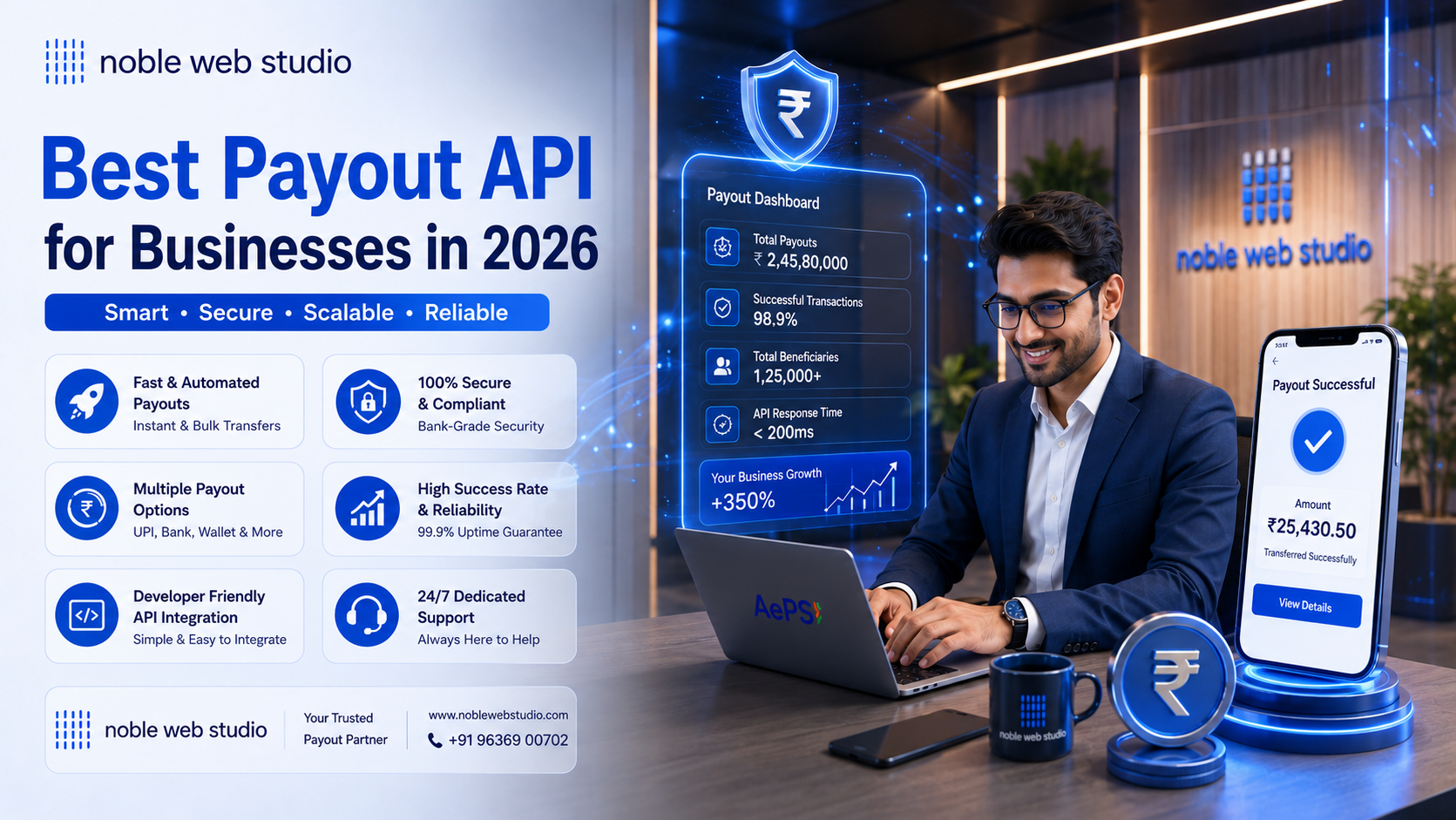
In today’s digital payment ecosystem, fast and secure money transfers are essential for every online business. A Payout API in India is a modern fintech solution that allows businesses to send instant payments directly to bank accounts in a simple and automated way. It is widely used for vendor payouts, salary transfers, refunds, cashback, and bulk payment processing.
A Payout API is a software interface that enables businesses to automate, send, and manage funds directly to bank accounts, UPI IDs, or wallets instantly. It facilitates bulk vendor payments, employee salaries, and customer refunds, reducing manual efforts. These Payout APIs connect directly with banking networks to provide secure, 24/7, high-volume transactions.
With the help of a payout API integration, companies can easily connect their platform with banking systems and process thousands of transactions in real time. This removes manual work, reduces errors, and ensures quick money transfers, which are very important for modern digital businesses.
For entrepreneurs and retailers, starting a payout API business in India opens strong earning opportunities. You can earn commission on every transaction while offering instant money transfer to your customers. This creates a powerful income source in the growing fintech API market.
Noble web studio is an payout API provider helps you automate payments like vendor payouts, salary transfers, refunds, cashback, and commission payments. This makes financial operations faster, smoother, and fully digital. With the rise of digital payment systems in India, payout solutions have become essential for startups, fintech companies, and online platforms.
With a trusted Payout platform like Noble Web Studio, businesses can easily integrate secure payment systems, manage bulk transactions, and scale their operations without technical difficulty. It helps you deliver fast, reliable, and error-free payouts to users.
Noble Web Studio offers a powerful and scalable payout API solution in India designed for fintech businesses, retailers, and enterprises. With features like instant settlement, secure Payout API system, user-friendly dashboard, and strong technical support, it helps businesses manage payouts smoothly and grow faster in the digital finance industry.
This blog will explain What is Payout API, how Payout API works, its benefits, setup process, and business opportunities with Noble Web Studio, so you can start your own digital payout business in India with low investment and high earning potential.
What is Payout API?
A Payout API (Application Programming Interface) is a tool that allows businesses to programmatically automate and manage the disbursement of funds from their own accounts to external recipients. While a standard payment gateway handles “pay-ins” (collecting money from customers), a payout API handles “pay-outs” sending money to vendors, employees, or customers.

Payout API Work
A Payout API (Application Programming Interface) is a programmatic tool that lets businesses automate and manage outgoing payments directly from their internal systems to thousands of recipients simultaneously. Unlike a standard payment gateway used for collecting money from customers, a Payout API designed specifically for disbursements, such as paying vendors, employees, or issuing refunds.
How a Payout API Works
The process follows a secure request-and-response cycle between your business software and the financial service provider:
- Integration & Authentication: Developers connect your platform (ERP, CRM, or custom app) to the provider using secure Payout API keys or OAuth tokens.
- Request Initiation: Your Payout API system sends a JSON or XML request containing recipient details (bank account, UPI ID, or digital wallet), the amount, currency, and a unique reference ID.
- Verification: The Noble web studio authenticates the request and performs security checks, including Beneficiary Validation (like a “penny drop” test) to ensure the account details are correct before sending funds.
- Execution: Once validated, the Noble web studio triggers the transfer through payment rails like IMPS, NEFT, UPI, or global wire transfers.
- Confirmation & Tracking: The Payout API sends a real-time response back to your system (success, pending, or failed). Many systems also use Webhooks to push automatic status updates back to your platform for reconciliation.
Types of Payout Api Services
Payout API services are essentially the “digital pipes” that allow businesses to send money out to other people or companies automatically. Unlike a payment gateway, which collects money from customers, payout APIs are for disbursements like paying employee salaries, vendor invoices, or sending customer refunds.
1. Types by Operational Structure
- Single Payout APIs: Payout API Design for one-off, real-time transfers to an individual recipient. This is common for on-demand refunds or immediate contractor payments.
- Batch (Bulk) Payout APIs: These allow you to send thousands of payments simultaneously using a single API call or by uploading a file (like a CSV). This is the standard for monthly payroll or affiliate commissions.
Scheduled Payouts: These best Payout API allow you to program payments to happen at specific intervals (weekly, monthly, or on specific dates) without manual intervention. - Composite Payout APIs: Advanced services that bundle different types of operations like verifying a bank account first and then initiating the transfer into one seamless flow.
2. Types by Payment Method (Rails)
Different services specialize in the “path” the money takes to reach the recipient:
- Bank Transfer APIs: Connect directly to banking networks. In India, for example, these use IMPS, NEFT, and RTGS. In the US, they typically use ACH or Wire transfers.
- UPI Payout APIs: Popular in India, these allow instant transfers using just a UPI ID (VPA) or phone number, often used for gig worker payments.
- Digital Wallet APIs: Services that send money directly into e-wallets.
- Card Payout APIs: Allow businesses to push funds directly to a recipient’s debit or credit card, often used for international payouts or “instant” insurance claim settlements.
3. Types by Industry Specialization
- Marketplace Payouts: Fast Payout API Designed for platforms. These often include Split Payment features to automatically divide a customer’s payment between the platform (commission) and the seller.
- Gig Economy APIs: Built for high-frequency, low-value payments to freelancers or delivery partners, often prioritizing speed (real-time rails).
- Lending & Insurance APIs: Focus on high security and verification, used for disbursing loans or settling insurance claims instantly.
Documents Required for Payout API Setup
To set up a Payout API, you’ll need to go through a Know Your Customer (KYC) or Know Your Business (KYB) verification process. This ensures the payment provider complies with financial regulations like anti-money laundering (AML) laws.
The specific documents vary based on your business type (e.g., Sole Proprietorship vs. Private Limited), but the core requirements generally fall into the following categories:
1. Business Registration Documents
These prove that your company is a legally registered entity.
- For Private/Public Limited Companies: Certificate of Incorporation (CoI), Memorandum of Association (MoA), and Articles of Association (AoA).
- For Partnership/LLP: Partnership Deed or LLP Agreement.
- For Sole Proprietorship: GST Certificate, MSME/Udyam Registration, or Shop and Establishment Act certificate.
- For NGOs/Trusts: Trust Deed or Registration Certificate.
2. Tax and Identity Proofs
These are used to verify the tax identity of the business and the individuals running it.
- Business PAN Card: Mandatory for all registered entities (except sole proprietors who use their personal PAN).
- GST Certificate: Often required if your annual turnover exceeds specific limits (e.g., ₹20 lakhs in India) or mandated by the provider.
- Promoter/Director Identity: PAN and Aadhaar (or Passport/Voter ID) of all authorized signatories or directors with significant ownership.
3. Bank Account Verification
Noble web studio need to know where the funds for payouts will be drawn from or where settlements will occur.
- Cancelled Cheque: Must clearly show the account holder’s name, account number, and IFSC code.
- Bank Statement: A recent statement (usually within the last 3 months) for the business account.
4. Operational Documents
These help the provider understand your business model and ensure it isn’t “high-risk.
- Board Resolution: For companies, a formal letter on company letterhead authorizing the account opening and designating signatories.
- Website/App URL: A functional link showing your products/services, privacy policy, and terms of service.
- Authorized Signatory Proof: A letter or document proving the person setting up the trusted Payout API has the legal right to do so on behalf of the company.

Requirements for Payout API Setup
Setting up a Payout API requires a mix of administrative, security, and technical configurations. Whether you are using a Noble web studio the core requirements remain largely consistent across the industry.
1. Business & Administrative Setup
Before you can write a single line of code, you must clear these regulatory hurdles:
- Active Merchant Account: You must have a verified account with a Noble web studio.
- KYC (Know Your Customer): You are required to submit business registration documents, tax IDs (like PAN/GST in India or EIN in the US), and bank account proofs.
- Account Funding: Payouts usually work on a “pre-paid” or “balance-based” model. You must have a sufficient balance in your merchant virtual account or linked bank account before a payout can be initiated.
2. Technical Infrastructure
A professional integration involves more than just a simple Payout API call:
- API Credentials: You will need a Client ID and a Secret Key (or Payout API Key) obtained from Noble web studio developer dashboard.
- Sandbox Environment: Never test with real money. Ensure you have access to a Sandbox or Test Mode to simulate transaction successes and failures.
- Webhook Listener: Since payouts are often asynchronous (taking seconds or days to settle), you must set up a Webhook URL on your server to receive real-time status updates (e.g.,
SUCCESS,FAILED,PENDING). - Server-Side Calls Only: For security, payout API calls must be made from your server. Client-side calls (from a browser or mobile app) are typically blocked to prevent exposing secret keys.
3. Security & Compliance
Financial data is highly sensitive and requires strict protection:
- Idempotency Keys: You must include a unique Idempotency Key in every request to prevent accidental double payments if a request is retried.
- IP Allowlisting: Many providers require you to list the specific IP addresses of your servers that will be making the API requests.
- Encryption & Hashing: All communications should use TLS 1.2+. Some advanced setups require SHA-512 hashing and RSA signatures for request validation.
4. Data Requirements (Payload)
To initiate a payout, your system must collect and send the following data points:
- Recipient Details: Full name, email, and destination info (Bank Account Number + IFSC/SWIFT code, or a UPI VPA).
- Transaction Info: The amount (often in the smallest currency unit, like cents or paise), currency code (e.g.,
USD,INR), and a unique internalreference_id. - Purpose & Notes: Many regions require a “Purpose Code” or description (e.g., “Refund”, “Salary”, “Vendor Payment”) for regulatory reporting.
Who Can Use Payout API
Top Payout API are used by businesses, fintech firms, and marketplaces requiring automated, high-volume, or instant disbursements to recipients such as vendors, employees, contractors, or customers. Common users include e-commerce sites, gig platforms, and HR tech firms automating salary, commission, and refund processes via bank transfer, UPI, or wallets.
Key Users and Use Cases:
- E-commerce & Marketplaces: Automated daily/weekly settlements to sellers, vendors, and managing customer refunds.
- Fintech & Lending Platforms: Instant loan disbursements, cashback processing, and incentive payments.
- Payroll & HRMS Solutions: Automatic salary disbursement, employee reimbursement, and bonuses.
- Gig Economy & Freelancer Platforms: Instant payments for gig workers (ridesharing, delivery) to boost retention.
- Logistics & Supply Chain: Paying labor charges, transportation costs, and vendor settlements.
- Marketing Agencies: Issuing referral rewards, influencer payouts, and commission payments.
Why Use Payout API
A Payout API enables businesses to automate, secure, and instantly disburse funds to vendors, employees, or customers, reducing manual work and human error. It facilitates real-time, 24/7 transfers (via UPI, IMPS, or bank transfer), enhancing trust with instant refunds or payments. These standard Payout API are essential for high-volume transactions in marketplaces, lending, and gig economies.
Key Reasons to Use a Payout API:
- Automation and Efficiency: Replaces manual file uploads and bank portal entries with automated workflows, allowing finance teams to focus on strategic tasks.
- Instant/Real-Time Payments: Enables instantaneous disbursements (via IMPS, UPI, etc.), ensuring contractors, vendors, and employees are paid instantly, even on holidays.
- Improved User Experience: Enables instantaneous refunds or payouts, increasing customer loyalty and satisfaction.
- Faster, 24/7 Processing: Unlike manual banking procedures, smooth Payout API operate continuously, ensuring immediate transfers for instant payouts and superior user experience.
- Enhanced Accuracy and Reduced Fraud: Payout API include beneficiary validation (verifying bank account details) to ensure money goes to the correct recipient, lowering the risk of failed transactions.
- Reduced Human Error: Direct system-to-system integration ensures that payment details are accurate, eliminating accidental double payments or incorrect amounts.
- Scalability: Efficiently manage high volumes of transactions (e.g., thousands of instant vendor payouts or loan disbursements) without increasing operational costs.
- Enhanced Security and Validation: Features like beneficiary validation (checking if an account exists) and webhook notifications ensure secure transfers and immediate updates on success or failure.
- Improved Cash Flow Visibility: Automated webhooks provide real-time status updates on transaction success or failure, simplifying reconciliation.

Top Use Cases of Payout API
Payout API enable businesses to automate and instantly send funds via UPI, IMPS, or bank transfers to suppliers, employees, and customers, replacing manual payment processes. Top use cases include bulk vendor payments, instant gig worker payouts, e-commerce refunds, loan/insurance disbursals, and automated employee reimbursements.
Here are the top use cases of Payout APIs:
- Bulk Vendor & Supplier Payments: Automates high-volume, regular payments to suppliers directly from an ERP or management system, ensuring timely settlements.
- Gig Economy & Creator Payouts: Enables instant, on-demand payments for freelancers, delivery partners, and content creators, enhancing retention.
- Vendor Disbursements: Automatically paying suppliers or logistics partners as soon as services are rendered.
- E-commerce Refunds: Processes instant customer refunds via UPI or original payment methods, which improves satisfaction and reduces customer support tickets.
- Loan and Insurance Disbursals: Fintechs and insurance companies use Payout API to instantly disburse loans or settle claims, improving user experience.
- Marketplace Commission Payouts: Allows Payout platforms to automatically split and distribute commissions to agents, affiliates, or influencers.
- Gig Economy & Payroll: Disbursing salaries, commissions, or contractor wages.
- Salary and Payroll Management: Facilitates automated monthly salaries and instant wage payments, particularly useful for hourly workers.
- Employee Reimbursements: Streamlines the process of paying back expense claims (e.g., travel, food) directly to employee accounts.
- Gaming & Rewards Payouts: Handles fast, high-frequency winnings or loyalty cashbacks directly to verified bank accounts or wallets.
- Refunds & Cashback: Triggering immediate or scheduled refunds and reward payouts directly to customers.
These Payout API often feature account verification (penny testing) to ensure accuracy and webhooks for real-time transaction tracking, allowing firms to lower operational costs and enhance security.
One Payout API For All Payouts
A unified payout API is a powerful fintech solution that allows businesses to automate and manage all outgoing fund transfers such as salaries, vendor payments, and customer refunds through a single integration. Instead of manually handling multiple banking portals or spreadsheets, businesses can trigger thousands of payments across different methods and regions with one Payout API call.
Key Benefits of a Single Payout API
- Operational Efficiency: Replaces manual “Bulk File” uploads to bank portals with automated, real-time transfers initiated directly from your ERP or CRM.
- Massive Scalability: Automate bulk disbursements for thousands of recipients simultaneously, eliminating manual CSV uploads and bank logins.
- Multiple Payment Rails: Access domestic and international methods including ACH, Wire, UPI, and Digital Wallets through a unified interface.
- Real-Time Tracking & Webhooks: Receive instant notifications on payment success or failure, enabling immediate reconciliation and customer updates.
- Global Reach: Platforms support payouts to over 200 countries in 120+ currencies using 50+ payment methods.
- Automated Compliance: Integrated KYC/AML checks and tax form collection (like W-9s) ensure all transfers meet regulatory standards automatically.
- Reduced Errors: Built-in beneficiary validation (e.g., penny-drop tests) verifies account details before funds are sent to prevent wrong transfers.
- Security and Compliance: Features like IP whitelisting, beneficiary bank account verification, and maker-checker workflows to prevent fraud and ensure regulatory compliance.
Key Aspects of Payout API
A Payout API (Application Programming Interface) is a powerful tool that allows businesses to automate the distribution of funds to various recipients like vendors, employees, or customers directly from their own software. Instead of manual bank transfers, it creates a seamless connection between your business platform and a payment provider.
Here are the key aspects that make Payout API essential for modern business operations:
1. Core Functionality & Automation
- Automated Disbursement: It removes the need for manual intervention, allowing you to send funds instantly to various recipients with a simple line of code.
- Bulk Payment Processing: You can execute thousands of payments simultaneously through a single Payout API call or a CSV upload, which is crucial for handling payroll or vendor settlements at scale.
- Smart Scheduling: Payout API allow for scheduling recurring payments (e.g., weekly gig worker commissions or monthly salaries) using programming.
2. Payment Methods & Coverage
- Multiple Payout Modes: A versatile Payout API supports various transfer methods, including:
- Bank Transfers: IMPS, NEFT, and RTGS for traditional account-to-account moves.
- Instant Methods: UPI (Unified Payments Interface) for immediate, 24/7 transfers.
- Wallets & Cards: Support for digital wallets and direct-to-card payouts.
- Broad Bank Coverage: It should connect with a wide array of banks to ensure high success rates and reach across different regions.
3. Operational Efficiency & Tracking
- No Beneficiary Cooling Periods: modern Payout API, like those from allow for instant transfers without the traditional 30-minute to 24-hour waiting period after adding a new beneficiary.
- Real-Time Tracking: You get live updates and detailed logs for every transaction, making it easy to monitor payment status and maintain records.
- Reconciliation & Reporting: Automated reporting features help standardise financial reconciliation and provide data for compliance and analysis.
4. Security & Compliance
- Robust Authentication: Ensuring the legitimacy of payout requests through mechanisms like API keys and OAuth is essential to prevent fraud.
- Transaction Security: High-level encryption protects sensitive financial data and maintains the integrity of each transaction.
- Access Controls: Advanced Payout systems offer “Smart Approvals,” where certain payouts require a manual sign-off within the business before they are processed.
5. Developer-Centric Design
- Easy Integration: Strong Payout API come with clear documentation, SDKs (Payout Software Development Kits), and predictable workflows to help developers go live quickly.
- Webhooks: These provide real-time notifications to your system when a payout status changes (e.g., moving from “pending” to “success”), ensuring your internal database is always up to date.

How Noble Web Studio Can Help You
At Noble Web Studio, we specialize in API integrations for growing businesses. Whether you need a Payout API for your startup, marketplace, or enterprise platform, we handle everything from start to finish:
We study your business needs, select the best Payout API for your case, write clean integration code, test every edge case, and hand you a fully working system fast.
Our clients have seen up to 80% reduction in manual payment work within the first month of integration.
Business Opportunities with Payout API in India
Payout API solutions in India enable businesses to automate, secure, and accelerate financial transfers (UPI, IMPS, NEFT) to vendors, employees, and customers, reducing manual work and enhancing trust. Key business opportunities include Instant vendor settlements for marketplaces, automated, real-time gig worker payments, and immediate loan/claims disbursal.
Key Business Opportunities and Use Cases
- E-commerce & Marketplaces: Automated daily/weekly settlement with thousands of sellers and vendors, reducing errors and enhancing trust.
- Fintech & Lending Platforms: Real-time loan disbursals, cashback incentives, and instant insurance claim settlements.
- Gig Economy & HRMS: Immediate payouts for freelancers, delivery executives, and ridesharing drivers (e.g., in gig economy platforms), boosting satisfaction.
- SaaS & EdTech: Automated payouts to instructors, partners, or affiliates based on commission structures.
- Corporate Payroll: Automated salary disbursement, reimbursements, and bonuses directly into employees’ bank accounts.
Payout API for Bulk Payments & Vendor Disbursement
A Payout API allows businesses to automate and programmatically send funds directly from their internal systems to multiple recipients (e.g., vendors, contractors, employees). It replaces manual uploads of banking files with instant, system-to-system fund transfers via UPI, IMPS, NEFT, or RTGS.
Core Mechanisms
- Direct Integration: The API connects your platform or app directly to banking networks to execute transfers the moment a transaction is approved.
- Bulk Payments: Instead of initiating hundreds of transactions individually, you can disburse funds to thousands of recipients simultaneously with a single API request.
- Payment Channels: It routes money through various rails like UPI, IMPS, NEFT, or RTGS based on transaction limits, urgency, and cost.
Why Are Businesses Switching to Payout APIs?
Businesses are switching to payout API to automate financial workflows, enabling instant, 24/7, and bulk disbursements to vendors, employees, and customers. This shift reduces manual errors, slashes processing costs, improves cash flow visibility, and enhances user experience through real-time, secure transactions.
Key drivers for adopting payout APIs include:
- Real-Time Speed & 24/7 Availability: Unlike manual bank transfers, Payout API-driven payouts (using UPI, IMPS, or faster payment networks) operate 24/7, allowing funds to be sent in real-time without being limited by bank working hours.
- Automation & Error Reduction: Payout API eliminate tedious manual tasks like downloading/uploading spreadsheets, significantly reducing data entry errors and preventing failed transactions.
- Cost Efficiency & Scaling: Automated payouts reduce the need for large admin teams to manage finance operations, providing significant cost savings. They enable firms to scale by handling high-volume transactions instantly.
- Improved User Experience (UX): Instant payments for refunds, gig work, or creator payouts increase trust and customer loyalty.
- Enhanced Security & Compliance: Payout API provide built-in security features like IP whitelisting, best Payout API key authentication, and detailed audit logs to ensure compliance with anti-money laundering (AML) regulations.
- Real-Time Reconciliation: Webhook notifications keep systems updated on payout statuses (success, failure, or pending) instantly.
Why Payout API is Important for Businesses
A Payout API is vital for businesses to automate fund disbursements, enabling instant, 24/7 transfers to vendors, employees, or customers, which reduces manual work, errors, and operational costs. It enhances trust through secure, real-time tracking, supports scaling for bulk payments, and streamlines reconciliation.
Key benefits include:
- Operational Efficiency & Automation: Payout APIs remove the need for manual file uploads, allowing companies to automatically disburse payments via UPI, IMPS, ACH, or wires directly from their system, which is essential for managing high-volume, regular payments.
- Instant Payouts & Better Cash Flow: By providing real-time, 24/7 transactions, businesses can meet the demand for instant refunds or commissions. It also enables “just-in-time” funding, optimizing liquidity instead of holding large idle balances.
- Enhanced Security and Compliance: These Payout API include built-in validation (checking bank details before sending) and meet security standards to protect against fraud, while also facilitating regulatory compliance (KYC, AML).
- Detailed Tracking & Reconciliation: Provides real-time notifications via webhooks and detailed reports on payout status, which helps in efficient, accurate, and automated accounting.
- Scalability & Efficiency: Handles high-volume transactions automatically, allowing businesses to grow without increasing their accounting staff.
- Improved Recipient Experience: Fast, reliable payments increase satisfaction and loyalty, particularly in the gig economy for paying freelancers or vendors.
- Global Expansion: They enable seamless international transactions, handling currency conversions and local payment methods without building separate infrastructures.
By integrating payout API, companies can move away from manual, error-prone spreadsheets to a secure, efficient, and modern financial system.

Benefits Payout API
A Payout API is a set of protocols enabling businesses to automatically transfer funds, such as salaries, vendor payments, or customer refunds, directly from their system to beneficiaries’ bank accounts, wallets, or UPI IDs. Key benefits include instant 24/7 transaction processing, high-security encryption, improved operational efficiency, bulk payment capabilities, and seamless automated reconciliation.
Key Benefits of a Payout API
- Automation & Efficiency: Eliminates manual tasks and streamlines complex financial workflows, allowing businesses to save on operational costs.
- Real-Time Payments: Enables instant or near-instantaneous fund transfers to recipients, improving vendor and employee satisfaction.
- High Success Rates & Reliability: Noble web studio offers robust infrastructure with smart retry options to ensure transactions succeed, reducing failed payment troubleshooting.
- Reduced Errors & Improved Accuracy: Minimizes manual intervention, preventing costly errors, with real-time tracking of transaction statuses.
- Bulk Processing: Allows companies to pay hundreds or thousands of beneficiaries simultaneously.
- Multiple Payment Options: Supports various, flexible payout modes including NEFT, IMPS, RTGS, UPI, and bank transfers.
- Enhanced Security & Compliance: Ensures data protection with encryption and secure, compliant infrastructure.
- Scalability: Allows businesses to efficiently scale up their payout processes to handle high volumes, such as mass payouts for vendors or affiliates.
- Easy Reconciliation: Provides detailed reports and dashboards for effortless tracking of transactions, charges, and refunds.
Features Payout API
A Payout API allows businesses to automate, manage, and execute instant, high-volume, or scheduled funds transfers such as vendor payments, salaries, refunds, or partner commissions directly from their systems to beneficiaries via bank accounts, UPI, or cards. Key features include 24/7 instant transfers, multi-mode support (IMPS, NEFT, RTGS, UPI), beneficiary validation, and real-time status updates.
Key Features of Payout APIs:
- Real-Time & Instant Transfers: Supports immediate money movement 24/7, including bank holidays, using IMPS, UPI, and wallets.
- Bulk Payouts & Automation: Enables sending payments to thousands of recipients simultaneously via a single API request, eliminating manual file uploads.
- Multiple Payment Methods: Facilitates payouts through varied channels such as Bank Transfers, UPI, Cards, and Digital Wallets.
- Real-Time Tracking & Notifications: Provides instant status updates on transactions (success, failure, pending) through webhooks, ensuring automatic reconciliation.
- Security & Compliance: Features enterprise-grade security, including bank-grade encryption, API key authentication, IP whitelisting, and secure compliance with financial regulations.
- Automated Validation: Validates beneficiary bank details or UPI IDs before initiating transfers to reduce failed transactions.
- Global Payout Capabilities: Supports cross-border payments with automated currency conversion, allowing payouts to be made in local currencies.
- Scheduled Payments: Allows scheduling future payments for recurring transactions such as salaries or subscription-based payouts.
- Developer-Friendly Documentation: Noble web studio offers easy integration with ERP/CRM systems for seamless financial operations.
Payout API Cost Structure
Payout API cost structures typically follow a usage-based model, combining transaction fees, volume-based pricing, and potential monthly subscriptions. Costs usually involve a small percentage (around 2% on average) or fixed fees per transaction (e.g., ₹4–₹10 for UPI), plus FX conversion fees (0.4%–2%). Many providers offer lower rates for higher volumes.
Common Payout API Cost Structures
- Transaction-Based Fees: The most common model, where providers charge per payout request (e.g., IMPS, NEFT, UPI).
- Percentage-Based Fees: Often used for international payouts, typically around 2% of the total amount.
- Fixed Fees per Transfer: Fixed costs, such as fixed UPI pricing: < ₹999 at ₹4, ₹999–₹25,000 at ₹7, and > ₹25,000 at ₹10.
- Subscription/Platform Fees: Noble web studio charge monthly fees ranging from approximately ₹1,000 to ₹10,000, while others offer no-fee options.
- Transfer Type Costs: Costs vary depending on whether the payout is made via UPI, NEFT, IMPS, or bank transfer, with some methods offering a low-cost, all-inclusive rate around 1%.
- Volume-Based Pricing: High-volume businesses often negotiate lower rates compared to fixed pricing models.
Common Fee Structures
- Pay-per-use: You only pay for each transaction completed, which is beneficial for businesses with unpredictable volumes.
- Subscription: A fixed monthly amount for a set number of transactions, common in SaaS models.
- Percent-based: A percentage of each transaction, typically used for global or high-risk transfers.
Additional Cost Factors
- API Maintenance & Setup: While many payout platform boast no setup fees, some may charge for advanced integrations.
- International Payouts: These generally have higher fees, often with currency conversion charges.
- Platform Fees: Charges for using specific features like dashboards, reports, and SDKs.
Additional Costs:
- Currency Conversion (FX): Range from 0.40%–2.00%.
- Validation Fees: Small fees to verify recipient bank accounts.
- Failed Transaction Fees: Noble web studio charge a nominal fee even if the payout fails, or a lower fee for reversals.
Key Factors Influencing Cost
- Payout Volume: Higher transaction volumes often secure lower, discounted rates.
- Method of Payout: Costs vary significantly between instant IMPS/UPI, bank transfers (RTGS/NEFT), digital wallets, or international SWIFT transfers.
- Provider: Noble web studio have varying fee structures.

Step-by-Step Process of Payout API Integration
Integrating Payout API involves a series of steps to securely automate the disbursement of funds to beneficiaries like vendors, employees, or contractors. The process typically follows this workflow:
1. Preparation & Credentialing
- Select a Provider: Choose a Noble web studio based on your region and supported payment rails (e.g., IMPS, UPI, ACH).
- Acquire API Keys: Sign up for a merchant account and generate unique payout API Keys (Client ID and Secret) from the developer dashboard.
- Review Documentation: Study the Technical Documentation to understand authentication methods, endpoints and data formats (JSON/XML).
2. Development & Backend Setup
- Set Up Environment: Use a Sandbox/Test environment to simulate transactions without moving real money.
- Implement Authentication: Use standard protocols like OAuth 2.0 or Bearer Tokens over HTTPS to secure your requests.
- Beneficiary Management: Build logic to create and verify recipients. This often includes gathering bank details or UPI IDs and performing KYC verification.
3. Core Integration Steps
- Initiate Payouts: Construct a
POSTrequest to the Noble web studio payout endpoint containing recipient details and the amount. - Handle Webhooks: Configure Webhook Endpoints to receive real-time asynchronous notifications on transaction status (Success, Failed, Pending).
- Implement Idempotency: Use unique Idempotency Keys in your requests to prevent duplicate payments in case of network retries.
4. Security & Compliance
- Encryption: Ensure all data transmission uses TLS 1.2 or higher.
- IP Whitelisting: Restrict payout API access to specific pre-approved IP addresses to prevent unauthorized requests.
- PCI DSS Compliance: Ensure your server environment meets security standards for handling financial data.
5. Testing & Deployment
- Scenario Testing: Simulate various edge cases in the sandbox, such as insufficient funds, invalid bank details, and timeouts.
- Go Live: Switch from sandbox to production keys, monitor the first few live transactions closely, and set up alerts for high error rates.
Payout API Commission Structure & Profit
Payout APIs enable automated, instant bank transfers for vendors, salaries, and refunds, driving high-profit margins through transaction-based commissions. Commissions are typically tiered, with high-value transactions (₹3,000–₹10,000) generating the highest earnings—up to ₹15–₹20 per transaction. Daily income for agents can be significant, often leading to monthly profits of ₹30,000+.
Payout API Commission Structure (2026)
Payout APIs, especially within best AEPS (Aadhaar Enabled Payment System) for high-value withdrawals, offer a commission-based model.
- Tiered Slab Model: Payout Commissions increase with transaction amounts.
- ₹500 – ₹1,000: ₹5 – ₹8 commission
- ₹1,000 – ₹2,000: ₹8 – ₹12 commission
- ₹2,000 – ₹3,000: ₹10 – ₹13 commission
- ₹3,000 – ₹10,000: ₹13 – ₹18 commission (Highest)
- Aadhaar Pay: For transactions up to ₹50,000, agents can earn up to 1% commission.
- Balance Inquiry/Mini Statement: Usually generates ₹1 – ₹5 per request.
Earning Example:
- ₹3,000–₹10,000 Withdrawal: ₹13–₹15+ commission.
- ₹1,500–₹2,999 Withdrawal: ₹4.50–₹7 commission.
- Small Transactions (<₹1,000): ~₹2 commission.
Profit Drivers
The profitability of Payout APIs is high due to low infrastructure requirements (smartphone + biometric device) and immediate, high-volume transactions.
- Active Agent Income: Agents can earn ₹10,000 – ₹30,000+ per month, largely driven by high-value transactions between ₹3,000 – ₹10,000.
- Instant Settlement: Instant (T+0) settlement enables better cash flow management and higher volume, which drives up profit margins.
- Transaction Volume: High-volume users can negotiate lower per-transaction fees (around ₹12–₹13).
Profit Maximization Strategies
- High-Volume Targeting: Focusing on areas with high-value transactions (e.g., in semi-urban/rural areas where cash demand is high) maximizes the highest commission slabs.
- Aadhaar Pay Utilization: Using Top Aadhaar Pay for high-value transactions (up to ₹50,000) provides 1% commission, which is more profitable than standard AEPS.
- Reducing Operational Costs: Utilizing Payout APIs that offer low or no Payout api setup costs for white label, or lower per-transaction fees, increases net profit.
How Retailers & Agents Earn Money Using Payout API
Retailers and agents earn money using Payout API by acting as “mini-ATMs,” automating vendor payments, and receiving commissions for digital transactions like cash withdrawals, best Aadhaar Pay, and refunds. By integrating these APIs, they enable instant financial services, typically earning ₹2–₹15+ per transaction (highest in the ₹3,000–₹10,000 range), allowing agents to generate ₹10,000–₹30,000+ monthly.
Key Revenue Streams Using Payout/AEPS APIs:
- Cash Withdrawal Commission: Agents earn commissions (often up to 0.50%) on, for example, using Noble web studio to process Aadhaar-based withdrawals, with commissions peaking for transactions between ₹3,000 and ₹10,000.
- Aadhaar Pay/Merchant Payments: Agents can facilitate high-value transactions (up to ₹50,000) through Aadhaar Pay and earn commission of approximately 1% on the transaction value.
- Balance Inquiry & Mini-Statements: Retailers earn small, consistent fees typically ₹0.50 – ₹5 for performing balance inquiries or issuing Mini-Statements.
- Increased Customer Footfall & Sales: Serving as a “Digital Bank” brings in more customers, often resulting in 20% or higher sales of primary, non-banking goods.
- Bulk Payment Solutions: Businesses use Payout API to automate vendor payments, commissions, and salaries, improving efficiency and reducing operational costs.
- Vendor Payments & Commission Disbursal: Businesses, including E-commerce platforms, use payout APIs to automate payments to freelancers, delivery partners, and suppliers, replacing slow manual processes with instant, reliable transfers.
Active agents can generate significant monthly income, frequently ranging from ₹10,000 to ₹30,000+ per month, making it a high-profit, low-investment business model.

How to Increase Income Using Payout API
Increasing income using a Payout API involves automating outgoing payments to vendors, affiliates, or gig workers to reduce operational costs, increase transaction volume, and improve partner retention. By transitioning from manual payments to an automated Payout API, businesses can shift from slow, manual processes to near-instant payments (UPI/IMPS/ACH) that build loyalty and trust.
Here are the primary ways to increase income using a Payout API:
1. Accelerate Growth through Automated Payouts
- Scale Operations Without Extra Headcount: Manually paying hundreds of vendors is slow and error-prone. A Payout API allows you to automate thousands of transactions with a single API call, allowing your business to handle higher volumes without hiring more finance staff.
- Instant Payouts for Gig Workers & Sellers: Gig economy apps and marketplaces (e.g., DoorDash, Uber) gain a competitive advantage by providing near-instant payments to workers. This increases satisfaction, which leads to better retention and faster growth.
- Improve Cash Flow Management: Automated payouts help in precise, faster settlements, which improves overall working capital and frees up resources for growth.
2. Implement Direct Revenue Models
- API Monetization: If you are building the software, you can charge developers or other businesses a fee to use your payout infrastructure via subscription models or pay-per-use fees.
- Revenue Sharing: Integrate payout API into a larger ecosystem to collect a percentage of transactions completed by partners.
- Transaction Fees: Charge partners a small convenience fee for instant payout options (e.g., instant bank transfer vs. 2-day ACH).
3. Enhance Operational Efficiency and Reduce Costs
- Reduced Transaction Fees: Payout API leverage low-cost, efficient banking rails like UPI and IMPS (in India) for instant bank transfers.
- Minimized Human Error & Fraud: Automated systems reduce expensive mistakes and reconciliation errors, lowering the costs of repairing failed transactions.
- Instant Verification: Use “penny drop” APIs to verify bank accounts instantly, ensuring funds reach the right person and avoiding costly retries.
4. Create Better Customer/Vendor Experience
- Instant Refunds and Loyalty Rewards: Automating refunds and cashback instantly enhances user trust, leading to higher retention rates and increased repeat sales.
- Instant Commissions for Affiliates: Paying affiliates immediately rather than at the end of the month encourages them to drive more traffic and sales to your platform.
By focusing on automating the “pay-out” side of your business, you unlock the ability to scale faster and reduce the high operational costs associated with manual finance processes.
Security & Compliance in Payout API
Payout API security and compliance ensures secure fund transfers by employing TLS 1.2+ encryption, tokenization, and multi-factor authentication. Essential measures include OAuth 2.0 authorization, strict KYC, and fraud detection to adhere to PCI DSS 4.0, GDPR, and local regulations (e.g., RBI). Robust logging and payout API gateways prevent data breaches and unauthorized transactions.
Key Security Components
- Authentication & Authorization: Use OAuth 2.0 to manage payout API access via secure tokens rather than sharing passwords.
- Data Encryption: All API traffic (internal or external) should be encrypted in transit and at rest.
- API Key Management: Secure payout API keys to prevent unauthorized access and potential theft of funds.
- Rate Limiting & Throttling: Control the flow of payout API calls to prevent abuse and ensure system stability.
- Access Controls: Implement Role-Based Access Control (RBAC) to restrict access to sensitive functionalities.
Compliance Requirements
- PCI DSS 4.0: Ensures secure handling of financial data, requiring regular API security audits and penetration testing.
- GDPR & Data Privacy: Compliance with regional regulations for protecting personally identifiable information (PII).
- KYC & AML: Built-in tools for identity verification and bank account validation to prevent fraud.
- Regulatory Adherence: Ensuring compliance with local financial regulations (e.g., RBI guidelines in India).
Best Practices for Implementation
- API Gateway: Use a gateway to act as a centralized, secure gatekeeper for all traffic.
- Regular Audits: Conduct continuous testing and penetration tests to identify vulnerabilities.
- Logging & Monitoring: Maintain detailed audit trails to detect anomalies or security incidents.
- PII Masking: Mask personally identifiable information in logs to ensure privacy.
How to Choose Best Payout API Provider in India
Noble web studio one of the right payout API provider involves balancing technical flexibility with operational reliability. For businesses managing bulk disbursements, vendor payments, or salaries, the following factors are critical for evaluation.
1. Transaction Performance and Reliability
- Success Rates: Noble web studio with a proven track record of high transaction success rates (ideally 99% or higher).
- Uptime and Availability: Ensure the best payout platform offers 99.9% uptime to prevent delays during critical payout windows.
- Real-time Processing: Look for “real-time rails” (like UPI, IMPS) that deliver funds in seconds rather than business days.
- Intelligent Routing: Advanced payout systems can automatically reroute transactions if a specific banking partner is experiencing downtime.
2. Payment Modes and Geographic Reach
- Supported Rails: Confirm the payout API supports the methods your recipients prefer, such as:
- Bank Transfers: IMPS, NEFT, RTGS, or ACH.
- Digital Alternatives: UPI, digital wallets, or direct-to-card payouts.
- Global vs. Local: If paying international vendors, ensure the provider supports multi-currency settlements and cross-border payment compliance.
- Bulk Disbursement: The payout API should handle high-volume batches (e.g., 10,000+ payments) in a single call without performance degradation.
3. Security, Compliance, and Risk Control
- Regulatory Licensing: Ensure the Noble web studio is authorized by relevant bodies (e.g., RBI in India, PCI DSS globally).
- Fraud Prevention: Look for built-in AI-powered fraud detection, IP whitelisting, and idempotency keys to prevent duplicate payments.
- Approval Workflows: High-value payouts should support “Maker-Checker” workflows, requiring dual authorization before funds are released.
- KYC/AML Tools: Integrated identity verification services like penny-drop verification help confirm recipient details before sending funds.
4. Developer Experience and Integration
- Documentation Quality: Clear, well-organized payout API documentation with code samples in multiple languages (Python, Node.js, Java) reduces integration time.
- Sandbox Environment: A robust testing environment allows you to simulate success and failure scenarios before going payout API live.
- Webhooks: Real-time notifications for status changes (e.g.,
payout.succeededorpayout.failed) are essential for automated reconciliation.
5. Transparent Pricing and Operational Support
- Pricing Structure: Compare per-transaction fees, monthly platform fees, and potential hidden costs like currency exchange (FX) markups.
- Reporting Dashboard: A user-friendly interface is needed for real-time tracking, error logs, and exporting data for accounting.
- Customer Support: Critical issues require 24/7 technical assistance with clear Service Level Agreements (SLAs) for resolution times.

Why Noble Web Studio is a Trusted Payout API Provider
Noble web studio is a trusted Payout API solution because it offers a secure, automated, and instant way to manage bulk disbursements while adhering to strict regulatory standards. These Payout API solutions enable businesses to transfer funds 24/7 including on bank holidays directly to vendor bank accounts, UPI IDs, and wallets, eliminating manual errors and delays.
Here is why a top-tier Payout API is considered trusted:
1. Robust Security and Compliance
- Regulatory Adherence: Noble web studio ensure all payout processes comply with RBI guidelines in India, protecting businesses from compliance risks.
- Data Protection & Fraud Prevention: They implement industry-standard encryption (TLS, SSL) and offer advanced features like IP whitelisting, maker-checker workflows (dual authorization), and tokenization.
- Secure Authentication: Access to the payout API is secured using rotating payout API keys and secure authentication protocols.
2. High Reliability and Speed
- Real-time Transactions: Payments are processed almost instantly (e.g., using IMPS or UPI), ensuring that vendors, freelancers, or employees receive funds immediately.
- High Success Rates & Automated Retries: Noble web studio often boast high transaction success rates (e.g., 99.99% uptime) and feature auto-retry functionality, which automatically re-routes failed transactions through different banking channels.
- Bank Downtime Detection: Advanced payout platforms use Machine Learning (ML) to detect beneficiary bank downtimes, allowing the payout system to intelligently wait for the bank to recover or choose an alternative route, ensuring the payment does not fail.
3. Comprehensive Feature Set
- Bulk Payouts via API or CSV: Businesses can automate thousands of payouts in a single payout API call or by uploading a CSV file, reducing the need for manual data entry.
- Instant Bank Account Verification: Before sending funds, the payout API validates the beneficiary’s bank account or UPI ID to prevent wrong transfers.
- Real-time Tracking and Reconciliation: Webhooks provide instant notifications on the status of payouts (success/failure), making accounting and reconciliation seamless.
4. Scalability and Developer-Friendly
- Easy Integration: These payout api solutions provide comprehensive, well-documented, developer-friendly APIs with SDKs in popular languages (Python, PHP, Node.js).
- Sandbox Environment: Noble web studio offer a testing (sandbox) environment that allows developers to test their integration without impacting real transactions.
- Scalable Infrastructure: Whether processing a few payments or thousands daily, the infrastructure scales with the business, making it ideal for startups and enterprises.
By centralizing these capabilities, payout APIs offer a reliable “backbone” for businesses to manage their financial operations efficiently.
Future Trends Payout API
The future of payout APIs is heavily focused on automation, instant, 24/7, and secure financial transactions, with significant advancements in artificial intelligence (AI) and blockchain to enhance speed and security. Payout APIs are evolving from simple bank transfers to intelligent, integrated systems that offer real-time analytics, smart routing, and improved reconciliation, crucial for modern gig economies and B2B settlements.
Here are the key future trends in Payout APIs as of 2026:
1. AI-Powered Fraud Detection and Smart Routing
- AI for Security: Machine learning algorithms will analyze transaction patterns in real-time to identify anomalies and prevent fraudulent payouts.
- Smart Routing: AI will evaluate the best payment route among various bank networks (e.g., IMPS, NEFT, UPI in India) to optimize speed and success rates.
- Instant Downtime Detection: AI-based systems will detect beneficiary bank downtime and automatically route payouts to alternative rails to prevent failures.
2. Real-Time and 24/7 Payout Capabilities
- Instant Payouts: There is a strong shift toward instantaneous payouts (within 2 seconds) for vendor payments, refunds, and salary disbursements, removing the need for manual batch processing.
- UPI Expansion: In India, the expansion of UPI Lite and UPI AutoPay will facilitate micro-rewards and instant payouts, enhancing the gig economy payment model.
- Cross-Border Real-Time: Payout APIs are improving to support real-time cross-border payments, making it easier for global businesses to pay suppliers and freelancers.
3. Embedded Finance and API-First Architecture
- Invisible Payments: Payout APIs are becoming embedded within software platforms (ERPs, SaaS), allowing businesses to pay vendors without leaving their native platform.
- API Marketplaces: The rise of developer-friendly API marketplaces makes it easier for startups and SMEs to integrate robust payment solutions.
- Blockchain Integration: Increased use of blockchain technology to enhance transparency and provide a tamper-proof record of transactions.
4. Enhanced Security and Compliance
- Tokenization: Actual account details will be replaced by tokens to enhance security and prevent data breaches.
- Regulatory Compliance: Future APIs will offer built-in compliance features like automated KYC, bank account verification, and adherence to evolving regulations (e.g., RBI guidelines).
- Idempotency Keys: Mandatory use of idempotency keys is a rising trend, ensuring that the same request cannot be processed multiple times, thereby reducing duplicate payments.
5. Advanced Reconciliation and Reporting
- Automated Reconciliation: Payout APIs will offer sophisticated, automated reconciliation, allowing for seamless integration with accounting software, thus saving time on manual accounting.
- Instant Webhooks: Real-time, instant notification through webhooks will provide immediate updates on payout success or failure.
These trends indicate that payout APIs are shifting from a “nice-to-have” to a necessity for scaling businesses, offering superior speed, efficiency, and security.

Conclusion
Understanding payout API in India is very important for anyone who wants to build a strong digital payment business or fintech-based earning model. A payout API solution allows businesses to send instant payments directly to bank accounts, wallets, or users in a secure and automated way. This makes financial transactions faster, easier, and more reliable for both businesses and customers.
A Payout API is a, secure, programmatic interface that allows businesses to automate, manage, and instantly transfer funds directly from their systems to bank accounts, UPI IDs, wallets, or credit cards. Key for vendor payments, salary disbursements, and refunds, these APIs enable 24/7 automated, bulk payouts, reducing manual errors and improving operational efficiency.
By using a trusted payout API provider in India, Noble web studio can manage bulk payments, salary transfers, vendor payments, cashback, refunds, and commission payouts in just a few clicks. This not only saves time but also reduces manual work and improves overall efficiency.
The biggest advantage of a payout API solution is speed and automation. Instead of manual transfers, businesses can process thousands of transactions in real time with high accuracy, secure authentication, and instant settlement, which improves operational efficiency and customer trust.
For startups, fintech companies, and digital platforms, the payout API business model in India creates strong opportunities to generate revenue through transaction-based commissions and service charges. As demand for digital payments continues to grow, payout systems are becoming a core part of every online business.
Choosing a reliable platform like Noble Web Studio ensures smooth integration, high transaction success rate, secure processing, and strong technical support. This helps you run your business without technical issues and focus on growth and customer expansion.
Noble Web Studio is a trusted payout API provider in India ensures secure transactions, multi-bank support, high success rate, real-time processing, and easy integration, which are critical for smooth business operations and long-term growth.
Noble Web Studio offers a powerful and scalable payout API solution in India designed for fintech businesses, retailers, and enterprises. With features like fast settlement, secure API infrastructure, user-friendly dashboard, and strong technical support, it helps businesses manage payouts efficiently and grow faster in the digital finance industry.
If you are planning to build a fintech platform or digital payment system, choosing a Payout API with Noble Web Studio is a smart step toward building a profitable, automated, and future-ready business in India.
FAQ – Payout API Explained: How It Works & Business Opportunities
A Payout API is a digital payment solution that allows businesses to send instant money transfers to bank accounts, UPI IDs, or wallets. It is widely used in the fintech industry in India for fast and automated payments.
A payout API system connects your platform with banks and payment networks. When a payout request is made, the API processes it instantly and transfers money securely to the recipient’s account in real time.
A payout API solution is important because it helps businesses manage fast, secure, and automated payments, reducing manual work and improving efficiency in the digital payment system in India.
Startups, fintech companies, e-commerce platforms, gaming companies, NBFCs, affiliate networks, and service marketplaces can use a Payout API provider like NobleWebStudio to manage payments easily.
You need:
Business registration or platform
Bank account
API access from provider
Basic technical setup
A reliable payout API solution offers:
Instant bank transfers
Bulk payouts
Real-time processing
Multi-bank support
Secure transaction system
Yes, the Payout API business in India is highly profitable due to increasing demand for digital payments, automation, and instant fund transfers.
Yes, you can start a payout-based fintech business in India with low investment by offering automated payment solutions and digital payout services to other businesses.
Yes, the payout API business in India is highly profitable due to increasing demand for instant digital payments and automated financial transactions.
With a Payout API business in India, you can offer services like bulk payouts, vendor payments, freelancer settlements, cashback distribution, and commission transfers, creating a strong income source.
Yes, Noble web studio one of the trusted payout API provider in India ensures secure transactions, encrypted data, and real-time monitoring, making it safe for all types of financial operations.
Most instant payout API in India process transactions in real time or within a few seconds, depending on bank networks and integration speed.
Yes, many businesses earn revenue by offering payout services, commission distribution, and fintech solutions. It is a growing digital business opportunity in India.
You can earn commission per transaction or service-based revenue, depending on your business model and transaction volume.
You need a basic setup like a business account, KYC documents, internet connection, and integration with a trusted Payout API provider like Noble Web Studio.
Basic technical knowledge is helpful, but most providers like Noble Web Studio offer simple API documentation and support for easy integration.
A Payout API in India helps businesses save time, reduce costs, and provide fast payment services. It is now an essential tool for any digital payment platform or fintech business.
Instant money transfers
Bulk payment processing
Low manual errors
Real-time transaction updates
Easy business scaling
Better customer trust
With a Payout API, you can build services like:
Cashback apps
Commission distribution systems
Wallet transfer platforms
Gaming payout systems
Fintech payment solutions
Noble Web Studio provides a fast, secure, and easy-to-integrate Payout API solution. It supports real-time payments, high transaction success rate, and smooth API integration, making it ideal for startups and fintech businesses.