In today’s fast-growing digital ecosystem, where online transactions and virtual interactions have become a daily routine, maintaining trust and security has become extremely important. One key element of this is passport verification, which enables businesses and organizations to confirm whether an individual’s identity is genuine or not.
In this article, we will understand how the Passport Verification API is transforming identity verification by simplifying the process and improving overall security standards.
The Challenges of Traditional Passport Verification
Traditional passport verification systems have always faced multiple challenges such as inefficiency and security risks. In manual verification, passports are physically checked and matched with identity documents, which takes a lot of time and increases the chances of human error. These traditional methods are also not scalable and often result in delays, which negatively impacts user experience. On top of that, older systems are not capable of detecting advanced identity fraud techniques, making them unreliable in today’s digital-first world.

The Passport Verification API
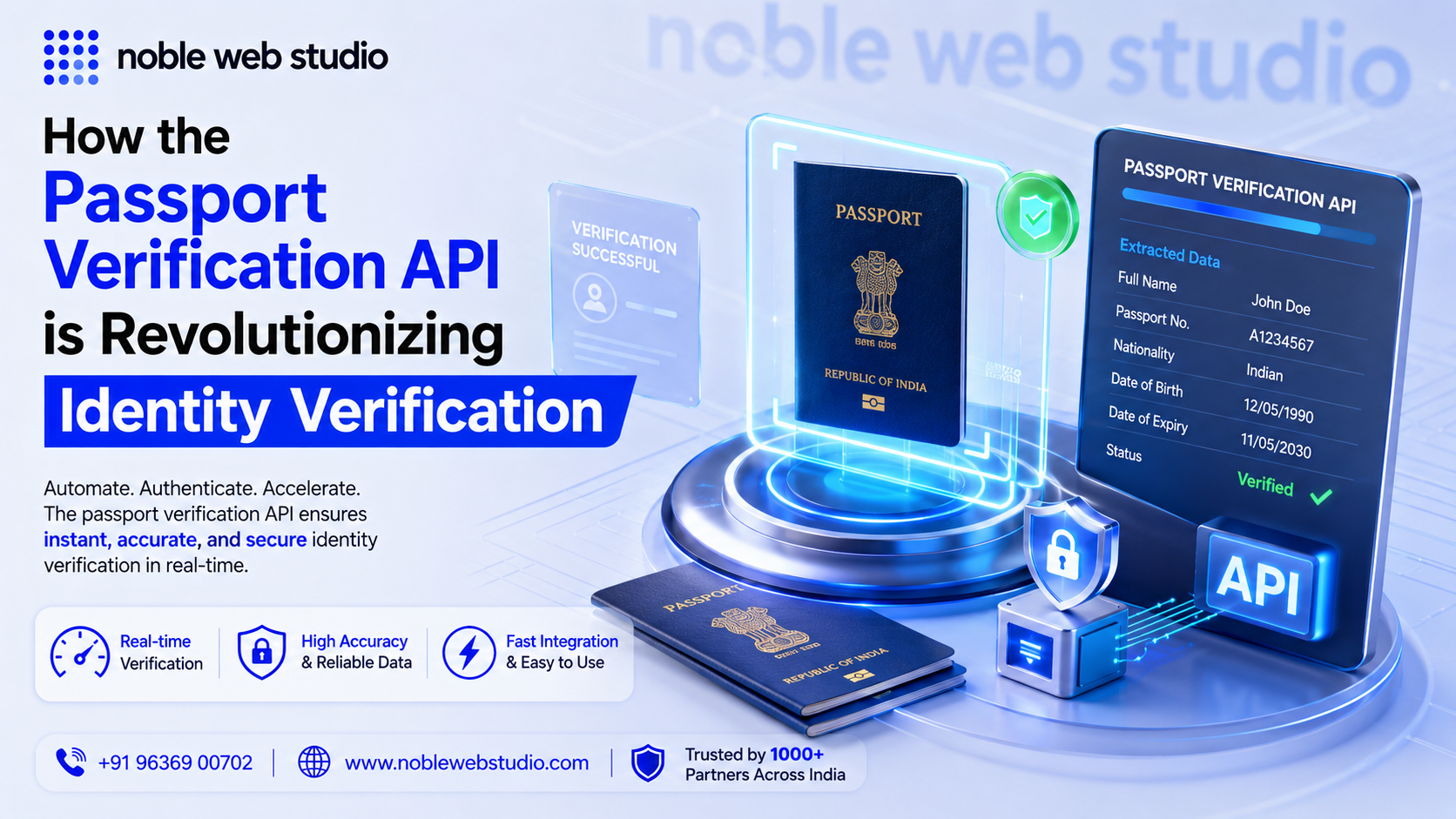
The Passport Verification API provides a modern and powerful solution to overcome the limitations of traditional verification methods. With the help of artificial intelligence (AI) and machine learning technologies, this API automates passport verification processes. Businesses can easily integrate this API into their systems and perform real-time verification using just a few lines of code.
Real-time Verification with Accuracy
The Passport Verification API enables businesses to verify passport details instantly and accurately. It connects with secure databases of passport records and matches scanned images or entered data against official information. This instant validation helps confirm whether a passport is genuine, removing the need for manual checking and significantly reducing processing time and effort.
Enhanced Security Measures
This API is designed with advanced security features that go beyond traditional verification methods. It uses intelligent algorithms to detect fake, altered, or tampered passports, ensuring a high level of security. Along with this, facial recognition technology is also used to match the passport photo with the live image of the user, which helps prevent identity theft and impersonation attempts.
User-Friendly Integration
Integrating the Passport Verification API into existing applications or platforms is simple and smooth. It comes with detailed documentation and developer-friendly tools that allow quick setup. The API also supports flexible integration options, so businesses can customize it according to their operational requirements and workflows. This makes it suitable for industries like banking, travel, and e-commerce platforms.

Scalability and Cost Efficiency
One of the major advantages of the Passport Verification API is its ability to scale effortlessly. Whether a business needs to verify a few passports or thousands of them daily, the API handles the workload efficiently while maintaining consistent performance. This reduces dependency on manual processes, lowers operational costs, and improves overall efficiency.
Ensuring Compliance with Regulations
In today’s regulated business environment, compliance is a critical requirement. The Passport Verification API is designed to support major compliance frameworks such as KYC (Know Your Customer) and AML (Anti-Money Laundering). By ensuring proper identity verification, businesses can stay compliant with regulations and minimize legal and financial risks.
Expanding Possibilities: Use Cases of Passport Verification API
The use cases of the Passport Verification API are wide-ranging and highly impactful. Financial institutions can use it to speed up customer onboarding processes and ensure only genuine users access their services. Travel companies can verify passport authenticity during bookings to reduce fraud risks. Online marketplaces can verify sellers to build a secure platform for buyers. Government agencies can also utilize it to strengthen immigration and border control systems. The applications are truly limitless across different sectors.
The Future of Passport Verification
With continuous technological advancement, the Passport Verification API is expected to become even more powerful in the future. Improvements in artificial intelligence, machine learning, and computer vision will further increase accuracy and fraud detection capabilities. The integration of biometric technologies like fingerprint scanning and iris recognition will add another layer of security. Additionally, blockchain technology may also play a role by providing secure and tamper-proof passport verification systems, ensuring greater trust and transparency.
Conclusion
The Passport Verification API is completely changing the way identity verification is performed by making it faster, more secure, and highly efficient. By automating verification processes with real-time accuracy, it helps businesses build trust, reduce risks, and improve user experience. Its easy integration, scalability, and cost-effectiveness make it suitable for a wide range of industries. As technology continues to advance, this API is expected to further revolutionize identity verification systems, creating a more secure and efficient digital future.