
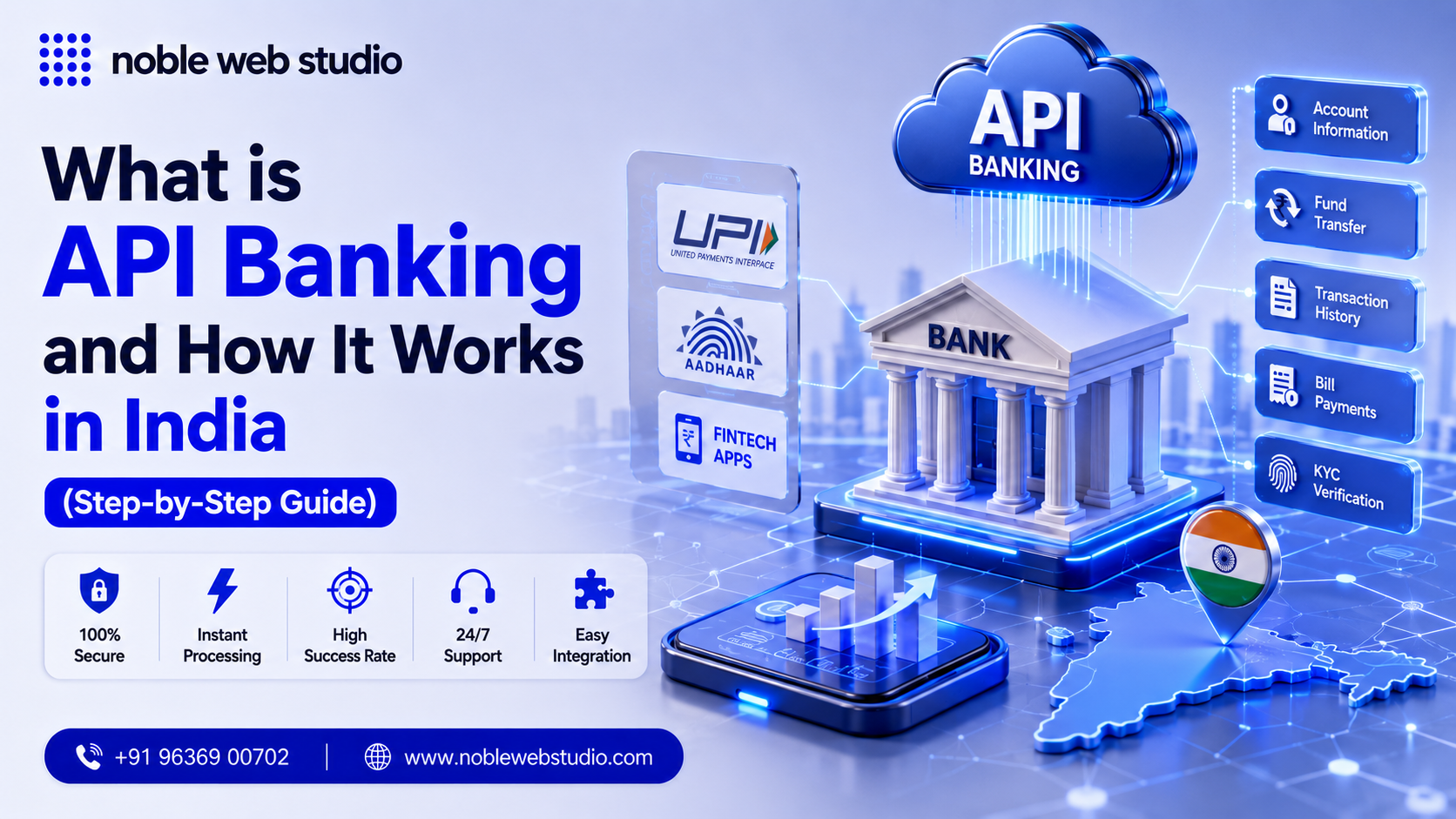
API Banking is a modern digital solution that allows businesses to connect directly with banking services through secure Application Programming Interfaces (APIs). It enables companies to offer services like money transfer, account verification, balance check, payment processing, and financial transactions directly from their website or mobile app without building a bank from scratch.
API banking is the use of Application Programming Interfaces (APIs) to securely connect a bank’s internal systems with third-party applications (fintechs, e-commerce, ERP software). It enables real-time, automated data exchange such as instant payments, balance checks, and account management directly within external apps or software, eliminating manual banking processes.
API Banking allows businesses to connect directly with banks and financial institutions through secure APIs. This means you can offer services like online payments, fund transfers, account verification, balance checks, payouts, collections, and real-time transaction processing directly from your platform without building everything from scratch. It is widely used by fintech companies, payment gateways, recharge portals, e-commerce platforms, and startups to deliver seamless and automated banking experiences to customers.
Using a reliable API banking platform, businesses can offer multiple financial services such as AEPS, money transfer, BBPS bill payments, and recharge services in one place. This not only improves customer experience but also helps generate revenue through commission on each transaction.
Noble Web Studio provides a powerful and secure API banking solution in India designed for seamless integration and high performance. With features like real-time transaction processing, secure API integration, high success rate, and scalable infrastructure, businesses can easily build and manage their own digital payment platform.
If you want to build a strong fintech platform or expand your digital services, choosing a trusted API banking solution like Noble Web Studio is the best step to achieve business growth, higher earnings, and long-term success in the digital payment ecosystem.
In this guide, you will clearly understand the meaning of API banking, how it works, its key features, and major benefits for businesses. If your goal is to build a profitable fintech or digital payment platform, this guide will help you make the right decision and move towards success with confidence.
What is API Banking?
API banking is a technology that allows banks to securely expose their internal services such as payments, account info, and lending—to third-party developers via Application Programming Interfaces (APIs). It acts as a digital bridge, enabling fintech apps, e-commerce sites, and corporate software to interact directly with bank systems for real-time transactions, automation, and tailored financial services.
The full form of API in banking is Application Programming Interface. It is a set of rules and protocols that allows two software systems to talk to each other.
In simple words:
API Banking = Banks + Technology + Permission-Based Data Sharing

API Banking Work
API banking enables secure, real-time communication between banks and third-party applications (fintechs, ERP systems) using JSON/XML codes. By connecting through an banking API gateway, external applications can initiate payments, check balances, verify KYC, and manage account data without navigating the bank’s own portal. This facilitates faster, automated financial services and improved user experiences.
How API Banking Works
- The Request: A third-party app (e.g., a budgeting app or corporate ERP) requests data or a transaction from the bank’s system.
- Authentication & Validation: The API gateway validates the request using security protocols like OAuth2.0 or token-based authentication.
- Execution: The bank’s core system processes the request (e.g., transferring funds, fetching a statement) and sends a secure response back to the third party.
Key Usage Examples of API Banking:
- Real-time Payments & Transfers: Enabling apps like Venmo or Google Pay to transfer money immediately without visiting a bank portal.
- E-commerce Payments: Payment gateways connecting to banks for seamless checkout on retail websites.
- Automatic Reconciliation: Integrating company ERP systems (like SAP or Oracle) with banks to automate bank statement reconciliation.
- Fintech/Neobank Integration: Allowing third-party financial apps (e.g., Mint, Robinhood) to access user account data or offer services without possessing their own banking license.
- KYC & Account Verification: Instantly verifying a user’s bank details for onboarding or transaction security.
Synonyms and Related Concepts:
- Open Banking (or Open Banking APIs)
- Embedded Finance
- Banking-as-a-Service (BaaS) (a closely related model enabled by APIs)
- Digital Banking Integration
Types of API Banking Services Available
API banking services enable seamless, real-time integration between banks and third-party applications, powering modern fintech solutions. Key services include instant payments (NEFT/RTGS/IMPS/UPI), account management (balance inquiries/statements), customer onboarding (KYC), and automated reconciliation. These APIs streamline corporate cash flow and enhance user experiences.
Common Types of API Banking Services
- Payment & Fund Transfer APIs: Allow real-time transactions, bulk payments, UPI, VPA-based payments, and payment status inquiries.
- Account Management APIs: Retrieve account balances, transaction history, and detailed bank statements in real time.
- KYC and Onboarding APIs: Facilitate paperless, automated customer verification using government data (e.g., PAN verification).
- Lending APIs: Enable businesses to offer digital lending products, check credit scores, and manage loan applications.
- Card Issuance APIs: Allow, for example, fintechs and NBFCs to issue and manage virtual, debit, or prepaid cards.
- Trade Services APIs: Support trade finance activities, such as international transactions and letter of credit services.
- Compliance APIs: Ensure regulatory compliance, including the Account Aggregator system or CKYC.
API Banking Models
- Open Banking APIs: Regulated access for third-party developers, key for account aggregation.
- Partner APIs: Restricted for specifically approved partners to enable embedded banking.
- Internal APIs: Used for internal bank systems to improve efficiency and data transfer.
- Banking as a Service (BaaS): A model where third-party providers use bank APIs to offer banking products (e.g., in a fintech app).
Common Applications:
- Payments: Retailers and e-commerce platforms processing transactions directly from accounts.
- Data Aggregation: Financial apps consolidating information from multiple bank accounts.
- Instant Credit: Lenders accessing transaction history for rapid loan approvals.
- ERP Integration: Directly embedding banking capabilities into company systems.
Documents required for API Banking
To setup API Banking, organizations typically need to provide business registration documents, PAN card, authorized signatory identity proofs, and technical details like IP addresses for secure server-to-server interaction. A partnership deed, partnership letter, and an active current account are also required for business entities.
Commonly Required Documentation for API Banking:
- Entity Registration/Incorporation: Proof of business existence (Partnership deed, Incorporation Certificate, Memorandum of Association).
- Entity PAN Card: Valid Permanent Account Number (PAN) of the organization.
- Authorized Signatories: Passport-size photographs, identity proof (e.g., Passport, Aadhaar, PAN), and address proof of the people authorized to use the Banking APIs.
- Existing Bank Account: An account-opening cheque or details of an existing Current Account.
- Technical Details: IP Address or Whitelist request for HTTPS/SSL connectivity, often requiring a “Technical Point of Contact”.
- Usage Details: Details on the nature of business, Banking API use cases (payments, collections, account details), and estimated transaction volumes.
Key Steps for Application:
- Register Account: Register on the bank’s developer portal by providing basic entity details (Name, email, occupation, organization).
- Verification: The bank reviews the request for security, which may take up to 5 days.
- Authentication Setup: Implementation of secure protocols, typically using OAuth authentication and secure token validation.
For specific, up-to-date requirements, it is recommended to check the specific bank API developer portal or contact their business banking department directly.

Who Can Use API Banking
API banking can be used by fintech startups, financial institutions, and corporations across various sectors (retail, e-commerce, logistics) to integrate banking services directly into their platforms. It enables third-party developers to access, manage, and automate bank functions like payments, account inquiries, and KYC.
Who Uses API Banking?
- Fintech Startups & Apps: To build specialized investment banking platforms, lending solutions, or digital wallets by connecting to a bank’s infrastructure.
- Retailers & E-commerce Businesses: To offer branded financial products, such as credit cards, loyalty programs, or direct payment processing, without building their own bank.
- Corporate Clients & ERP Systems: To integrate company ERP systems with bank accounts for real-time reconciliation, instant payments, and auto-collection.
- Third-Party Service Providers (TPPs): Regulated entities that aggregate data (Open Banking) to provide financial insights or initiate payments.
- Non-Banking Financial Companies (NBFCs): To automate loan processing and check customer data.
Why Use API Banking
API banking enables businesses and developers to directly integrate bank services like payments, account updates, and credit checks into their own software, enhancing efficiency, security, and customer experience. It enables real-time, automated transactions, reduces manual errors, and allows for personalized financial management apps, boosting operational speed and security.
Key Reasons to Use API Banking
- Real-Time Data and Operations: Enables instant fund transfers, real-time balance checks, and instant transaction notifications.
- Enhanced Security: Features robust security layers like encryption, OAuth, and instant fraud detection, which are often superior to traditional methods.
- Operational Automation & Efficiency: Streamlines processes such as payroll management, invoice reconciliation, and KYC (Know Your Customer) verification, reducing manual intervention and lowering costs.
- Improved User Experience: Allows businesses to create seamless user journeys, such as initiating payments without leaving an application or integrating bank data into accounting software.
- New Revenue Streams & Product Innovation: Allows businesses to offer banking products (like loans or credit scoring) directly, creating opportunities for cross-selling and enhancing service offerings.
- Enhanced Financial Insights: Facilitates the aggregation of data from multiple bank accounts into a single platform for better financial management.
Top Use Case of API Banking
API banking enables seamless, real-time connectivity between banks and third-party apps, with top use cases centered on embedded finance, such as seamless payments (UPI/eNACH), automated account aggregation, instant digital loan approvals, and personalized financial wellness tools. It facilitates faster, automated financial operations for businesses and consumers.
Top Use Cases of API Banking
- Embedded Payments & Digital Wallets: banking API (like UPI or eNACH) are integrated directly into third-party apps, enabling instant payments without leaving the application.
- Account Aggregation & Data Sharing: Services like Plaid use banking API to consolidate data from multiple financial accounts into one, providing a comprehensive view of a user’s finances.
- Digital Lending & Automated Loan Processing: Banking API allow instant verification of income, credit scores, and KYC documentation, reducing the turnaround time for loan approvals.
- Real-time Fraud Detection: Banking API integration allows for instantaneous analysis of transactions using AI, triggering alerts through a Fraud Early Warning System (FEWS).
- Corporate Treasury & Payment Reconciliation: Businesses use Banking API for automatic, real-time tracking of cash flows, automating reconciliation, and initiating bulk payments.
- Digital Onboarding (KYC): Instantly verifying a customer’s identity through KYC Banking API, connecting directly with national identity databases.
These applications streamline operations, reduce manual errors, and enhance the customer experience by providing secure, rapid, and tailored services.

Key Aspects of API Banking
API banking allows third-party providers to securely access banking services and data via Application Programming Interfaces (APIs), enabling real-time, automated, and embedded financial services. Key aspects include, but are not limited to, real-time transaction processing, account aggregation, secure data sharing, automated KYC/verification, and improved, user-centric financial experiences.
Key Aspects of API Banking:
- Real-Time Data & Transaction Management: Unlike batch processing, Banking API provide instant updates (e.g., account balance, transaction history) and allow for real-time payments, including IMPS, UPI, and cross-border transfers.
- Enhanced Security & Authentication: API banking relies on robust standards like token-based authentication (OAuth2) and encryption, allowing for secure data sharing between banks and authorized fintechs.
- Embedded Finance: Non-financial brands can integrate banking services directly into their apps, enabling functionalities like “buy now, pay later,” virtual cards, and instant loans without switching applications.
- Automated Onboarding and KYC: Digital Know Your Customer (eKYC) APIs and instant identity verification (e.g., PAN/Aadhaar verification) allow for immediate, frictionless account opening.
- Account Aggregation & Insights: Banking API empower users to consolidate financial data from multiple banks into a single platform for holistic financial management, budgeting, and automated, personalized advice.
- Operational Efficiency & Automation: Businesses can automate complex processes like reconciliation, cash flow forecasting, and B2B payment management, reducing manual efforts.
- Regulatory Compliance & Open Banking: Banking API banking supports compliance with global standards like PSD2, ensuring standardized and secure access to data.
These key aspects facilitate a shift toward “Banking as a Service” (BaaS), where financial services are modularized, enabling deeper partnerships between banks and third-party developers.
How Banking API Helps Your Business
Banking APIs (Application Programming Interfaces) enable businesses to securely connect their internal systems directly to banks, driving efficiency through automated, real-time financial data exchange, instant payments, and seamless, embedded banking services. Key benefits include faster reconciliation, enhanced cash management, improved security, and faster loan access, ultimately reducing operational costs and improving customer experiences.
How Banking API Helps Your Business
- Automated Financial Operations: Banking API eliminate manual data entry by automatically syncing bank transactions with accounting software (like QuickBooks) and ERP systems, accelerating reconciliation.
- Real-Time Cash Management: Businesses get live visibility into bank balances and transaction history, rather than relying on delayed spreadsheets, which helps in making better cash flow decisions.
- Instant Payment Processing: Banking API integrations facilitate instantaneous fund transfers, UPI settlements, and real-time payment validation (e.g., via Stripe).
- Embedded Financial Services: Noble web studio can embed banking services directly into their apps such as card issuing, account opening, or, in the case of creating IBANs without building their own banking infrastructure.
- Faster Lending and Underwriting: Small businesses can access capital faster, as Banking API allow lenders to assess risk based on real-time transaction data rather than just credit scores, leading to 40% faster approvals.
- Enhanced Security & User Experience: Banking API banking utilizes robust security protocols like OAuth for secure, permissioned data sharing, enhancing customer trust and creating a smoother, tailored experience.
What Business Problems Can API Banking Address?
API banking addresses critical business problems by enabling real-time, automated financial operations, replacing slow, manual processes. It streamlines payment reconciliation, enables instant loan approvals via data sharing, improves cash flow visibility through bank account aggregation, and enhances customer experience with embedded, personalized financial tools.
Here are the key business problems API banking addresses:
- Slow & Inefficient Payment Processes: Banking API banking enables direct, real-time payments and automated reconciliation, reducing reliance on slow, manual banking portals.
- Limited Access to Capital (SME Lending): Lenders can access real-time financial data, allowing them to provide loans to small businesses based on cash flow rather than just credit history, reducing the 70% rejection rate for SME loans.
- Manual Accounting/Reconciliation Errors: Automated data synchronization between banks and accounting tools (e.g., QuickBooks) eliminates manual entry, reducing human error.
- Poor Customer Experience & Siloed Data: Noble web studio can offer tailored financial tools, such as budget management or, AI-driven chatbots, by securely accessing customer banking data, improving personalization.
- High Transaction Costs: Banking API-based embedded payments (e.g., direct bank transfers) reduce, or eliminate, high processing fees charged by traditional card networks.
- Complex Onboarding & KYC: Third parties can use existing KYC (Know Your Customer) data provided by banks to speed up customer onboarding, removing the need for duplicate verification processes.
- Lack of Cash Flow Visibility: Businesses can aggregate data from multiple bank accounts to obtain a holistic view of their financial situation.

The Growth of Bank API
The global bank API market is experiencing explosive growth, projected to exceed $107 billion by 2030, driven by open banking, fintech collaboration, and regulatory mandates like PSD2 and PSD3. Banking API are transforming traditional banking into a “Banking as a Service” (BaaS) model, boosting efficiency, improving customer experience, and enabling real-time financial services.
Key Drivers of Bank API Growth
- Open Banking Regulation: Regulations such as PSD2 in Europe require banks to share data securely with third-party providers.
- Fintech & Ecosystem Collaboration: Banks use Banking API to partner with fintech companies for faster innovation, offering integrated services like budgeting, credit assessment, and payments.
- Digitalization of Services: Increasing demand for digital-only banking and instant transactions (KYC, payments, loans) requires agile Banking API technology.
- Modernizing Legacy Systems: Internal Banking API allow banks to bridge legacy systems with new digital apps, reducing complexity and operational costs.
Growth Trends & Impact
- Rapid Adoption: Active open banking users are expected to grow rapidly, reflecting the shift toward embedded finance.
- Increased API Portals: Financial institutions (e.g., in India, as mentioned by, RBL Bank, ICICI Bank) are deploying extensive Banking API portals offering over 100 endpoints for payments and data services.
- Shift to Open Finance: Banking API are evolving from simple bank account data sharing to supporting a broader “open finance” ecosystem, including investments, trading, and insurance.
Who Should Be Paying Attention to API Banking?
API banking is critical for financial institutions, Fintechs, technology leaders (CTOs/CISOs), and businesses looking to embed financial services. It enables real-time data sharing, faster payments, and innovative product development, making it essential for anyone involved in digital transformation, security, or customer-centric financial experiences.
Key stakeholders who should pay attention include:
- Financial Institutions (Banks & Credit Unions): Must adopt Banking API to modernize legacy systems, remain competitive, and offer seamless digital experiences.
- Fintech Startups and Platforms: Use banking APIs to build innovative apps, such as personal finance managers, specialized lending platforms, and digital wallets.
- Corporate Treasury & Large Enterprises: Utilize Banking API for real-time liquidity management, automated reconciliation, and faster cross-border payments.
- Retailers and E-commerce Platforms: Integrate payment APIs directly into their platforms to streamline customer checkout, automate payouts, and offer embedded finance options.
- Technology Leadership: Responsible for implementing secure Banking API infrastructure, managing data privacy, and navigating the open banking landscape.
- Regulatory Bodies: Monitor Banking API best practices to ensure security, privacy, and compliance with open banking standards.
Key benefits driving this attention include real-time transactions, improved security through tokenized access, and the ability to offer personalized financial services.
Why API Banking is Important for Modern Businesses
API banking has become a foundational pillar for modern businesses, evolving from a niche technical tool into a strategic necessity. It allows authorized third-party applications to securely access banking services such as payments, account data, and identity verification in real time. By enabling seamless, automated communication between banks and non-bank platforms, API banking is crucial for increasing operational efficiency, accelerating innovation, and enhancing customer experience.
Here is why API banking is important for modern businesses:
1. Enhanced Customer Experience and Seamless Integration
- Embedded Finance: Businesses can integrate banking services (like payments, lending, or insurance) directly into their own applications. This prevents customers from having to leave an app to complete a transaction, reducing friction in the purchasing process.
- Real-time Transactions: Banking API enable instantaneous payments and 24/7 access to financial services, meeting the demands of a digitally savvy consumer base.
- Personalization: With better access to financial data (with user consent), companies can offer personalized financial advice, tailored lending products, and better budgeting tools.
2. Operational Efficiency and Automation
- Automated Reconciliations: API banking replaces manual spreadsheets and exports with automatic, live data feeds, reducing manual work and human error.
- Faster Onboarding: KYC (Know Your Customer) and account verification Banking API allow businesses to verify user identity instantly, reducing customer onboarding time by up to 60%.
- Improved Cash Management: Businesses can achieve real-time visibility of cash positions across multiple accounts and geographies, allowing them to optimize liquidity.
3. Rapid Innovation and Speed-to-Market
- “Plug-and-Play” Functionality: Instead of building complex financial infrastructure from scratch, companies can use Banking API to plug into existing services in weeks rather than months.
- Modular Architecture: Banking API-driven systems allow businesses to update or replace specific components of their financial products independently without disrupting the entire system.
- BaaS (Banking-as-a-Service): Non-banking businesses can offer branded financial products (like prepaid cards or wallets) by leveraging the banking licenses and infrastructure of a partner bank through APIs.
4. New Revenue Streams and Scalability
- API Monetization: Financial institutions can charge third-party developers for access to their Banking API creating new income channels.
- Broader Market Reach: Banks can attract a broader customer base by embedding their services in non-banking ecosystems (e-commerce platforms, software providers).
- Scalability: Banking API designed to handle varying demands, allowing startups to scale into large enterprises without needing to overhaul their backend systems.
5. Improved Security and Compliance
- Secure Data Sharing: Banking API use strict security protocols, such as token validation and OAuth authentication, to manage data sharing safely.
- Regulatory Compliance: API banking assists in adhering to regulations like PSD2 and GDPR by facilitating consent-based, secure data access.
Key Trends Driving Adoption:
- Instant Payments: Growing demand for services like UPI (India) and PIX (Brazil).
- Open Banking: Regulations are increasingly forcing banks to open up data, creating a more competitive, collaborative ecosystem.
- AI and Automation: Large volumes of transactional data via Banking API allow for AI-driven fraud detection and improved risk monitoring.

Benefits API Banking
API banking enables seamless, secure connectivity between banks and third-party applications, providing benefits like real-time transaction processing, faster, tailored customer services, and improved operational efficiency. It reduces manual errors, fosters innovation, allows faster product deployment, and helps financial institutions meet modern, digital-first client expectations through automated and integrated services.
Key Benefits of API Banking
- Enhanced Customer Experience (CX): Banks can offer personalized products, such as integrating AI-driven chatbots or personal financial management tools, giving customers instant access to data.
- Real-time Transactions & Data: Enables instant, 24/7 fund transfers, real-time balance updates, and immediate transaction alerts, reducing the need for manual processing.
- Operational Efficiency & Reduced Costs: By automating tasks and replacing manual workflows, banks reduce operational expenses and increase productivity.
- Faster Innovation and Speed to Market: Banks can rapidly launch new services and collaborate with fintech partners, enhancing competitive edge and staying adaptable.
- Improved Security & Compliance: API banking allows for secure data sharing, using strong authentication methods (like OAuth) to securely connect systems and manage user consent, aiding in compliance.
- Scalability and Interoperability: Banking API allow systems to connect effortlessly with other platforms (like e-commerce sites or SaaS tools), allowing for easy scaling to meet demand.
- Financial Inclusion: Enables easier integration with digital wallets and mobile apps, increasing accessibility to banking services for a wider audience.
Features API Banking
API banking allows third-party applications to securely interact with a bank’s core systems in real-time, facilitating instant payments, account aggregation, and automated reconciliation. Key features include high-level security (OAuth/tokenization), 24/7 automated operations, seamless integration with ERPs, and instant KYC verification.
Key features of API banking include:
- Real-time Transactions & Data: Enables instant fund transfers, account verification, and transaction history retrieval rather than batch processing.
- Secure Access & Authentication: Uses industry-standard security protocols such as OAuth, SSL, and token validation to ensure authorized data sharing between banks and third-party fintech applications.
- Enhanced Automation & Reconciliation: Businesses can automate cash management and achieve near 100% automated reconciliation of transactions, reducing manual errors.
- Flexible Integration (Modular Structure): Offers developer-friendly tools to easily embed banking services (like payments, lending, or KYC) directly into websites, apps, and ERP systems.
- Consent Management: Allows customers to directly manage which data they share and with whom, ensuring compliance with data privacy regulations.
- Scalability & Reliability: Banking API System designed to scale with business growth, operating 24/7 for activities like bulk payouts, even when core banking systems are not available.
- Improved User Experience: Enables specialized financial applications (like budget apps, lending platforms, or investment tools) to offer superior user interfaces (UI) and user experiences (UX).
How to Integrate API Banking Step-by-Step
Integrating API banking involves a structured process of moving from business requirements to a live, secure production environment.
1. Planning and Strategy
- Define Business Use Cases: Identify if you need Account Information APIs (to fetch balances/history), Payment Initiation APIs (to move funds), or Banking Service API (for KYC or account opening).
- Select the Right Provider: Choose between a Direct Bank Integration (better for high volume with a single bank) or an Banking API Aggregator like Noble web studio to access multiple banks through one interface.
2. Onboarding and Access
- Register on the Developer Portal: Sign up for an account on the Noble web studio provide portal to access documentation and SDKs.
- Obtain Credentials: Generate your Client ID, Client Secret, and Banking API Keys. These must be stored securely using environment variables or secret management tools.
- Legal Compliance: For production access, you typically need to sign a Non-Disclosure Agreement (NDA) or service agreement and meet regional regulations like PSD2 in the EU or India’s Account Aggregator framework.
3. Technical Integration
- Review Documentation: Study the Banking API Reference for endpoints (e.g.,
GET /accounts), required headers, and request/response formats like JSON. - Set Up Authentication: Implement secure protocols, most commonly OAuth 2.0. This involves redirecting users to the bank’s secure page to grant permission and receiving a token in return.
- Handle Security Measures:
- Encrypt data in transit using TLS 1.2+.
- Implement Idempotency Keys for payment requests to prevent accidental double-charging.
- Set up Webhooks to receive real-time notifications for transaction status changes.
4. Testing and Validation
- Sandbox Testing: Use the bank’s Sandbox Environment with mock data to test “happy paths” (successful calls) and error handling (insufficient funds, invalid tokens).
- UAT (User Acceptance Testing): Conduct integrated testing in a pre-production environment to ensure the system handles real-world scenarios and high traffic.
5. Deployment and Monitoring
- Final Audit: Perform a security audit or penetration test as required by the bank’s onboarding process.
- Production Launch: Promote your Banking API keys to the production environment and monitor performance using Banking API Gateways to track latency, error rates, and unauthorized access attempts.

Investment Required for API Banking Setup
The investment required to set up API banking, specifically for AEPS API and digital payments in India, typically involves a one-time setup fee of ₹12,000 to ₹35,000, with white-label solutions potentially costing up to ₹1.2 Lakhs or more.
Below is a breakdown of the costs involved in setting up API banking services, based on 2026 data:
1. One-Time Setup and Integration Costs
- Standard API Integration: ₹12,000 – ₹35,000 (covers initial setup, documentation, and support).
- White-Label Solution: ₹15,000 – ₹1.2 Lakhs+ (includes customized branding, portal, and full software solution).
- Direct Bank API (Premium): ₹2.5 Lakhs – ₹4.5 Lakhs (Direct integration with banks like ICICI/Yes Bank).
- Low-Cost Options: Basic banking API setups can start as low as ₹7,500 – ₹15,000.
2. Hardware Costs
- Biometric Device: ₹1,500 – ₹5,999 (STQC-certified fingerprint/iris scanner needed for AEPS).
- Micro ATM Device: ₹10,000 – ₹15,000.
3. Recurring and Transactional Costs
- Annual Maintenance Charges (AMC): Approx. ₹9,999 to ₹40,000+ per year.
- Transaction Fees: 0.5% to 1% of the transaction amount, or a fixed fee per transaction.
- Failed Transactions: A small fee (around ₹0.50) may apply for failed authentication attempts.
4. Revenue Generation & ROI
While initial costs exist, agents and businesses can earn revenue through transaction commissions:
- Retailer/Agent Commission: ₹2–₹15+ per cash withdrawal.
- Balance Inquiry/Mini-statement: ₹1–₹5 per transaction.
- Settlement Speed: T+0 (instant) or T+1 (next day) settlement options are available.
Key Factors to Consider
- NPCI Certification: Ensure the Noble web studio is NPCI-certified for secure operations.
- Security: Compliance with RBI/UIDAI guidelines is mandatory, including Aeps L1 certified devices.
- Technical Support: 24/7 support is essential for managing transaction failures.
Summary of Investment (2026 Estimates)
| Cost Item | Estimated Range (INR) |
|---|---|
| Basic AEPS Integration | ₹12,000 – ₹35,000 |
| White Label Portal | ₹15,000 – ₹1.2 Lakh+ |
| Biometric Device (L1) | ₹1,500 – ₹5,999 |
| Annual Maintenance (AMC) | ₹9,999 – ₹40,000 |
| Direct Bank API | ₹2.5 Lakh – ₹4.5 Lakh |
Security and Safety in API Banking Transactions
Security and safety in API banking transactions are maintained through a multi-layered framework of technical protocols, regulatory standards, and continuous monitoring. As APIs (Application Programming Interfaces) bridge the gap between core banking systems and third-party fintech apps, they represent both a major digital transformation tool and a significant attack surface.
Core Security Mechanisms
Financial institutions use several standard technologies to ensure that only authorized entities can access sensitive data:
Authentication & Authorization:
- OAuth 2.0 & OpenID Connect: The industry standard for granting third-party apps limited access to user data via secure, time-limited tokens instead of actual passwords.
- Strong Customer Authentication (SCA): A multi-factor authentication (MFA) process—typically involving a password, a device (like a phone), or biometrics—required to approve high-risk actions.
- Data Encryption:
- In Transit: Transport Layer Security (TLS) 1.2 or 1.3 is mandated for all connections to create an encrypted “tunnel” that prevents eavesdropping.
- At Rest: Sensitive data stored in databases is encrypted using advanced standards like AES-256.
- Traffic Management:
- Rate Limiting & Throttling: Prevents automated “bot” attacks, credential stuffing, and DDoS attacks by capping the number of requests a single source can make in a given timeframe.
- API Gateways: Act as a centralized control plane to enforce security policies, manage traffic, and block malicious requests before they reach the bank’s internal systems.
Regulatory & Industry Standards
Banking APIs must comply with strict legal frameworks to protect consumer interests:
- PSD2 (Payment Services Directive 2): A European regulation that mandates secure API access and SCA for all electronic payments.
- PCI-DSS: Standards specifically for the Payment Card Industry to safeguard credit and debit card data.
- GDPR: Requires banks to implement “Privacy by Design,” ensuring that personal financial data is shared only with explicit user consent.
- OWASP API Security Top 10: A critical awareness document that identifies the most common vulnerabilities, such as Broken Object Level Authorization (BOLA).
Key Vulnerabilities & Risks
Despite robust defenses, several risks persist:
- Shadow & Zombie APIs: Undocumented or deprecated endpoints that are forgotten by developers but remain accessible to hackers.
- Business Logic Flaws: Subtle manipulations of legitimate API functions to bypass transaction limits or reroute funds.
- Excessive Data Exposure: When an API returns more information than necessary (e.g., providing a full user profile when only a balance was requested).
Emerging Safety Strategies
Modern banking is shifting toward more proactive defense models:
- Zero Trust Architecture: Operates on the “never trust, always verify” principle, requiring every API call—internal or external—to be continuously authenticated and inspected.
- AI-Driven Anomaly Detection: Uses machine learning to establish a baseline of “normal” behavior and flag unusual activities, such as login attempts from new locations or rapid-fire transfers.
- Automated API Discovery: Tools that automatically inventory and monitor all active APIs to eliminate blind spots.
How does API banking create value?
API banking creates value by allowing third-party developers and businesses to securely integrate directly with bank systems. This enables real-time payments, automated financial processes, and tailored financial products, boosting efficiency for businesses while delivering seamless, personalized experiences to users.
Key ways API banking creates value include:
- Improved Customer Experience: Real-time data sharing and instant payments/transfers create a smoother, faster, and more engaging user experience.
- Faster Innovation: Banks can partner with Fintechs to launch new services (e.g., automated savings, crypto trading) quickly without building them in-house.
- Automated Operations: Processes such as reconciliation and credit scoring are automated, reducing manual effort, errors, and costs.
- New Revenue Streams: Banks can monetize their APIs by charging third-party developers for access, or by offering premium features for a fee.
- Financial Inclusion and Ecosystem Growth: Enhanced access allows underserved populations to use banking services and facilitates collaboration across industries, including healthcare and retail.
- Enhanced Security: By using secure protocols like OAuth 2.0, API banking allows for secure data sharing and real-time monitoring of transactions to prevent fraud.
This shift to modular, API-first technology allows financial institutions to act as platforms, driving efficiency and innovation across the financial services industry.

How API banking simplifies the maintenance of financial services
API banking simplifies financial service maintenance by using a modular design that allows developers to update, fix, or enhance individual components like payments or KYC independently without disrupting the entire system. It reduces manual labor through automation, streamlines operations, improves data accuracy, and enables real-time updates for better, secure customer experiences.
Key ways API banking simplifies maintenance:
- Modular Architecture: By using micro services, banks can isolate, update, or replace specific functions (e.g., updating a payment API) without risking the stability of the entire system.
- Reduced Manual Intervention: Automated workflows for tasks like reconciliation,KYC verification, and data aggregation reduce errors and the need for manual oversight.
- Streamlined Integration: Third-party fintech apps and internal services connect directly, enabling quicker deployment of new features and reducing the complexity of managing disparate systems.
- Enhanced Security Monitoring: Centralized banking API gateways act as security layers, allowing for easier monitoring of performance, managing traffic, and updating security protocols without needing to touch core banking systems.
- Real-time Data Sync: Banking API provide immediate access to account data and transaction updates, eliminating batch processing and simplifying troubleshooting.
By facilitating faster innovation and easier integration, API banking allows institutions to remain agile and reduce the long-term technical debt associated with legacy systems.
How API Banking Improves Customer Experience
API banking improves customer experience by enabling real-time transactions, personalized financial insights, and seamless integration with third-party apps. By allowing secure, instant data sharing, it facilitates faster payments, instant loan approvals, and comprehensive financial management, significantly increasing convenience and reducing operational bottlenecks.
Key ways API banking enhances customer experience:
- Real-Time Data and Transactions: Customers receive instant notifications, up-to-date balances, and immediate payment processing, removing the delay in traditional banking.
- Seamless Integration (Embedded Finance): Services like payments and lending can be embedded into non-banking apps (like e-commerce or accounting software), allowing users to complete transactions without leaving their current platform.
- Personalization and Financial Wellness: banking APIs connect banking data to AI-driven tools, offering personalized financial advice, budgeting tools, and tailored financial products, with 72% of customers expecting such personalized service.
- Faster, Streamlined Processes: Loan applications and credit scoring can be approved in real-time by securely accessing transaction history, reducing wait times from days to minutes.
- Unified Financial View (Aggregation): Customers can consolidate accounts from multiple banks into a single, comprehensive dashboard, providing a holistic view of their financial situation.
- Enhanced Security: Through secure banking API protocols (like OAuth 2.0), users can securely share data without handing over login credentials, ensuring safer transactions.
This shift toward Open Banking APIs fosters an “always-on” environment, aligning with the fast-paced, digital-first lifestyle of modern users.
How can business prepare for API banking?
Businesses can prepare for API banking by establishing a robust API strategy that integrates with bank developer portals, upgrading internal IT infrastructure for secure REST/JSON communication, ensuring compliance with data regulations (e.g., GDPR, PSD2), and fostering cross-functional teams to manage API monetization and security.
Here is how to prepare for API banking:
- Establish a Strategic API Plan: Move beyond treating banking APIs merely as IT projects and treat them as business priorities. Build a cross-functional team involving business, IT, and marketing to define goals, such as automated payments or instant loans.
- Engage with Bank Developer Portals: Join the developer communities of partner banks to access documentation, sandbox environments for testing, and banking API keys for authentication.
- Invest in Technical Architecture: Update infrastructure to handle modern banking API protocols such as REST, SOAP, or GraphQL. Ensure you have API management platforms in place to handle authentication, rate limiting, and security.
- Prioritize Security and Compliance: Implement robust authentication mechanisms, such as OpenID Connect or OAuth 2.0, to ensure safe data exchange. Adhere to security standards, including GDPR and PSD2 for user consent and data protection.
- Prioritize Use Cases: Identify high-value banking API use cases, such as automated invoice reconciliation, real-time balance checks, or instant payments.
- Test in Sandboxes: Use bank-provided regulatory sandboxes (testing environments) to trial new products and services under safe, low-risk conditions.

Understanding the limitations of API banking
API banking, while enabling faster innovation and digital transformation, faces significant limitations that stem from legacy infrastructure constraints, security concerns, and regulatory complexities. Key limitations include high implementation costs, potential data security breaches, and challenges in achieving uniform standards across different financial institutions.
Here are the key limitations and challenges of API banking:
1. Technical and Integration Challenges
- Legacy Systems Integration: Many financial institutions operate on outdated, monolithic core banking systems. Integrating these with modern, agile banking API is complex, expensive, and requires significant middleware or complete system modernization.
- Scalability and Performance: banking API must be designed to handle massive, changing volumes of transaction data. Failure to do so can lead to bottlenecks, high latency, and reduced performance during peak times.
- Interoperability and Standardization: A lack of common, universal banking API standards means third-party developers often have to build different integrations for different banks, causing inefficiencies and fragmented data formats.
- Data Fragmentation: Financial data is often stored across multiple, siloed databases, making it difficult to consolidate for a unified real-time view of customer data.
2. Security and Risk Management
- Heightened Fraud Risk: Increasing the number of parties interacting with bank data increases the “attack surface.” APIs are vulnerable to breaches, “shadow APIs” (forgotten, unsecured APIs), data leakage, and identity theft.
- Broken Object Level Authorization (BOLA): A primary security risk in banking API, where improper authorization allows users to access sensitive data, a common issue in complex banking API ecosystems.
- Liability and Third-Party Risks: If a third-party partner fails to secure their systems, it may lead to data breaches. The liability for these breaches can sometimes be ambiguous, leading to significant reputational and financial risk for the primary bank.
3. Operational and Regulatory Hurdles
- Regulatory Compliance: Financial institutions must ensure that APIs adhere to strict data protection laws (e.g., GDPR, PSD2) which differ across regions.
- High Costs: Building and maintaining banking API infrastructure, including banking API gateways and robust security protocols, involves substantial initial investments, which can be challenging for smaller institutions.
- User Consent Management: Ensuring that customer consent is properly captured, stored, and managed throughout the data-sharing process is complex.
- Dependency on Partner Reliability: banking API uptime is critical. If a partner’s system goes down, it can directly affect the bank’s services, leading to customer frustration.
4. Strategic and Competitive Risks
- Disintermediation: Banks fear losing direct relationships with customers, as third-party apps may become the primary interface for financial services.
- Vendor Lock-in: Dependence on a few large banking API platform providers can create risks, as it reduces flexibility to switch technology partners.
- Inadequate Documentation: Poorly documented banking API make it difficult for developers to integrate, leading to slower adoption rates.
API banking to be successful, institutions must treat banking API as critical infrastructure rather than just IT projects, focusing on robust security, high-performance architecture, and clear governance frameworks.
Affordable API Banking Provider in India – Secure, Scalable & High-Profit Solutions
Looking for an affordable API banking provider in India to start or grow your fintech business? Noble Web Studio offers low-cost, high-performance API banking solutions designed for startups, retailers, and enterprises who want to launch a secure online payment platform with ease. With powerful features like instant API integration, real-time transactions, bank-level security, and 24/7 uptime, you can deliver seamless financial services to your customers without heavy investment.
Affordable API banking providers in India include specialized fintechs like Noble Web Studio, which offer low-cost AEPS APIs (starting around ₹7,500–₹12,000), and fintech platforms like Noble Web Studio, which provides accessible API banking for payouts and collections. Noble Web Studio also provides an affordable, zero-utilization-charge API stack.
Our API banking services in India include AEPS, money transfer API, BBPS API, mobile recharge API, DTH recharge, and wallet integration, making it a complete solution for building a multi-service fintech platform. Whether you want to create a recharge portal, micro ATM business, or digital banking app, Noble Web Studio provides everything you need at an affordable price with high commission opportunities.
With fast onboarding, developer-friendly APIs, advanced admin panel, and real-time reporting, managing your business becomes simple and efficient. Our platform is optimized for high success rate transactions, secure Aadhaar authentication, and smooth user experience, helping you build trust and grow faster in the competitive market.
How to Choose Best API Banking Service Provider
Noble web studio is the best API banking service provider requires prioritizing top-tier security (OAuth 2.0, encryption), regulatory compliance (RBI/NPCI/GDPR), high reliability (>99.9% uptime), and comprehensive developer documentation. Key factors include fast, real-time transaction processing, scalability, robust fraud monitoring, and excellent support, ensuring the provider fits your technical and compliance needs.
Here is a guide to selecting the best API banking provider:
1. Security and Regulatory Compliance
- Compliance: Ensure the Noble web studio adheres strictly to regulatory bodies like the RBI in India.
- Security Standards: Look for PCI-DSS compliance, end-to-end encryption, OAuth 2.0 authentication, and tokenization.
- Fraud Protection: Integrated, real-time fraud monitoring systems are crucial for preventing financial loss.
2. Performance and Reliability
- Uptime & Speed: Demand at least 99.9% uptime and low-latency API response times (ideally under 2 seconds) to ensure a smooth customer experience.
- Success Rates: Check for a high transaction success rate and a robust failover strategy.
3. Developer Experience (DX) and Integration
- Documentation: Comprehensive, clear documentation is essential.
- Sandbox Environment: A reliable testing (sandbox) environment for simulation is crucial.
- SDKs and API Design: Look for well-structured Software Development Kits (SDKs) and easy integration processes.
4. Functionality and Scalability
- Coverage: Ensure the API supports a wide range of services (e.g., NEFT, RTGS, IMPS, UPI, e-Nach).
- Scalability: The Noble web studio should handle high transaction volumes and be able to scale as your user base grows.
- Support: Access to 24/7 technical support and dedicated account management.
5. Cost and Transparency
- Pricing Structure: Evaluate if the Noble web studio uses a per-request fee or a subscription model.
- Hidden Costs: Ensure all costs, including maintenance, setup, and transaction fees, are transparent.
Summary Checklist for Selection
| Feature | What to Look For |
|---|---|
| Security | Encrypted data, OAuth 2.0, PCI-DSS |
| Compliance | RBI/NPCI compliant (for India) |
| Performance | |
| Support | 24/7 technical support, Documentation |
| Ease of Use | Sandbox environment, SDKs |

Why Noble Web Studio is a Trusted API Banking Solution
Noble web studio is the trusted API Banking solution provider is considered reliable because it offers a secure, compliant, and stable bridge between a bank’s core systems and third-party applications (fintechs). These providers, often referred to as Banking-as-a-Service (BaaS) or open banking providers, are essential for ensuring data security, operational stability, and regulatory compliance.
Key reasons why a provider is considered a “Trusted” API Banking solution:
- Robust Security Measures: Noble web studio implement advanced security measures, including bank-grade encryption (e.g., TLS 1.2 or higher), OAuth 2.0 for secure authorization, and tokenization. This prevents unauthorized access to sensitive financial data.
- Regulatory Compliance: These Noble web studio ensure compliance with local and international regulations such as PSD2 in Europe, or RBI guidelines in India. They often hold certifications like PCI DSS Level 1.
- High Reliability and Performance: Noble web studio offer near 99.99% uptime with scalable, cloud-native architectures that can handle high transaction volumes and real-time requests.
- Transparent Data Handling: Noble web studio operate under a “consent-based” model, where users authorize exactly what data is shared, with whom, and for how long, ensuring transparent data management.
- Developer-Friendly Tools: Noble web studio provide clear documentation, SDKs, and sandbox environments (test environments) that allow for safe development and integration.
- Multi-Bank Connectivity: Noble web studio often offer a unified abstraction layer, enabling connections to multiple banks to ensure continuity even if a single bank’s server is down.
Future Trends API Banking in India
Future API banking trends focus on hyper-personalization, embedded finance, and AI-driven automation, with the global market projected to reach $17.5 billion by 2032. Key trends include AI-powered predictive services, blockchain integration for faster transactions, and the expansion of Open Banking into “Open Finance,” encompassing insurance and investments.
Key Future Trends in API Banking
- AI and Machine Learning Integration: APIs now facilitate real-time data flow, allowing AI to detect fraud, perform compliance checks, and offer personalized financial advice in real-time.
- Blockchain and DeFi Integration: APIs are increasingly bridging traditional banking infrastructure with decentralized platforms, facilitating faster settlement, digital asset management, and lower transaction costs.
- Instant and Real-Time Payments: Increased regulatory pressure is accelerating API adoption for instant payments, reducing settlement times to mere seconds, similar to UPI in India and Pix in Brazil.
- API Marketplaces: The rise of dedicated API marketplaces is acting as a hub for financial institutions to buy, sell, or integrate partner APIs, fueling collaboration.
- Enhanced API Security & “Green APIs”: As threats increase, the industry is moving toward advanced security measures like mutual TLS and AI-driven fraud detection. Additionally, “green APIs” are being adopted to optimize energy usage in digital transactions.
- Embedded Finance & “Banking as a Service” (BaaS): Banking services are being integrated directly into non-banking platforms (e-commerce, ERPs, SaaS apps). This allows for instant “buy-now-pay-later” options and, for instance, embedding insurance directly into logistics apps.
- DeFi and Blockchain Integration: APIs will act as the bridge between traditional banking systems and decentralized finance (DeFi), allowing for seamless cryptocurrency and smart contract interaction.
- Advanced Security and Authentication: As threats evolve, API security is adopting biometrics (facial recognition/fingerprints) and autonomous runtime authorization to verify machine-to-machine transactions.
- Biometric & User-Centric Verification: Noble web studio offer a frictionless yet secure experience, APIs are integrating facial recognition and fingerprinting for instant user authentication.
- Serverless Architectures: Developers are adopting serverless technology to build scalable, cost-effective APIs, decreasing infrastructure management while handling high-volume, real-time data exchange.
- Open Finance & Cross-Industry Integration: Beyond banking data, APIs are opening access to insurance, pensions, and wealth management, creating comprehensive financial ecosystems (Open Finance).
Key Metrics & Market Outlook
- Growth Projections: Global open banking API calls are predicted to grow from 137 billion in 2025 to over 722 billion by 2029.
- Market Size: The open API banking market is anticipated to expand rapidly, with a projected 22% CAGR from 2026–2033.
- Data-Driven Focus: APIs are enabling a shift from static statements to interactive, personalized financial data visualization.
These trends are driving a shift toward more agile and personalized banking experiences, essentially moving banking from a destination to a digital service.

Conclusion
API banking in India is changing the way businesses and financial services operate in the modern digital banking and fintech ecosystem. With the help of a powerful API banking platform, companies can easily connect with banks and offer services like fund transfer, account verification, payment processing, and financial data access directly through their website or mobile app.
Using a reliable API banking solution helps businesses automate their operations, reduce manual work, and provide a smooth user experience. It also opens new earning opportunities by enabling services like online payments, fund transfers, and digital transactions from a single platform.
The biggest advantage of using an API banking solution is speed and automation. It enables real-time transactions, seamless integration, secure data exchange, and improved customer experience, which helps businesses grow faster and operate more efficiently.
For startups, retailers, and fintech entrepreneurs, API Banking opens the door to creating a scalable, automated, and high-profit online payment system without the need for a traditional banking setup. Features like fast API integration, high security, real-time processing, and seamless connectivity with banks make it a must-have solution for any modern digital business.
Choosing a reliable provider like Noble Web Studio API Banking Solutions ensures you get high uptime, secure transactions, easy integration, and complete admin control, which are essential for building a successful fintech platform. Whether you want to start a recharge portal, AEPS service, BBPS platform, or mobile wallet app, API banking gives you the flexibility and power to expand your services and increase your revenue.
Noble Web Studio provides a reliable and easy-to-use API banking solution with features like secure integration, fast processing, scalable infrastructure, and full technical support, helping businesses launch their fintech platforms quickly and smoothly.
Adopting the best API banking platform in India helps you stay ahead in the competitive market, improve your services, and build a strong position in the growing digital finance industry.
Noble Web Studio helps businesses build, integrate, and launch API-powered digital products. Whether you need a fintech app, a payment integration, or a full digital banking solution our team is ready to help.
Start your journey today with Noble Web Studio and take your business to the next level with powerful API banking services.
Get in touch with Noble Web Studio today.
FAQ – What is API Banking?
API banking is a modern banking solution that allows businesses and applications to connect directly with banks using Application Programming Interfaces (APIs). It helps companies offer services like money transfer, balance check, account verification, and payment processing automatically through their website or mobile app.
In API banking in India, the business integrates bank APIs into its platform. When a user performs an action like sending money or checking balance, the API securely connects with the bank server and completes the request in real time.
With a reliable API banking solution, businesses can offer:
Money transfer (IMPS, NEFT, RTGS)
Balance enquiry
Account verification
Payment collection and payouts
Transaction history
Using a banking API solution offers:
Fast and automated transactions
Real-time processing
Improved customer experience
Easy scalability for business growth
Businesses can earn through:
Transaction fees
Service charges
Commission-based services
This makes API banking a profitable fintech business model.
API banking for business helps automate financial operations, reduce manual work, and improve speed and accuracy. It also allows businesses to offer secure and fast digital payment services to their customers.
Fintech companies, startups, payment service providers, and businesses can use API banking platforms to build their own financial services and digital payment systems.
Basic technical knowledge is helpful, but many providers like Noble Web Studio offer full technical support and easy integration, making it beginner-friendly.
Yes, API banking systems use secure encryption, authentication protocols, and bank-level security, ensuring all transactions are safe and protected.
To start API banking integration, you need to register with a trusted provider like Noble Web Studio, complete KYC, get API credentials, and integrate using their developer documentation.
API banking is used by businesses to integrate banking services into their platforms, while internet banking is used by individual customers to manage their personal bank accounts.
Yes, API banking for startups is a great option because it offers low development cost, fast launch, and high scalability, helping businesses grow quickly.
The API banking market in India is growing rapidly due to increasing demand for digital payments, making it a strong and future-ready business opportunity.
Choose a provider that offers:
High security and compliance
Real-time transaction processing
Easy API documentation
Strong customer support
Scalable infrastructure
You can start by registering with a trusted provider like Noble Web Studio, completing the setup, and integrating APIs into your platform to launch your digital banking services quickly.
NobleWebStudio provides:
Secure and reliable API banking platform
Fast integration process
Scalable and high-performance system
Full technical support
Yes, with the right API banking platform, you can expand your services, automate financial operations, and build a profitable digital business in the fintech industry.