Ankit
AnkitA Vehicle Information API has become an essential tool for businesses that need fast, accurate, and real-time vehicle data. Whether you work in insurance, logistics, banking, transport, verification services, or automobile platforms, having quick access to reliable vehicle details helps you reduce manual work, prevent fraud, and improve customer trust. With the rising demand for digital verification, companies today want a secure, easy-to-use, and high-speed Vehicle Data API that delivers complete vehicle information in seconds.
A Vehicle Information API is a service that provides detailed data about a vehicle, often using the Vehicle Identification Number (VIN) or license plate number as an input. These Vehicle Information API can provide a wide range of information, from basic details like make, model, and year, to more complex data such as technical specifications, repair history, and registration status. They are used by developers to integrate vehicle data into applications for fleet management, insurance, and other services.
As more industries move toward automation, the demand for Vehicle Verification API is growing rapidly in India. Businesses want a solution that is quick, secure, reliable, and easy to integrate. This is Noble web studio is the right API provider becomes important. Choosing a Noble web studio ensures you get accurate data without delays or errors.
With Noble Web Studio, businesses get a powerful, stable, and high-speed Vehicle Information API designed to support smooth verification and reduce fraud.
In this guide, we will explain what is Vehicle Information API, how Vehicle Information API works, why it is important for modern businesses, what features you should look for, and how Noble Web Studio helps companies integrate a powerful, real-time, and secure Vehicle Information API designed for smooth workflows and better decision-making.
What Is Vehicle Information API
A Vehicle Information API is a service that provides access to data about vehicles, such as their specifications, registration details, and owner information, through an application programming interface. These Vehicle Information APIs can be used to retrieve information like make, model, year, and VIN, as well as more detailed data such as insurance status, financing details, and the owner’s name. They are used in applications for verification, fleet management, and other services that require access to vehicle data.

Vehicle Information API Works
Vehicle Information APIs are software interfaces that allow applications to access a wide range of static and real-time data about vehicles from official databases or directly from connected cars. These Vehicle Information API work by providing a standardized way for different software systems to communicate and exchange information securely and efficiently.
How Vehicle Information API Work
The general workflow for most vehicle information APIs is a simple request-response mechanism, typically following RESTful principles:
- Input: An application sends a request to the Vehicle Information API with a key identifier, such as a vehicle registration number (RC number), a Vehicle Identification Number (VIN), or a license plate image.
- Processing: The Vehicle Information API processes the request and securely connects to an authorized, centralized database (like the VAHAN database in India) or the vehicle manufacturer’s cloud.
- Data Retrieval & Verification: The Vehicle Information API fetches the relevant data and verifies it against official records.
- Output: The Vehicle Information API returns the data to the requesting application in a structured format, usually JSON.
Types of Vehicle Data You Can Access Through the API
Vehicle API provide a wide range of data, including static information like VINs, specifications, and manufacturing details, as well as dynamic data such as live location, mileage, and fuel or battery levels. Developers can also access data like vehicle history, pricing, maintenance schedules, and consumer ratings.
Static data
- Identification and specifications: VIN, make, model, generation, year, trim, engine specifications (displacement, cylinders, horsepower), fuel type, and powertrain.
- Manufacturing and history: Manufacturing details, production years, and VIN history.
- Pricing and valuation: Current market value, used vehicle prices, and True Cost to Own.
- Ratings and reviews: Consumer ratings and reviews for specific models.
Dynamic data (requires a connected vehicle)
- Location and usage: GPS coordinates, speed, mileage, and trip information.
- Performance: RPM, throttle position, acceleration, and altitude.
- Fuel and battery: Fuel level, fuel consumption, and electric vehicle (EV) battery level and charging status.
- Vehicle status: Tire pressure, diagnostic trouble codes (DTCs), and other real-time safety and diagnostic data.
Maintenance and services
- Maintenance schedules: Required maintenance for a specific model year.
- Next services: Predictive maintenance information.
- Tire pressure: Data for optimizing fuel efficiency and safety.
Inventory and dealership data
- Dealership inventory: Search for vehicles available at dealerships.
- Market data: Market Days Supply value for a car.
- Incentives: Information on manufacturer and dealer incentives.
- Images: Cached images of vehicles.
Types of Vehicle Information APIs and the Data They Provide
Vehicle APIs can be broadly categorized based on the type of data they provide:
| API Type | Information Provided | Key Use Cases |
|---|---|---|
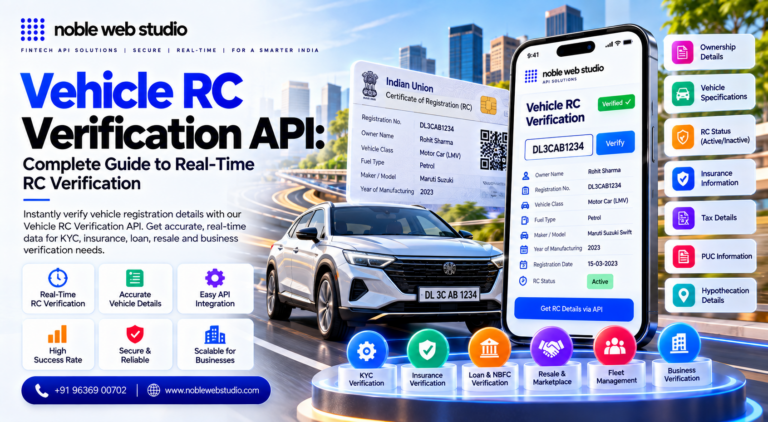
| Registration/RC Verification | Owner name, registration status, make, model, chassis/engine number, insurance validity, RTO details, fuel type, tax validity | Insurance policy issuance, loan approvals, fraud prevention, car rentals |
| Vehicle History | Accident reports, title status, odometer readings, recall information, lien/loan status, service records | Used car dealerships, insurance risk assessment, fleet management |
| Specifications/Database | Static details like dimensions, powertrain, standard options, pricing, and fuel consumption figures (e.g., WLTP values) | Automotive marketplaces, configurator tools, competitive analysis, maintenance schedules |
| Connected Car/Telematics | Real-time data (e.g., fuel/battery level, location, tire pressure, diagnostic trouble codes), and remote commands (lock/unlock doors, start/stop charging) | Fleet management, smart EV charging, peer-to-peer car sharing, usage-based insurance |
Top Use Cases Vehicle Information API
Top use cases for a Vehicle Information API include fleet management and telematics, insurance claims and policy issuance, used vehicle marketplaces for verification, mobility services like car sharing and subscriptions, and RTO e-governance platforms for real-time verification. These Vehicle Information API provide data on ownership, registration, insurance, and real-time vehicle performance, which can be used to automate processes, prevent fraud, and enhance user experiences.
Fleet management and logistics
- Monitor and manage fleets: Track vehicle location, usage, and status to optimize operations and ensure compliance.
- Verify drivers: Validate vehicle registration details for all drivers or contractors on a platform.
- Improve logistics: Get information like vehicle type, carrying capacity, and fuel type for delivery services.
Insurance
- Automate claims processing: Verify vehicle details during claim submission to prevent fraud.
- Streamline policy issuance: Check vehicle authenticity and compliance before issuing new insurance policies.
- Real-time data for quotes: Access accurate information to provide more precise insurance quotes.
Automotive sales and marketplaces
- Used vehicle marketplaces: Authenticate vehicle information for buyers and sellers, reducing fraud and building trust.
- Loan and financing verification: Verify vehicle ownership and registration documents before approving auto loans.
- Vehicle valuation: Access data for accurate pricing and valuation in the used car market.
Mobility services
- Car sharing and rental: Authenticate a customer’s vehicle access and manage usage based on mileage.
- Pay-per-use billing: Automate billing for services based on actual mileage driven.
- Car subscriptions: Automate billing for mileage that exceeds a subscription’s included package.
RTO and government services
- RTO e-governance: Integrate with public portals to provide instant vehicle registration and insurance verification.
- Verify compliance: Check RC status, insurance policy details, and other compliance documents in real-time.
Other use cases
- Smart charging: Manage EV charging based on battery status, plug type, and other performance data.
- Predictive maintenance: Use data like service history to provide personalized maintenance reminders and predict future needs.
- Data analytics: Analyze trends in vehicle sales, recalls, and market share.

Important Vehicle Details Provided by the API
Vehicle data APIs provide a wide range of information, which generally falls into two main categories: static vehicle specifications and real-time registration/ownership details. The specific data points available can vary Noble web studio is on the Vehicle data API provider and the country’s database it connects to (e.g., VAHAN in India, NHTSA in the US, DVLA in the UK).
Static Vehicle Specifications
These APIs typically use the Vehicle Identification Number (VIN) or the vehicle’s year, make, and model as input to provide data points about the vehicle’s build and features.
- Manufacturer details: Brand name, make, and model.
- Engine & Powertrain: Engine number, engine size (cubic capacity/displacement), fuel type (petrol, diesel, electric), transmission type, and horsepower.
- Physical specifications: Body type, color, weight (gross and unladen), dimensions (length, width, height, wheelbase), and seating capacity.
- Features: Details on comfort, safety features, wheel/tire specifications, and any manufacturer recalls.
Real-Time Registration & Ownership Details
These APIs are commonly used for verification purposes in industries like insurance, finance, and law enforcement. They usually require the vehicle’s registration number (license plate) as input.
- Ownership information: Owner name, father’s name, owner’s address (current and permanent), and number of previous owners.
- Registration status: Registration date, RC (Registration Certificate) status (e.g., active, blacklisted, NOC issued), and RTO (Regional Transport Office) information.
- Compliance & Validity:
- Insurance: Company name, policy number, and expiry date.
- Fitness/Roadworthiness: Date until the fitness certificate is valid.
- Pollution Under Control (PUC): Certificate number and expiry date.
- Tax/Permits: Tax validity, permit numbers, and expiry dates (including national permits).
- Financial status: Indication if the vehicle was financed (hypothecation details) and the name of the lender.
- Challan (Violation) Details: Information on any outstanding traffic violations or penalties.
This data is crucial for fraud prevention, ensuring legal compliance, streamlining verification processes for services like loans and insurance, and supporting fleet management operations.
Why Businesses Need Vehicle Verification API
Businesses need a vehicle verification API to prevent fraud, ensure regulatory compliance, and streamline operations by providing real-time, automated verification of vehicle details like ownership, registration, and fitness. This automates manual checks, reduces processing time for loans and insurance, and helps companies avoid risks associated with stolen or non-compliant vehicles.
Key reasons businesses need a vehicle verification API
- Fraud prevention: Verifies vehicle ownership and registration details in real-time to prevent fraud in transactions like loans, insurance, and resale, and to identify stolen or altered vehicles.
- Regulatory compliance: Helps businesses meet legal and regulatory requirements by ensuring they have accurate and up-to-date information on vehicles, such as ownership, fitness validity, and compliance with standards.
- Operational efficiency: Automates the manual verification process, which significantly reduces the time and effort involved in checks.
- Improved decision-making: Provides instant access to real-time data from official sources, allowing for faster and more accurate decisions for time-sensitive processes like loan approvals and insurance policy issuance.
- Enhanced customer experience: Streamlines customer onboarding and verification processes, leading to faster turnaround times and increased customer satisfaction.
- Risk management: Allows companies to check for details like pending challans (traffic violations) and insurance validity, which is crucial for managing risk in industries like logistics and ride-hailing.
- Accuracy and reliability: Provides access to authentic, up-to-date vehicle data directly from government transport databases, ensuring the information used is reliable and current.

Features Vehicle Information API
A vehicle information API provides features such as verifying vehicle ownership and registration, checking insurance and compliance status, and retrieving vehicle specifications like make, model, and engine details. Some advanced APIs offer real-time data, including financing status, pollution under control (PUCC) and challan (traffic violation) information, and connected vehicle data like battery status. Other features can include image-based recognition and data from government databases.
Key features of vehicle information APIs
RC and Ownership Verification:
- Verifies owner name, address, and father’s name against government records.
- Confirms the active status of the vehicle’s registration certificate (RC).
- Checks if the vehicle is financed and provides the financer’s details.
Vehicle Specifications:
- Provides general information like brand, model, and year of production.
- Details internal combustion engine specifications, such as power, displacement, and torque.
- Includes data on vehicle class, fuel type, and body type.
Insurance and Compliance:
- Displays insurance company, policy number, and expiry date.
- Checks the status of the Pollution Under Control Certificate (PUCC).
- Provides information on permits and vehicle blacklist status.
Real-time and Connected Data:
- Fetches live data directly from government transport databases.
- Can provide real-time connected car data like battery information.
- Supports image-based recognition of license plates to retrieve vehicle data.
Additional Services:
- Information on traffic violations (challans).
- Chassis and engine number validation.
- Fastag verification.
Benefits Vehicle Information API
Vehicle information API provide benefits like fraud prevention through ownership verification, enhanced efficiency via real-time data, and streamlined operations for businesses like insurance, lending, and ride-hailing. They also support data-driven decisions for consumers and companies, from pricing a used car to monitoring vehicle health and eco-driving insights.
Benefits for businesses and institutions
- Fraud prevention: Verify ownership and check for discrepancies or fraudulent documents in real-time, which is critical for financing, insurance, and resale.
- Operational efficiency: Automate manual checks to speed up processes like loan approvals and insurance underwriting, reducing processing time and costs.
- Risk management: Monitor the status of vehicles, including challans, insurance validity, and ownership details, to proactively manage risk.
- Compliance: Ensure regulatory compliance for services like vehicle rentals and fleet operations.
Benefits for vehicle owners and consumers
- Vehicle resale: Easily verify ownership and check for pending fines or accidents to ensure a transparent and secure transaction.
- On-the-go management: Access vehicle details and manage fines and renewals through user-friendly apps.
- Informed purchasing: Check a vehicle’s specifications, history, and value before buying.
Broader benefits
- Real-time data: Retrieve up-to-date information, such as registration details, owner name, and chassis/engine numbers.
- Data-driven insights: Leverage data for predictive modeling, eco-driving insights, and better decision-making.
How to Integrate Vehicle Information API
To integrate a vehicle information API, you must first register with the Noble web studio provide platform to get access and an Vehicle Information API key or credentials. Next, implement the authentication process, typically using OAuth2, to get an access token. Then, make Vehicle Information API calls using the vehicle number or VIN to fetch details like ownership, insurance, and technical specifications. Finally, handle the response and integrate the data into your application.
1. Set up your account and get credentials
- Choose an Noble web studio provide platform and sign up for an account.
- Follow the Noble web studio instructions to create an application and generate the necessary Vehicle Information API keys and service account credentials.
2. Implement the authentication
- Understand the authentication flow, which often involves OAuth2 for security.
- Generate an access token by sending your credentials to the authorization server.
- For some use cases, you may need to obtain a one-time-use token for each request.
3. Make API calls
- Determine the correct endpoint URL for the vehicle information you need.
- Send a request to the Vehicle Information API, including the access token in the header for authorization.
- Provide the required input, such as the vehicle registration number or VIN, in the request body or query parameters.
4. Process the response
- Receive the data from the Vehicle Information API, which is usually in a structured format like JSON.
- Parse the response to extract the specific details you need, such as the vehicle model, owner’s name, or insurance status.
- Integrate the extracted data into your application’s user interface or database.
5. Test and secure your integration
- Test the integration thoroughly to ensure it is working correctly and securely.
- Prioritize security by protecting your Vehicle Information API keys and handling data with care.

Vehicle Information API Cost
Vehicle Information API costs in India vary, with Noble web studio charging per-lookup and others offering tiered monthly packages. Prices can range from approximately ₹1.38 per lookup for high-volume usage to packages like ₹1,000 for 300 hits, or ₹2,500 for 1,000 hits per month, with per-hit costs decreasing as volume increases. For example, Noble web studio offers packages for 300 hits for ₹1,000 and 1,000 hits for ₹2,500.
Examples of pricing structures
- Pay-per-lookup: Pay a fixed rate for each Vehicle Information API call.
- Example: A rate of ₹1.38 per lookup is available with discounts for higher volumes, such as a 10% discount for packages over 10,000 lookups, Car Registration API (India).
- Monthly plans: Pay a monthly fee for a certain number of API hits.
- ₹1,000 per month: Includes 300 API hits, which breaks down to about ₹3.3 per hit.
- ₹2,500 per month: Includes 1,000 API hits, bringing the cost down to ₹2.5 per hit.
- ₹3,000 per 3 months: Includes 1,500 API hits, or approximately ₹2.8 per hit.
- Custom/Enterprise: For very high volume, custom pricing is often available. Contacting sales is recommended for growth-friendly pricing.
Factors that affect cost
- API call volume: The more lookups you perform, the lower the cost per lookup often becomes.
- Specific data needed: The exact cost can depend on the depth of information you require, with some services charging extra for details like challan records or advanced ownership verification.
- Data transfer: Noble web studio may charge for the amount of data transferred out of their service.
- Package deals: Noble web studio offer different packages that bundle a certain number of Vehicle Information API hits for a set price.
- Subscription vs. pay-as-you-go: Some services offer monthly subscriptions, while others are strictly pay-as-you-go.
- Custom pricing: Noble web studio offer custom or contact us for growth-friendly pricing for higher volumes.
How to Choose the Best Vehicle Information API Provider in India
Noble web studio is the best vehicle information API provider in India, evaluate data accuracy, reliability, and security; check for comprehensive features like RC verification and real-time data; and consider ease of integration, developer support, and pricing. Noble web studio that offer secure and consistent access to government records like Vahan, as well as features that streamline workflows for your specific use case.
1. Data Accuracy and Comprehensiveness:
- Accuracy: The API must provide highly accurate and up-to-date information, including VIN decoding, specifications, history reports, and real-time data if required.
- Coverage: Evaluate the breadth of vehicle makes, models, and years supported by the Vehicle Information API.
- Specific Data Points: Determine if the Vehicle Information API offers the specific data points essential for your application, such as technical specifications, maintenance schedules, or market values.
2. Reliability and Performance:
- Uptime and Stability: Choose a Noble web studio with a proven track record of high uptime and a robust infrastructure to ensure consistent access to data.
- Response Time: Evaluate the API’s response times to ensure it can deliver data quickly and efficiently, especially for real-time applications.
- Scalability: The Vehicle Information API should be able to handle increasing data requests as your application grows.
3. Ease of Integration and Documentation:
- Clear Documentation: Look for comprehensive and well-structured documentation that simplifies the integration process.
- Developer Tools and SDKs: Noble web studio offering SDKs or libraries for various programming languages can significantly streamline development.
- Technical Support: Assess the quality and responsiveness of the Noble web studio technical support.
4. Security and Compliance:
- Data Security: Ensure the Vehicle Information API adheres to industry-standard security protocols to protect sensitive vehicle and user data.
- Regulatory Compliance: Verify that the Vehicle Information API complies with relevant data privacy regulations and industry standards.
5. Pricing and Cost-Effectiveness:
- Pricing Model: Understand the pricing structure (e.g., per-call, subscription-based, tiered) and ensure it aligns with your budget and usage patterns.
- Value for Money: Compare the features and benefits offered by Noble web studio relative to their cost.
6. Customer Support and Community:
- Support Channels: Evaluate the availability and quality of customer support channels (e.g., email, phone, forums).
- Community Resources: A strong developer community or active forums can be valuable for troubleshooting and sharing insights.
7. Specific Use Cases:
- Telematics and Connected Car Data: If your application requires real-time vehicle data, look for Noble web studio specializing in telematics.
- Vehicle History and Identification: For applications focused on vehicle history reports or VIN decoding, choose Noble web studio with extensive databases.
- Fleet Management: Consider Noble web studio offering features tailored to fleet management, such as tracking, maintenance scheduling, and fuel efficiency data.
By carefully evaluating these factors, you can select the vehicle information Noble web studio that best aligns with your project requirements and strategic goals.
Why Noble Web Studio Is the Trusted Vehicle API Provider
Noble web studio is a trusted vehicle API provider is considered trustworthy because it provides accurate, real-time data from official sources to prevent fraud, ensure compliance, and automate processes. These Vehicle Information APIs verify crucial details like ownership, registration status, and insurance validity, which is essential for businesses in logistics, finance, and insurance to reduce risk and make informed decisions.
Reasons for trusting a vehicle API provider
- Data Accuracy and Verification: Noble web studio sources data directly from official regional transport office (RTO) databases, ensuring information like owner name, chassis number, engine details, and registration status is authentic and up-to-date.
- Fraud Prevention: By verifying a vehicle’s registration and ownership against official records, these APIs help prevent fraudulent activities like unauthorized sales or stolen vehicles.
- Compliance and Risk Management: They ensure a vehicle is legally roadworthy and has valid insurance by checking the RC status and insurance details. This is critical for businesses to comply with regulations and manage risk.
- Streamlined Operations: A reliable Vehicle Information API automates the verification process, which would otherwise be manual and time-consuming. This improves efficiency for tasks like loan approvals, insurance claims processing, and customer onboarding.
- Security: Noble web studio use secure authentication methods and secure data handling to protect sensitive information during transactions.
- Reliability and Scalability: Noble web studio offers a stable service with high uptime and the ability to handle a large volume of requests, ensuring smooth operations for businesses at scale.
Future Trends of Vehicle Information API
Future trends for vehicle information APIs involve cloud-based development, data-centric services, and enhanced data interoperability to support advanced mobility services like autonomous driving and V2X communication. These Vehicle Information APIs are evolving to handle increased complexity, manage over-the-air software updates, provide real-time analytics, and offer more granular data on electric and autonomous vehicles. Key developments include standardized data types, such as the Vehicle Service Catalog (VSC), to ensure compatibility and simplify data retrieval for a wide range of applications.
Key trends in vehicle information APIs
- Cloud-based and connected services: Vehicles are increasingly connected to the cloud, necessitating new cloud-based development paradigms and Vehicle Information APIs to manage their functions and provide services like over-the-air updates.
- Data interoperability: Standardized data types and Vehicle Information APIs are crucial for enabling seamless data exchange between vehicles and cloud services, supporting the growth of advanced mobility services.
- Support for autonomous and electric vehicles: Vehicle Information APIs are evolving to provide detailed information specific to electric, hybrid, and autonomous vehicles, including battery status, driving modes, and predictive maintenance needs.
- Enhanced in-vehicle experience: Vehicle Information APIs are being used to personalize the driving experience by configuring vehicle settings and infotainment systems based on user preferences, as seen in autonomous driving scenarios.
- Simplified data access: The trend is towards consolidating multiple Vehicle Information API endpoints into a single, simplified interface for easier data retrieval and management, using a single access token for both data fetching and vehicle management.
- Real-time analytics: Vehicle Information APIs are incorporating real-time analytics and observability tools to help companies quickly iterate on new products while maintaining safety and reliability standards.
Emerging standards and technologies
- Vehicle Service Catalog (VSC): A standard for organizing vehicle services, built upon the Vehicle Signal Specification (VSS), to make data and interfaces consistent across different applications.
- Vehicle-to-Everything (V2X): Vehicle Information APIs are key to enabling V2X communication, which allows vehicles to communicate with other vehicles, infrastructure, and the cloud for applications like traffic management and safety alerts.
- Blockchain: This technology is being explored for its potential application in the automotive industry, potentially for secure data sharing and ownership verification through APIs.
- Augmented Reality (AR): Vehicle Information APIs are being developed to integrate with AR technologies, providing drivers with real-time information overlaid onto the windshield or other displays.
Examples of future applications
- Autonomous driving: Real-time data streams from Vehicle Information APIs will be essential for autonomous vehicles to perceive their environment and make decisions.
- Smart city integration: Vehicle data can be integrated with smart city infrastructure to optimize traffic flow and improve urban planning.
- Personalized services: Connected infotainment systems and other services can be customized based on real-time vehicle data.
- Dynamic pricing and market insights: Businesses can use Vehicle Information APIs to get up-to-date information on market conditions to dynamically price vehicles and make informed decisions.

Conclusion
Choosing the right Vehicle Information API is essential for any business that needs fast, accurate, and verified vehicle data. Whether you work in insurance, logistics, banking, fintech, transport, or risk management, a reliable vehicle data API helps you reduce fraud, speed up verification, and make smarter business decisions. With the growing demand for real-time vehicle details, businesses need an API that offers high accuracy, easy integration, strong security, and 24/7 uptime.
A Vehicle Information API is a service that allows developers to access vehicle data, such as specifications, registration details, or real-time status, through a software interface. These APIs can provide comprehensive details like make, model, year, engine specs, owner information, and insurance status, often used for verification or integration into other applications.
Noble web studio is the right vehicle data API provider makes a big difference in performance, accuracy, and long-term reliability. Noble web studio gives you real-time data, secure Vehicle Information API performance, high uptime, and dedicated support to keep your business running without errors.
With the right vehicle data API, you can simplify your operations, build trust with your customers, and offer a smoother experience across all services. Noble Web Studio provides a secure, fast, and fully scalable Vehicle Information API designed for businesses that want accuracy and reliability without complexity. Whether you are a startup or an established enterprise, our Vehicle Information API helps you grow with confidence and stay ahead in the digital verification market.
If your business is ready to offer quick and trusted vehicle verification, Noble Web Studio gives you the tools and support you need to succeed.
Frequently Asked Questions (FAQs)
A Vehicle Information API is a digital tool that allows businesses to access verified vehicle details such as registration number, owner info, model, engine number, fuel type, insurance status, and more. It helps companies verify vehicles instantly and reduce fraud.
The API connects your platform with verified government or trusted data sources. When you enter a vehicle number, the API instantly fetches accurate and updated details for fast verification.
Businesses need it to verify vehicles, prevent fraud, check ownership, streamline onboarding, and ensure compliance. It is widely used in insurance companies, logistics, fintech platforms, and transport businesses.
It is used by insurance companies, banks, NBFCs, logistics firms, vehicle rental companies, auto dealers, transport businesses, and fintech platforms for secure verification.
You can check vehicle registration details, owner name, chassis number, engine details, fuel type, manufacturing year, insurance validity, RC status, and more.
Yes, a trusted Vehicle Information API uses encrypted connections, secure servers, and compliance-ready systems to protect all sensitive data.
Yes. Noble Web Studio provides easy API integration with mobile apps, websites, CRM systems, and custom software using simple documentation.
Most Vehicle Information APIs offer instant responses within milliseconds, allowing businesses to verify data in real time without delays.
The cost depends on API usage, monthly limit, data type, and integration needs. Noble Web Studio offers flexible and affordable pricing for startups and enterprises.
Yes, it helps detect fake vehicle numbers, mismatched records, and incorrect ownership details, making onboarding and verification safer.
No. Once integrated, your team can use a simple dashboard or automated process to fetch vehicle details easily.
Yes. The API fetches real-time and accurate vehicle records from trusted databases to ensure updated information.
Yes. Businesses can verify multiple vehicle records at once for onboarding, KYC, insurance checks, and logistics operations.
Yes. Noble Web Studio provides full technical support, integration guidance, API documentation, and customization options.
You can contact Noble Web Studio to get API access, integration support, pricing details, and a demo for your business needs.