
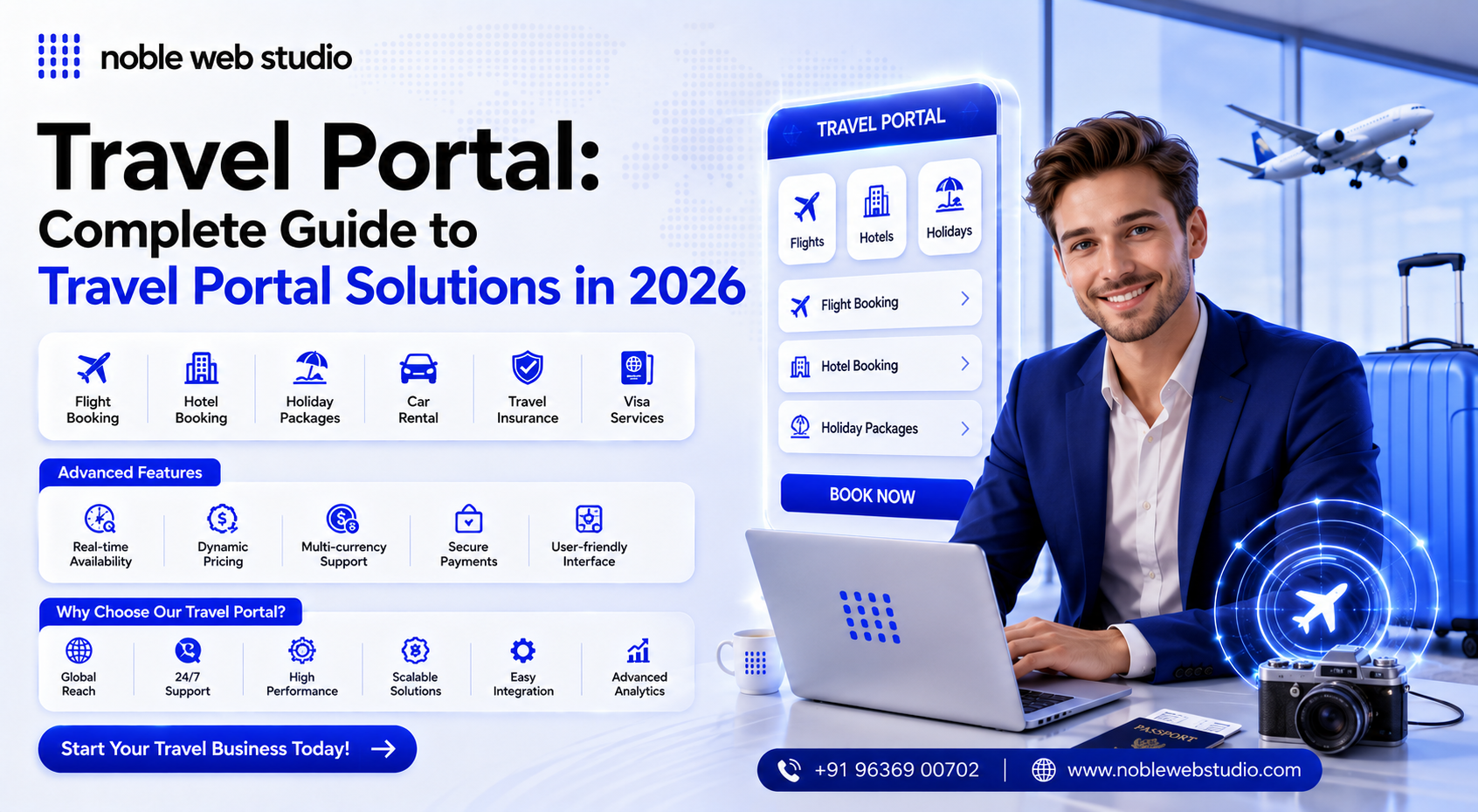
In today’s digital era, a travel portal is a powerful online platform that allows users to search, book, and manage travel services such as flight tickets, train tickets, hotel bookings, and holiday packages from the comfort of their homes. Travel portals simplify the travel experience by offering real-time availability, competitive pricing, and easy payment options, making travel planning faster and more convenient.
A Travel Booking Portal is an online platform acting as a one-stop shop for planning and booking trips, aggregating services like flights, hotels, car rentals, and tours, allowing users to search, compare, and reserve everything in one place through a user-friendly interface, often connecting suppliers via APIs for real-time availability and payments. They simplify travel by providing a centralized hub for travelers and travel businesses (B2B/B2C) to manage bookings efficiently.
For businesses, developing or using a travel portal opens opportunities to reach more customers, streamline bookings, and earn commission through online transactions. With Noble Web Studio, travel businesses can create or manage secure, user-friendly, and scalable travel portals that enhance customer experience and boost revenue.
This guide will explain what a travel portal is, its key features, benefits, and how it can help both travelers and travel businesses succeed in the growing digital travel industry.
What is Travel Booking Portal?
A travel booking portal is an online platform website or app that enables users to search, compare, and book travel services such as flights, hotels, car rentals, and tour packages in real-time. These platforms serve as a one-stop shop, aggregating data from multiple providers to offer secure payments and instant confirmations.

Travel Booking Portal Work
A travel booking portal is an online platform that acts as a one-stop shop for searching, comparing, and booking travel services like flights, hotels, and tours. It works by connecting to GDS (Global Distribution Systems) and third-party APIs for real-time inventory and pricing, automating bookings for agents and customers.
Key Aspects of Travel Booking Portal Work:
- Core Functionality: Users can search for flights (origin, destination, date), select hotels, and book services instantly.
- Search and Compare: Portals, like those from Noble web studio, allow agents to compare prices in real-time, reducing search time and increasing productivity.
- API/XML Integration: These portals, such as the ones from Noble web studio, link with major suppliers (GDS/LCCs/Aggregators) to provide comprehensive inventory, including flights, hotels, and car rentals.
- Back-Office Management: They enable travel agents to manage bookings, create packages, automate invoicing, handle cancellations, and set custom markups.
- Customer Experience: These platforms offer user-friendly interfaces, secure payment gateways, and automated ticket generation for a seamless booking process.
Types of Travel Booking Portal
Travel booking portals are digital platforms designed to facilitate reservations for flights, hotels, cars, and packages. Major types include Online Travel Agencies (OTAs) (e.g., Booking.com), B2B agent portals, corporate travel management systems and supplier direct sites Noble web studio often featuring GDS/API integration.
Key Types of Travel Booking Portals
- Online Travel Agencies (OTAs): Consumer-facing websites Noble web studio offering vast inventory for travelers to book flights, hotels, and rentals directly.
- B2B Travel Portals: Dedicated, login-based systems for travel agents and sub-agents that allow booking with net rates and markups.
- Corporate Travel Management (CTM) Software: Tailored portals for businesses to manage travel policies, expenses, and employee bookings.
- Meta-search Engines: Platforms that compare prices across various OTAs and airline sites, then redirect users to complete the booking.
- Supplier Direct Booking Portals: Official websites of hotels, airlines, or car rental companies (e.g., goindigo.in) allowing direct bookings without middlemen.
- White Label Travel Portals: Ready-to-use platforms customized for travel agencies to sell services under their own brand, powered by a larger travel aggregator.
Services Offered by Travel Portal
Travel portals offer comprehensive online booking services, including real-time flight reservations, hotel bookings, car rentals, holiday packages, and travel insurance. These platforms provide 24/7 access for both B2B agents and B2C consumers to search, compare, and book travel services, often with API integration for global inventory.
Key services offered by a travel portal include:
Booking Engines:
- Flights: Real-time, worldwide flight booking for domestic and international airlines.
- Hotels: Access to a vast inventory of accommodations, including global hotel chains and independent properties.
- Cars/Transport: Rental car bookings, including airport transfers and local city travel.
- Packages/Activities: Custom holiday packages, sightseeing tours, and activity booking.
- Others: Bus and train booking services.
Technical & Management Services:
- API/XML Integration: Integration with GDS (Global Distribution Systems) and third-party suppliers for real-time inventory.
- B2B/B2C Portals: Customized platforms for travel agents (B2B) to manage sub-agents, credit limits, and wallets, or direct-to-consumer websites (B2C).
- White Label Solutions: Branded, turnkey booking engines for travel agents.
- Payment Gateway Integration: Secure, multi-currency payment options.
Customer & Operational Services:
- Customer Support: Live chat, email, and phone support tools.
- Reporting/CRM: Automated invoicing, sales reports, and customer relationship management (CRM) tools to track bookings and customer data.
- Policy Management: For corporate travel portals, this includes enforcing travel policies and approval workflows.
Documents Required to Start Travel Business in India
Starting a travel agency in India requires business registration (Proprietorship, LLP, or Private Limited), PAN card, address proof, and GST registration. Key operational requirements include IATA accreditation, Bank Account, and optional Ministry of Tourism recognition (crucial for credibility). Mandatory documents include proof of office space (150 sq. ft. minimum).
Key Documents Checklist
- Business Entity Registration: Proof of registration (e.g., Partnership Deed, Incorporation Certificate, MSME registration).
- PAN Card: PAN Card of the company, LLP, or Proprietor.
- Office Address Proof: Rent agreement, electricity bill, or utility bill in the business name.
- Bank Account: A current account in the name of the agency.
- GST Registration: Required for businesses with a turnover exceeding ₹40 lakh (₹20 lakh in special category states).
- IATA Accreditation: Essential for booking flights directly; requires a detailed application with financial records.
- Ministry of Tourism Recognition (Optional but Recommended): Requires a detailed application, including an audited balance sheet, staff details (at least 4 qualified employees), and a photograph of the premises.
- GST Number/Certificate: Proof of tax compliance.
- Digital Signature Certificate: Needed for business filings.
Who Can Use Travel Booking Portal
Travel booking portals are designed for a wide range of users, including individual travellers, corporate travel planners, travel agents, and tour operators. They offer a centralized platform for booking flights, hotels, car rentals, and tour packages, streamlining the booking process for both B2B (business-to-business) and B2C (business-to-consumer) needs.
Key Users of Travel Booking Portals:
- Individual Travelers (B2C): Consumers looking for easy-to-use platforms to book personalized travel arrangements, such as flights, hotels, and holiday packages.
- Travel Agents & Agencies (B2B): Professionals who use B2B portals to book services for their clients, often benefiting from exclusive deals, higher mark-ups, and managing multiple bookings in one place.
- Corporate Travel Planners: Businesses that manage, book, and track employee travel, ensuring efficient booking and expense management.
- Tour Operators & Wholesalers: Companies that manage, bundle, and sell travel services, including charter planes, hotels, and tours.
- Travel Startups & Entrepreneurs: New businesses that use white-label booking solutions to enter the travel market quickly without building infrastructure from scratch.
- Destination Management Companies (DMCs): Companies that manage local travel arrangements and logistics.
These platforms provide significant advantages to their users, including real-time access to inventory, 24/7 service availability, improved efficiency, and cost savings.
Why Use Travel Booking Portal
Using a travel booking portal provides unparalleled convenience, allowing you to search, compare, and book flights, hotels, and services in one place, 24/7. These platforms save money through exclusive deals, offer real-time availability, and streamline the planning process with secure, instant, and personalized booking experiences.
Key Benefits of Using a Travel Booking Portal:
- Convenience & Speed: Access a one-stop shop for flights, hotels, car rentals, and insurance, eliminating the need to visit multiple sites.
- Price Comparison: Easily compare prices and amenities across numerous service providers to find the most cost-effective options.
- 24/7 Availability: Book anytime, anywhere, at your own convenience.
- Exclusive Deals: Access special discounts, promotions, and packages that might not be available elsewhere.
- Real-Time Data: View live inventory for flights and accommodation, reducing risks of booking errors.
- Personalization & User Reviews: Benefit from tailored recommendations and read user-generated reviews to make informed choices.
- Secure & Easy Payments: Travel portals offer multiple secure payment options, improving trust and user experience.
For businesses, these portals provide automated, efficient tools to boost customer loyalty and streamline operations.
Key Aspects of Travel Booking Portal
A successful travel booking portal requires a user-friendly interface, real-time API integration for flights/hotels, secure payment gateways, and advanced search filters. Key aspects include mobile optimization, 24/7 availability, instant confirmation, detailed inventory management, and personalized experiences, which together enhance customer trust and operational efficiency.
Core Components of a Travel Portal
- User Interface (UI) & Experience: A simple, intuitive design that allows easy navigation and quick searches for flights, hotels, and packages.
- Search Engine & Filters: Powerful, advanced filters to narrow down results by destination, date, price, and amenities.
- API Integration: Real-time, live data from airlines, hotels, and Global Distribution Systems (GDS) like Amadeus or Sabre.
- Secure Payment Gateway: Support for multiple currencies and payment methods with secure, encrypted transactions.
- Booking & Inventory Management: A centralized backend (Admin Panel) to manage bookings, cancellations, and real-time inventory to prevent overbooking.
Key User Features
- Instant Confirmation & Itinerary: Immediate email or SMS notifications upon booking to reassure users.
- Customer Reviews & Ratings: Transparent feedback to build trust.
- Virtual Reality & Maps: Integration of Google Maps for location scouting and Virtual Reality (VR) for 360-degree views of hotels.
- Mobile-Friendly Design: A responsive, mobile-optimized site to cater to on-the-go travelers.
Business & Operational Aspects
- CRM System: Customer Relationship Management (CRM) tools to store user data, history, and offer personalized service.
- Reporting & Analytics: Tools to track sales performance, booking trends, and customer behavior for improved decision-making.
- Scalability: The system should grow with the business, accommodating increasing traffic and services.
- Loyalty Programs: Features to reward repeat customers.
Top Use Cases of Travel Booking Portal
Travel booking portals streamline the entire travel lifecycle by integrating real-time flight, hotel, and transport data for instant, 24/7 booking. Key use cases include personalized AI-driven search, automated B2B/B2C itinerary management, dynamic pricing adjustments, and API-based inventory aggregation to enhance user experience and maximize conversion.
Top Use Cases of Travel Booking Portals
- Real-Time Flight & Hotel Search: Users can instantly search and compare flight options, hotel availability, and car rentals from multiple suppliers through GDS APIs like Sabre and Hotelbeds.
- AI-Powered Personalization: Portals use AI to recommend personalized hotels and activities based on user behavior and past trips.
- B2B/B2C Booking Modules: These portals offer comprehensive booking engines for travel agents (B2B) to manage sub-agents, commissions, and clients, as well as self-service tools for end-users (B2C) to manage their bookings.
- Dynamic Pricing & Fare Forecasting: AI algorithms help predict when to book, offering travelers the best deals and forecasting price changes.
- Automated Booking & Payments: Platforms automate the entire process, including ticket generation, invoice creation, and payment collection using multiple gateways.
- Itinerary Planning & Customization: Travelers can build their own customized vacation packages, including transportation, hotels, and local activities, directly on the platform.
- Real-Time Support & Rebooking: During travel disruptions like flight delays, AI can automatically suggest alternative transport and rebook hotel stays.
- Corporate Travel Management: Specialized portals help companies manage employee travel budgets and policies.
These platforms also allow for the use of VR/AR for virtual site visits to hotels or resorts before booking.
Role of Travel Portal
A travel portal acts as a centralized online platform that connects travelers with travel service providers, enabling users to search, compare, and book flights, hotels, packages, and car rentals in real-time. It automates booking operations, enhances customer experience, increases brand reach, and allows travel agents (B2B) or customers (B2C) to manage bookings through a single dashboard, essential for modern travel business efficiency.
Key Roles and Functions of a Travel Portal:
- Automation of Operations: These portals handle bookings, invoices, and notifications, significantly reducing manual tasks.
- Data Aggregation and Real-time Booking: Travel portals connect with multiple travel service providers via APIs, providing real-time availability and pricing.
- Improved User Experience: They provide a simple, intuitive user interface (UI) with powerful search filters and comparison tools.
- Business Growth (B2B/B2C):
- B2C: Provides direct-to-customer bookings for flights, hotels, and tours.
- B2B: Enables travel agents to create sub-agents, manage commissions, and access global travel inventory.
- Customer Engagement and Retention: Features such as reviews, ratings, and mobile-friendly designs help build trust and loyalty.
- Analytics and Insights: Travel portals provide data on customer behavior and preferences, aiding in data-driven decisions for improved sales and marketing.
- Competitive Advantage: A well-designed portal sets a business apart in the travel industry, offering comprehensive solutions such as hotel management systems and holiday package management.
Why Invest in a Travel Portal?
Investing in a travel portal offers 24/7 automated sales, significantly reducing operational costs while expanding your reach to a global customer base. It enhances customer experience through instant, secure, and mobile-friendly bookings, driving higher conversion rates and revenue through B2B agent networks and real-time inventory updates.
Key reasons to invest in a travel portal include:
- 24/7 Operational Availability: Unlike physical agencies, a digital portal operates around the clock, enabling continuous sales and bookings.
- Automation and Reduced Costs: Automate booking confirmations, invoicing, and inventory updates, minimizing human error and lowering administrative overhead.
- Global Reach & Scalability: Easily expand your market beyond local limits and handle increased booking volumes efficiently as your business grows.
- Real-Time Inventory and Pricing: Connect with Global Distribution Systems (GDS) and APIs to offer live, competitive pricing on flights, hotels, and, packages.
- Enhanced Customer Experience: Provide a user-friendly interface with fast search, secure payment gateways, and instant confirmations, which builds trust and loyalty.
- B2B and B2C Growth: Implement B2B functionalities to manage agent networks and B2C tools for direct customer engagement, broadening revenue streams.
- Data-Driven Insights: Gain access to analytics and reporting tools to understand customer trends, travel preferences, and high-performing routes.
- Customization: Tailor the platform’s features to specific business needs, ensuring a unique and competitive user experience.
- Mobile-Friendly Functionality: Reach on-the-go travelers with mobile-responsive platforms that allow booking from anywhere.
How to Start Your Own Travel Business Using a Travel Portal
Starting a travel business with a portal involves choosing a niche (e.g., luxury or budget), registering your business (LLC), and selecting a White Label portal provider for instant booking functionality. Key steps include integrating GDS/API for real-time inventory, setting up secure payment gateways, and launching a responsive website for marketing.
Steps to Launch Your Travel Portal Business:
- Define Your Niche and Structure: Focus on a specific market (e.g., eco-tourism, corporate) to build a clear brand. Register your business entity officially.
- Select a Travel Portal Provider: Choose a White Label travel portal that provides booking engines, API integration, and GDS (Global Distribution System) connection for flights and hotels.
- Set Up Website and Technology: Purchase a domain, secure web hosting (e.g., Hostinger), and customize the portal with your brand logo and content.
- Integrate Payment Gateway: Enable secure payment options (credit cards, PayPal, UPI) to process transactions safely on your portal.
- Negotiate Supplier Deals: Partner with travel suppliers (airlines, hotels, DMCs) to obtain competitive rates for your portal’s backend.
- Marketing & SEO: Launch digital marketing campaigns (SEO, social media, PPC) to drive traffic to your website.
Why Travel Portal is Important for Travel Agents and Businesses
A travel portal is essential for travel agents and businesses to centralize booking systems, automating flight, hotel, and package bookings in real-time while significantly reducing manual errors and operational costs. These platforms expand market reach, enable competitive pricing, and boost profitability through 24/7 service availability, improved customer experience, and data-driven insights.
Key reasons for adopting a travel portal include:
- Operational Efficiency & Automation: Portals act as a single hub for managing inventory and bookings, which automates tasks like invoicing, generating itineraries, and sending confirmation emails, saving significant time and resources.
- Real-time Access & Inventory: Agents can access global, live data for flights, hotels, and services, allowing them to provide up-to-the-minute availability and competitive pricing.
- Increased Profitability & Growth: Through tools that support upselling, exclusive deals, and efficient booking workflows, businesses can increase sales and higher margins.
- Enhanced Customer Service: 24/7 accessibility, quick booking confirmations, and secure, integrated payment gateways (including wallets) enhance client satisfaction and foster trust.
- Scalability & Global Reach: A digital portal enables agents to break geographical barriers, reaching a wider audience and managing sub-agents or corporate clients easily through B2B models.
- Data-Driven Decisions: Integrated analytics tools enable businesses to make informed, strategic decisions.
These systems, whether B2B or B2C, provide the digital infrastructure necessary to compete in a fast-paced, online-first travel industry.
Features of Travel Portal
A modern travel portal offers real-time booking, secure payments, and comprehensive inventory for flights, hotels, and tours. Key features include API/GDS integration (Amadeus, Sabre), multi-currency/language support, responsive design, advanced filtering, and user-friendly dashboards for B2B/B2C users. It enables automation, dynamic markup, and personalized recommendations.
Key Travel Portal Features:
- Real-Time Booking Engine: Access live inventory and instant booking capability for flights, hotels, cars, and buses, ensuring accurate pricing.
- API & GDS Integration: Seamless connectivity with major travel suppliers (Amadeus, Galileo, Sabre) for updated inventory.
- Secure Payment Gateway: Integrated multi-payment options (credit cards, digital wallets, net banking) with SSL encryption to ensure safe, encrypted transactions.
- User-Friendly/Responsive Interface: Mobile-first design, as emphasized allows users to search and book easily on mobile, tablet, or desktop, ensuring a smooth experience.
- B2B & B2C Modules: Distinct portals for travelers (B2C) and travel agents (B2B) with dedicated dashboards.
- Dynamic Packaging & Pricing: Allows bundling of flights, hotels, and activities while managing dynamic markups and commissions.
- Advanced Search and Filters: Enables users to quickly narrow down options based on price, location, star ratings, and amenities.
- Multi-Currency & Multi-Language Support: Facilitates global reach by supporting diverse currencies and languages.
- CMS & Automated Emails: Content management system for website updates and automated emails for booking confirmations and invoices.
- Analytics and Reporting: Tools for tracking booking performance, user behavior, and revenue.
- Social Media & Customer Reviews: Integration with social platforms and display of user reviews for enhanced trust.

Benefits Travel Portal
A travel portal offers significant benefits for both businesses and travelers, including 24/7 self-service booking, reduced operational costs, and access to a wide inventory of flights, hotels, and services. These digital platforms enhance customer experience through real-time updates and secure, fast bookings, while also driving brand growth, improving efficiency, and facilitating automated payments and reporting.
Key benefits of travel portals include:
- Improved Operational Efficiency: Portals automate tasks such as booking confirmations, cancellations, invoicing, and reporting, reducing the reliance on manual processes.
- Centralized Management: A single hub to manage inventory, pricing, and bookings, simplifying complex operations.
- Automation & Efficiency: Automated ticketing, booking confirmation, and invoicing minimize human errors and save time.
- Increased Revenue Opportunities: Ability to upsell services and offer a wider range of products (e.g., travel insurance, transfers).
- Cost Savings & Productivity: By reducing manual work and streamlining processes, businesses can significantly lower administrative expenses and improve efficiency.
- 24/7 Access and Convenience: Travelers can book, cancel, or update itineraries at any time from anywhere, offering a, seamless self-service experience.
- Comprehensive Inventory Access: B2B portals provide agents with access to a wide range of services—including flights, hotels, and, transfers in a single, unified platform.
- Global Reach & Enhanced Marketing: Portals help travel businesses reach a global customer base, increase visibility, and strengthen their, brand presence online.
- Real-Time Data: Access to live availability and pricing for flights, hotels, and services, ensuring accurate booking information.
- Data-Driven Decisions: These systems offer, valuable data on customer behavior and preferences, allowing businesses to make informed, strategic decisions.
- Mobile Compatibility: Many portals offer, responsive designs or mobile apps, ensuring travelers can manage their, plans conveniently on the go.
Key Benefits for Travelers/Agents (Users)
- All-in-One Convenience: Access to flights, hotels, and activities on one platform, allowing for easy comparison of prices and reviews.
- 24/7 Accessibility: Bookings can be made anytime, anywhere, on any device.
- Better Deals: Access to special, exclusive offers and discounts not available elsewhere.
- Quick Confirmations: Instant booking updates and itinerary generation reduce wait times.
Travel Portal API Integration for Website and Mobile App
The process for Travel API integration generally involves a structured sequence of steps, from initial planning to deployment and ongoing maintenance:
- Define Requirements Clearly outline your business needs and objectives. Determine which services you need to offer (flights, hotels, car rentals, etc.) and what features your platform requires (B2B, B2C, specific filters, etc.).
- Select an API Provider: Choose a Noble web studio based on their inventory, reliability, cost, and quality of documentation/support.
- Sign Contracts & Obtain Credentials Sign a contract with the Noble web studio and obtain the necessary API credentials, such as an API key, secret, and possibly a Pseudo City Code (PCC ID). These credentials are vital for secure authentication.
- Set Up the Development Environment Prepare your technical infrastructure and development environment by installing the necessary software, code editors, and libraries that support the API’s protocol (SOAP/XML or JSON REST).
- Develop the Integration Use the Noble web studio API documentation to write code that connects your application to the API endpoints. This involves implementing functionalities like search, booking, payment processing, and error handling.
- Test and QA Conduct rigorous testing in a staging or sandbox environment. Test various scenarios, including successful bookings, cancellations, error conditions, and peak-traffic situations, to ensure seamless and accurate functionality before going live.
- Go Live and Monitor Once testing is successful and certified by the provider, deploy the integration to your live production environment. Continuously monitor the performance, track errors, and make ongoing optimizations and updates.
Travel Portal Commission Structure and Earning Potential
Travel portals typically earn commissions ranging from 1% to 30%, with hotels offering 10–20%, cruises/tours 10–16%, and flights often providing 0–5% or relying on service fees. High-margin luxury packages can yield up to 30%. Earning potential varies based on volume and supplier agreements, commonly utilizing a 70/30 or 80/20 agent-to-host commission split.
Travel Portal Commission Structure
Commissions vary significantly by service type and Noble web studio:
- Hotels: 10%–25% often get the high end of this range.
- Cruises & Tours: 10%–18%.
- Travel Insurance & Extras: 20%–30%.
- Flights: 0%–5%. Most agents earn fees here rather than commissions.
- Vacation Packages: 20%–30% (High-margin).
Earning Potential Factors
- Commission Splits: Independent agents under a host agency usually share commissions, with common splits being 70/30 or 80/20 (agent/host).
- Volume Tiers: Travel platforms offer higher tiers for top producers, sometimes starting at 10% and increasing to 15% or more based on passenger count.
- Service Fees: In addition to commissions, agents often charge client fees (e.g.,
$
50 for flights,
$
100
+ for itineraries).
- Niche Specialization: Specialized, high-end, or complex bookings (e.g., luxury, adventure) typically offer higher margins.
Earning Maximization Strategies
- Bundle Services: Selling packages (flight + hotel + car) offers higher commission potential than individual bookings.
- Direct Supplier Relationships: Booking directly can sometimes yield higher commission rates compared to using lower-level aggregators.
- Use Host Agency/Consortia: Accessing negotiated rates through a host agency often guarantees higher base commissions than acting as an independent, non-accredited agent.
- Focus on High-Margin Products: Prioritize selling cruises, tours, and travel insurance, which offer the highest commission percentages.
Travel Portal Cost
Travel portal development costs in India range from approximately ₹30,000 for basic, static websites to ₹2 lakh ₹8 lakhs or more for advanced, API-integrated dynamic booking engines. Costs vary heavily based on features, with white-label solutions often starting lower, around ₹25,000 – ₹1 lakh. Key factors include B2B/B2C modules, API integrations, payment gateways, and mobile app development.
Key Cost Factors & Estimates:
- Static/Basic Website: ₹30,000 – ₹75,000.
- Dynamic Portal (CMS): ₹80,000 – ₹1.5 Lakhs.
- Advanced Portal (API, Booking Engine): ₹2 Lakhs – ₹8 Lakhs+.
- White Label Solutions: ₹25,000 – ₹1,00,000.
- Mobile App Development: Additional ₹1.5 Lakhs – ₹3 Lakhs per platform (iOS/Android).
- API Integrations (Flight/Hotel/Bus): ₹10,000 – ₹50,000 per module.
Common Expense Breakdown (According to local suppliers):
- Bus Booking API: ₹5,000 – ₹25,000.
- Travel Booking Portal (Generic): ₹50,000.
- White Label Portal Service: ₹2,23,000.
Factors Influencing Cost:
- Platform Type: Static vs. dynamic vs. custom-built.
- Functionality: Flight, hotel, or car rental modules.
- Integration: GDS or third-party API integration.
- Backend: Need for CMS and B2B Agent modules.
- UI/UX Design: Custom branding and user experience.
Best Travel Portal Providers in India
Noble web studio is the best travel portal providers in India include top B2B for agents, alongside leading B2C/White Label providers like Noble web studio for comprehensive booking technology. These platforms offer GDS integration, API/XML connectivity, and high-performance booking engines for flights, hotels, and holidays.
Key Features of Top Providers
- API/XML Integration: Connecting to multiple flight (LCC) and hotel suppliers for real-time data.
- White Label Solutions: Allowing agents to brand their own travel website.
- GDS Integration: Integration with Global Distribution Systems.
- Mobile Functionality: High-functioning app support for on-the-go bookings.

How to Choose the Best Travel Portal Provider
Noble web studio is the best travel portal provider requires prioritizing scalability, robust API integrations (GDS, LCCs, bedbanks), and user-friendly, customizable, and secure (SSL/GDPR) technology. Select a Noble web studio with strong industry experience, proactive customer support, and comprehensive, modular booking engines for flights, hotels, and packages.
Key Considerations for Choosing a Provider:
- API & Supplier Integration: Ensure the Noble web studio integrates with major Global Distribution Systems (GDS like Amadeus, Sabre, Galileo) and various suppliers for flight, hotel, and car rental inventories.
- Scalability & Customization: Choose a Noble web studio that grows with your business, allowing for customized branding (white-label), and supports future expansion.
- Modules & Features: Verify that the platform supports crucial modules like B2B/B2C booking engines, agent wallets, mark-up engines, and real-time reports.
- Reputation & Portfolio: Noble web studio history, customer reviews, and previous work in the travel industry.
- Security & Support: Ensure robust security measures (SSL, secure payments) and reliable post-development technical support and maintenance.
- Cost & ROI: Best pricing for upfront development, licensing, and ongoing maintenance to ensure cost-effectiveness.
- Mobile Responsiveness: A modern, mobile-friendly interface is essential for user engagement and accessibility.
- User Experience (UX): The interface must be easy to navigate, reducing the time required for booking processes.
Before finalizing a Noble web studio, request a demonstration or a trial account to test the system’s ease of use and functionality.
Why Choose Noble Web Studio for Travel Portal Solutions
Choosing a Noble web studio for travel portal solutions ensures access to specialized, scalable, and secure technology that streamlines operations, such as real-time flight and hotel booking systems. These Noble web studio offer custom, mobile-friendly platforms with API integration, enhancing user experience, maximizing operational efficiency, and broadening market reach for travel businesses.
Key Reasons to Choose a Professional Provider:
- Customized & Feature-Rich Solutions: Noble web studio create tailored systems that meet specific business requirements, offering functionalities like B2C/B2B modules, admin dashboards, and custom booking engines.
- Advanced Technology & Automation: Benefit from up-to-date technologies like AI, instant search filters, and automatic booking confirmations, reducing manual effort and errors.
- API Integration & Global Reach: Expertise in integrating third-party APIs (flights, hotels, transfers) provides access to a global inventory, allowing your customers to find the best deals instantly.
- Increased Revenue & Scalability: These platforms are built for growth, allowing businesses to scale operations efficiently and increase sales through improved conversion rates.
- Secure Payment & Security: Noble web studio ensure safe and secure payment gateway integrations, which are crucial for customer trust and compliance.
- 24/7 Support & Maintenance: Noble web studio offer ongoing technical support and maintenance, ensuring the portal remains functional and updated.
Choosing a Noble web studio helps travel businesses turn technology into a competitive advantage.
Comprehensive Travel Portal Solutions
A Travel Portal is much more than a simple website; it serves as a complete platform that connects travelers with service providers seamlessly. Equipped with features such as real-time availability, secure payment gateways, and personalized recommendations, travel portals have revolutionized how people plan and book their trips.
At NobleWebStudio, we are committed to delivering exceptional Travel Portal Development Services designed to help your business succeed in today’s digital world. Whether you require a B2B Travel Portal, B2C Travel Portal, or White Label Travel Portals, our expert solutions are tailored to meet your needs.
Start Your Journey with NobleWebStudio
Take the first step toward transforming your travel business by partnering with NobleWebStudio for a state-of-the-art Travel Portal. Get in touch with us today and unlock endless opportunities in the travel industry!
FAQs — What is a Travel Portal?
A1: A travel portal is an online platform that enables users to search, compare, and book travel-related services such as flights, hotels, buses, car rentals, and holiday packages in one place. It simplifies the travel booking process for customers.
A2: Travel portals aggregate information from multiple service providers through API integrations, displaying real-time availability and pricing. Users can make bookings directly on the portal, which processes payments securely and confirms reservations instantly.
A3: The main types include flight booking portals, hotel booking portals, bus and cab booking portals, and full-service travel portals that offer multiple services like packages, insurance, and visa assistance.
A4: Travel portals save time and effort by providing a one-stop platform for all travel needs, offering competitive prices, user reviews, and easy comparison, leading to better-informed decisions and convenience.
A5: Businesses can reach a wider audience, streamline bookings, increase sales through online presence, and manage inventories efficiently through centralized platforms integrated with service providers.
A6: NobleWebStudio creates customized travel portals with scalable architecture, seamless API integration, secure payment gateways, and user-friendly interfaces, tailored to client requirements for optimal performance and growth.