
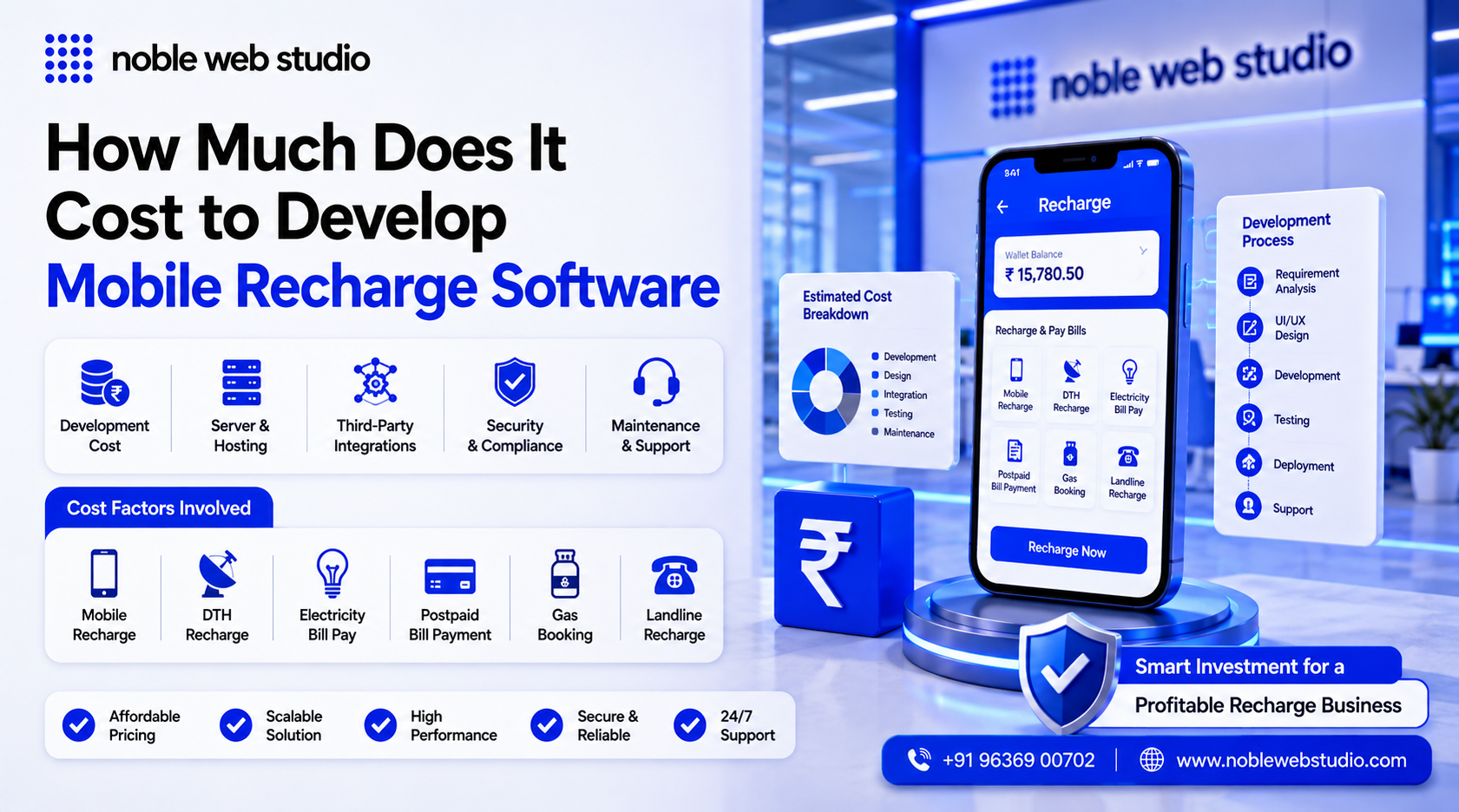
In today’s fast-growing digital payment world, mobile recharge software has become a must-have for businesses that want to offer fast, secure, and profitable recharge services. From prepaid and postpaid mobile top-ups to DTH, data card, and utility bill payments, a reliable recharge platform helps you serve customers anytime, anywhere. But if you are planning to launch your own recharge business, the first question that comes to mind is “How much does it cost to develop mobile recharge software?”
The cost of mobile recharge software can range from a few thousand to several lakhs, depending on various factors like features, complexity, and whether it’s a custom recharge software development or pre built recharge software solution. Standalone mobile recharge software can be found for around ₹10,000. However, comprehensive recharge software solutions with advanced features and customization can cost upwards of ₹300,000.
The cost depends on many factors, like the type of recharge system (single recharge software, multi-recharge portal, or white-label solution), the features you want (multi-operator API integration, wallet system, agent panels), the technology stack, and whether you choose custom mobile recharge software development or a ready made white label recharge platform. In 2025, businesses also look for features like secure payment gateways, 24×7 uptime, multi-device support, and real-time reporting to stay ahead of the competition.
At Noble Web Studio, we provide custom mobile recharge software and white label mobile recharge software development that is cost-effective, scalable, and packed with all the latest features.
This blog will guide you through the Develop Recharge Software main cost factors, Mobile Recharge Software development process, and the best ways to save money while building a high quality Mobile Recharge Software platform.
What is Mobile Recharge Software?
Mobile recharge software enables businesses to offer online or offline mobile and DTH recharge services. These solutions typically include features like multi-recharge capabilities (for various operators and services), retailer and distributor management, commission management, and reporting. Businesses can choose from ready-made solutions or opt for custom recharge software development.
Factors influencing the cost:
Type of Software:
- Standalone Mobile Recharge Software: Basic mobile recharge software for mobile recharges may be relatively inexpensive.
- Multi-Recharge Software: Software that handles various recharges (mobile, DTH, etc.) and payment options will likely cost more. Supports multiple operators and services within a single platform.
- API Integration: Integrating mobile recharge API (e.g., to access multiple operators) adds to the cost.
- B2B or B2C: B2B solutions (for businesses) might have different pricing structures than B2C (for individual consumers).
- B2B (Business-to-Business): Focuses on providing recharge services to other businesses (e.g., retailers).
- B2C (Business-to-Consumer): Provides recharge services directly to end-users.
- White Label: Allows businesses to rebrand the software and offer it under their own brand.
Key Features:
- Multi-Recharge: Supports various operators (Airtel, Jio, Vodafone, etc.) and DTH providers for prepaid and postpaid recharges.
- Distributor and Retailer Management: Enables businesses to create and manage different user levels (retailers, distributors, master distributors) with varying commission structures.
- Commission Management: Allows setting up and tracking commissions earned by retailers and distributors.
- Reporting: Provides detailed reports on transactions, sales, and commissions.
- API Integration: May offer recharge API for integration with other systems or platforms.
- Payment Gateways: Supports multiple payment options for seamless transactions.
- White Label Solutions: Noble web studio offer white label recharge options, allowing businesses to rebrand the recharge software.
- Other Services: Some solutions also integrate bill payments, money transfer, and other services.

What is Mobile Recharge Software Cost
Mobile recharge software costs vary significantly, but you can expect to pay anywhere from ₹3,000 to over ₹1,00,000 or more, depending on the recharge software features, license type (monthly or lifetime), B2B or B2C functionality, and deployment model (cloud-based vs. on-premise). Basic B2C recharge software might be around ₹20,000-₹30,000, while a comprehensive multi-recharge system or custom recharge software development can be much higher.
Here’s a more detailed breakdown:
Factors Influencing Cost:
- Software Type: Standalone software, online/cloud-based solutions, or mobile applications all have varying costs.
- Features: Basic features like API integration, payment gateway, and a user-friendly interface will be more affordable than advanced features like multi-user capabilities, custom branding, and detailed reporting.
- Development Approach: Developing mobile recharge software in-house will involve different cost considerations than outsourcing to a third-party developer.
- Maintenance and Support: Ongoing maintenance and support costs should also be factored in.
Examples of Pricing:
- Basic Online Recharge Software: Noble web studio offers a starter package for ₹7,500 (₹12,500 regular price) and a gold package for ₹15,500 (₹23,500 regular price).
- Multi Recharge Software: Prices can range from ₹15,000 to ₹45,000 or more.
- Software with Customization: Solutions with custom websites or apps can cost upwards of ₹100,000.
- Recharge API Provider: Integrating recharge API provider might cost around ₹10,000.
Additional Costs:
- API Integration: Integrating with multiple service providers (mobile operators, DTH providers, etc.) can incur additional costs.
- Payment Gateway Integration: Connecting with payment gateways for secure transactions adds to the overall cost.
- Maintenance and Support: Ongoing maintenance and support fees will also need to be considered.
Starting a Recharge Business:
- You’ll need to register with a recharge portal and complete KYC procedures.
- Consider partnering with a trusted bill payment API provider for a low-investment, high-return business.
- Factors like commission rates (1-6% depending on the brand), and potential for monthly income (potentially ₹10,000+) should be considered.
Features:
- Single or Multi Recharge: The number of recharge types supported affects the price.
- Payment Gateways: Integrated payment gateway (e.g., for credit/debit cards, net banking) adds to the cost.
- User Interface/Design: Complex or custom designs can increase the development cost.
- Reporting and Analytics: Features for tracking transactions and generating reports can also impact the price.
Development Approach:
- Off-the-shelf solutions: Pre-built software with standard features is generally more affordable.
- Custom Development: Bespoke software tailored to specific needs will be more expensive.
- Support and Maintenance:Ongoing support and maintenance can also contribute to the overall cost.
Approximate price ranges:
- Basic Mobile Recharge Software: ₹10,000 – ₹50,000.
- Multi Recharge Software: ₹15,000 – ₹80,000 or more.
- Custom Mobile Recharge Software Solutions: ₹300,000 and upwards.
Key Features of Mobile Recharge Software
Mobile recharge software typically features multi-operator support, allowing users to recharge for various telecom providers. It also offers functionalities like DTH recharges, bill payments, and potentially other utility payments. Key features often include a user-friendly interface, secure payment gateway, transaction history, and commission management for different users and services. Mobile recharge software also provides white label recharge software options for businesses to create their own branded platforms.
Here’s a more detailed look at the key features:
1. Multi-Operator Support:
- The mobile recharge software should be able to handle recharges for various telecom operators (e.g., Airtel, Jio, Vodafone) and service providers (e.g., prepaid, postpaid, DTH, data cards).
- This allows users to manage all their recharges from a single platform.
2. Secure Payment Gateways:
- The recharge software integrate with trusted and secure payment methods like UPI, net banking, debit/credit cards, and digital wallets.
- This ensures that transactions are safe and protected.
3. User-Friendly Interface:
- The mobile recharge software should have a simple and intuitive interface that is easy to navigate for both customers and administrators.
- This makes the recharge process quick and convenient.
4. Real-Time Transaction Processing:
- The mobile recharge software should process transactions instantly and accurately, providing real-time updates on the status of each recharge.
- This minimizes delays and ensures a smooth experience for users.
5. Admin Dashboard and Reporting Tools:
- The mobile recharge software should offer a comprehensive dashboard for administrators to monitor transactions, manage users, and track performance.
- This allows for efficient management and oversight of the entire system.
6. Role-Based Multi-User Hierarchy:
- The mobile recharge software should support different user roles (e.g., admin, distributor, retailer) with specific permissions and access levels.
- This enables businesses to manage user access and responsibilities effectively.
7. Commission and Margin Management:
- The mobile recharge software should allow for setting and managing commission structures and profit margins for different users and services.
- This helps businesses incentivize their partners and manage their revenue streams.
8. Wallet and E-Wallet Support:
- The mobile recharge software integrate with digital wallets and e-wallets, allowing users to store funds and use them for recharges.
- This provides a convenient and secure way for users to manage their funds.
9. API Integration:
- The mobile recharge software should integrate with telecom operators mobile recharge API to enable seamless and automated recharge processing.
- This ensures that the mobile recharge software can connect with various service providers and handle transactions efficiently.
10. Scalability:
- The mobile recharge software should be able to handle a large volume of users and transactions without performance issues.
- This ensures that the software can scale with the business’s growth.
11. White-Label Solution:
- For businesses looking to establish their own brand, the software should offer white label recharge options, allowing them to rebrand the software with their own logo and branding.
- This helps businesses create a unique identity and build customer loyalty.
Additional Features:
- Support and Training: Offering customer support and training resources to users.
- Security Measures: Implementing robust security protocols to protect user data and transactions.
- Instant Payouts: Providing instant commission payouts to users.
- Multi-Language Support: Supporting multiple languages for a wider user base.
- Offline Functionality: Recharge software may offer limited offline functionality for areas with poor internet connectivity.
Read Blog : Top Features to Look for in a Mobile Recharge Commission App
Key Benefits of Mobile Recharge Software
Mobile recharge software provide benefits for businesses, primarily by increasing revenue, enhancing customer experience, and streamlining operations. It allows retailers to offer a wider range of services, attract more customers, and manage transactions more efficiently.
Here’s a more detailed look at the benefits:
For Businesses:
- Increased Revenue: Businesses earn commissions on every recharge transaction, creating a new income stream.
- Enhanced Customer Experience: Instant and easy recharges reduce waiting times, leading to happier customers and increased loyalty.
- Simplified Operations: Automation of routine tasks, accurate tracking of commissions, and streamlined user management save time and effort.
- Attracting More Customers: Offering a variety of digital services like recharges and bill payments can draw in more customers.
- Scalability: The mobile recharge software can grow with the business, accommodating new services and customers over time.
- Improved Efficiency: Businesses can manage multiple service providers and transactions from a single platform.
- Secure Transactions: Secure payment gateways ensure safe and reliable transactions.
- Multiple Payment Options:Offering various payment methods caters to a wider customer base.
- Analytics and Reporting:Detailed reports and analytics provide valuable insights into customer behavior and transaction trends.
- Cost-Effectiveness: The software can consolidate multiple services, reducing the need for separate solutions and associated costs.
- Financial Inclusion: Recharge software can empower businesses to serve remote areas and promote financial inclusion.
- Compliance: The software helps businesses stay compliant with relevant regulations.
For Users (Retailers, Distributors, etc.):
- One-Stop Solution: Access to multiple services like mobile recharges, DTH recharges, and bill payments from one platform.
- Convenience: Users can access and manage services from anywhere, anytime.
- Commission Earnings: Users earn commissions on each transaction, creating a source of income.
- Flexibility: Users can manage their business on their own schedule.
- User-Friendly Interface: Most apps and platforms are designed with easy-to-navigate interfaces.
- Reliable Support: 24/7 support and instant refunds for failed transactions ensure a smooth experience.
Mobile recharge software provide a powerful platform for businesses to expand their offerings, improve customer satisfaction, and boost their revenue, while also offering convenience and flexibility to users.
Read Blog : Mobile Recharge Software with Instant Payment and Secure Transactions
How Much Does It Cost to Develop Mobile Recharge Software
The cost to develop mobile recharge software can range from ₹15,000 to ₹80,000 or more, depending on the complexity and features. Factors influencing the cost include the platform (web or mobile), features (single or multi recharge software, mobile recharge API integration), design complexity, and customization needs.
Factors Influencing Cost:
- Platform: Mobile apps generally cost more than web-based platforms due to the complexities of mobile development.
- Features: Basic single recharge functionality will be cheaper than a multi recharge portal with features like user management, reporting, and recharge API integration with multiple providers.
- Design: Custom UI/UX design and branding will increase development costs compared to using a pre-built template.
- Customization: Adding unique features, specific business logic, or integrations with third-party services will add to the cost.
- Development Team: The hourly rate of the developers (in-house, freelancers, or agencies) will significantly impact the overall cost.
- Maintenance and Support: Ongoing maintenance and support will also add to the total cost of ownership.
Cost Breakdown:
- Basic Web Portal: A basic mobile recharge website or software with minimal features can cost around ₹35,000 to ₹50,000.
- Multi-Recharge Portal: A more advanced system with user management, reporting, and best recharge API integration can cost from ₹50,000 to ₹80,000 or more.
- Mobile App: Developing mobile recharge software, especially if it includes advanced features, can range from ₹70,000 to ₹1,50,000 or higher.
- API Integration: Integrating third party recharge API (e.g., for mobile, DTH, data cards) can cost between ₹10,000 and ₹20,000 per API.
Example Costs:
- A basic mobile recharge software might be priced around ₹30,000.
- A white label recharge service provider might charge around ₹20,000 per month for their services.
- A multi-user mobile recharge portal could be priced at ₹15,000 per piece.
Additional Costs:
- Payment Gateway Integration: Integrating payment gateway (e.g., Ezeepay) will incur transaction fees.
- Server Costs: Hosting the application on a server will incur monthly or annual costs.
- PCI DSS Compliance: If you handle sensitive payment information, you’ll need to ensure PCI DSS compliance, which can add to the costs (up to $25,000 annually).
- Marketing and Promotion: To attract users, you’ll need to invest in marketing and promotional activities.
The cost of development mobile recharge software is highly variable, but understanding the factors that influence the cost can help you plan your budget effectively.
Read Blog : Best Mobile Recharge Software for Android & iOS Users
Factors That Affect Mobile Recharge Software Development Cost
Several key factors influence the cost of develop mobile recharge software. These include the complexity of features, the choice of platforms (iOS, Android, or both), design requirements, third-party integration mobile recharge software service, security considerations, and ongoing maintenance. Additionally, the development team’s location, experience, and the chosen development approach (native, cross-platform, or hybrid) also play a significant role.
Here’s a more detailed breakdown:
1. Feature Complexity and Functionality:
- Basic Features: Simple functionalities like user login, basic data entry forms, and straightforward navigation will naturally cost less to develop.
- Advanced Features: Features like real-time data processing, complex calculations, integration payment gateway, or advanced security measures will require more development time and resources, thus increasing the cost.
- Customization: Bespoke software development tailored to specific requirements will be more expensive than pre-built solutions.
- Development Platform: Web-based, desktop, and mobile app development have different cost implications.
- Support and Maintenance:The cost of ongoing support, updates, and maintenance can also vary.
- Examples: A basic recharge software that only allows users to enter a phone number and amount might be less expensive than one with features like:
- Multiple payment options: Integration payment gateway (credit cards, wallets, etc.).
- Prepaid and postpaid support: Handling different types of mobile plans.
- Promotions and discounts: Implementing offer codes and loyalty programs.
- Transaction history and reporting: Providing users with detailed transaction records.
- Integration with other services: Allowing users to purchase other items like DTH recharges or gift cards.
2. Platform Choice:
- Native Apps (iOS or Android): Developing separate apps for each platform requires more development effort and resources, especially if you need to support a wide range of devices and screen sizes.
- Cross-Platform Development: Frameworks like React Native or Flutter can help reduce development time and cost by allowing you to write code once and deploy it on both iOS and Android. However, they might not offer the same level of performance or access to native device features as native apps.
- Hybrid Apps: Combining elements of both native and web technologies, hybrid apps can be a more cost-effective option for certain types of applications.
3. Design and User Experience (UI/UX):
- Simple Designs: Minimalist and straightforward designs with basic user interactions are generally less expensive to implement.
- Complex Designs: Custom UI elements, animations, and interactive features will require more design and development effort, increasing the cost.
- Example: A recharge app with a clean, user-friendly interface that is easy to navigate and visually appealing will likely cost more than one with a basic, functional design.
4. Third-Party Integrations:
- Payment Gateways: Integrating payment gateway requires time and resources.
- SMS APIs: Integrating with SMS gateways for sending transaction notifications and OTPs can add to the cost.
- Other Services: Integrating with other services like social media, analytics platforms, or loyalty programs can also increase development expenses.
5. Security:
- Robust Security Measures: Implementing strong security measures to protect user data and prevent fraud is crucial for any financial application.
- Security Audits: Conducting regular security audits to identify and address vulnerabilities can also add to the cost.
- Example: A recharge app that handles sensitive financial information needs to implement robust security measures like encryption, secure data storage, and two-factor authentication.
6. Development Team:
- Location: Development teams in different regions have varying hourly rates, so the location of your development team can significantly impact the cost.
- Experience: Experienced developers and specialized experts will generally command higher rates than junior developers.
- Team Size: Larger teams with specialized roles (developers, designers, QA testers) will naturally cost more than smaller teams.
Other Considerations:
- Subscription vs. One-Time Purchase: We offer subscription-based access, while others sell the software outright.
- Training and Support: The cost may include training on how to use the software, as well as ongoing support.
- Licensing: The software’s licensing terms (single-user, multi-user, lifetime, etc.) can also affect the price.

Estimated Cost to Develop Mobile Recharge Software in 2025
The estimated cost to developed mobile recharge software varies widely, but you can expect to pay anywhere from ₹15,000 to ₹1,00,000 or more, depending on the complexity and features mobile recharge software. A basic multi-recharge software can cost around ₹15,000 to ₹30,000, while a more advanced mobile recharge software with additional features like an Android app could cost ₹1,00,000 or higher.
Here’s a more detailed breakdown:
Basic Mobile Recharge Software:
A simple software for multi recharge (mobile, DTH, data card, etc.) will be less expensive than a more complex application with features like user management, reporting, and integration with various payment gateways.
- Basic Multi-Recharge Software Cost: Can be found for as low as ₹15,000 to ₹30,000.
- Features: Basic mobile, DTH, and data card recharges, simple user interface, and limited customization options.
- Example: A basic multi mobile recharge software for desktop or mobile.
Advanced Mobile Recharge Software:
- Advanced Mobile Recharge Application (Android/iOS) Cost: Can range from ₹50,000 to ₹1,00,000+ or more, depending on the complexity and features.
- Features: Advanced features like online/offline functionality, multi-user support, multi-platform compatibility (Android, iOS), customized branding, detailed reporting, and integration with multiple recharge software service providers.
- Example: An app like Ezeepay with advanced features and a user-friendly interface.
Custom Mobile Recharge Software:
Custom Software Development: Can range from ₹30,000 to ₹2,50,000 or higher, depending on the complexity and the number of developers involved.
Multi-Recharge Software:
Multi Recharge Software that allows for multiple recharges and potentially other services (like bill payments) will cost more, potentially reaching ₹20,000 – ₹50,000.
Multi-recharge software with basic features: ₹20,000 – ₹50,000
API Integration:
- Integrating with payment gateways or other recharge APIs will also add to the cost.
- API Integration Can range from ₹10,000 to ₹50,000, depending on the number and complexity of integrations.
Factors Affecting Cost:
- Customization: The level of customization required, including UI/UX design, branding, and specific functionality, will significantly impact the cost. Custom solutions will generally be more expensive than off-the-shelf options.
- Platform: Developing mobile recharge software Android and iOS will increase costs compared to developing for a single platform. Developing a web application will have different cost implications than developing a mobile app.
- Features: More advanced features like payment gateway integration, real-time transaction processing, and detailed reporting will increase the cost.
- Development Team: The location and experience of the development team will also affect pricing. Rates can vary significantly between countries and between experienced and less experienced developers.
- Maintenance and Support: Ongoing maintenance and support are essential and will incur additional costs.
- Ongoing Costs: Remember to factor in costs for maintenance, updates, server hosting, and potentially PCI compliance, especially if handling sensitive financial data.
Additional Considerations:
- API Integration: Integrating with mobile operators and payment gateways through APIs will add to the cost.
- Security: Implementing robust security measures is crucial and should be factored into the budget.
- Testing: Thorough testing across different devices and platforms is necessary to ensure a smooth user experience.
Other factors to consider:
- Development vs. Licensing: You can either develop custom software or purchase a license for existing software.
- Maintenance and Support: Factor in ongoing costs for maintenance and support, especially for custom solutions.
- Platform: Software for mobile devices (iOS, Android) will likely cost more than web-based solutions.
The cost of best mobile recharge software development can vary greatly, depending on features, technology stack, and customization needs. It is best to first define your specific requirements and then request quotes from Noble Web Studio, the best leading mobile recharge software development company.
Read Blog : Best Mobile Recharge Commission App 2025
Additional Costs You Should Know About
Build mobile recharge software involves several cost factors, including mobile recharge API integration, payment gateway setup, mobile recharge app/website development, and ongoing maintenance. Costs can range from a few thousand to several lakhs depending on the complexity and features. Key cost components include online recharge API integration for recharge and payment processing, payment gateway fees, website and mobile recharge app development, and potentially ongoing server hosting and maintenance.
Detailed Cost Breakdown:
- Recharge API Integration: Integrating recharge API provider (e.g., for mobile and DTH recharges) can cost between ₹20,000 and ₹30,000.
- Payment Gateway: Setting up a secure and reliable payment gateway (e.g., for accepting online payments) can cost around ₹5,000 or more.
- API & Payment Gateway Integration: Integrating both the recharge and payment APIs can cost an additional ₹30,000 to ₹50,000.
- Website/Mobile App Development: Developing the user interface (website and/or mobile app) for recharge transactions can range from ₹50,000 to ₹100,000 or more, depending on the complexity and features.
- Domain Name & Hosting: Purchasing a domain name (e.g. godaddy.com/en-in) and web hosting services for your platform are essential. Domain name registration is relatively inexpensive (₹500 approx.), while web hosting can cost ₹10,000 to ₹20,000 per year.
- Legal & Business Setup: Registering your business and obtaining necessary licenses and permits can involve additional costs.
- Customization & Maintenance: Any custom features, branding, or ongoing maintenance will increase the overall cost.
- Support & Updates: Consider the cost of ongoing support, bug fixes, and software updates.
Example Costs:
- A basic mobile recharge software solution, including recharge API integration service and a payment gateway service, might cost between ₹40,000 and ₹60,000.
- A more comprehensive solution, including a custom website or app, could cost upwards of ₹100,000.
- B2B Recharge Portals: Can range from ₹45,000 per month to ₹300,000, depending on the features and customization.
- Advanced Solutions with API Integration and Multi-recharge: Could cost ₹50,000 to ₹150,000 or even more.
Other Considerations:
- Ongoing Maintenance: Budget for ongoing server maintenance, security updates, and technical support.
- Marketing and Promotion: Consider costs associated with promoting your mobile recharge platform to attract users.
- Database Management: You’ll need a database to store user data, transaction details, and other relevant information.
- Admin Panel: A robust recharge admin panel is essential for managing users, transactions, and commissions.
- Customization: Any custom features or design elements will add to the overall cost.
Read Blog : Online Recharge Software with Wallet, API, and Commission Features
Why Choose White-Label Mobile Recharge Software
White label mobile recharge software offers several key advantages for businesses looking to enter or expand in the mobile recharge market. It allows businesses to offer recharge services under their own brand name without the significant investment required to develop mobile recharge software platform from scratch. This approach enables businesses to quickly establish a presence, customize the platform, and focus on marketing and customer acquisition.
Here’s a more detailed breakdown of the benefits:
1. Branding and Customization:
- Own Brand Identity: White label recharge solutions allow businesses to brand the platform with their own name, logo, and color scheme, building brand recognition and customer loyalty.
- Customizable Interface: Businesses can customize the look and feel of the user interface and admin panel to match their brand identity.
- Reseller Management: White label recharge software solution offer features for managing multiple resellers, including registration and commission structures.
2. Speed and Efficiency:
- Quick Launch: White label recharge solution provide a ready-to-use platform, significantly reducing the time and effort needed to launch recharge services compared to developing a system in-house.
- Automated Operations: Features like automated recharge processing, commission management, and reporting streamline operations and reduce manual intervention.
- Integration: White label mobile recharge solution often integrate with various payment gateways and recharge APIs for seamless transactions.
3. Cost-Effectiveness:
- Reduced Development Costs:By leveraging a pre built recharge platform, businesses avoid the high costs associated with developing and maintaining their own software.
- Lower Maintenance:The white label recharge software provider typically handles maintenance, updates, and technical support, further reducing the burden on the business.
4. Scalability and Flexibility:
- Handle Growth: White label recharge platform are designed to handle increasing transaction volumes, allowing businesses to scale their operations as needed.
- Multi-Service Support: Many solutions support various recharge and bill payment options, enabling businesses to expand their service offerings.
5. Security and Reliability:
- Secure Transactions: White label mobile recharge software solution often utilize secure payment gateways and encryption technologies to ensure safe and reliable transactions.
- Reduced Risk: By using a reputable recharge software provider like Noble web studio, businesses can mitigate the risks associated with developing and managing their own secure payment systems.
6. Focus on Core Business:
- Concentrate on Growth: By outsourcing the technical aspects of the recharge business, businesses can focus on core competencies like marketing, customer acquisition, and business development.
White label mobile recharge software provide a cost-effective, efficient, and scalable solution for businesses to enter the mobile recharge market under their own brand, allowing them to focus on growth and customer satisfaction.

How White Label Mobile Recharge Software Can Save You Money
Yes, White Label mobile recharge software can help businesses save money. By using a white label recharge solution, businesses can avoid the high costs associated with developing recharge platform from scratch and reduce operational expenses through automation. Furthermore, it can also offer new revenue streams and increase customer loyalty, ultimately contributing to cost savings and profitability.
Here’s how it saves money:
- Lower upfront costs: White label recharge solution offer a ready-made platform with minimal upfront investment compared to building a platform from the ground up.
- Reduced development and maintenance costs: The cost of developing and maintaining a mobile recharge software platform can be substantial. White label solutions handle the technical aspects, saving on development and ongoing maintenance expenses.
- Faster time to market: White label recharge software solutions offer a quicker way to launch mobile recharge service, allowing businesses to start generating revenue sooner and realize a return on investment faster.
- Operational efficiency: Automation features like automated refunds and instant settlements reduce manual intervention and operational costs, making the business more efficient.
- Scalability: White label recharge software allows businesses to easily scale their operations by adding more services like bill payments or other financial transactions, without significant additional investment.
- Focus on core business: By outsourcing the technical aspects of the recharge business, businesses can focus on their core competencies like marketing and customer service.
- Potential for increased revenue: White label mobile recharge software integrate with other services like bill payments, insurance service, and travel bookings service, creating new revenue streams.
- Enhanced customer experience: A user-friendly mobile recharge software platform with features like SMS and email alerts, instant settlements, and automatic refunds can improve customer satisfaction and loyalty.
- Enhanced Customer Loyalty: Providing a seamless and convenient recharge experience can increase customer satisfaction and retention, leading to repeat business and lower customer acquisition costs.
- Cost-effective for new businesses: White label recharge solutions are particularly beneficial for startups and small businesses with limited budgets, allowing them to enter the market with a branded platform.
- Access to advanced features: White label mobile recharge platform often come with features like multi-API support, real-time reporting, and secure payment gateways, which can be costly to develop and maintain independently.
Read Blog : Online Recharge Software with Wallet, API, and Commission Features
How Noble Web Studio Delivers Affordable & High-Quality Mobile Recharge Software Solutions
Mobile recharge software solutions can be both affordable and high-quality by leveraging efficient development practices, strategic mobile recharge API integrations, and focusing on user experience. Key aspects include multi operator support, secure payment gateways, user friendly recharge software interface, and scalable architecture. Developers also offer white label recharge solutions for customization and branding.
Here’s a breakdown of how these solutions are delivered:
Affordability:
- API Integration: Using recharge APIs to connect with telecom companies and service providers eliminates the need for costly infrastructure development, making mobile recharge software more accessible.
- Cost-Effective Development: Noble web studio focus on build affordable mobile recharge software solutions that cater to small businesses and startups with limited budgets.
- Competitive Pricing: Affordable mobile recharge software developers offer various pricing models, including subscription-based plans and one-time license fees, allowing businesses to choose what suits their budget.
- Commission Management: The mobile recharge software usually allows for commission management, enabling distributors and retailers to set their own profit margins, which can contribute to affordability.
High Quality:
- User-Friendly Interface: Intuitive interfaces are crucial for both B2B and B2C recharge users, ensuring ease of use and quick navigation.
- Multi-Service Support: The multi mobile recharge software typically supports various services like mobile recharge, DTH recharge service, and bill payments, offering a comprehensive solution.
- Secure Payment Gateways: Integrating secure payment gateway like Ezeepay and others ensures safe and reliable transactions.
- Robust Security Measures: The mobile recharge software implements security protocols such as encryption, OTP verification, and fraud detection to protect user data and transactions.
- Scalability: The mobile recharge software should be scalable to handle increasing transaction volumes and user base without performance issues.
- Customization Options: Customizable features and branding options allow businesses to tailor the software to their specific needs and maintain a unique identity.
- Reliable Support: Continuous support and maintenance services are essential for smooth operation and issue resolution.
- Transaction Management: The mobile recharge software provide tools for efficient transaction tracking, reporting, and reconciliation.
- White-labeling: Noble web studio offer white label recharge solutions, allowing distributors to brand the software with their own logo and colors.
By combining these features, mobile recharge software providers like Noble web studio can offer both affordable and high quality recharge software solutions that cater to a wide range of businesses and users.

How to Choose the Top Mobile Recharge Software Development Company
To choose the top mobile recharge software development company like Noble web studio, prioritize factors like experience, multi-service support, security, and user-friendliness. Look for Noble web studio with a strong track record, that offer comprehensive recharge software solution, including mobile recharge API integration, white-label recharge options, and robust admin panels. Ensure the Noble web studio provides 24/7 support and transparent pricing structures.
Here’s a more detailed breakdown:
1. Experience and Reputation:
- Track Record: Noble web studio with a proven history of delivering reliable and scalable mobile recharge solutions.
- Client Testimonials: Look for positive reviews and case studies from satisfied clients to gauge their expertise and reliability.
- Years in Business: Noble web studio with more experience are more likely to understand the complexities of the industry and offer robust solutions.
2. Multi-Service Support:
- Operator Coverage: Ensure the recharge portal software supports all major telecom operators and services, including prepaid, postpaid, DTH, and data card recharges.
- Bill Payment Integration: Look for Noble web studio that integrate BBPS (Bharat Bill Payment System) for broader bill payment capabilities.
- Other Services: Consider Noble web studio that offer additional services like AEPS software, money transfer software, and PAN card integration.
3. Security and Reliability:
- Secure Transactions: Prioritize mobile recharge software with strong security measures like end-to-end encryption, fraud detection, and secure payment gateway.
- API Security: Ensure the mobile recharge API provider uses robust security protocols like encryption and tokenization.
- High Uptime: Choose a Noble web studio with a proven track record of high uptime and reliability to minimize disruptions to your business.
4. User Experience:
- User-Friendly Interface: The recharge software should have a simple and intuitive interface for both agents and customers.
- Admin Panel Features: Look for comprehensive mobile recharge admin panel features for user management, transaction monitoring, commission management, and reporting.
- Customization Options: Consider Noble web studio that offer white label solutions and customization options to tailor the software to your specific needs.
5. Support and Pricing:
- 24/7 Support: Ensure the Noble web studio offers 24/7 customer support to address any issues promptly.
- Transparent Pricing: Look for clear and transparent pricing structures with no hidden fees.
- Integration Support: Choose a Noble web studio with comprehensive documentation and sample code to simplify the integration process.
By carefully considering these factors, you can choose the best mobile recharge software development company to meet your specific business needs and ensure a smooth and successful operation.
Read Blog : Best Mobile Recharge Admin Panel Solutions in India 2025
Why Noble Web Studio is the Best Choice for Mobile Recharge Software in 2025
In 2025, the best mobile recharge software offers a combination of convenience, security, and revenue potential for businesses. It should provide a user-friendly interface for both B2B and B2C transactions, ensure secure payment gateways, and offer real-time transaction tracking. Furthermore, the software should be scalable to handle increasing transaction volumes, and offer features like multi-operator support and integration with other systems. Ultimately, the best choice will depend on individual business needs and priorities, but key considerations include ease of use, transaction speed and reliability, security, commission structures, and customer support.
Here’s a more detailed look at why these features are important:
1. Growing Digital Economy and Mobile Usage:
- Increasing Demand: With the expansion of digital payments and mobile usage, mobile recharge software is becoming increasingly essential for businesses.
- Convenience and Speed: Users expect instant and hassle-free recharge services, and the software should provide a seamless experience.
- Multi-Service Platform: Ideally, the mobile recharge software should support various services beyond mobile recharges, such as DTH recharges and bill payments, to cater to a wider customer base.
2. Business Growth and Revenue Generation:
- Commission Earnings: Mobile recharge software allows businesses to earn commissions on every recharge transaction, providing a lucrative revenue stream.
- Scalability: The mobile recharge software should be able to handle a growing number of transactions and users as the business expands.
- Customization: Features like customizable dashboards and API integration allow businesses to tailor the software to their specific needs.
3. Enhanced Customer Experience:
- User-Friendly Interface: A simple and intuitive interface ensures that both customers and retailers can easily navigate and complete transactions.
- Secure Transactions: Robust security measures, including secure payment gateways and data encryption, are crucial for building trust and protecting user information.
- Real-time Tracking: Real-time transaction tracking enables businesses to monitor transactions, manage commissions, and address any issues promptly.
4. Future Trends:
- AI and Blockchain Integration: The top mobile recharge software will likely incorporate AI for improved security and user experience and blockchain for secure and transparent transactions.
- Cloud-Based Solutions: Cloud integration makes the software more scalable and accessible, allowing businesses to handle larger transaction volumes and expand their reach.
5. Choosing the Right Software:
- Consider your specific needs: Evaluate the features offered by Noble web studio mobile recharge software provider and choose the one that best aligns with your business requirements.
- Compare commission structures: Compare commission rates offered by Noble web studio to maximize your earnings.
- Prioritize security and reliability: Choose mobile recharge software with robust security measures and a high transaction success rate to protect your business and your customers.

Conclusion
Developing mobile recharge software in 2025 is not just about the cost it’s about investing in the right features, security, and scalability to grow your business. The price can vary depending on the type of platform you choose, customization level, payment gateway integration, and whether you go for a ready-made white-label solution or a fully custom build.
The cost of mobile recharge software can range from a few thousand rupees to several lakhs, depending on the features, customization, and platform (online/cloud-based, desktop application, mobile app). Factors like whether it’s a basic software, a comprehensive solution with API integration, or customized development significantly impact the price.
At Noble Web Studio, we offer affordable mobile recharge software development that is secure, fast, user-friendly, and fully customizable to match your business goals. Whether you want to start with multi recharge API , secure payment systems, agent & reseller panels, or 24×7 customer support, we make sure you get the best value for your budget without compromising on quality.
If you are planning to launch your own mobile recharge business, now is the best time to act. Partner with Noble Web Studio and get a powerful, feature-rich, and cost-effective mobile recharge software that can help you serve more customers, earn more revenue, and grow faster in the competitive digital recharge market.
Start today your success begins with the right software.
FAQ – How Much Does It Cost to Develop Mobile Recharge Software
Ans. Mobile recharge software is an online platform or app that allows users to recharge prepaid mobiles, pay postpaid bills, DTH, data cards, and even utility bills instantly. Businesses use it to offer mobile recharge services through a website, Android app, or iOS app.
Ans. The cost to develop mobile recharge software in 2025 depends on features, platform (web, Android, iOS), and customization.
Basic version: ₹50,000 – ₹1,00,000 (with standard recharge features)
Advanced version: ₹1,00,000 – ₹3,00,000 (with API integration, wallet, reports, and branding)
White-label solution by Noble Web Studio: More cost-effective and faster to launch compared to building from scratch.
Ans. Key features that impact the cost include:
Multi-operator recharge API integration
Payment gateway support (UPI, cards, net banking, wallets)
Wallet management
Agent & reseller module
Reports & analytics
Branding & white-label customization
Security features like OTP login and encryption
Ans. Noble Web Studio provides ready-to-use and fully customizable mobile recharge software with:
Multi-operator support (all telecom operators in India)
Secure payment processing
Agent network system for extra income sources
Affordable pricing with no hidden charges
Fast launch (go live in days, not months)
Ans. Yes! With Noble Web Studio’s software, you can start your own recharge business, set your own commissions, manage agents, and earn from every recharge transaction.
Ans. Yes, it is legal as long as you use verified APIs and follow payment compliance guidelines.
Ans. The easiest way is to choose a white-label mobile recharge software from Noble Web Studio. You avoid high custom development costs and get a ready, branded solution at an affordable price.
Ans. With Noble Web Studio’s white-label solution, you can launch in 3–7 days, depending on customization needs.
Ans. Yes Noble Web Studio specializes in custom mobile recharge software development. We design software to match your business model, add your branding, and integrate the services you want, so you can launch your recharge business quickly.
Ans. Experience: Years of expertise in recharge and payment solutions
Customization: 100% white-label software with your branding
Security: Strong encryption and safe transactions
Support: 24/7 technical help and updates
Scalability: Easily add more services as your business grows
Ans. Simply contact Noble Web Studio, share your requirements, choose a package, and our team will set up your complete mobile recharge software with your branding.