
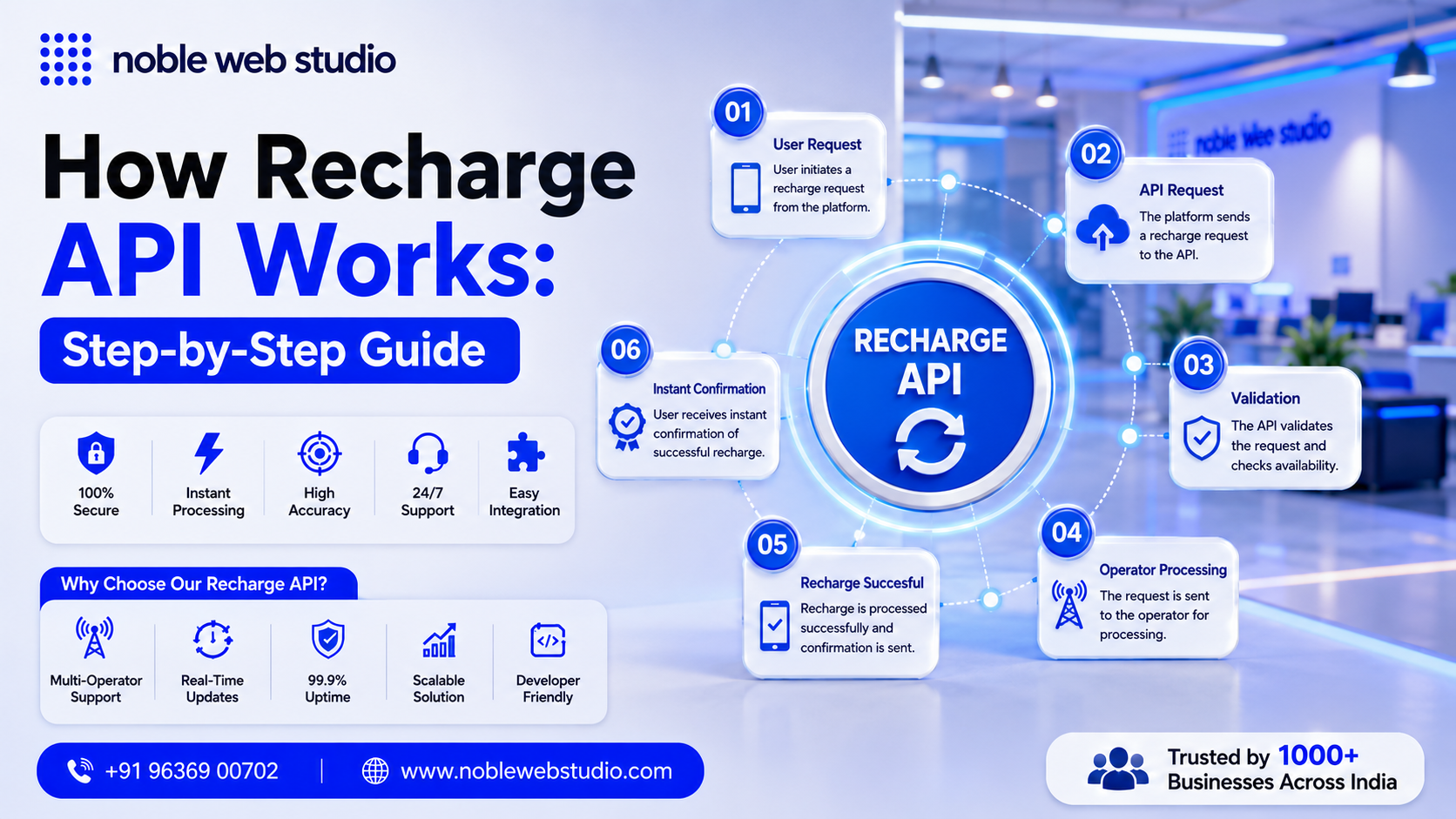
Are you curious about how Recharge API works and why it has become so popular for online businesses, retailers, and developers? A Recharge API (Application Programming Interface) is a simple yet powerful tool that helps you connect with multiple telecom operators and service providers to offer mobile recharge, DTH recharge, data card recharge, postpaid bill payments, and utility services all in one place.
A Recharge API (Application Programming Interface) enables different mobile recharge software systems to communicate and interact to facilitate various types of recharges, such as mobile, DTH, data card, and utility bill payments. It acts as a digital bridge, allowing businesses to integrate these functionalities directly into their own websites or applications.
With the help of a Recharge API integration, you can easily start your own mobile recharge business, give your customers instant recharge services, and earn high commissions without heavy investment. Whether you are a retailer, distributor, entrepreneur, or developer, learning how Recharge API works step by step will help you grow your business, provide seamless digital payments, and attract more users.
In this guide, we’ll explain the Recharge API working process, its key benefits, and how you can use it to launch your own multi recharge portal or app. This step-by-step explanation will give you a clear idea of mobile recharge API integration, recharge automation, and secure online transactions, making it easy for you to get started.
What is Recharge API?
A recharge API (Application Programming Interface) is a set of instructions that allows businesses to integrate various payment services, including mobile, DTH, and data card top-ups, into their own websites, apps, or software. This enables customers to complete recharges through the business’s platform by connecting the business’s system to telecom operators and payment aggregators. These mobile recharge API are designed for easy integration, offering secure and automated ways to process transactions and manage different service providers.
Key Features
- Multi-Service Support: Can handle various services like mobile prepaid, postpaid, DTH, data card recharges, and sometimes even utility bill payments.
- Real-time Transactions: Processes recharges instantly, providing a seamless experience for the end-user.
- Security: Utilizes encryption and other security measures to protect transaction data and prevent fraud.
- Scalability: Designed to handle a large volume of transactions, making it suitable for businesses of all sizes.
- Customization: Offers options to tailor the service, such as setting different denominations or offering discounts.
Benefits
- Enhanced Customer Experience: Businesses can offer a convenient, integrated recharge service directly to their customers.
- Increased Revenue Streams: Enables businesses to offer a wider range of payment services.
- Automation: Automates the recharge process, reducing manual effort and potential errors.
- Brand Building: Allows businesses to create their own branded recharge portals and apps.

How Recharge API Works – Step by Step
A Recharge API functions as an intermediary, enabling applications or recharge platforms to offer recharge and bill payment services by communicating with various service providers (e.g., mobile operators, DTH providers, utility companies).
Here’s how it typically works:
- Integration: A business integrates the Recharge API into its host recharge software (e.g., a website or app). This integration establishes a connection between the business’s system and the vendor’s system (e.g., a telecom operator or an aggregator).
- Request Initiation: When a user initiates a recharge or bill payment on a recharge platform integrated with a Recharge API, the host application sends a request to the recharge API. This request contains essential information like the service type (mobile, DTH, electricity), the recipient’s details (mobile number, DTH subscriber ID, bill account number), and the transaction amount.
- API Processing and Validation: The Recharge API receives this request and performs validations. This may include checking the authenticity of the request (e.g., using API keys or tokens), verifying the format of the provided data, and ensuring the availability of the requested service.
- Communication with Service Provider: If the request is valid, the Recharge API then communicates with the respective Noble web studio provide system. This communication is typically handled through secure protocols, and the recharge API translates the host application’s request into a format understandable by the service provider.
- Transaction Execution: The Noble web studio processes the recharge or bill payment based on the information received from the API. This involves updating the recipient’s account balance or marking a bill as paid.
- Response and Status Update: The Noble web studio sends a response back to the Recharge API, indicating the success or failure of the transaction. The recharge API then relays this status back to the host application, which can then update the user on the transaction’s outcome.
Key functionalities of a Recharge API include:
- Facilitating diverse recharges: Supporting mobile, DTH, data card recharges, and various utility bill payments.
- Transaction management: Handling the entire transaction lifecycle, including processing, status checks, and potentially refunds.
- Integration: Providing a standardized interface for seamless integration into websites, mobile apps, and other software.
- Automation: Automating the recharge and bill payment process, reducing manual intervention.
Read Blog : How Mobile Recharge API Integration Works for Retailers
Types of Recharge API Services
Recharge API services encompass a range of functionalities that enable businesses to integrate various digital payment and top-up options into their mobile recharge platforms. These mobile recharge APIs facilitate the processing of transactions for a wide array of services.
Key Types of Recharge API Services:
- Mobile Recharge API: This recharge API allows for the instant top-up of prepaid mobile numbers and payment of postpaid mobile bills across various telecom operators and circles.
- DTH Recharge API: Designed for recharging Direct-to-Home (DTH) satellite television services, enabling users to top up their subscriptions for Noble web studio.
- Data Card Recharge API: Facilitates the recharging of internet data cards from different service providers.
- Utility Bill Payment API: Extends beyond mobile and DTH to include the payment of various utility bills such as electricity, gas, water, and insurance premiums.
- Multi Recharge API: Multi Recharge API offers a comprehensive solution that combines the functionalities of mobile, DTH, data card, and often utility bill payments into a single, integrated platform, allowing businesses to offer a wide range of services through one recharge API.
- BBPS (Bharat Bill Payment System) API: A specific type of utility bill payment API in India, enabling payment for a wide range of services through a standardized and integrated system.
- White Label Recharge API: White Label Recharge API Provides a solution where businesses can utilize a recharge API under their own branding, creating customized recharge portals or applications without developing the underlying infrastructure.
These recharge APIs are crucial for businesses seeking to offer convenient and efficient digital services to their customers, enhancing user experience and potentially generating new revenue streams.
Read Blog : Best All-in-One Recharge API Provider in India
Why Businesses Use Recharge API
Businesses use Recharge API to automate and streamline the process of offering mobile, DTH, and bill payment services, leading to enhanced customer convenience, increased operational efficiency, and new revenue streams. Integrating recharge API allows businesses to quickly offer a broad range of recharge options, gain cost savings by avoiding in-house development, and achieve scalability to handle transaction growth.
Here’s a breakdown of the key benefits:
For the Business:
- Expanded Service Offerings: Integrate diverse services like mobile, DTH, and utility bill payments into their existing apps and websites.
- Increased Revenue: Generate new income through commissions or fees on recharge transactions.
- Improved Operational Efficiency: Automate manual processes, reducing operational costs and freeing up staff for other tasks.
- Cost Savings: Eliminate the need for expensive in-house development and infrastructure by using a pre-built, scalable solution.
- Scalability: Handle large volumes of transactions as the business grows, ensuring consistent performance without compromising quality.
- Flexibility and Customization: Adapt services and features to meet specific business needs and customer demands.
For the Customer:
- Enhanced Convenience: Provide a one-stop platform for multiple recharge services, eliminating the need to use different apps or websites.
- Faster Transactions: The automated and streamlined process leads to instant, real-time transactions and reduced wait times.
- Seamless Experience: A user-friendly interface and a smooth transaction process contribute to higher customer satisfaction.
Technical and Operational Advantages:
- Multi-Operator Support: Connect to numerous telecom and DTH operators through a single API, ensuring comprehensive service coverage.
- Secure & Reliable Transactions: Benefit from secure payment gateway and robust infrastructure, ensuring high transaction success rates and minimal downtime.
- Real-time Monitoring: Automate transaction monitoring, status updates, and account management in real-time.

Benefits of Using Recharge API
A Recharge API provides significant benefits by increasing operational efficiency through automation, improving customer experience with faster and more convenient transactions, and driving business growth by expanding service offerings and creating new revenue streams. Key advantages include multi-operator support for various services, real-time processing, enhanced security, cost reduction, and the ability to scale for high transaction volumes.
For Businesses
- Increased Revenue: Offers a new income source by providing recharge services to customers and can lead to cross-selling opportunities.
- Operational Efficiency: Automates the entire recharge process, reducing manual effort, errors, and associated operational costs.
- Expanded Services: Allows businesses to integrate a range of digital services, such as mobile, DTH, and bill payments, into their existing platform.
- Scalability: Built to handle large volumes of transactions, enabling businesses to grow and meet increasing demand without system strain.
- Enhanced Control: Provides access to comprehensive reporting and analytics to monitor performance and gain insights into customer behavior.
For Customers
- Convenience: Enables users to recharge their services directly from the business’s website or application, eliminating the need for multiple recharge platforms or physical locations.
- Speed and Reliability: Offers real-time processing for instant recharges and updates, ensuring a fast and seamless user experience.
- Multi-Operator Support: Provides access to a wide variety of mobile and DTH operators through a single integration, offering greater choice.
- Security: Utilizes secure protocols to protect sensitive customer data and ensure that transactions are safe.
Read Blog : Best Recharge API Providers in India – Complete Guide
Best Features of a Recharge API
A recharge API provide businesses with the capability to automate and integrate various recharge services, including mobile, DTH, and data card recharges, into their existing applications or websites. Key features commonly found in a best recharge API include multi-operator support, enabling services across numerous providers; real-time transaction processing for instant top-ups; secure payment gateway integration for safe transactions; comprehensive reporting and analytics for tracking performance; and customization options for tailoring the user experience to specific branding needs.
Core Features
- Multi-Operator Support: This feature allows the recharge API to handle recharges for a wide range of telecom operators, DTH providers, and data card services from various companies.
- Real-time Processing: Recharges are processed instantly, ensuring that users receive their top-ups without delay, which enhances customer satisfaction.
- Payment Gateway Integration: The mobile recharge API integrate with secure payment gateway to process payments through various methods like UPI, credit/debit cards, and digital wallets.
- Automated Recharges: The process of topping up prepaid mobile numbers and other services is automated, streamlining operations and reducing manual effort.
Business-Oriented Features
- Customization Options: Businesses can tailor the user interface and recharge experience to match their brand identity and specific requirements.
- Reporting and Analytics: The mobile recharge API provide detailed reports and analytics on transaction history, success rates, and customer behavior, allowing for data-driven decisions.
- Integration Support: Developers receive documentation and support to easily integrate recharge API with their existing recharge software and platforms.
- High Reliability and Uptime: A robust and stable recharge API ensures consistent performance and minimal downtime, building customer trust.
Other Useful Functionalities
- Multi-Channel Support: In addition to mobile and DTH, some recharge APIs support other services like electricity bill payments and data card recharges.
- Secure Transactions: The recharge API incorporates security features, such as encryption and fraud detection, to protect sensitive data during financial transactions.
- Transaction Management: Functionalities include checking account balances, monitoring transaction status, and managing potential issues like failed transactions.
Read Blog : What is Recharge API? Everything You Need to Know
Step-by-Step Guide to Integrate Recharge API
Integrating Recharge API, which allows you to offer services like mobile top-ups, DTH recharges, and bill payments, generally involves the following steps:
Choose a Recharge API Provider:
- Identify the specific recharge services you need (e.g., mobile, DTH, data card).
- Select a reputable recharge API provider that offers the required services, strong uptime, reliable support, and competitive commission rates.
Obtain API Credentials:
- Sign up for an account with Noble web studio.
- Generate or obtain the necessary API keys, tokens, or other credentials required for authentication and secure access to the API.
Consult API Documentation:
- Thoroughly review the recharge API documentation provided by Noble web studio.
- Understand the available recharge API endpoints, request parameters, response formats (e.g., JSON), and error codes.
Integrate the API into Your System:
- Implement recharge API calls within your application’s code (website, mobile app, custom software).
- Write code to send requests to the recharge API endpoints for initiating recharges, checking balances, managing transactions, and retrieving status updates.
- Handle recharge API responses, including parsing data and managing potential errors or transaction failures.
Implement Payment Gateway Integration (if applicable):
- If your platform directly handles user payments for recharges, integrate secure payment gateway to process these transactions before sending the recharge request to the API.
Test Thoroughly:
- Utilize a sandbox or testing environment provided by the mobile recharge API provider like Noble web studio.
- Conduct comprehensive testing of all integrated functionalities, including successful recharge scenarios, error handling, various operators, and different recharge amounts.
Launch and Monitor:
- Deploy the integrated recharge application to your live environment after successful testing.
- Continuously monitor transaction performance, API uptime, and address any issues that may arise.

Recharge API Pricing and Commission
Recharge API pricing and commission vary by the Noble web studio with costs for recharge API integration services typically ranging from a few thousand to tens of thousands of rupees annually, and commission rates on recharges generally falling between 2% and 6.5%. The actual cost depends on the services included (like DTH and data card recharges), the platform’s features, and the commission percentage offered by specific providers for different mobile operators.
Factors Influencing Pricing and Commission
- Provider and Plan: Noble web studio offer various pricing tiers, such as annual or monthly plans, and may include free trials.
- Service Scope: The recharge api cost can also depend on the range of services the API supports, such as prepaid, postpaid, DTH, and data card recharges.
- API Features: Mobile recharge platform offer additional features like merchant recharge admin portal for managing configurations, which can affect the overall cost.
- Commission Rates: Commissions are often set per operator and can range from 2% to over 6% depending on the operator, such as BSNL, Vodafone Idea, or Jio.
Examples of Pricing and Commission
- API Service Costs: Noble web studio might charge an annual fee for access to the API service, for example, ₹25,000/year for a mobile recharge API.
- Integration Fees: Integrating with a third party recharge API might cost around ₹10,000 to ₹20,000 per API, according to one source.
- Commission Rates:
- BSNL: Can be as high as 6.50%.
- Vodafone Idea (VI): Around 3.80%.
- JIO: About 3.50%.
How to Find Specific Pricing
To get precise pricing and commission details, you will need to:
- Contact API Providers: Reach out to companies that offer mobile recharge APIs.
- Request a Quote: Ask for a detailed breakdown of their API integration costs and the commission structure for different operators.
- Compare Options: Evaluate offerings from different providers to find the best fit for your business needs.
Read Blog : Best Recharge API Providers with 24×7 Support
How to Start Recharge Business with API
Start recharge business with an API involves several key steps to establish a functional and profitable platform.
1. Business Setup and Legalities:
- Register your business: Choose a suitable legal structure (e.g., sole proprietorship, partnership, LLP, or private limited company) and register it according to local regulations.
- Obtain necessary licenses and permits: Ensure compliance with all relevant industry-specific and general business licenses.
- Adhere to tax regulations: Understand and comply with applicable tax laws for your business type and operations.
- Ensure data protection compliance: If handling customer data, comply with relevant data protection and privacy regulations.
2. Platform Development and API Integration:
- Choose a reputable API provider: Select a Noble web studio offering reliable recharge APIs for various services (mobile, DTH, data card, bill payments, etc.) and competitive commission structures.
- Develop your platform: This can involve creating a user-friendly website, a mobile application, or integrating the API into an existing system.
- Integrate the Recharge API: Follow the Noble web studio documentation to integration mobile recharge API into your platform, enabling real-time recharge processing.
- Integrate a secure payment gateway: Ensure seamless and secure payment processing for customers by integrating a reliable payment gateway.
- Develop an admin panel: Create a backend system to manage users, transactions, commissions, and other operational aspects of your business.
3. Testing and Deployment:
- Thoroughly test the integration: Conduct comprehensive testing of the best mobile recharge API integration, payment gateway, and overall platform functionality to ensure smooth operation and accuracy.
- Launch your platform: Once testing is complete and satisfactory, deploy your website and/or mobile application.
4. Marketing and Operations:
- Market your services: Utilize digital marketing channels and other strategies to promote your recharge business and attract customers.
- Provide excellent customer support: Offer responsive and effective customer support to address user queries and issues, building trust and loyalty.
- Monitor and optimize: Continuously monitor recharge platform performance, transaction success rates, and customer feedback to identify areas for improvement and optimize your services.
5. Branding and Marketing:
- Branding: Incorporate your brand elements (logo, name) into your platform.
- Marketing: Promote your business through digital marketing channels to attract customers.
6. Customer Support:
- Establish a system for providing excellent customer support to address any queries or issues related to recharges and transactions.
Key Considerations:
- Reliable API Provider: The success of your business heavily depends on the reliability and uptime of your chosen reliable recharge API.
- Commission Structure: Understand the commission structure offered by Noble web studio and ensure it aligns with your business goals.
- Security: Implement robust security measures to protect customer data and financial transactions.
- Scalability: Choose an recharge API and mobile recharge portal platform that can scale as your business grows.

Top Reasons to Choose a Best Recharge API Provider
Top reasons to choose a best recharge API provider like Noble web studio are enhanced user experience through fast, reliable transactions, increased revenue potential with attractive commissions and new service offerings, improved operational efficiency via automation and reduced errors, and robust security to protect sensitive customer data. Businesses also benefit from scalability to handle high transaction volumes, flexibility for customization, and comprehensive support and documentation.
Here’s a breakdown of the key reasons:
For Your Customers & Business
- Enhanced User Experience: Quick and reliable transactions, instant transaction statuses, and automated processes lead to happier, more satisfied customers.
- Increased Revenue: Recharge APIs create new revenue streams and can increase existing profits through attractive commission structures.
- Business Growth: Offer a wider range of services, attract more customers, and expand your business’s offerings by integrating a robust recharge API.
For Your Operations
- Efficiency & Automation: Automating the recharge process reduces manual effort, minimizes errors, and frees up valuable resources for other business activities.
- Scalability: Choose an recharge API designed to handle high volumes of transactions, ensuring seamless performance as your business grows.
- Reliability & Stability: High uptime and a proven track record of uninterrupted service are crucial to maintain customer trust and prevent business disruption.
For Security & Support
- Robust Security: Noble web studio use strong security measures like encryption, tokenization, and secure payment gateways to protect sensitive customer and financial data.
- Reliable Support & Documentation: Access to clear guides, responsive technical support, and helpful resources simplifies integration and helps resolve issues promptly.
- Real-Time Processing & Reporting: Gain real-time insights into transaction statuses and performance with built-in analytics and reporting features.
Key Features to Look For
- Multi-Operator Support: Ensure the recharge API supports a wide range of mobile, DTH, and other service providers to offer comprehensive services.
- Service Coverage: Verify the API supports various recharge types, including mobile, DTH, data cards, and utility bill payments.
- Ease of Integration: Look for well-documented recharge API and SDKs that integrate smoothly with your existing platforms and applications.
- White-Labeling Options: If you want to launch your own branded recharge portal, Noble web studio
Read Blog : A Complete Guide to Choosing the Best Recharge API Provider
Why Choose the Best Recharge API Provider
Choosing the top recharge API provider like Noble web studio is crucial for businesses because it enables streamlined operations, enhances customer experience through fast and reliable transactions, boosts revenue, ensures secure data protection, and offers a competitive advantage by expanding service offerings. Noble web studio offers robust infrastructure, supports multiple operators, ensures high uptime, provides comprehensive support, and delivers a seamless, secure, and cost-effective recharge solution for your customers.
Here are the key reasons to choose the best recharge API provider:
For Your Business Operations
- Streamlined Operations: Automate the recharge process to reduce manual effort and allow your staff to focus on other critical tasks.
- Increased Revenue: By offering reliable and fast recharge options, you can boost sales and attract more customers, creating new revenue streams.
- Competitive Advantage: Providing a smooth and comprehensive recharge service helps you stand out from competitors and attract more customers.
- Business Growth: A robust recharge API solution allows you to expand your service offerings and reach a wider customer base, driving business growth.
For Your Customers
- Enhanced User Experience: Customers benefit from fast, real-time transactions, minimizing wait times and improving satisfaction.
- Wide Service Range: Noble web studio is a good recharge API provider we supports a wide range of telecom and service operators, allowing you to meet the needs of a diverse customer base.
- Security and Trust: Noble web studio ensures secure payment processing and data protection, building trust with your customers.
For the API Provider’s Reliability
- High Success Rates & Reliability: Noble web studio offer robust infrastructure, minimizing downtime and ensuring consistent performance for your transactions.
- 24/7 Support: Round-the-clock technical support is vital to resolve issues quickly and maintain uninterrupted service.
- Secure Transactions: Advanced security features protect sensitive customer data and prevent fraud.
- Transparent Pricing: Look for a Noble web studio with a transparent pricing structure and no hidden fees.
Read Blog : Mobile Recharge Software with Multi-API Integration Explained
Future of Recharge API in Digital Payments
The future of Recharge API in digital payments is characterized by several key trends and advancements aimed at enhancing efficiency, security, and user experience:
Integration of Advanced Technologies:
- Artificial Intelligence (AI) and Machine Learning (ML): These technologies will be increasingly used for predictive analytics, personalized user experiences (e.g., suggesting optimal recharge plans), and robust fraud detection mechanisms.
- Blockchain: Blockchain technology is anticipated to enhance security, transparency, and trust in recharge transactions, particularly for cross-border payments and preventing fraudulent activities.
Expanded Service Offerings and Integration:
- Unified Financial Ecosystem: Recharge API integrated more deeply with digital wallets, banking applications, and other platforms to offer a seamless and unified financial experience for users, encompassing mobile recharges, DTH, bill payments (BBPS), and potentially other digital services like AEPS (Aadhaar Enabled Payment System).
- Multi-Channel Availability: Businesses will focus on offering recharge services across diverse channels, including mobile apps, websites, and potentially even IoT devices, to reach a wider audience.
Enhanced Security and Compliance:
- Robust Security Measures: Future mobile recharge API will incorporate stronger encryption, multi-factor authentication, and advanced fraud detection systems to protect user data and financial transactions.
- Regulatory Adherence: Compliance with evolving financial regulations and industry standards will be a critical aspect of future recharge API development.
Focus on Scalability and Performance:
- Resilient Infrastructure: Mobile recharge API designed for high scalability and fault tolerance to handle rapidly increasing transaction volumes and ensure consistent performance.
- Real-time Processing: The demand for real-time processing of recharges and payments will drive advancements in recharge API architecture and infrastructure.
Addressing Financial Inclusion:
- Expansion into Rural Areas: Recharge APIs will play a significant role in extending digital payment services to underserved rural populations, facilitating financial inclusion through user-friendly interfaces and potentially vernacular language support.
The future of recharge APIs in digital payments involves a move towards more intelligent, secure, integrated, and accessible platforms that leverage emerging technologies to deliver a superior user experience and drive the growth of the digital economy.

Conclusion
Using a Recharge API is one of the simplest and most profitable ways to grow your digital business. It allows you to offer services like mobile recharge, DTH recharge, data card recharge, and utility bill payments directly from your own platform. With just a few easy steps, you can connect to the mobile recharge API integrate it with your website or app, and start earning commission on every successful transaction.
A Recharge API serves as a crucial bridge, enabling businesses to seamlessly integrate diverse recharge services into their platforms. This integration allows for the automation of transactions, including mobile top-ups, DTH recharges, and bill payments, directly through a business’s website or application.
The core mechanism involves the host system (the business’s platform) sending a request to the vendor system (telecom operator or aggregator) via the API. This request contains essential details such as the mobile number, recharge amount, and an authentication token. The API then facilitates communication, processing the request and verifying the information with the vendor. Upon successful verification and processing, the vendor system returns a response to the host system, indicating the transaction’s status (success, failure, or pending).
Ultimately, Recharge APIs enhance operational efficiency, expand service offerings for businesses, and provide a convenient, real-time experience for end-users, thereby streamlining the entire recharge ecosystem.
The best part is that a Recharge API saves time, reduces manual work, and gives instant recharge services to your customers. Whether you are a small retailer, entrepreneur, or startup, adding Recharge API to your business can help you increase income, attract more customers, and provide reliable digital services 24/7.
If you want to earn more commission, expand your services, and grow your online recharge business, then integrating a Mobile recharge API solution is the smartest choice. Start today and give your customers the fast, secure, and convenient recharge experience they deserve.
FAQ – How Recharge API Works: Step-by-Step Guide
A Recharge API is a system that connects your app, website, or software directly to mobile, DTH, or utility services. It allows you to provide instant recharges and bill payments automatically.
The API works by sending a request from your system to the service provider’s server. Once the request is processed, the recharge or payment is completed instantly, and you get a confirmation.
Not necessarily. Most providers, like Noble web studio offer easy integration with ready-to-use scripts, plugins, or dashboards, so even beginners can start recharging easily.
Instant mobile, DTH, and utility recharges
Real-time transaction updates
Ability to earn commission on every transaction
Automated system reduces manual work
Multiple operators in one platform
Yes. Every successful recharge through your system gives you a commission. Many agents and online businesses use Recharge APIs to earn regular income.
Yes. Noble web studio use secure connections and follow banking and telecom regulations to keep transactions safe.
You can integrate it via simple REST API calls, ready-made plugins, or by using the Noble web studio provide dashboard. Full step-by-step documentation is usually provided by the API provider.
Mobile prepaid and postpaid
DTH recharge
Data cards
Electricity, water, and gas bills
Transactions are usually instant, and you get a confirmation immediately after the recharge or bill payment is successful.
Yes. Most Recharge API dashboards provide a complete history of all transactions, commissions earned, and pending payments, making management easy.