
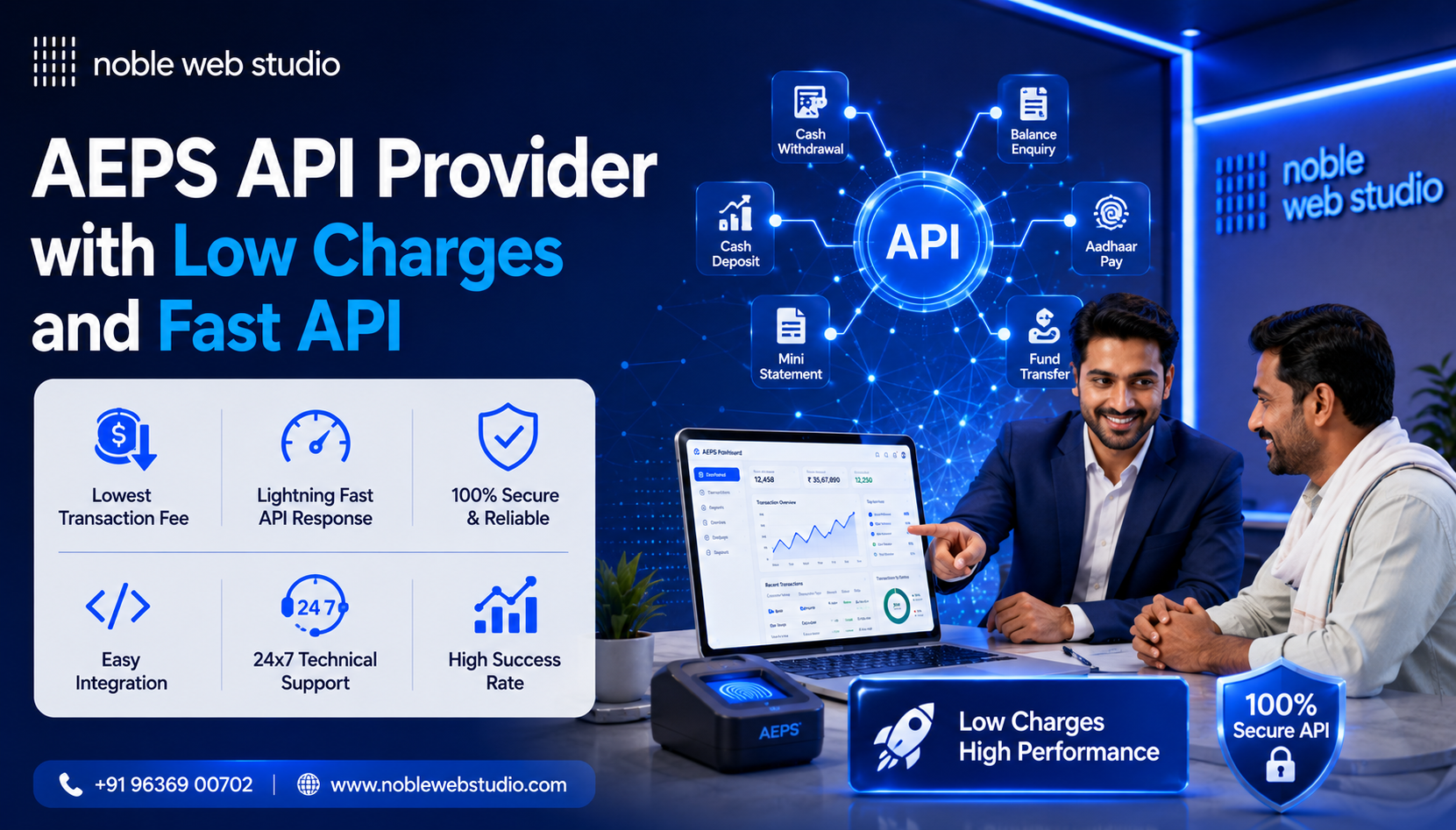
In today’s fast-growing digital economy, startups are constantly looking for secure and efficient ways to offer financial services. The AEPS API (Aadhaar Enabled Payment System API) has become one of the most powerful tools for startups entering the digital payment industry. It allows businesses to provide essential banking services like cash withdrawal, balance inquiry, and fund transfer using Aadhaar authentication even in remote areas.
AEPS API Startups Grow Digital Payment Business means that fintech startups are using the (AEPS) Aadhaar Enabled Payment System API to build their businesses, which allows them to offer basic banking services like cash withdrawals and balance inquiries to customers using only their Aadhaar number and biometric authentication. By integrating Aeps API, these startups can expand their services, reach more customers in areas with limited bank access, and generate revenue through transaction commissions.
By integrated AEPS API, startups can expand their service offerings, attract more customers, and increase their revenue without needing a physical bank setup. It helps build trust with customers by enabling instant, cashless, and secure transactions that work anytime, anywhere.
At Noble Web Studio, we help startups and fintech businesses implement reliable AEPS API solutions that boost growth, ensure compliance, and simplify payment operations.
This blog explains how AEPS API solutions help startups grow faster, increase revenue, and gain customer trust in the evolving digital economy. If you’re a fintech startup or agent looking to start your own AEPS-based business, understanding the benefits of AEPS Api software and API integration will give you a competitive edge in 2025.
What is AEPS API
An AEPS API is a software tool that allows businesses to integrate Aadhaar Enabled Payment System (AEPS) into their applications or platforms, enabling customers to conduct basic banking transactions using only their Aadhaar number and biometric authentication. It connects a business’s device to the NPCI network, facilitating services like cash withdrawals, deposits, and balance inquiries through a merchant acting as a micro-ATM.

How AEPS API Works
An AEPS API works by connecting a business’s system to the AEPS network to process financial transactions using a customer’s Aadhaar number and biometric authentication. The API acts as a secure, real-time bridge that facilitates communication between the merchant’s device, the AEPS network (managed by NPCI), the customer’s bank, and the Aadhaar database (UIDAI).
Here is a step-by-step breakdown of how the process works:
1. Initiation of transaction
- Customer request: A customer with an Aadhaar-linked bank account visits a merchant or a banking correspondent with a micro-ATM.
- Transaction details: The customer provides their Aadhaar number and the name of their bank to the merchant.
- Service selection: The customer then selects the desired banking service, such as cash withdrawal, cash deposit, balance inquiry, or mini-statement.
2. Authentication
- Biometric capture: The merchant uses a UIDAI-certified biometric device, such as a fingerprint or iris scanner, to capture the customer’s biometrics.
- API request: The merchant’s application sends the transaction request, including the customer’s Aadhaar number and encrypted biometric data, to the AEPS API provider like Noble web studio.
- UIDAI verification: The AEPS API securely transmits the biometric data to the UIDAI database for verification. UIDAI confirms if the biometric data matches the Aadhaar number.
3. Processing
- Network routing: Once the biometric authentication is successful, the fast AEPS API routes the transaction request through the National Payments Corporation of India’s (NPCI) network to the customer’s bank.
- Bank processing: The customer’s bank receives the request and, after verifying the account details and transaction type, processes the transaction in real-time.
- Transaction completion: The bank then sends a response back through the NPCI network and the best AEPS API, confirming the transaction’s success or failure.
4. Confirmation
- API response: The AEPS API receives the confirmation and passes it back to the merchant’s application.
- Customer notification: The merchant provides a receipt to the customer and gives them cash if it was a withdrawal. Many systems also send an SMS notification to the customer.
Key components involved
- AEPS API provider: Noble web studio that provides AEPS API and manages the integration with the NPCI and banks.
- Merchant application: A Point-of-Sale (PoS) system, Aadhaar Enabled Payment System Software, or web portal and Aeps admin portal used by the merchant.
- Biometric device: A UIDAI-certified hardware device that captures and encrypts the user’s biometric data.
- NPCI (National Payments Corporation of India): The central switch that routes the transactions between different banks.
- UIDAI (Unique Identification Authority of India): The central database for Aadhaar, which verifies the user’s biometric data.
- Issuing bank: The customer’s bank, where the Aadhaar-linked account is held.
Use Cases of AEPS API in Digital Payment Businesses
(AEPS) Aadhaar Enabled Payment System API offers various use cases for digital payment businesses, primarily focused on financial inclusion and accessible banking services, especially in rural and underserved areas.
Key Use Cases of AEPS API in Digital Payment Businesses:
Micro-ATMs and Rural Banking:
- Retailers and agents can use secure AEPS API to offer basic banking services like cash withdrawals, cash deposits, balance inquiries, and mini-statements through micro ATM software.
- This extends banking reach to remote locations where traditional bank branches or ATMs are scarce.
Financial Inclusion Initiatives:
- AEPS API facilitates the onboarding of unbanked and underbanked populations into the formal financial system.
- It enables access to essential banking functions using only Aadhaar and biometric authentication, removing barriers like documentation or card requirements.
Government Benefit Disbursements (DBT):
- Governments can leverage top AEPS API for secure and efficient disbursement of subsidies and welfare scheme benefits directly into beneficiaries’ Aadhaar-linked bank accounts.
- This enhances transparency and reduces leakage in the distribution process.
Aadhaar Pay for Merchants:
- Merchants can integrate AEPS API to accept cashless payments from customers using their Aadhaar number and biometric authentication.
- This provides an alternative payment method, particularly useful in areas with limited card penetration.
eKYC Services:
- AEPS API enables businesses to perform electronic Know Your Customer (eKYC) verification in real-time, streamlining the account opening process for banks and other financial AEPS service Provider.
Fund Transfers:
- AEPS facilitates Aadhaar-to-Aadhaar fund transfers, allowing individuals to send money securely between Aadhaar-linked bank accounts.
Mobile Banking and Fintech Applications:
- Noble web studio provide AEPS Banking Software and integration AEPS API to offer a comprehensive suite of banking and payment services within their Aeps platforms, providing a seamless user experience.
Revenue Generation for Agents and Retailers:
- By low cost integrating AEPS API, businesses can empower their agent networks to offer banking services, earning Aeps commission on each transaction and creating a new revenue stream.
Why AEPS API is Important for Startups
AEPS (Aadhaar Enabled Payment System) APIs are important for startups due to several key factors:
- Financial Inclusion and Market Reach: AEPS allows startups to provide basic banking services like cash withdrawals, deposits, and balance inquiries in underserved areas, particularly rural regions lacking traditional banking infrastructure. This expands their market reach to a large, untapped customer base.
- New Revenue Streams: Startups can generate commissions on each AEPS transaction, creating a stable and potentially significant source of income.
- Increased Customer Traffic: Offering essential banking services attracts more customers to a startup’s platform or physical location, potentially leading to increased sales of other products or services.
- Cost-Effective Market Entry: Integrating AEPS API is generally more affordable and faster than building a complete banking infrastructure from scratch, enabling quicker market entry for startups.
- Security and Compliance: AEPS leverages secure, government-backed biometric authentication (Aadhaar), minimizing fraud risk and ensuring compliance with regulatory bodies like the National Payments Corporation of India (NPCI) and the Reserve Bank of India (RBI).
- Diversified Business Offerings: Startups can integrate AEPS with other digital solutions (e.g., mobile recharges, utility bill payments) to create multi-service platforms, enhancing their value proposition and expanding revenue opportunities.
- Enhanced Accessibility and Convenience: AEPS offers a secure, cardless, and PIN-free method for customers to access financial services, improving accessibility and convenience, especially for those in remote areas.
- Seamless Integration: AEPS API allow for straightforward integration of banking functionalities into existing AEPS Admin Software or new platforms, streamlining Aeps develop and deployment.

Benefits of AEPS API for Startups Growth
(AEPS) Aadhaar Enabled Payment System API integration offers several benefits for startup growth, particularly in the Indian market:
- Financial Inclusion and Market Expansion: AEPS enables startups to provide essential banking services like cash withdrawals, balance inquiries, and money transfer to underserved populations, especially in rural and remote areas. This expands the startup’s potential customer base significantly and fosters financial inclusion.
- New Revenue Streams: Startups can generate revenue through commissions on each AEPS transaction processed through their platform. This provides a direct income stream and helps build a sustainable business model.
- Increased Customer Engagement and Loyalty: By offering convenient and accessible banking services, startups can attract new customers and build loyalty among existing ones. This enhances customer engagement and strengthens the startup’s position in the market.
- Cost-Effectiveness and Scalability: Integrated AEPS API is a cost-effective way for startups to enter the financial services market compared to establishing traditional banking infrastructure. Reliable AEPS API are typically scalable, allowing startups to handle increasing transaction volumes as they grow without significant upfront investments.
- Enhanced Security and Trust: AEPS leverages Aadhaar-based biometric authentication, providing a secure and reliable method for transactions. This enhances customer trust and reduces the risk of fraud, which is crucial for building a reputable financial service.
- Seamless Integration: Noble web studio offer well-documented and easy-to-use APIs, simplifying the integration process into a startup’s existing AEPS B2B Software or platforms. This reduces Aeps software development time and resources.
- Government Backing and Regulatory Compliance: AEPS is a government-backed initiative, which provides a level of legitimacy and security. Integrating AEPS ensures compliance with regulatory requirements for digital payments in India.
Features of AEPS API for Startups Growth
AEPS (Aadhaar Enabled Payment System) API offers a range of features crucial for startups aiming to grow in the fintech space and promote financial inclusion. These features empower businesses to provide essential banking services securely and efficiently:
Core Banking Services:
- Cash Withdrawal: Allows customers to withdraw cash from their Aadhaar-linked bank accounts using biometric authentication.
- Cash Deposit: Facilitates the deposit of cash into Aadhaar-linked bank accounts.
- Balance Inquiry: Enables users to check their current bank account balance in real-time.
- Mini Statement: Provides a summary of recent transactions for an Aadhaar-linked account.
- Fund Transfers: Enables secure fund transfers between Aadhaar-linked bank accounts, including interbank transfers.
Security and Efficiency:
- Aadhaar-Based Biometric Authentication: Ensures secure transactions through fingerprint or iris scanning linked to the user’s Aadhaar number.
- Real-Time Transaction Processing: Transactions are processed and settled instantly, ensuring quick fund transfers and balance inquiries.
- Interoperability: The AEPS system integrates with multiple banks, allowing for seamless transactions across different financial institutions.
- Robust Security Measures: Includes encryption and potentially two-factor authentication to protect user data and prevent fraud.
Growth and Scalability for Startups:
- Financial Inclusion: Enables startups to extend banking services to underserved and rural areas, reaching a wider customer base.
- New Revenue Streams: Provides opportunities for commission-based income through transaction facilitation.
- Ease of Integration: API allow for seamless integration with existing platforms and systems, reducing Aeps Software development time and Aeps Api costs.
- Agent Management Tools: For B2B AEPS platforms, features like agent management, commission setup, and real-time reporting are vital for scaling operations.
- Customization Options: The ability to customize interfaces and features to align with specific business models and target audiences.
Integrate AEPS API for Startups
Integrating AEPS (Aadhaar Enabled Payment System) API for a startup involves several key steps to enable Aadhaar-based banking services within your platform.
- Partner with an Authorized AEPS API Provider: Select a reliable AEPS API provider like Noble web studio that is authorized by the National Payments Corporation of India (NPCI). Noble web studio based on their best reputation, support, and features.
- Complete Registration and KYC: Register your startup with the Noble web studio and complete the Know Your Customer (KYC) process by submitting the required documentation, such as your Aadhaar and PAN cards, and business registration details.
- Acquire and Register Biometric Devices: Obtain compliant biometric devices (fingerprint or iris scanners) that are certified for use with AEPS. Register these devices with Noble web studio.
- Obtain AEPS API Key and Documentation: Upon successful registration and KYC, the Noble web studio will furnish you with the necessary AEPS API key and comprehensive documentation detailing the API endpoints, request/response formats, and integration guidelines.
- Integrate the AEPS API:
- Access API Endpoints: Utilize the provided Aeps API endpoints to send transaction requests (e.g., cash withdrawal, balance inquiry, fund transfer) and receive responses.
- Incorporate Code Snippets: Integrate the provided code snippets or develop custom code to handle various AEPS functionalities within your AEPS Admin Software, website, or Point-of-Sale (POS) system. This involves managing user input (Aadhaar number, bank name), biometric data capture, and API calls.
- Handle Data Formats: Ensure your system can correctly format requests and parse responses according to the API’s specifications.
- Develop User Interface (UI): Aeps Api design a user-friendly interface within your platform for customers to initiate AEPS transactions, input their Aadhaar number, select their bank, and perform biometric authentication.
- Implement Security Measures: Ensure robust security measures are in place to protect sensitive customer data and biometric information, adhering to the security standards outlined by the Noble web studio and regulatory bodies.
- Testing and Deployment: Thoroughly test the integrated AEPS functionalities in a sandbox or staging environment to identify and resolve any issues. Once testing is complete and successful, deploy the integrated Aeps Api solution to your live environment.
- Offer AEPS Services: With the successful integration and deployment, you can begin offering AEPS services to your customers, enabling them to perform basic banking transactions using their Aadhaar number and biometric authentication.

How AEPS API Increases Revenue and Business Growth
An AEPS (Aadhaar Enabled Payment System) API increases revenue for startups and businesses by creating a new, commission-based income stream and attracting more customers through the offer of essential banking services. This drives growth by expanding a customer base, especially in rural areas, and fostering customer loyalty by acting as a trusted financial hub. Startups benefit from a cost-effective entry into the financial services market without the need for expensive physical infrastructure.
Increases revenue
- Transaction commissions: Businesses earn a commission on every AEPS transaction they process, such as cash withdrawals, deposits, and balance inquiries.
- Increased customer footfall: Offering banking services transforms stores into “micro-ATMs,” attracting new customers who would otherwise have to travel far for banking needs.
- Boosted sales: The increased footfall from banking customers leads to more potential buyers for the store’s primary products and services.
Drives startup growth
- Cost-effective entry: Startups can enter the financial services market with a low-cost solution compared to building a traditional banking infrastructure.
- Financial inclusion: AEPS APIs allow startups to serve the unbanked and underbanked populations in rural and remote areas, tapping into new markets and contributing to national development goals.
- Scalability: The use of APIs enables startups to scale their operations by handling increasing transaction volumes without significant upfront investment.
- Enhanced customer loyalty: By providing a convenient and secure service, businesses build trust and loyalty, encouraging repeat business and customer retention.
- Seamless integration: Aeps API integrated can be easily into a startup’s existing AEPS Portal provider or point-of-sale systems, simplifying operations and management.
Choosing the Right AEPS API Provider
Noble Web Studio is the best AEPS API provider on your specific needs, but you should look for one that is certified by the NPCI, has strong bank partnerships, robust security, and a user-friendly Aeps platform with good support. Noble Web Studio are often mentioned for high commissions and services, while Noble Web Studio is cited for reliability and a wide network.
Key factors to consider
- NPCI and RBI Certification: Ensure the Noble Web Studio is compliant with the National Payments Corporation of India (NPCI) and Reserve Bank of India (RBI) guidelines for security and reliability.
- Bank Partnerships: Choose a Noble Web Studio with direct, secure connections to a wide range of RBI-authorized banks to ensure seamless transactions.
- Security: Look for strong security measures like encryption, SSL, and two-factor authentication to protect financial and biometric data.
- Transaction Performance: A high transaction success rate and fast, real-time settlements are critical for customer satisfaction and your own cash flow.
- Features and Functionality:
- Multi-bank support: Offers flexibility for your customers.
- User-friendly interface: A good Aeps Api dashboard for managing your business and transactions.
- Additional services: Noble Web Studio offer more than just AEPS, such as bill payments, recharges, and money transfers.
- Support and Commission:
- Customer Support: Responsive and reliable technical support is crucial for resolving issues quickly.
- Commission Structure: Compare commission rates to maximize your earnings per transaction.
- Scalability: Select a platform that can grow with your business, handling increasing transaction volumes without performance issues.
Future of AEPS in India’s Digital Payment Business
The future of India’s Aadhaar Enabled Payment System (AEPS) is one of robust, if selective, growth. While AEPS is not expected to rival the volume of UPI in urban areas, it will continue to be a vital component of India’s digital payments infrastructure by serving its core purpose: providing last-mile financial connectivity to rural and financially underserved populations.
Growth will be defined by ongoing efforts to increase security, technological innovation, and integration with other digital payment platforms.
Key trends shaping the future of AEPS
Enhanced security and fraud prevention
Addressing fraud is the most pressing challenge for AEPS, and new regulations are set to enforce stronger security measures.
- Stricter oversight: The Reserve Bank of India (RBI) has issued new directives, effective January 1, 2026, mandating enhanced due diligence for AEPS Touchpoint Operators (ATOs).
- Improved monitoring: Banks will be required to strengthen KYC processes for operators and integrate AEPS transaction flows with Enterprise Fraud Risk Management Systems (EFRMS) for better oversight.
- Advanced biometrics: AEPS software and hardware will leverage improved biometric technology, including liveness detection and higher-quality scanners, to combat fingerprint spoofing and cloning.
- AI for fraud detection: Increased use of artificial intelligence and machine learning will enable real-time transaction monitoring and anomaly detection to flag suspicious activity.
Deeper integration with the digital ecosystem
Future AEPS development will focus on linking with other major platforms to create a more comprehensive financial toolkit for users.
- UPI and Bharat Bill Pay System (BBPS): Integration with UPI for broader digital payments and BBPS for utility bill payments will create multi-service platforms that offer greater value to rural users.
- Mobile-first solutions: With rising smartphone penetration, Best AEPS platforms will user-friendly develop Aeps Software for both customers and agents, improving accessibility.
- Embedded finance: AEPS API will be increasingly integrated into non-financial applications, making banking services more accessible in everyday apps.
Continued and expanded financial inclusion
AEPS will continue to fulfill its core mandate of serving the unbanked and underbanked populations, solidifying its role as a crucial tool for financial inclusion.
- Doorstep banking: The model of Business Correspondents (BCs) and Micro ATM will persist, enabling doorstep banking in areas that lack traditional bank branches.
- Offline capabilities: The system will incorporate more advanced offline transaction capabilities to ensure service availability in regions with poor internet connectivity.
- Diversified services: Beyond basic banking, future AEPS platforms will expand to include micro-loan payments and insurance premium collections.
A strategic shift from AEPS to UPI
Despite its continued relevance, AEPS is increasingly viewed as an entry point for users to transition to more advanced digital payment systems like UPI.
- On-ramp to digital finance: A report by MicroSave Consulting highlights how AEPS acts as a ladder for last-mile users to climb toward broader digital adoption.
- Distinct use cases: AEPS remains crucial for cash-based transactions and government Direct Benefit Transfer (DBT) disbursements in rural areas. In contrast, UPI is the preferred method for quick, cashless payments among tech-savvy urban users.
Challenges AEPS must overcome
The future of AEPS is not without hurdles. Successfully navigating these challenges will be critical for its continued relevance.
- Reliability: High transaction failure rates, caused by both technical issues and user errors, must be reduced to build greater user trust in the system.
- Digital literacy: Significant portions of the rural population remain unaware of AEPS or lack the literacy to use it effectively. Continued educational initiatives are required.
- Competition from UPI: While serving different segments, AEPS must contend with the ever-expanding reach and convenience of UPI, particularly with the introduction of features like UPI Lite X for offline payments.

Conclusion
The AEPS API (Aadhaar Enabled Payment System API) has become one of the most powerful tools for startups aiming to expand their presence in the digital payment industry. By integrating AEPS API, startups can offer instant cash withdrawals, balance inquiries, fund transfers, and bill payments, all in a secure and efficient way.
AEPS (Aadhaar Enabled Payment System) API enables startups to grow their digital payment business by offering basic banking services like cash withdrawal and balance inquiries through a secure, Aadhaar-biometric-based system, particularly in areas with limited banking infrastructure. This integration allows businesses to create new revenue streams from transaction commissions, attract a larger customer base, increase foot traffic, and promote financial inclusion while enhancing customer trust through secure and convenient transactions.
For new businesses, AEPS API not only helps in building customer trust but also creates new income opportunities through transaction-based commissions and wider service reach. It simplifies digital transactions, enhances user experience, and ensures compliance with banking regulations key factors for long-term growth in 2025 and beyond.
By integrating AEPS API, startups can accept Aadhaar-based transactions, improve cash flow, increase customer trust, and earn additional revenue through commissions. It also allows them to reach rural and semi-urban markets, helping promote financial inclusion and grow their customer base.
Choosing a trusted AEPS API provider like Noble Web Studio a leading AEPS software development company, ensures your startup gets reliable integration, real-time support, and a scalable Aeps platform designed for business success. With the right AEPS solution, your startup can grow faster, earn more, and stand out in the competitive fintech market.
FAQs: How AEPS API Helps Startups Grow Their Digital Payment Business
AEPS API (Aadhaar Enabled Payment System API) allows users to perform basic banking transactions like cash withdrawal, balance inquiry, and fund transfers using their Aadhaar number and fingerprint authentication. It connects businesses directly with banks to offer secure and instant payment services.
AEPS API helps startups by enabling them to offer cashless banking and financial services to customers in rural and urban areas. It increases customer engagement, business revenue, and trust by providing secure, real-time Aadhaar-based transactions through their platform.
Noble Web Studio provides a reliable, secure, and easy-to-integrate AEPS API solution for startups and fintech companies. With expert support, real-time transaction monitoring, and customizable dashboards, we help businesses grow faster in the digital payment industry.
Some major benefits include:
Instant Aadhaar-based transactions
Low Aeps setup cost and high commission
Real-time settlement and reports
Increased reach in rural areas
Secure and RBI-compliant solution
Yes. Noble Web Studio’s AEPS API is built with bank-grade security, data encryption, and Aadhaar authentication. It follows NPCI and RBI guidelines, ensuring that all digital transactions are completely safe and compliant.
Absolutely. AEPS API is perfect for small businesses, retailers, and agents looking to start a digital payment or B2B fintech business. It helps them earn commissions and offer banking services like withdrawals and balance checks to their customers.
You can easily integrate AEPS API with Noble Web Studio’s support team. The integration process is simple, fast, and developer-friendly, allowing your business to go live within a few days and start offering Aadhaar-based payment services instantly.
AEPS API is revolutionizing the way people access banking services by promoting financial inclusion and digital payments. It enables secure, Aadhaar-based banking, especially in rural areas, making it a key part of India’s cashless economy growth in 2025.