Mobile Recharge Software: Complete Guide for B2B Businesses in 2026

Best Mobile Recharge Software in India 2026 – Top API Recharge Platform for Retailers

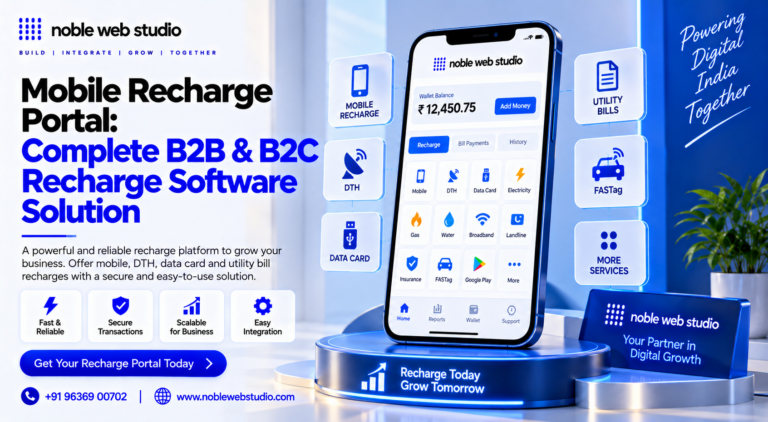
The demand for Mobile Recharge Software for B2B Businesses is growing rapidly as retailers, distributors, fintech companies, and digital payment service providers expand their services across India. With millions of customers using mobile recharge, DTH recharge, and utility bill payment services every day, businesses need a reliable and scalable platform to manage transactions efficiently and deliver a seamless customer experience.

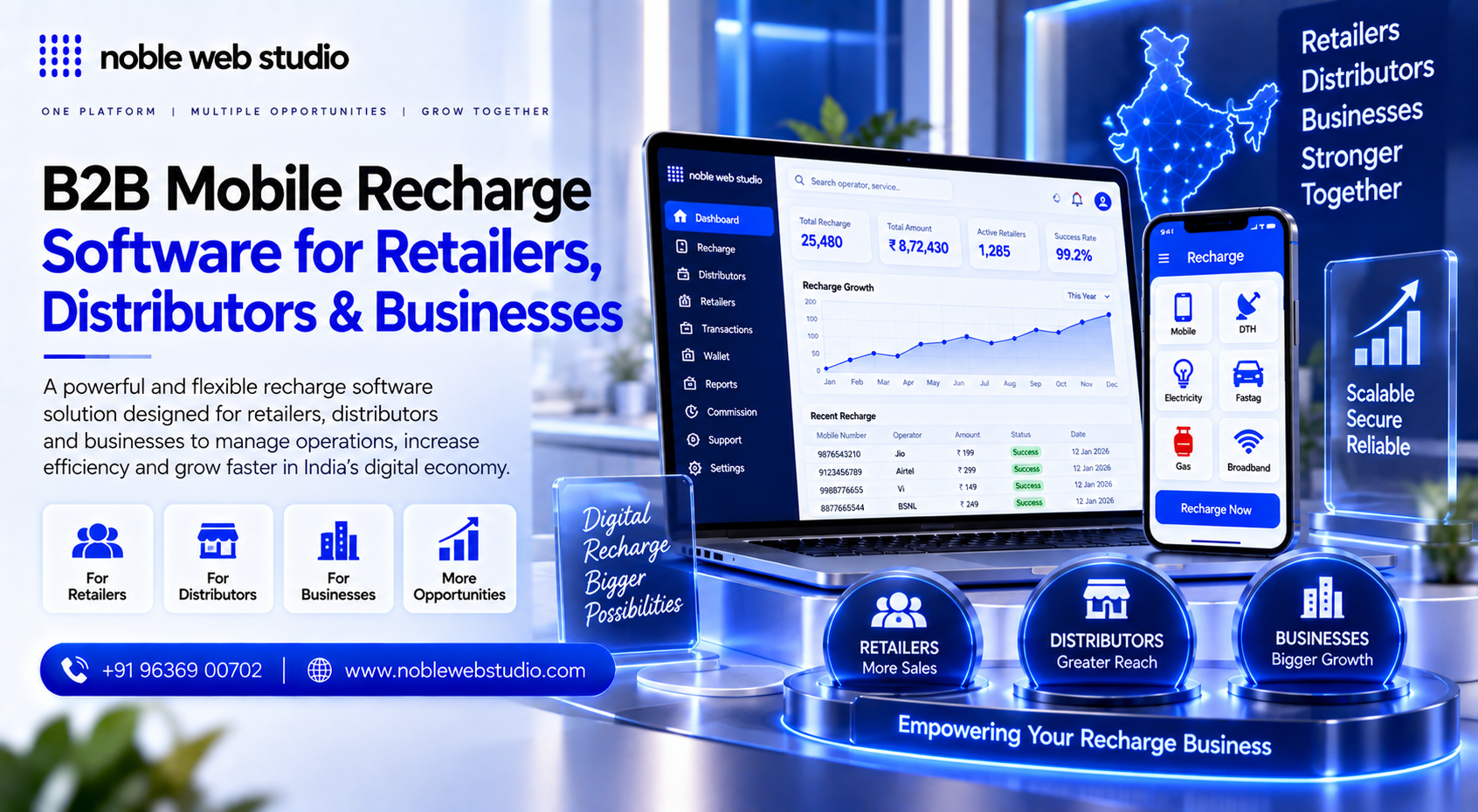
A professional B2B Mobile Recharge Software helps businesses automate recharge services, manage retailers and distributors, track commissions, handle wallet transactions, and monitor reports through a centralized admin panel. With secure Mobile Recharge API Integration, businesses can offer instant prepaid recharge, postpaid bill payment, DTH recharge, and other digital payment services while maintaining high transaction reliability and operational efficiency.

Mobile recharge software is a digital platform that lets users or shopkeepers instantly top up prepaid and postpaid mobile numbers, pay DTH bills, and settle utility services across multiple telecom operators from a single dashboard. It automates payments and tracks commissions for small businesses. 

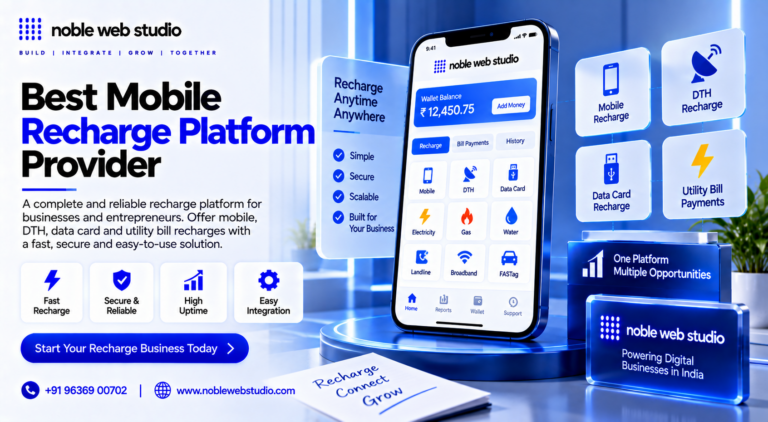
Whether you are starting a new recharge business or upgrading an existing platform, Noble web studio is the right Mobile Recharge Software Provider plays a vital role in long-term success. A feature-rich solution should include multi-operator support, real-time transaction processing, automated commission management, role-based user management, detailed reporting, secure wallet management, and scalable infrastructure to support business growth.

Noble Web Studio provides advanced B2B Mobile Recharge Software designed for startups, retailers, distributors, aggregators, and fintech businesses. Our platform offers secure API integration, an intuitive admin dashboard, high transaction performance, multi-service support, and dedicated technical assistance, enabling businesses to launch and scale their recharge operations with confidence.

In this blog, you will learn everything about Mobile Recharge Software for B2B Businesses, including its features, business benefits, API integration process, essential modules, and how the right software can help you build a profitable and future-ready digital recharge business.

Table of Contents

Empower Your B2B Network: India’s Leading Mobile Recharge Software Provider

Build and grow your digital recharge business with a reliable Mobile Recharge Software platform. Manage retailers, distributors, commissions, wallets, and multiple operators from one powerful dashboard. Launch your branded B2B recharge network quickly with secure APIs, real-time transactions, and dedicated technical support designed for long-term business growth.

India’s leading B2B mobile recharge software provider such as Noble Web Studio empower businesses with white-label portals, multi-operator APIs, and automated single-wallet systems. These platforms let you build a network of distributors and retailers to process telecom top-ups and utility bills instantly. 

What is Mobile Recharge Software?

Mobile Recharge Software is a digital platform that automates the process of topping up prepaid and postpaid mobile credits, DTH services, and data cards across multiple telecom operators from a single system. It aggregates services like Airtel, Jio, and Vi, allowing businesses or agents to process transactions instantly and manage commissions. 

Whats app chat now

Mobile Recharge Software Work

Mobile recharge software is a fintech platform that enables businesses to instantly process prepaid and postpaid mobile, DTH, and utility bill payments across multiple telecom operators (like Airtel, Jio, and Vi). It acts as a centralized dashboard to automate wallet management, transaction tracking, and distributor/retailer commission payouts. 

How the Software Workflow Operates

The mobile recharge business functions on a hierarchical digital ecosystem that processes payments in real-time: 

  • User Request Initiation: A customer or retail agent submits a recharge request through a web portal or mobile app. 
  • Wallet Deduction: The software securely debits the requested amount from the user’s digital wallet. 
  • API Routing: The admin’s software uses a Recharge API to forward the request to the specific telecom operator (e.g., Vodafone-Idea). 
  • Instant Processing & Confirmation: The operator verifies the number and processes the top-up, sending a real-time success or failure response back to the software. 
  • Success Update & Commission: If successful, the software marks the transaction as complete, and automated commission structures (cashback or percentage margins) are credited to the retailer’s wallet. If it fails, an instant refund is processed. 

Service Offer Mobile Recharge Software

Mobile recharge software is a digital platform that lets businesses offer prepaid mobile, DTH, and utility bill payments. Noble web studio offer white label recharge system, single-wallet APIs, and admin dashboards to launch your own branded recharge business. 

Core Features Offered

  • Multi-Operator Support: Recharges for Jio, Airtel, Vi, and BSNL, plus major DTH providers.
  • Utility & Bill Payments: Integration for electricity, gas, water, and FASTag.
  • White-Label Branding: Custom domain names, logos, and mobile apps built with your brand name.
  • Single Wallet System: Unified balance management for all operator transactions.
  • Multi-Tier Commissions: Setup and control commission distributions for retailers, distributors, and master distributors.
  • Admin & Reporting Dashboard: Real-time transaction tracking, automated refunds for failed requests, and analytics. 

Types of Mobile Recharge Software in 2026

Mobile recharge software in 2026 is categorized by target audience and deployment model. Noble web studio offer everything from simple end-user apps to complex business suites that handle multi-operator networks and complex financial services like bill payments (BBPS) and Aadhaar-enabled payments (AePS). 

Explore the following primary software types:

1. B2C (Business-to-Consumer) Applications

These are direct-to-user mobile applications used by individuals to self-recharge their phones, pay utility bills, and manage DTH accounts. Users typically load funds into an in-app digital wallet or link a card/UPI. 

  • Key Use Case: Self-service recharges and cashback accumulation.

2. Multi-Level B2B Portals (B2B2C)

Also known as Admin Panel or MLM (Multi-Level Marketing) recharge software, these platforms are designed for retail networks, shop owners, and agents. They feature a tiered structure allowing Master Distributors, Distributors, and Retailers to operate. 

  • Key Features: Distributor network management, automated commission distribution, and detailed transaction reporting.

3. White-Label Recharge Software

White-label software provides ready-made, fully customizable platforms that entrepreneurs can rebrand as their own without building an app from scratch. 

  • Key Features: Customized logos, app names, independent admin dashboards, and custom domain integrations.

4. API-Based Recharge Platforms

These software solutions allow developers and larger fintech companies to integrate recharge capabilities directly into their existing websites or applications via Application Programming Interfaces (APIs). 

  • Key Features: 99.9% uptime guarantees, real-time transaction webhooks, and secure sandbox environments for testing.

5. Multi-Service (BBPS & AePS) Platforms

While traditional software focused strictly on telecom, modern solutions act as holistic digital banking and utility hubs. 

  • Key Features: In-built domestic money transfers, FASTag recharges, electricity/water bill payments, and Aadhaar banking.

Documents Required for Mobile Recharge Software

To launch mobile recharge software, you need personal KYC proofs, business registration documents, and financial credentials to verify your merchant account and integrate a recharge API. Essential requirements include a PAN card, Aadhaar card, business bank account, and a GST registration or local shop license. 

Personal KYC Documents

  • PAN Card: Mandatory tax ID for the business owner or director.
  • Aadhaar Card: Government-issued ID for identity and address verification (Voter ID or Passport also accepted).
  • Passport-Size Photos: Recent clear photographs of the applicant.
  • Contact Info: Active mobile number and working email address. 

Business and Legal Proofs

  • Business Registration: GSTIN certificate, Udyam registration, or a Shop Act license depending on your firm type.
  • Address Proof: Utility bill or rental agreement for your office or shop location.
  • Company PAN & Incorporation: Required if registering as a Partnership or Private Limited company. 

Financial and Technical Details

  • Bank Account: Current bank account details with a canceled cheque, passbook copy, or bank statement for settlement and commission payouts.
  • Domain Name: Registered web address if you are setting up a white-label brand or independent portal.
  • API & Payment Agreements: Signed vendor terms from Noble web studio for the recharge API and payment gateway. 

Eligibility for Mobile Recharge Software

To use or set up mobile recharge software, eligibility depends on your role. Retailers need an Aadhaar card, PAN card, smartphone, and working capital (₹5,000–₹10,000). Business owners or white-label platform admins need a registered business entity, GST registration, bank account, and technical server infrastructure. 

Retailer Eligibility (Agent Level)

  • Age: Minimum 18 years old.
  • Identity Proof: Aadhaar card, Voter ID, or Passport.
  • Tax ID: PAN card.
  • Equipment: An Android smartphone or PC with stable internet.
  • Bank Account: Active savings or current bank account to load digital wallet funds. 

Distributor & White-Label Software Eligibility

  • Business Proof: Registered firm, partnership, or private limited company.
  • Tax/Registration: Business PAN card and GST number.
  • Financials: Current bank account for commission payouts and liquidity.
  • Technical Setup: Domain name, web hosting, and API subscription agreement with a Noble web studio. 

Requirements of Mobile Recharge Software

Mobile recharge software needs core components like multi-operator API integration, a virtual wallet system, multi-tier user hierarchy panels (Admin, Distributor, Retailer), automated commission management, and secure payment gateway support for instant, real-time transaction processing. 

Core Functional Requirements

  • Multi-Operator & Service APIs: Connect seamlessly with major telecom operators (Jio, Airtel, Vi, BSNL) and DTH services, plus utility modules like BBPS, electricity, and FASTag. 
  • Auto-Operator Detection: Identify the telecom circle and Noble web studio instantly when a user inputs a mobile number. 
  • Virtual Wallet System: Maintain digital ledgers for users and agents to load funds, process payouts, and handle automated instant refunds for failed transactions. 
  • Multi-Tier Hierarchy Control: Manage role-based access for Admin, Master Distributors, Distributors, and Retailers. 
  • Automated Commission Engine: Calculate and split profit margins for each tier instantly upon a successful transaction. 

Technical & Security Requirements

  • High Uptime & Speed: Process real-time transactions within seconds using robust server architecture.
  • API Failover Routing: Switch automatically to backup vendor APIs if a primary telecom gateway fails.
  • Secure Authentication: Implement OTP-based logins, data encryption, and role-based permissions.
  • Multi-Platform Access: Provide responsive web dashboards and native Android/iOS applications. 

Supported Telecom Operators and Recharge Services

Major Indian telecom operators include Jio, Airtel, Vi (Vodafone Idea), and BSNL/MTNL. Digital platforms provide instant prepaid and postpaid mobile recharges, DTH top-ups, and data card renewals across all standard national telecom circles. 

Supported Mobile Operators

  • Reliance Jio: Prepaid, Postpaid, and 5G/4G data voucher top-ups.
  • Bharti Airtel: Prepaid, Postpaid, international roaming, and data add-ons.
  • Vi (Vodafone Idea): Comprehensive bundled, talk-time, and validity extension packs.
  • BSNL & MTNL: State-run network coverage supporting regional tariff vouchers. 

Supported Recharge & Utility Services

  • Mobile Prepaid & Postpaid: Instant validation, automatic operator/circle detection, and plan browsing.
  • DTH Connections: Tata Play, Airtel Digital TV, Sun Direct, Dish TV, and D2H.
  • Data Cards & Hotspots: Portable dongles and Wi-Fi routers (e.g., JioFi, Airtel Hotspot).
  • Landline & Utility Bills: Broadband and fixed-line bill clearing. 

Who Can Use Mobile Recharge Software

Mobile recharge software can be used by individual consumers, local shop owners, multi-level business distributors, and corporate enterprises. It streamlines prepaid/postpaid mobile top-ups, DTH renewals, and utility payments through single or multi-operator platforms. 

Key Users of Recharge Software

  • Individual Consumers: People who use B2C applications (like consumer-facing wallet apps) to pay for their own family or personal mobile and utility bills. 
  • Retailers and Shop Owners: Local kirana stores, mobile repair shops, and small-town vendors who use B2B recharge systems to process customer recharges and earn transaction commissions. 
  • Distributors and Master Distributors: Middle-tier business supervisors who manage networks of retail agents, allocate digital wallet funds, and oversee commission tiers. 
  • Entrepreneurs and White-Label Owners: Startup business owners who purchase custom-branded multi-recharge software to run their own independent B2B recharge and fintech networks. 
  • Enterprise Corporations: Large businesses or global service platforms that integrate developer APIs (like carrier billing or programmatic top-ups) into existing software. 

Why Use Mobile Recharge Software

Mobile recharge software automates and centralizes prepaid top-ups, DTH services, and utility payments through multi-operator APIs. Businesses and digital shop owners use it to process instant transactions, track earnings, manage retail networks, and eliminate manual errors while earning reliable commission margins. 

Key Benefits for Businesses

  • Automation & Speed: Connects directly via APIs to process top-ups in seconds with minimal failure rates.
  • Multi-Service Integration: Handles mobile, DTH, data cards, and utility bill payments (BBPS) from one dashboard.
  • Commission Management: Automatically calculates and distributes multi-tier commissions for admins, distributors, and retailers.
  • Centralized Wallet System: Simplifies funds management by combining all operator payouts into a single secure digital wallet.
  • Business Insights: Generates real-time analytics and detailed transaction logs to monitor performance and sales volume.
  • White-Label Branding: Allows companies to launch custom-branded portals and apps featuring their own company logos and domain names. 

Industries That Use Mobile Recharge Software

Mobile recharge software is used across multiple industries to automate prepaid/postpaid top-ups, utility bills, and financial transactions through multi-service portals. Primary sectors include fintech and digital wallet providers, multi-service retail networks, telecom aggregators, and rural banking agents utilizing white-label or API-driven transaction infrastructure. 

Key Industries and Sectors

  • Fintech & Digital Wallets: Companies build or license multi-recharge platforms to let users pay utility bills, DTH, and mobile tariffs inside consumer-facing apps. 
  • B2B Micro-Retailing & Convenience Stores: Local kirana shops, pharmacies, and general merchants use dealer portals to offer walk-in top-up services and earn commissions. 
  • Direct Sales & MLM Networks: Multi-level marketing and direct-selling firms use white-label recharge software as an engagement tool or value-added wallet service for members. 
  • Rural Banking & Kiosks (AEPS/BC): Business correspondents and micro-ATM/banking operators integrate recharge features alongside Aadhaar-enabled payment systems to serve unbanked regions. 
  • Travel & Ticketing Agencies: Booking agents add mobile and utility recharges to cross-sell services to commuters and travelers. 

Key Aspects of Mobile Recharge Software

Mobile recharge software is a digital platform that automates prepaid and postpaid mobile recharges, DTH services, and utility bill payments. Essential aspects include multi-operator API integrations, secure payment gateways (UPI, cards, wallets), real-time transaction processing, multi-level commission structures, and robust admin dashboards for managing users and tracking revenue. 

Core Functional Features

  • Multi-Operator Support: Connects with major telecom (Airtel, Jio, Vi, BSNL) and DTH (Tata Play, Dish TV) providers.
  • Auto-Detect Operator: Identifies the telecom circle and operator automatically via the entered mobile number.
  • Real-Time Processing: Executes instant top-ups with immediate success or failure updates via automated API switching.
  • Digital Wallet System: Lets users and agents maintain internal balances for quick, one-click checkout. 

Business & Management Tools

  • Commission Management: Configures flexible profit margins and commissions for admins, distributors, and downline retailers.
  • Hierarchical Access: Provides role-based control panels for master distributors, retailers, and end-customers.
  • White-Labeling: Allows businesses to rebrand the web portal and mobile apps with their own custom logos and domain names.
  • Reporting & Analytics: Generates detailed logs on transaction history, active circles, failed requests, and revenue balances. 

Security & Infrastructure

  • Payment Integration: Supports safe multi-channel checkout options like UPI, net banking, and debit/credit cards.
  • Data Encryption: Protects user credentials and financial logs with robust SSL and two-factor authentication.
  • Failover Protection: Uses backup operator routes to maintain high uptime during server errors. 

Why Mobile Recharge Software is Important

Mobile recharge software is vital for automating telecom transactions, eliminating manual errors, and generating recurring revenue through commissions. It enables businesses to act as a one-stop hub for instant, multi-operator mobile, DTH, and utility bill payments, allowing owners to scale operations securely from a centralized dashboard. 

Key benefits of utilizing this technology include:

  • Automated Efficiency: Replaces slow, manual entry with direct network routing via APIs, significantly reducing transaction failures. 
  • Revenue Generation: Allows retailers to earn a steady commission (often 1% to 6%) on every successful top-up or bill payment. 
  • Centralized Management: Provides administrators with a single, unified dashboard to manage B2B distributor structures, custom commission plans, and wallet systems. 
  • Security: Protects sensitive financial data through advanced encryption, multi-factor authentication, and secure payment gateways. 
  • Brand Customization: Offers white-label solutions so businesses can launch fully branded, custom recharge portals or mobile applications. 
Request quotes now

Why Businesses Need the Best Mobile Recharge Software Today

Mobile recharge software enables businesses to instantly process telecom, DTH, and utility transactions through a single, automated platform. It allows retail and corporate entities to significantly reduce operational costs, drive customer footfall, and generate a consistent passive income through tiered commission structures on every successful recharge. 

Why Businesses Need the Best Mobile Recharge Software

  • Instant Revenue Generation: Retailers and business owners can earn predictable commissions (typically 2% to 7%) on every mobile and DTH recharge processed through the system, turning storefronts into digital service centers. 
  • Centralized Operations & Multi-Operator Support: Instead of managing separate apps for major telecom providers like Airtel, Jio, and Vi, businesses can use one dashboard to route transactions across multiple networks instantly. 
  • Operational Automation: Advanced platforms utilize smart API integrations to process transactions instantly, reducing manual errors and eliminating service downtime. 
  • Multi-Tier Commission Management: B2B businesses can seamlessly oversee master distributors, regional distributors, and local retailers while automating margin distribution and settlements across the network. 
  • White-Label Solutions: Companies can launch their own branded applications and web portals utilizing personalized logos, domains, and custom themes to strengthen brand identity without building technology from scratch. 
  • Enhanced Security: Bank-grade data encryption and secure payment gateways protect sensitive transaction data from cyber threats and fraudulent activity. 

Why Your B2B Network Needs a High-Performance Recharge Infrastructure

A high-performance recharge infrastructure is the backbone of a profitable B2B telecom or fintech network. It minimizes transaction bottlenecks, guarantees uptime across multiple operators, and manages complex multi-tier distributor hierarchies to keep your network running smoothly, profitably, and securely. 

Key reasons to invest in a high-performance recharge system include:

  • Instant Transactions & Failover: High-performance infrastructure utilizes multi-operator API connections and automatic failover. If one telecom gateway is down, the system instantly routes the transaction through an Noble web studio, preventing delays and transaction failures. 
  • Automated Commission Management: Robust platforms automate margin and commission tracking across all levels of your network (master distributors, sub-distributors, and retailers). This guarantees prompt, accurate payouts without manual accounting errors. 
  • Centralized Wallet & Reconciliation: It streamlines your finances by providing a unified digital wallet and real-time reconciliation. You can seamlessly manage B2B2C billing, track revenue, and generate reports instantaneously. 
  • White-Label Branding: High-performance software allows businesses to scale rapidly by offering white-label panels and applications. Resellers and agents can process transactions entirely under your custom brand and domain. 

Mobile Recharge Software Architecture

Mobile recharge software architecture uses a multi-tier, microservices-based model to handle high-volume, concurrent transactions safely. It splits into a presentation layer (web and mobile apps), an API gateway/backend core for business logic and wallets, an intelligent routing engine for telecom APIs, and robust transactional databases. 

Core Architectural Layers

  • Presentation Layer: Cross-platform mobile apps (Android/iOS) and responsive web dashboards for retailers, distributors, and administrators. 
  • API Gateway & Routing Engine: Acts as the central traffic cop, authenticating requests and dynamically routing recharge calls to the best-performing Noble web studio. 
  • Business Logic & Wallet Service: Manages multi-level user hierarchies (Admin → Master Distributor → Retailer), real-time commission calculations, and ledger balances. 
  • Integration Layer: Connects securely with external payment gateways (UPI, cards, net banking) and aggregator APIs for operators and BBPS (Bharat Bill Payment System). 
  • Data & Caching Layer: High-speed Redis caching for wallet limits and session tokens, backed by relational databases (MySQL/PostgreSQL) with strict ACID compliance for financial logs. 

Key Design Considerations

  • Failover & Redundancy: Automatic switching to secondary operator APIs if the primary route fails or times out.
  • Idempotency: Ensures duplicate network requests or retries never trigger a double recharge on the customer’s phone.
  • Concurrency Handling: Row-level locking or distributed locks on wallet credits to prevent race conditions during peak load hours. 
Mobile Recharge Platform — Original Reference Architecture
Blog-friendly, responsive architecture diagram (UI, APIs, payment, reconciliation, monitoring) with realistic flow.
Diagram version
MRX-2026-01

1) Channels (Web/App/Agents)

User actions: operator selection, plan & denomination, number validation, OTP (optional), and pricing preview.

UI Gateway Rate-limit, session context, device/locale, anti-bot checks
Order Draft Idempotency key, validation status, cost estimate & fees

2) Core Services (API Layer)

All business rules centralized: balance, pricing, order lifecycle, provider routing, and audit trails.

Recharge Orchestrator State machine: CREATED → AUTHORIZED → EXECUTED → CONFIRMED
Provider Router Chooses upstream based on region, failover score & SLA
Ledger & Wallet Double-entry ledger, reserved funds, settlement flows

3) Upstream Providers + Payments

External integration points: recharge providers, payment processors, and callback webhooks.

Recharge Gateway(s) Request/response, retries, signature validation, timeout control
Payment Processor Webhook confirmation, payout status mapping, chargeback-safe design
Callback Receiver Event normalization → order confirmation & reconciliation triggers
Idempotent
Duplicate requests don’t double-charge
Audited
Traceability across order + ledger

4) Reliability, Observability & Reconciliation

Operational safety nets: monitoring, dead-letter queues, reconciliation jobs, and reporting.

Event Bus / Queue Async execution, retries, DLQ for failed provider events
Reconciliation Worker Discrepancy detection: provider vs ledger vs user receipts
Monitoring & Alerts Latency, error-rate, timeout spikes, wallet anomalies

Features Mobile Recharge Software

Mobile recharge software is an end-to-end platform that enables businesses to manage prepaid/postpaid recharges, DTH, and utility bills across multiple telecom operators. Essential features include multi-level commission management, a secure digital wallet system, real-time transaction processing, and multi-operator API integration to ensure maximum uptime. 

A robust mobile recharge software or system (often utilized by telecom distributors, retailers, or B2B aggregator businesses) requires a comprehensive set of operational and technical features: 

Core Operational Features

  • Multi-Operator & Multi-Service Support: Processes instant recharges for major telecom operators (such as Airtel, Jio, and Vi in India) as well as DTH and data cards. 
  • Multi-Level Commission Configuration: Allows admin panels to set, manage, and distribute automated commission percentages across multi-tier networks like Master Distributors, Distributors, and Retailers. 
  • Virtual Wallet & Ledger Management: Features secure digital wallets that hold and distribute balances, manage user ledgers, and handle auto-settlements. 
  • White-Label Branding: Gives businesses the ability to customize the platform (admin panel, web app, and mobile apps) with their own domain, brand colors, and logos. 

Technical & Integration Features

  • Recharge API Integration: Connects seamlessly with multiple recharge gateways so that if one API goes down, the system automatically shifts transactions to a backup API to guarantee high success rates. 
  • Secure Payment Gateway: Incorporates heavily encrypted payment gateways (supporting UPI, credit/debit cards, net banking, and wallets) for safe, instantaneous balance top-ups. 
  • Automated Refund & Dispute Management: Automatically credits a user’s wallet if a transaction fails at the operator’s end, decreasing manual customer support complaints. 
  • Real-Time Analytics & Reporting: Provides detailed, live dashboards for administrators to track daily transaction volumes, commissions, user activity, and revenues. 

User-Facing & Accessibility Features

  • User-Friendly Interface (UI): Provides intuitive, mobile-responsive web portals and dedicated Android/iOS apps for retailers and end-users. 
  • 24/7 Automation: Reduces human intervention by automating everything from the API request-response cycle to balance updates, ensuring 24/7 operational capability. 

Benefits Mobile Recharge Software

Mobile recharge software provides instant, automated top-ups across multiple telecom operators (like Airtel, Jio, Vi) and DTH services. It eliminates manual errors, provides secure transactions via unified APIs, and generates recurring revenue through commission margins, making it an essential digital tool for modern businesses and consumers alike. 

The benefits of utilizing mobile recharge software can be categorized into advantages for businesses and conveniences for users:

Benefits for Businesses (Retailers, Distributors, and API Owners)

  • New Revenue Streams: Earn reliable commission margins (typically 1% to 6%) on every transaction, top-up, or bill processed through the platform. 
  • Operational Automation: Streamline workflows with automated payment gateways, bulk transaction APIs, and instant status updates, completely removing the need for manual data entry. 
  • Single Wallet Convenience: Manage all major mobile network operators and DTH services using a single, easily refilled wallet instead of maintaining multiple accounts. 
  • High Scalability: Effortlessly add unlimited network members (such as Master Distributors, Distributors, and Retailers) using Mobile Recharge B2B Software without the need for bulky physical infrastructure. 
  • Diversified Services: Easily scale platforms to go beyond just mobile airtime to include FASTag, electricity, gas, and insurance premium payments from a single, centralized dashboard. 

Benefits for Consumers and End-Users

  • 24/7 Availability: Process instant, uninterrupted recharges from the comfort of home or on the go, completely avoiding the need to visit physical stores and wait in queues. 
  • Security & Transparency: Encrypted payment gateways and secure OTP verifications (SSL/TLS) protect financial data, supported by instant, real-time digital receipts. 
  • Detailed Record Keeping: Access a detailed, exportable history of all past recharges to easily track monthly expenses and mobile data usage. 
  • Flexibility & Rewards: Access a wide variety of special telecom plans, discounts, cashback rewards, and promo codes directly through the app. 
Call now

Mobile Recharge Software Modules Explained

Mobile recharge software is a digital fintech platform that allows businesses to process prepaid/postpaid mobile recharges, DTH renewals, and utility payments. It functions as a centralized B2B or B2C intermediary, automating transactions between end-users and telecom/utility operators via secure API integrations. 

Core System Modules

The platform is powered by several interconnected modules that handle technical operations, user management, and financials. 

1. API & Operator Management Module

  • Function: Acts as the technical messenger connecting your software to telecom aggregators (e.g., Airtel, Jio, Vi).
  • Details: It supports multi-operator auto-detection, instantly processes validation requests, and manages fallback routes if a specific operator gateway faces downtime. 

2. User & Hierarchy Management Module

  • Function: Organizes and structures a multi-level business network.
  • Details: It establishes hierarchical tiers—typically Admin, Master Distributors, Distributors, and Retailers. Each tier has distinct permissions to add sub-agents, view network transactions, and manage account access. 

3. Wallet & Ledger Management Module

  • Function: Handles all internal digital currency, transactions, and credit limits.
  • Details: Retailers maintain a digital wallet to fund requests. This module tracks every debit/credit, manages prepaid limits, and prevents transactions if a wallet has insufficient funds. 

4. Commission & Payout Module

  • Function: Calculates and distributes profit margins automatically upon a successful transaction.
  • Details: Admins can configure different percentage-based or flat-fee commission slabs for different user tiers, instantly transferring margins up the distribution chain. 

5. Payment Gateway Integration Module

  • Function: Secures fund transfers into the software.
  • Details: Allows retailers or consumers to add funds via UPI, Net Banking, credit/debit cards, and digital wallets. 

6. Admin Dashboard & Reporting Module

  • Function: Provides a centralized control hub for the business owner.
  • Details: Admins can monitor live transaction logs, view daily/monthly profit analysis, manage user accounts, and resolve transaction disputes. 

7. Notification & Dispute Module

  • Function: Keeps all parties informed of transaction statuses.
  • Details: Triggers automated SMS or email alerts to both retailers and end-users for recharge success, failure, or low-balance warnings. It also includes a logging tool for agents to raise tickets for failed or “stuck” transactions. 

How to Develop Mobile Recharge Software

To develop mobile recharge software, start by choosing between building a custom platform from scratch or purchasing a white-label solution. Next, integrate reliable telecom aggregator APIs, develop your web/app interfaces, and ensure strict adherence to financial security standards to safely process payments. 

Follow this step-by-step guide to structure your project:

1. Define Your Business Model

Decide how your platform will operate: 

  • B2B / Multi-level Distributor: You supply the software to sub-dealers, retailers, or agents, and manage tiered commission structures.
  • B2C / Direct to Consumer: You provide a direct-to-user consumer app for individuals to top-up mobile phones, DTH, and pay utility bills. 

2. Procure Essential Recharge APIs

You cannot connect directly to telecom operators (e.g., Jio, Airtel, Vi, BSNL) from day one. Instead, you must partner with Noble web studio. These APIs will handle the direct communication with operator servers to instantly process the airtime top-ups. 

3. Choose the Technology Stack

Build your front-end and back-end with technologies that support high transaction volumes and real-time processing: 

  • Frontend: Flutter or React Native (for cross-platform iOS and Android apps), and React.js for the web admin portal.
  • Backend: Node.jsPython (Django), or PHP (Laravel).
  • Database: MySQL or PostgreSQL for storing secure transaction records, alongside Redis to speed up data loading times (like telecom circle and plan details).
  • Payment Gateways: RazorpayStripe, or PhonePe/UPI integrations to instantly top up agent e-wallets. 

4. Develop Core Features

Your platform should include the following essential software modules: 

  • Admin Dashboard: Manage users, monitor live transaction logs, block/unblock operators, and set specific commission percentages.
  • E-Wallet System: Maintain digital wallets for retailers/customers to deduct funds for successful recharges and add money instantly via UPI.
  • Auto-Detect Operator: The system should auto-detect the telecom provider based on the first few digits of the mobile number.
  • Instant Refund System: Automatically process instant refunds to the user’s wallet if a recharge fails. 

5. Security & Legal Compliance

  • Ensure all user data is encrypted using SSL/TLS protocols.
  • Integrate 2-Factor Authentication (2FA) for secure logins and wallet transfers.
  • Comply with local business regulations (such as registering a Pvt. Ltd. company or obtaining necessary licenses and tax registrations) before processing financial transactions. 

Mobile Recharge Software Deployment Timeline

A mobile recharge software deployment timeline takes 7 to 14 days for a pre-built white-label solution, whereas building custom software from scratch requires 3 to 9 months. The exact time depends on whether you select a ready-made framework or custom engineering. 

White-Label Deployment Timeline (7–14 Days)

  • Days 1–3 (Branding and Setup): Submit your company logo, color themes, domain name, and business details.
  • Days 4–7 (API & Payment Integration): Link pre-integrated recharge APIs (Jio, Airtel, Vi, BSNL, DTH) and payment gateways.
  • Days 8–11 (Testing & KYC): Test transaction flows, wallet balance updates, commission structures, and complete compliance verification.
  • Days 12–14 (Launch): Publish the web portal and deploy Android/iOS apps to the app stores. 

Custom Development Timeline (3–9 Months)

  • Month 1 (Planning & UI/UX): Define system architecture, user roles (Admin, Distributor, Retailer), and design app wireframes.
  • Months 2–4 (Core Development): Code the web panel, database, wallet ledger, and mobile apps.
  • Months 5–6 (API & Security Integration): Connect multi-recharge APIs, utility bill systems (BBPS), and security protocols.
  • Months 7–9 (Testing & Deployment): Perform load testing, bug fixing, final server setup, and official store publication. 

Mobile Recharge Software Implementation Process

Implementing mobile recharge software involves planning, choosing a platform, integrating APIs, and testing to build a secure, real-time transaction system for B2B or B2C operations. 

Planning and Setup

  • Define business model: Choose B2B (distributors/retailers), B2C (direct consumer), or API reselling. 
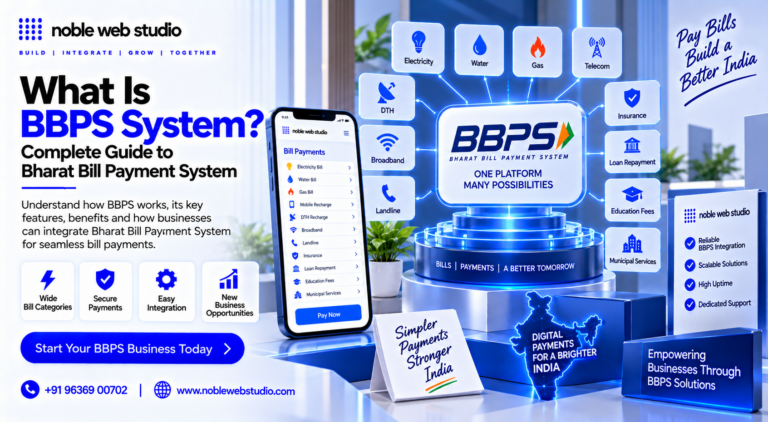
  • Legal and compliance: Register your business and acquire necessary local licenses or Bharat Bill Payment System (BBPS) approvals if applicable. 
  • Select software vendor or tech stack: Pick a readymade white-label solution or plan custom development using secure databases and servers. 

Core Integration

  • Recharge API integration: Connect with telecom and utility aggregators to process prepaid, postpaid, and DTH top-ups automatically.
  • Payment gateway setup: Integrate digital payment options like UPI, net banking, or debit cards to manage digital wallet top-ups.
  • Multi-level hierarchy setup: Configure role-based panels for admins, distributors, and retailers with customizable commission structures. 

Testing and Launch

  • Quality assurance: Run test transactions to check success rates, failover routing, and wallet balance updates.
  • Deployment: Launch web portals and publish mobile apps to app stores.
  • Maintenance: Monitor server uptime, security protocols, and 24/7 technical support. 

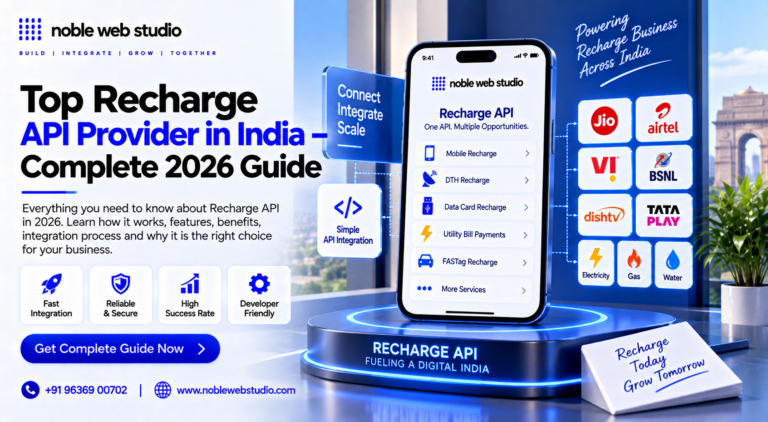
Mobile Recharge API Integration For Mobile Recharge Software

Integrating a Mobile Recharge API involves five distinct implementation phases to establish a secure link between your application, an Noble web studio. 

The step-by-step breakdown below covers how to successfully plan, develop, and deploy a mobile recharge API integration. 

Step 1: Noble Web Studio Selection & Credential Acquisition

You must Noble web studio that provides multi-operator support.

  • Sign Up: Create an Noble web studio account on the merchant platform.
  • Secure API Keys: Generate your custom API_KeySecret_Token, and retrieve your authorized Merchant_ID.
  • Whitelist Server IPs: Configure your live production server IP within Noble web studio developer panel for security. 

Step 2: Discovery and Validation Workflow

Before pushing a payment request, your application must automatically determine where to send the funds to prevent transaction errors. 

  • Operator & Circle Lookup (HLR): Implement an initial API query using the customer’s phone number to automatically detect the operator (e.g., Jio, Airtel) and the telecom circle location.
  • Dynamic Plan Fetching: Request active plans from the API to present valid top-up, data pack, and talk-time amounts to the user. 

Step 3: API Endpoint Implementation

Your backend development environment needs to communicate with the Noble web studio using secure HTTPS REST endpoints, usually formatted in JSON. You must build functions to handle four primary actions: 

ActionHTTP MethodObjectiveKey Parameters Required
Check BalanceGETVerifies your master wallet balance before allowing a user top-up.api_key
Initiate RechargePOSTSubmits a live top-up transaction request to the operator.mobile_numoperator_idamountclient_unique_id
Check StatusGET / POSTManually polls the server if a real-time response times out.transaction_idclient_unique_id
Webhook CallbackPOSTListens on your listener URL for async success/fail notices.operator_ref_numstatusfinal_response

Step 4: Robust Transaction & Refund Logic

Mobile operator networks often face temporary drops. Your system logic must accurately process every edge-case. 

  • Deduct & Hold: Hold the local app wallet funds when the user hits “Pay.” 
  • Handle Success: Read the HTTP 200 response or webhook success callback, clear the hold, and display the operator reference number to the user. 
  • Auto-Refund Engine: If a network timeout or STATUS: FAILED callback is received, programmatically credit the held balance back to the user’s local account wallet instantly. 

Step 5: Sandbox Testing and Going Live

Never deploy payment processing tools directly to production without testing structural loops. 

  • Staging Environment: Point your endpoint configurations to the Noble web studio Sandbox base URL. 
  • Simulate Test Scenarios: Use mock operator codes provided in the documentation to simulate a successful recharge, a failed recharge due to invalid numbers, and low wallet balances. 
  • Switch To Live Environment: Swap the Sandbox base URL for the live URL, load funds into your live master wallet, and run one final live test with a real phone number. 

Mobile Recharge Software Cost And Price

Mobile recharge software costs range from ₹1,499 per month for basic subscription-based SaaS platforms to ₹15,000 to ₹1,00,000+ for one-time white-label solutions, and ₹5,00,000+ for fully custom enterprise platforms. Expenses vary based on features, panel hierarchy, and API setups. 

Software Types and Purchase Cost

  • Starter / SaaS Subscriptions: ₹1,499 – ₹2,000/month for template frameworks with minimal channel setups.
  • Pre-built / Basic Scripts: ₹7,500 – ₹15,000 as a one-time fee for a simple admin and retailer login.
  • White-Label Solutions: ₹15,000 – ₹1,00,000 one-time fee for ready-made multi-recharge platforms customized with your logo, domain, and multi-tier panels.
  • Custom Development: ₹5,00,000 – ₹50,00,000+ for bespoke, scratch-built architectures with advanced user management and security. 

Component-Wise Price Breakdown

  • Web Portal & Admin Panel: ₹5,000 – ₹50,000 depending on depth of reporting tools.
  • Mobile App (Android/iOS): ₹50,000 – ₹1,50,000+ if native agent or consumer apps are required.
  • Recharge & Utility API Integration: ₹1,000 – ₹5,000 per operator (such as BBPS, DMT, or AePS). 

Ongoing & Operational Costs

  • Cloud Hosting & VPS Servers: ₹1,000 – ₹10,000+ per month based on traffic and storage scale.
  • SMS & Notification Gateways: ₹0.20 per SMS or fixed monthly service fees.
  • Working Capital / Admin Wallet: Variable funding required to maintain live floats for transaction execution.
  • Users on discussion forums that payment gateway merchant commission charges (ranging from 1.75% to 3.5% per digital load) add significant continuous overhead to online user wallet top-ups. 

Mobile Recharge Software Commission Provide

Mobile recharge software commission structures typically range from 1% to 6% per transaction for retailers, varying by telecom operator, service category (prepaid, DTH, or utility bills), and the hierarchical distribution tier (Admin, Master Distributor, Distributor, or Retailer). 

Operator-Wise Commission Breakdown

  • BSNL: 3.0% to 6.5% (highest margins due to state-backed promotional structures)
  • Vi (Vodafone Idea): 2.5% to 4.8% (highest among private telecom operators)
  • Airtel: 1.5% to 3.5% per transaction
  • Reliance Jio: 1.0% to 3.5% per transaction

Service-Wise Commission Slabs

  • DTH Recharges: 2.0% to 7.0% (Tata Play, Dish TV, Airtel Digital TV)
  • Prepaid Mobile: 1.0% to 5.0% depending on network carrier
  • Utility Bills (BBPS): Flat ₹5 to ₹20 per bill or 0.5% to 3.0% percentage-based
  • Postpaid Bills / Data Cards: 0% to 4.0% or small fixed gateway handling fees 

Multi-Tier Distribution Hierarchy

  • Retailer: Earns the base high-end slab (e.g., 1% to 5%) directly credited to their wallet per customer transaction.
  • Distributor: Earns an override margin (an extra 0.10% to 0.50%) on top of what their managed retailers process.
  • Master Distributor: Receives an additional upper-level override (0.05% to 0.25% extra) across the entire downline network. 

Mobile Recharge Software Profit Model

A mobile recharge software profit model relies on a commission-based structure where the platform owner (admin) earns a margin or spread from Noble web studio and distributes lower commission slabs downward to master distributors, distributors, and retailers. Revenue scales through high transaction volume, multi-level network fees, and value-added financial services. 

Core Profit Streams

  • The Commission Spread: The admin pockets the difference between the high API commission received from the telecom/utility vendor and the lower commission paid out to downline members. 
  • Multi-Tier Hierarchy Fees: Earnings flow from network participants (Admin -> Master Distributor -> Distributor -> Retailer), where the admin charges signup or franchise fees for creating lower-tier channels. 
  • Value-Added Service (VAS) Margins: Profits expand past telecom into high-margin utility and banking services via BBPS and AePS. 

How Mobile Recharge Software Helps You Earn High Commissions

Mobile recharge software helps you earn high commissions by automating prepaid, DTH, and utility transactions through digital wallets, giving you instant cash margins of 1% to 7% per payment. It removes physical inventory costs and lets you scale earnings via multi-tiered agent networks. 

How the Software Maximizes Profits

  • Instant Wallet Margins: Receive direct percentage-based commissions credited right after every mobile or DTH top-up.
  • Multi-Service Variety: Expand income past phone networks to include electricity, gas, and FASTag bills.
  • Network Building: Act as a master admin or distributor to collect residual commissions from downline retailers.
  • Automated APIs: Run high-volume transaction processing smoothly without manual delays or errors. 

Mobile Recharge Software Scalability for Large Networks

To scale mobile recharge software for large B2B networks, systems require high-throughput database design, load-balanced multi-API switching, and asynchronous queue management. This ensures thousands of concurrent distributor, agent, and retailer transactions process instantly without ledger mismatches or downtime. 

Core Scalability Architecture

  • Database Sharding: Split ledger and wallet balances by user regions or IDs to prevent locking rows during peak traffic hours.
  • Asynchronous Queues: Use tools like RabbitMQ or Kafka to handle transaction spikes without crashing the primary server. 
  • Smart API Routing: Connect multiple operator APIs with automatic failover switching to guarantee high uptime when a primary telecom link lags. 
  • Redis Caching: Store frequent lookup data like operator codes, circle details, and active commission slabs in memory to lower database load. 

Network & Management Control

  • Hierarchical Sync: Support unlimited multi-tier structures (Admin → Master Distributor → Retailer) with real-time balance propagation.
  • Distributed Load Balancing: Distribute web panel and mobile app traffic across regional cloud servers to minimize latency.
  • Automated Reversals: Handle failed or timeout responses from telecom operators instantly to auto-refund virtual wallets. 

Scaling Your Recharge B2B Network: From 10 to 10,000 Retailers

Scaling a B2B mobile and utility recharge network from 10 to 10,000 retailers requires moving from manual onboarding to automated digital KYC, deploying a reliable API-first transaction engine, building a multi-tier distributor commission structure, and setting up localized field support teams across target regions.

Core Tech Infrastructure

  • API Engine: Build a robust, redundant server setup to handle high transaction volumes without crashing.
  • Switching System: Connect directly with Noble web studio for fast, reliable processing.
  • Wallet Management: Use a real-time ledger system to track cash flow, credits, and commissions safely.
  • Mobile & Web Apps: Provide simple, fast apps that work well even on slow 3G or 4G mobile networks. 

Retailer Acquisition Strategy

  • Digital Onboarding: Use instant Aadhaar and PAN verification to sign up shop owners in minutes.
  • Distributor Network: Build a channel of regional partners who recruit and train local mom-and-pop stores.
  • Incentive Plans: Give attractive cash-back bonuses and higher commissions for active daily users.
  • Starter Kits: Provide free shop branding, window stickers, and digital promotion banners to build trust. 

Operations and Support

  • Multi-Tier Helpdesk: Set up phone, chat, and WhatsApp support to fix failed transactions immediately.
  • Liquidity Options: Partner with local banks and fintechs so retailers can add money to their wallets 24/7.
  • Fraud Detection: Track strange activity and blocked accounts using automated risk alerts.

Mobile Recharge Admin Dashboard Screenshots

Mobile Recharge Admin Dashboard — UI Screens (Original)
Today Orders
8,214
+12.4% vs yesterday
Success Rate
99.9%
Provider health OK
Pending Webhooks
37
Queue processing active
Failed Transactions
0
Auto-retry enabled
Order
User
Amount
Status
ORD-1048832
Airtel • IN • ₹199
rahul_12
₹199
SUCCESS
ORD-1048851
Jio • UP • ₹299
sanya_pay
₹299
PENDING
ORD-1048899
Vodafone • MH • ₹149
vishal_ops
₹149
FAILED
Admin actions: retry policy, webhook verification, and instant reconciliation triggers for mismatch cases.
Webhook Latency
420ms
P95 stable
Queue Depth
147
Autoscaling ready
Event
Order
Retry
State
PROVIDER.SUCCESS
signature verified
ORD-1048920
0/3
DELIVERED
PROVIDER.PENDING
waiting final status
ORD-1048937
1/3
IN_RETRY
PROVIDER.FAILED
DLQ candidate
ORD-1048961
3/3
DLQ
Dashboard includes retry rules, signature checks, and audit-ready event normalization.


Whats app chat click here

Best Mobile Recharge Software to Start Your Recharge Business

To start a mobile recharge business, look for white-label multi-recharge software supporting automated API integration for telecom operators (Jio, Airtel, Vi, BSNL), DTH, and BBPS utility bills. Noble web studio offer robust single-wallet admin panels and high-margin commission structures. 

Essential Features to Look For

  • Multi-Operator API: Fast, automated switching for high success rates across all major telecom and DTH providers.
  • White-Label Branding: Custom logos, domain names, and android mobile apps matching your business identity.
  • Single Wallet System: Unified fund management for managing retailer credits, commissions, and operator payouts.
  • Value-Added Services: Built-in integration for BBPS bill payments, FASTag, and AePS banking services to boost income. 

Best Mobile Recharge Software Solutions for Businesses

Top mobile recharge software solutions for businesses include white-label B2B/B2C multi-recharge platforms like Noble Web Studio. These systems support single-wallet APIs, multi-operator top-ups (Jio, Airtel, Vi, BSNL), DTH, utility bills, and automated multi-tier commission management. 

Core Features to Look For

  • Multi-Operator & Utility Support: Instant prepaid/postpaid mobile, DTH, FASTag, electricity, and gas bill integrations.
  • Single Wallet API: Centralized fund management system to process multi-service requests dynamically.
  • White-Label Branding: Custom domains, logos, and UI designs matching your company identity.
  • Commission Engine: Multi-level hierarchy settings (Admin, Master Distributor, Distributor, Retailer).
  • Automated Reporting: Real-time transaction tracking, failure refunds, and ledger analytics. 

Mobile Recharge Software Maintenance & Support

Mobile recharge software maintenance and support covers continuous technical care, server uptime, security updates, and API bug fixes. Noble web studio typically deliver 24/7 troubleshooting, database backups, and telecom operator synchronization to keep B2B or B2C digital recharge platforms running without transaction failures. 

Key Maintenance Services

  • API Sync: Regular updates for telecom and utility API links (Airtel, Jio, BBPS).
  • Server Upkeep: Cloud server monitoring and daily database backups.
  • Security Patches: Fixing bugs and protecting wallet systems from cyber threats.
  • Commission Updates: Adjusting operator margin slabs and multi-tier user structures. 

Support Levels Provided

  • 24/7 Helpdesk: Round-the-clock technical assistance for transaction failures.
  • Ticketing Systems: Tracking user, retailer, and distributor complaints.
  • Uptime Monitoring: Quick response protocols for server downtime or gateway blocks. 

Reports & Analytics in Mobile Recharge Software

Reports and analytics in mobile recharge software provide real-time dashboards and detailed logs to track transactions, monitor success and failure ratios, calculate multi-tier commissions, and manage ledger balances. These tools transform raw data into actionable insights for admins, distributors, and retailers. 

Core Transaction Reports

  • Live Status Logs: View active, successful, or failed top-ups instantly.
  • Operator-Wise Breakdown: Track performance metrics across different telecom providers (e.g., Jio, Airtel, Vi).
  • Success/Failure Ratios: Monitor operator uptime to switch backup APIs on the fly.
  • Historical Data: Search past transactions by date, mobile number, or transaction ID. 

Financial & Ledger Analytics

  • Wallet & Fund Ledgers: Monitor real-time fund transfers, credit limits, and downline balances.
  • Commission Tracking: View profit margins and automated payouts distributed across retailers and distributors.
  • Revenue Summaries: Generate daily, weekly, or monthly gross sales and net profit totals.
  • Tax & Settlement Reports: Export structured data for GST filing and financial reconciliation. 

User & Network Activity

  • Retailer Performance: Identify top-performing agents or high-volume sales channels.
  • User Growth: Analyze registration trends and platform engagement over custom date ranges.
  • Export Capabilities: Download aggregated metrics or raw records in CSV/Excel formats for deep analysis. 

Mobile Recharge Software Transaction Flow diagram


Mobile Recharge Software Security Features

Mobile recharge software relies on robust security tools like end-to-end data encryption, two-factor authentication (2FA/OTP), secure payment gateways, and role-based access controls to protect user financial details and block malicious activities. 

Core Data Protection

  • Data Encryption: Uses SSL/TLS protocols for data in transit and AES-256 for data at rest.
  • PCI-DSS Compliance: Meets standard card industry rules for secure online payments.
  • Secure Payment Gateways: Integrates safely with trusted channels like UPI, net banking, and cards. 

User Access and Verification

  • Two-Factor Authentication (2FA/OTP): Confirms user identity via SMS tokens or biometric checks before processing.
  • Transaction PINs: Requires a separate, secure PIN for every single wallet deduction or recharge.
  • Role-Based Access Control (RBAC): Limits administrative rights depending on user tier (admin, retailer, distributor). 

Fraud Prevention

  • IP/MAC Whitelisting: Binds system access to trusted device addresses to block unauthorized logins.
  • AI Fraud Detection: Uses machine learning models to spot unusual transaction spikes or behaviors. 

How Our Mobile Recharge Software Outperforms Traditional Recharge Portals

Modern mobile recharge software outperforms traditional, static recharge portals by using automated API routing, offering multi-level white-label structures, and supporting high-uptime multi-operator systems. Unlike basic websites, advanced software platforms provide centralized control, instant commission tracking, and robust digital wallets. 

Speed and Reliability

  • Instant API Routing: Directs transactions to operators like Jio, Airtel, Vi, and BSNL in milliseconds rather than lagging on manual updates.
  • Automated Failover: Switches to backup carrier paths automatically if one gateway drops, ensuring high success rates.
  • Real-time Status: Displays immediate transaction confirmations instead of leaving users or retailers waiting. 

Business Management and Scale

  • Tiered Hierarchies: Supports multi-level management structures such as Admin, Master Distributors, Distributors, and Retailers.
  • Automated Commissions: Instantly calculates and credits margins down the line for every successful top-up or bill payment.
  • Centralized Dashboard: Consolidates ledger tracking, analytics, and revenue reports into one unified admin panel. 

Service Expansion and Branding

  • White-Label Customization: Allows businesses to launch fully branded applications with custom logos, domains, and color themes.
  • Multi-Service Integration: Bundles mobile and DTH recharges alongside BBPS utility bills, FASTag, and money transfers in a single platform.
  • Enhanced Security: Protects financial ledgers using OTP-based authentications, encrypted databases, and role-based access. 

White-Label Mobile Recharge Software: Build Your Own Brand

White-label mobile recharge software is a ready-made platform that lets you launch your own branded top-up and bill payment business without writing code. The system uses your company logo, domain name, and color scheme while running on a proven technical infrastructure. 

Key Features

  • Custom Branding: Add your own logo, business name, and custom domain.
  • Multi-Service Support: Offer prepaid mobile, DTH, data card, and utility bill payments.
  • Admin Controls: Create unlimited sub-distributors, master distributors, and retailers.
  • API Integration: Connect easily with telecom operators and secure payment gateways. 

Core Benefits

  • Fast Launch: Go live in 24 to 48 hours instead of spending months on custom development.
  • Low Cost: Avoid expensive development and maintenance budgets.
  • Full Control: Set your own profit margins, commissions, and service fees.
  • No Tech Skills Needed: Noble web studio handle the backend server maintenance and security updates. 

Latest Mobile Recharge Software Trends in 2026

Mobile recharge software in 2026 centers on hyper-automation, AI-driven plan recommendations, and unified utility stacks. Platforms now merge standard prepaid and DTH top-ups with Bharat Bill Payment System (BBPS) utilities, Aadhaar Enabled Payment Services (AEPS), and multi-tier white-label commission apps for high-speed, error-free processing. 

Automation and Smart APIs

  • Instant API Routing: Systems use multi-operator switching to route and complete recharges in seconds with automated failovers.
  • Zero Manual Ledger Work: Digital wallets sync instantly with automated commission splits for admin, distributor, and retailer networks. 

AI and Personalization

  • Predictive Recharges: Integrated artificial intelligence analyzes past usage patterns to suggest optimal data and talk-time plans to end users.
  • Voice and QR Integration: Retail apps prioritize voice commands and rapid QR code scanning to speed up counter transactions. 

Expanded Service Stacks

  • All-in-One Utility Hubs: Software reaches past telecom to handle FASTag, broadband, water, gas, and electricity bills.
  • Financial Inclusion Add-ons: Micro-ATM and cash withdrawal tools built into the same software framework attract semi-urban and rural customer bases. 
Request quotes now

How to Choose the Best Mobile Recharge Software Provider

Noble web studio one of the best mobile recharge software provider, evaluate multi-operator and utility service support, real-time transaction speed, high uptime reliability, robust security features, multi-level commission management, white-label branding options, transparent pricing, and 24/7 technical customer support. 

Core Performance Factors

  • Multi-Operator Coverage: Support for all major telecom operators (Jio, Airtel, Vi, BSNL) and DTH providers.
  • Service Expansion (BBPS): Integration with utility bills, electricity, gas, water, and FASTag recharges.
  • Transaction Speed: Real-time processing with instant success or failure updates.
  • System Uptime: Guaranteed 99.9% uptime to prevent transaction failures and revenue loss. 

Business & Management Tools

  • Commission Structure: Multi-level commission distribution for admins, distributors, and retailers.
  • White-Labeling: Custom brand logos, domains, and themes for a standalone portal.
  • Admin Dashboard: Comprehensive logs, automated fund reversals, and financial reporting.
  • Wallet Management: Secure digital wallet system for instant fund loading and checkout. 

Security & Support

  • Data Security: Multi-level data encryption and two-factor authentication (2FA).
  • Technical Support: 24/7 responsive customer service and clear API documentation.
  • Cost Transparency: Clear, upfront pricing with no hidden setup or maintenance fees. 

Why Choose Noble Web Studio for Mobile Recharge Software

Noble web studio one of the professional mobile recharge software provider for mobile recharge software gives your business high-speed automated processing, multi-operator and utility bill support, and white-label branding options to launch your own custom portal. It helps you manage multi-tier commissions for distributors and retailers while keeping transactions secure. 

Business and financial benefits

  • Increased revenue: Noble web studio offers new revenue streams and opportunities for cross-selling other services. 
  • Higher profit: Consolidating services can reduce operational costs and improve profitability. 
  • Competitive edge: Noble web studio Provides a user-friendly and reliable mobile recharge platform to stand out in the market. 

Operational and technical benefits

  • Automation: A automates the entire recharge process, reducing manual effort and potential errors. 
  • Scalability: Allows businesses to handle increasing transaction volumes as they grow. 
  • Reduced technical burden: Outsourcing technical aspects like mobile recharge API integrations, server maintenance, and payment gateways to the Noble web studio frees up internal resources. 
  • White-labeling: Allows you to customize mobile recharge platform with your own brand name and logo. 

Customer experience benefits

  • Convenience: Customers can complete recharges and bill payments from a single, centralized platform. 
  • Faster transactions: Real-time processing ensures immediate confirmation and updates for users. 
  • Multi-service access: Supports a wide range of services, such as mobile, DTH, and utility bill payments, all from one place. 

Noble Web Studio-specific features to look for

  • Multi-operator and multi-service support: Ensures your platform can cater to a wide range of users and needs. 
  • Robust security: Guarantees secure transactions to protect customer data. 
  • Strong support: Look for reliable, 24/7 customer support to address issues and keep the system running smoothly. 
  • Reporting and analytics: Provides tools to track performance, manage mobile recharge api commission, and gain insights into business operations. 
Contact us

Conclusion

Choosing the right Mobile Recharge Software for B2B Businesses is one of the most important decisions for retailers, distributors, master distributors, fintech startups, and digital payment companies. A reliable platform helps you manage your entire recharge network efficiently while delivering fast, secure, and uninterrupted recharge services to your customers.

A professional B2B Mobile Recharge Software should include a powerful admin panel, Mobile Recharge API Integration, multi-operator support, retailer and distributor management, commission management, wallet management, real-time transaction tracking, detailed reports, and high system reliability. These features help automate daily operations, improve customer satisfaction, and support long-term business growth.

Mobile recharge software is a digital platform that lets businesses offer prepaid top-ups, DTH recharges, and utility bill payments. Key options include white-label portals, API integrations, and multi-level user systems. Costs typically range from ₹10,000 to over ₹50,000 depending on features and setup. 

Noble Web Studio provides advanced Mobile Recharge Software built for modern B2B businesses. Our solution is designed with scalable technology, secure API integration, real-time processing, automated commission distribution, and a user-friendly dashboard, making it easier to launch, manage, and expand your recharge business across India.

Whether you are starting a new recharge platform or upgrading your existing system, investing in a secure and feature-rich B2B Recharge Software Solution can help you increase operational efficiency, strengthen your retailer network, and create sustainable revenue opportunities in the growing digital payments market.

Get in touch with Noble Web Studio today to request a live demo and discover how our Mobile Recharge Software can help you build a profitable, scalable, and future-ready B2B recharge business with complete technical support and seamless API integration.

FAQs on Mobile Recharge Software

1. What is mobile recharge software?

Mobile Recharge Software is a digital platform that enables businesses to provide prepaid, postpaid, DTH, and other recharge services through a centralized dashboard. It is commonly used by retailers, distributors, and B2B FinTech companies to manage recharge operations efficiently.

How does Mobile Recharge Software work?

The software connects with recharge APIs and telecom operators to process recharge requests in real time. Once a customer submits a recharge request, the platform validates the transaction, processes it through the integrated API, updates the wallet balance, and records the transaction in the dashboard.

Who can use Mobile Recharge Software?

Mobile Recharge Software is suitable for:
B2B Recharge Businesses
FinTech Companies
Retailers
Distributors
Master Distributors
CSP Operators
Digital Service Centers
White Label Recharge Providers

What features should the best Mobile Recharge Software include?

A reliable Mobile Recharge Software should offer:
Multi-Operator Recharge
Prepaid & Postpaid Recharge
DTH Recharge
Wallet Management
Commission Management
Multi-Level Distributor Panel
Admin Dashboard
Real-Time Reports
API Integration
Secure Login & User Management

Can Mobile Recharge Software support multiple telecom operators?

Yes. Most professional recharge platforms are designed to support multiple telecom operators from a single dashboard, making it easier for businesses to manage recharge services.

Can Mobile Recharge Software be integrated with AEPS, BBPS, and DMT services?

Yes. Many modern FinTech platforms integrate Mobile Recharge Software with AEPS, BBPS, DMT, payout, and other digital financial services to provide multiple services through a single platform.

Is White Label Mobile Recharge Software a good option for businesses?

White Label Mobile Recharge Software allows businesses to launch recharge services under their own brand, including a custom logo, domain, and admin panel, without developing the software from scratch.

How long does it take to deploy Mobile Recharge Software?

The deployment timeline depends on the level of customization, API integrations, testing, and onboarding requirements. Ready-to-use white-label solutions are generally faster to launch than custom-built software.

How secure is Mobile Recharge Software?

Professional Mobile Recharge Software typically includes encrypted communication, secure authentication, role-based access, audit logs, transaction monitoring, and backup mechanisms to help protect business and customer data.

What is the difference between Mobile Recharge Software and a Recharge API?

A Recharge API processes recharge requests, while Mobile Recharge Software provides the complete business platform, including the admin panel, wallet management, commission management, reporting, user management, and API integration.

Can Mobile Recharge Software manage retailers and distributors?

Yes. Most B2B Mobile Recharge Software includes Admin, Master Distributor, Distributor, and Retailer panels with role-based permissions, wallet management, commission settings, and transaction reports.

What should I consider before choosing a Mobile Recharge Software provider?

Before selecting a Noble web studio, compare:
Platform stability
API performance
Security
Technical support
Dashboard features
Reporting tools
White-label options
Scalability
Commission management
Integration capabilities

Does Mobile Recharge Software support real-time reporting?

Yes. Most modern recharge platforms provide real-time transaction history, wallet balances, commission reports, settlement reports, and user activity dashboards to help businesses monitor operations.

Can Mobile Recharge Software grow with my business?

Yes. Scalable Mobile Recharge Software can support expanding retailer networks, additional services, higher transaction volumes, and new integrations as your business grows.

Why should businesses invest in Mobile Recharge Software in 2026?

Mobile Recharge Software helps businesses offer digital recharge services, automate operations, manage distributor networks, improve customer experience, and expand into a scalable B2B FinTech business with centralized management and API-based integrations.