Ankit
Ankit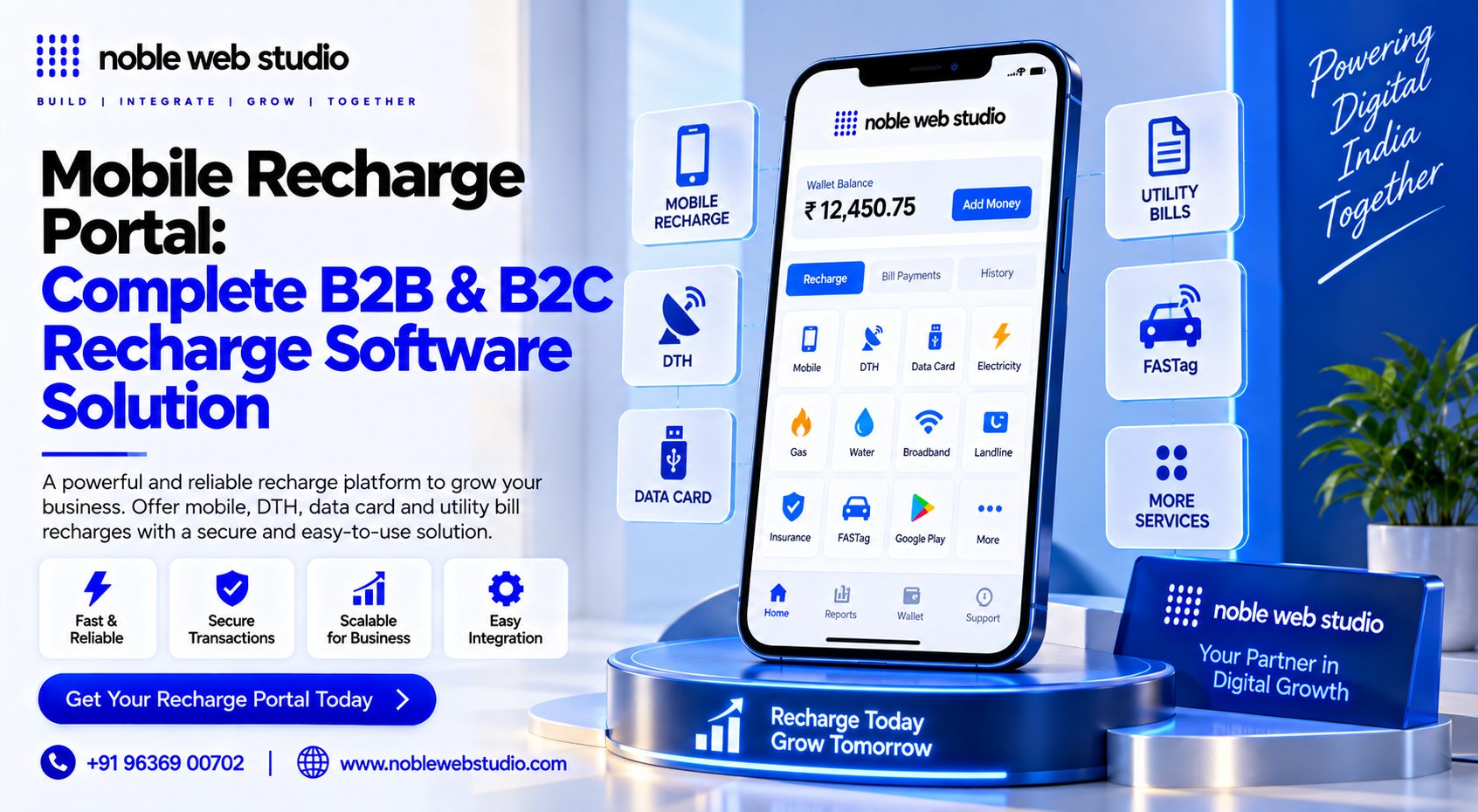
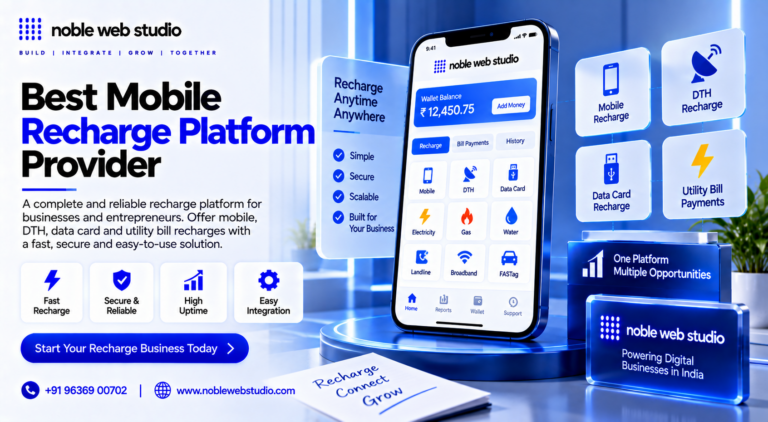
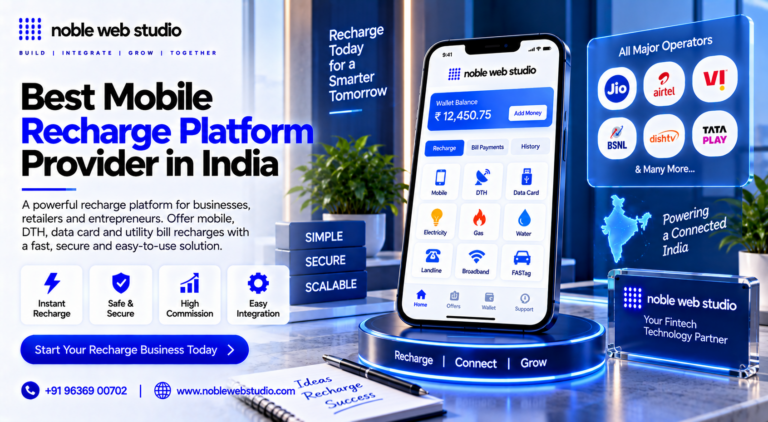
A Mobile Recharge Portal is a complete online platform that allows businesses to offer mobile recharge and other digital payment services through their own website, application, or business network. It can help manage recharge transactions, users, wallets, commissions, payments, reports, and service integrations from one centralized system.
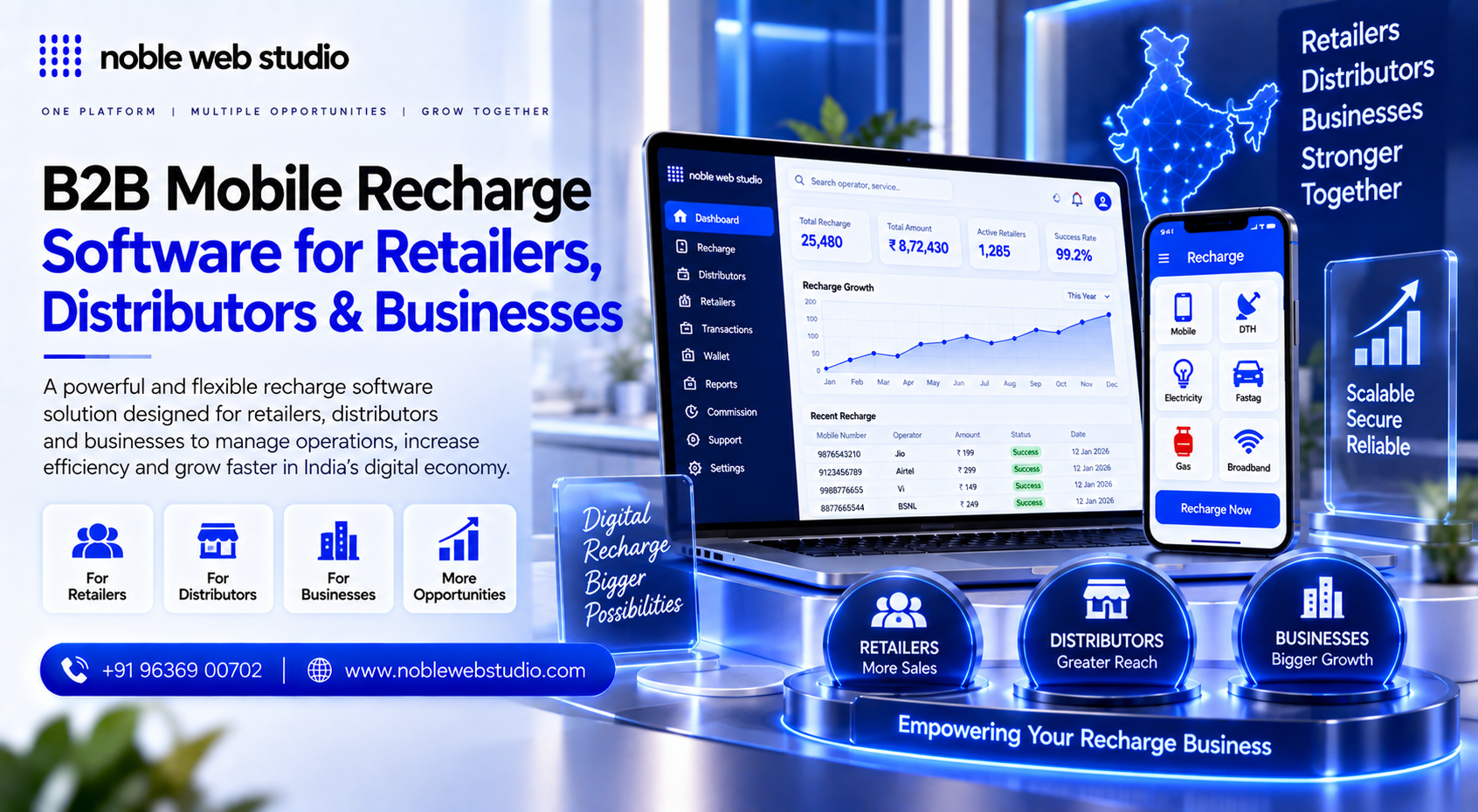
For a business owner, a Mobile Recharge Portal can be used to build a B2B recharge business, B2C recharge platform, reseller network, or white label recharge business. Retailers and distributors can get access to their own panels, while the main recharge admin can control users, services, transactions, wallet balances, commissions, and reports from the recharge admin panel.
A mobile recharge portal is an online platform or app that lets you add talktime, data, or validity to a prepaid mobile number. You can also use these portals to pay utility bills or recharge DTH connections.
A modern Mobile Recharge Portal can support services such as prepaid mobile recharge, postpaid bill payment, DTH recharge, data card recharge, and utility bill payments. Depending on the integrations included in the platform, additional services such as BBPS, FASTag, AEPS, money transfer, and other digital financial services can also be offered from the same platform. Noble Web Studio’s current recharge platform describes support for mobile, DTH, data card, utility payments and additional digital services through its recharge solutions.
The main technology behind a recharge portal is Recharge API Integration. When a customer or retailer submits a recharge request, the portal sends the required transaction information through the integrated Recharge API, receives the response, and updates the transaction status in the system. This allows the business to manage recharge transactions without processing every request manually.
A Mobile Recharge Portal for B2B businesses can also create a structured network of mobile recharge Admin, Master Distributor, Distributor, and Retailer users. Each user can have different permissions, wallet balances, commission rules, and transaction access. This makes the platform suitable for businesses that want to grow a retailer or distributor network while keeping overall control through the branded recharge admin panel.
Another important part of a recharge portal is the wallet and commission system. Retailers and distributors can manage their available balance, add or receive funds according to the recharge platform setup, process recharge transactions, and view their transaction or commission records. The admin can configure commission structures and monitor wallet and transaction activity from the backend.
Businesses that want to operate under their own brand can choose White Label Mobile Recharge Portal Software. A white label Recharge solution can be customized with the business name, logo, domain, user interface, and selected services, allowing the company to create its own branded recharge platform rather than relying on another company’s customer-facing brand.
At Noble Web Studio, we provide Mobile Recharge Portal solutions for businesses looking to start or expand their digital recharge operations. Depending on the business requirement, the platform can include B2B and B2C recharge functionality, Mobile Recharge API Integration, Mobile recharge Admin Panel, Retailer Recharge Panel, Distributor Panel, Wallet Management, Commission Management, Transaction Reports, White-Label Branding, Payment Gateway Integration, and Android recharge application support.
The right Mobile Recharge Portal should not only process recharges. It should also make daily business management easier, provide clear transaction records, support the required recharge and bill-payment services, and give the business enough flexibility to add users and services as it grows.
If you are planning to start your own recharge business, build a retailer network, or launch a branded recharge platform, choosing a Mobile Recharge Portal that matches your business model and can scale with your requirements is an important first step.
In this complete guide, you will learn what a Mobile Recharge Portal is, how a Mobile Recharge Portal works, its important features, B2B and B2C recharge models, Recharge API Integration, Admin Panel, Retailer and Distributor Management, Wallet Management, Commission Management, White-Label Recharge Portal, supported services, transaction process, recharge software development and mobile recharge software cost factors, and how to choose the right Mobile Recharge Portal for your business.
What Is a Mobile Recharge Portal?
A mobile recharge portal is an online platform or web application that allows users to instantly top up prepaid mobile phone numbers, view active telecom plans, and often pay utility bills without needing physical scratch cards or visiting a store.
How Does a Mobile Recharge Portal Work?
A mobile recharge portal is a web or mobile application that allows users to top up prepaid numbers, pay bills, and buy digital services online.
How It Works
- User Input: A customer logs into the Online Mobile Recharge Portal or app, enters their mobile number or account details, selects an operator, and picks a plan.
- Payment Processing: The user pays securely through a payment gateway using UPI, a credit/debit card, net banking, or a digital wallet.
- API Integration: The portal uses a Recharge Website Development backend connected via Application Programming Interfaces (APIs) to talk directly to telecom operators.
- Instant Top-Up: The operator processes the request immediately and sends a confirmation message and transaction ID back to the user.
- Admin Management: Recharge Portal owners use an best recharge admin panel to manage user accounts, check transaction logs, update operator plans, and distribute commissions to retailers or distributors.
Mobile Recharge Portal Services
A mobile recharge portal is an online platform that offers instant prepaid and postpaid mobile recharges, utility bill payments, and financial services.
Core Services Offered
- Mobile Top-Ups: Instant prepaid recharges and postpaid bill payments for major telecom operators like Airtel, Jio, Vodafone Idea (Vi), and BSNL.
- DTH Recharges: Direct-to-home television subscription renewals for providers like Tata Play, Dish TV, and Airtel DTH.
- Utility Bill Payments: Settlement for essential services including electricity, water, piped gas, and broadband or landline bills.
- Financial & Other Services: Additional options like fastag recharges, insurance premium payments, and loan EMI deposits depending on the specific recharge platform.
Types of Mobile Recharge Portal
Mobile recharge portals are classified primarily by their target audience and underlying business model, dividing into consumer-facing platforms and vendor-focused systems.
Major Types of Mobile Recharge Portals
- B2C (Business-to-Consumer) Portals: Designed for individual end-users to directly top up their own prepaid or postpaid numbers, DTH connections, or pay utility bills. Examples include general consumer applications like Paytm, PhonePe, and Google Pay.
- B2B (Business-to-Business) Portals: Built for local shopkeepers, retailers, distributors, and agents who process recharges on behalf of walk-in customers. These systems usually include wallet balance management and automated commission payouts for every transaction.
- Multi-Recharge Portals: Centralized platforms that integrate multiple telecom carriers (such as Jio, Airtel, Vi, and BSNL) and utility providers into a single interface or single wallet. They allow users to handle mobile, DTH, data cards, FASTag, and electricity bills in one place.
- White-Label Recharge Solutions: Pre-built software frameworks that a business can purchase, rebrand with its own company name and logo, and launch as a proprietary service for its own clientele.
- API-Based Portals: Systems that use an Application Programming Interface (API) to plug mobile recharge and bill payment capabilities directly into an existing third-party website or mobile application.
Documents Required for Mobile Recharge Portal
To set up and register a mobile recharge portal or business account, you need standard KYC (Know Your Customer) and business verification documents, such as a PAN Card and valid identity proof.
Identity and Address Proof (Any One)
- Identity Proof: Aadhaar card, PAN card, Voter ID card, or Passport.
- Address Proof: Aadhaar card, Voter ID, Driving License, or a recent utility bill (electricity or water) in your name.
- Photographs: 2–3 recent passport-size photographs.
Business and Financial Documents
- PAN Card: Mandatory for the individual applicant or registered firm.
- Bank Details: A canceled cheque, recent bank statement, or passbook copy to handle fund settlements and commissions.
- Business Registration: Shop & Establishment License, Udyam Registration, or Certificate of Incorporation (depending on if you are a sole proprietor or a company).
- Tax Documents: GST Registration Certificate (recommended or mandatory based on business turnover).
Technical and Legal Setup
- Domain & Hosting: A registered domain name if you are launching your own white-label portal or recharge commission app.
- Legal Agreements: Signed Noble web studio agreement alongside website terms of use and refund policies.
Who Can Use Mobile Recharge Portal
A mobile recharge portal can be used by individual consumers, local business owners, and commercial distributors to process prepaid, postpaid, and DTH services.
Individual Consumers
- Self-users: Anyone with a prepaid mobile or DTH connection who wants to top up data or talktime directly.
- Peer-to-peer users: Individuals who use the portal to help family members, friends, or neighbors who lack access to digital payment tools.
Business Users & Entrepreneurs
- Local Retailers & Kirana Store Owners: Shopkeepers who use B2B portals or commission apps to offer walk-in recharge and utility bill services to local customers.
- Independent Entrepreneurs: Individuals operating small-scale or home-based digital service desks.
- Agents & Distributors: Intermediaries who manage a chain of lower-tier retailers and earn tiered commissions on aggregated transactions.
Service Providers & Organizations
- Common Service Centres (CSCs): Village-level operators in rural areas who provide financial inclusion and telecom recharge services via digital platforms.
- Small & Medium Enterprises (SMEs): Companies integrating recharge APIs or white-label portals to offer value-added services to their existing customer base.
- System Administrators: Technical operators who manage user accounts, oversee wallet balances, and monitor transaction logs.
Why Use Mobile Recharge Portal
You should use a mobile recharge portal for instant, 24/7 convenience and secure, one-click top-ups without needing to visit a physical store.
Key Benefits for Users
- 24/7 Availability: Top up your prepaid mobile, DTH, or data card anytime from anywhere, avoiding last-minute service disconnections.
- Multi-Service Access: Pay utility bills (electricity, water, gas) and manage FASTag or broadband renewals in a single unified dashboard.
- Security & Transparency: Protect financial data with advanced encryption, multi-factor authentication (UPI/OTP), and instant electronic receipts.
- Expense Tracking: Maintain an automated digital record of past transactions to easily track monthly spending and plan budgets.
- Rewards & Cashback: Earn exclusive promotional discounts, loyalty points, or cashback incentives on frequent recharges.
Key Benefits for Businesses & Retailers
- Commission Earnings: Retailers and agents earn immediate margins or cashbacks on every customer transaction processed through a Noble Web Studio Portal.
- Single Wallet Control: Manage multiple telecom operators and downline retailer balances from a single virtual fund pool to minimize payment failures.
Top Use Cases of Mobile Recharge Portal
A mobile recharge portal serves as a digital hub for instant telecom top-ups, utility payments, and financial transactions for both individual users and commercial networks.
Top Use Cases of a Mobile Recharge Portal
- Prepaid & Postpaid Mobile Top-Ups: Instant 24/7 recharges, data packs, and talk-time boosters across major telecom operators like Jio, Airtel, VI, and BSNL.
- DTH & Cable TV Renewals: Real-time subscription payments for satellite TV services including Tata Play, Dish TV, and Airtel Digital TV.
- Utility Bill Payments (BBPS): Automated clearing for essential services like electricity, water, piped gas, and broadband through integrated Bharat Bill Payment System frameworks.
- FASTag & Transit Top-Ups: Instant digital reloading for highway electronic toll collection and municipal smart/metro travel cards.
- B2B Retail & Commission Networks: Local mom-and-pop shops and kirana stores acting as digital convenience hubs to process over-the-counter recharges and earn transaction commissions.
- White-Label Business Launch: Entrepreneurs and startups rebranding multi-service software via APIs to launch customized, independent digital payment portals.
- Corporate Expense Management: Enterprises managing multi-location employee connectivity allowances, corporate phone bills, and facility utilities from a single central dashboard.
Key Aspects of Mobile Recharge Portal
A mobile recharge portal is an online platform that automates top-ups and bill payments for mobile networks, DTH, and utility services.
Core Features & Modules
- Recharge & Billing Module: Lets users enter phone numbers, auto-detect operators (like Jio, Airtel, Vi, BSNL), and choose active plans.
- Payment Gateway Integration: Secures transactions via UPI, net banking, credit/debit cards, and digital wallets.
- API Management: Connects the platform directly to telecom operators for instant, automated processing.
- Wallet & Commission System: Stores digital funds for fast checkouts and manages multi-tiered commissions for retailers or agents.
- Admin Dashboard: Provides centralized controls to track logs, monitor profit analytics, and update service operators.
- Notification System: Sends instant SMS, email, or push alerts for successful or failed transactions.
Why Mobile Recharge Portal Fast Growing in india
Mobile recharge portals are growing fast in India because of widespread smartphone adoption, seamless digital payment infrastructure like UPI, and the demand for instant, 24/7 self-service convenience.
Key Drivers of Growth
- UPI & Digital Adoption: Instant, cashless payments via UPI make transactions frictionless.
- Surging Data Usage: High consumption of 5G and mobile data drives frequent, recurring recharges.
- 24/7 Convenience: Users can top up anytime without visiting physical retail shops.
- Business Opportunities: Retailers and entrepreneurs use B2B portals to earn daily commission margins.
- All-in-One Services: Portals now bundle DTH, utility bills, and financial tools like AEPS into a single dashboard.
Mobile Recharge Portal for Admin Panel and Retailer Panel
A mobile recharge portal with an Admin Panel and Recharge Portal is a centralized software solution that lets businesses run multi-level telecom and utility recharge operations.
Admin Panel Features
- Centralized Control: Manage all telecom operators, Recharge API connections, and service requests from a single master dashboard.
- User Hierarchy Management: Create and oversee a multi-level network consisting of master distributors, distributors, and Retailer Panel agents.
- Commission Engine: Configure, update, and automate profit margins and commission slabs based on user tiers or transaction volumes.
- Wallet & Fund Management: Track digital e-wallets, approve manual or automated fund requests, and monitor financial ledgers.
- Real-Time Analytics: Generate detailed sales and transaction reports to track success rates, failures, and overall liquidity.
Retailer Panel Features
- Instant Recharges: Process front-line prepaid mobile, DTH, and data card top-ups.
- Bill Payments: Handle utility payments like electricity, gas, water, and broadband through BBPS (Bharat Bill Payment System).
- Value-Added Services: Initiate FASTag recharges, money transfers (DMT), or gift card purchases depending on platform configurations.
- Wallet Top-Up: Request funds or add balance instantly via integrated digital payment gateways or UPI.
Mobile Recharge Portal Distributor Panel
A mobile recharge portal distributor panel is a mid-tier management dashboard used to create and oversee retailer accounts, transfer funds, and track commission margins in a multi-level recharge business.
Key Features of a Distributor Panel
- Retailer Management: Register new retailers, monitor their performance, and provide localized support.
- Fund & Wallet Transfer: Transfer virtual wallet balance instantly to downstream retailers and view transaction ledgers.
- Commission Tracking: Monitor commission earnings, profit margins, and automated credit distribution.
- Reporting & Analytics: Access real-time logs for successful, pending, or failed recharges across your retailer network.
- Multi-Service Access: Manage recharges and bill payments (Mobile, DTH, BBPS utility bills) from a single centralized dashboard.
Mobile Recharge Portal for B2B and B2C Business
A hybrid B2B and B2C Recharge Portal is a digital platform that lets you run a retail service network while also serving individual consumers directly.
Key Features
- B2B Network Management: Manage multi-tier user hierarchies like Master Distributors, Distributors, and Retailers.
- B2C Customer Interface: Provide a direct customer-facing website or mobile recharge commission app for self-service mobile, DTH, and utility bill payments.
- Automated Commission Payouts: Distribute profit margins dynamically down each tier of your distribution chain.
- Multi-Service Integration: Support prepaid mobile, DTH, electricity, gas, water bills, and BBPS services.
- Wallet & API Routing: Use pre-integrated digital wallets and automated mobile recharge API failover systems for high transaction success rates.
Mobile Recharge Portal for Android and iOS Model
A mobile recharge portal for Android and iOS operates on a white-label or multi-service aggregator model that connects users or retail agents directly to telecom API infrastructure for instant prepaid, postpaid, and DTH top-ups.
Core Architecture of a Mobile Recharge App Model
- User/Agent App (Android & iOS): Native or hybrid interfaces (built via Flutter/React Native) for end-users or B2B retailers to pick operators, browse plans, and initiate payments.
- Central Admin Dashboard: Web-based panel to manage operator margins, monitor live transaction success rates, handle automated refunds, and track user analytics.
- Recharge API / Operator Gateway: Direct server-to-server XML/JSON connections with major telecom operators (such as Jio, Airtel, Vi, and BSNL) to process real-time airtime dispatch.
- Integrated Wallet & Payment Gateway: Virtual credit ledger system supporting UPI, debit/credit cards, and net banking with auto-approval mechanics.
Mobile Recharge Portal Business Model
A mobile recharge portal business model operates as a digital intermediary connecting end-users or local merchants with telecom and utility providers via Recharge APIs to earn commissions on every transaction.
Core Business Structures
- B2C (Business-to-Consumer): A direct-to-customer app or website where users self-serve recharges using UPI, cards, or net banking, generating revenue via convenience fees or high-volume operator commissions.
- B2B (Agent/Retailer Network): A portal customized for local shopkeepers and Kirana owners who process cash-based recharges for walk-in clients, sharing commission margins with the platform owner.
- White-Label / API Reseller: Renting out a fully branded, turn-key software portal or backend best Recharge API to sub-distributors and startups in exchange for setup fees and recurring volume cuts.
Mobile Recharge Portal Features
A mobile recharge portal provides a digital platform to process prepaid and postpaid mobile top-ups, pay utility bills, and manage transactions seamlessly.
Core User Features (B2C)
- Instant Top-Ups: Recharge prepaid mobile connections or purchase data packs in seconds.
- Multi-Operator Support: Recharges mobile networks like Jio, Airtel, Vi, and BSNL, alongside DTH and data cards.
- Real-Time Processing: Executes instant recharges with immediate success or failure status updates.
- Plan Browser: Displays active tariff plans, special data packs, and operator circle detection.
- Secure Payments: Supports payment gateways via UPI, credit/debit cards, net banking, and digital wallets.
- Transaction History: Maintains a detailed log of past recharges and bill statuses.
Business and Admin Features (B2B)
- Central Admin Dashboard: Monitors overall platform performance, traffic, and revenue.
- API Integration: Connects with multiple telecom operators and payment gateways to maximize transaction success rates.
- Commission Management: Configures and automates multi-tier margins for a network of distributors and retailers.
- White-Label Solution: Allows businesses to brand the platform with their own company logo and custom domain.
- Advanced Reporting: Generate automated analytics and financial logs to track daily sales.
- Wallet System: Enables digital fund storage, automated balance updates, and instant refunds.
- Robust Security: Protect user data using advanced encryption, OTP verifications, and restricted IP access.
Benefits of Mobile Recharge Portal
A mobile recharge portal provides instant, 24/7 convenience and centralized utility bill payments through a single digital platform.
24/7 Availability & Speed
- Round-the-clock access: Top up anytime without visiting physical stores.
- Instant processing: Payments reflect immediately via automated network routing.
- Emergency ready: Avoid sudden service disconnections during odd hours.
Multi-Service Functionality
- All-in-one platform: Supports prepaid/postpaid mobile, DTH, and data cards.
- Utility payments: Pay electricity, water, gas, and broadband bills easily.
- Extra services: Handle FASTag top-ups and financial transactions securely.
Security & Payment Flexibility
- Safe transactions: Protected via high-level encryption and multi-factor authentication.
- Diverse options: Pay using UPI, digital wallets, net banking, or cards.
- No physical cash: Eliminate risks associated with carrying paper currency.
Transparency & Tracking
- Recharge history: Automatically store past transactions for easy budgeting.
- Plan comparisons: View and compare active tariff plans before paying.
- Rewards & cashback: Earn promo discounts, margins, or cashbacks on use.
Mobile Recharge Portal Development
Developing a mobile recharge portal involves planning a business model, integrating telecom and payment APIs, building user and admin panels, and ensuring robust security.
1. Planning and Requirement Analysis
- Define Target Audience: Decide if your portal is B2C (direct consumers), B2B (retailers and agents), or a multi-level white-label network.
- Legal and Compliance: Complete business registration, obtain necessary local permits, and prepare KYC documentation (PAN, identity proof, and banking details).
- Choose Architecture: Select between a ready-made white-label solution (fast deployment, lower initial cost) or a fully custom-built platform.
2. UI/UX Design and Prototyping
- Design Flow: Create a fast, intuitive 3-click recharge process for phone numbers, operators, circles, and amounts.
- Responsive Layouts: Ensure the web portal and best mobile recharge commission app function seamlessly across screen sizes with light/dark mode support.
3. Core Development and API Integration
- Front-End & Back-End: Build user-facing apps (Android/iOS/Web) and secure server-side logic for wallet management and transaction histories.
- Recharge API: Integrate with reliable telecom and utility aggregators (like Best BBPS or operator-specific APIs) for real-time top-ups.
- Payment Gateway: Connect secure payment options such as UPI, net banking, and credit/debit cards to fund digital wallets.
- Admin Panel: Develop a backend dashboard to oversee user management, operator commissions, success/failure logs, and ledger reports.
4. Testing and Security
- Quality Assurance: Perform load testing for concurrent users and run test transactions to eliminate latency.
- Security Measures: Enforce end-to-end encryption (AES-256), PCI-DSS compliance for payments, and OTP verifications.
5. Deployment and Maintenance
- Launch: Publish mobile apps on app stores and deploy the web portal on a scalable multi-cloud environment.
- Support: Provide continuous server monitoring, prompt error resolution, and recharge API updates.
Mobile Recharge Portal Cost in India
Setting up a mobile recharge portal in India typically costs between ₹7,500 and ₹1,50,000+ depending on whether you choose a starter package, a white-label solution, or a fully custom app development.
Cost Structure Breakdown
- Starter / Basic White-Label Portals: ₹7,500 to ₹30,000 (one-time) for pre-built admin panels, basic operator setups, and standard commission structures.
- Advanced B2B / B2C Portals: ₹30,000 to ₹80,000 for multi-recharge systems supporting user management, reporting, and multiple service integrations.
- Mobile App Development: ₹70,000 to ₹1,50,000+ if you need dedicated Android and iOS applications with advanced interface features.
- API Integration Fees: ₹1,000 to ₹20,000 per API depending on the Noble web studio and whether you are integrating basic recharge, DTH, or utility tools like BBPS, AEPS, or DMR.
- Recurring & Operational Costs: ₹1,499 to ₹5,000 per month for cloud hosting, server maintenance, and optional SMS notification gateways.
- Working Capital: Variable amount needed in your admin/operator wallet to manage daily transaction clearings.
Mobile Recharge Portal With Recharge API Architecture
A Mobile Recharge Portal with an API Architecture connects front-end interfaces (used by end-users, retailers, or distributors) to the upstream telecom operators through a secure, high-performance back-end system. This structure relies on an All in-One Recharge API to process multi-operator transactions (like Jio, Airtel, and Vi) via a single unified bridge.
1. High-Level Architectural Flow
The system processes transactions through a multi-tier pipeline designed for speed and data security:
[ User UI / Retailer App ]
         │  (HTTPS / JSON)
         ▼
[ API Gateway & Security ] ──► (Authentication, IP Whitelisting, Rate Limiting)
         │
         ▼
[ Core Recharge Engine ] ────► [ Wallet & Ledger Subsystem ] (Checks & Debits Balance)
         │
         ▼
[ Switch / Router Engine ] ──► (Selects best API Vendor / Upstream Operator)
         │
         ▼
[ Third-Party Aggregator / Telco API ]
2. Core Architectural Components
A. Frontend Presentation Layer
- B2C Customer Portal: Web and mobile layouts (iOS/Android) where end-users input their phone number, browse operator plans, and make retail payments.
- B2B Retailer Panel: A specialized dashboard allowing local store owners to perform high-speed recharges using a single prepaid wallet balance.
B. API Gateway & Security Layer
- Authentication: Validates incoming internal and external requests using secure tokens (
Bearer JWT) and static recharge API Keys. - IP Whitelisting & Security: Prevents unauthorized server hits by matching requests against registered merchant server IPs and employing SSL/TLS data encryption.
- Rate Limiting: Protects the downstream database from high-volume spam or denial-of-service (DoS) attempts.
C. Core Backend Application Layer
- User & Merchant Management: Handles hierarchy setups (Admin → Master Distributor → Distributor → Retailer).
- Plan & Operator Directory: Dynamically caches telecom data so users can fetch active packages instantly.
- Switching & Routing Logic: Automatically routes transactions across multiple recharge API vendor lines based on real-time success rates to minimize drops.
D. Wallet & Ledger Subsystem (Critical)
- Double-Entry Ledger: Ensures every request acts as an ACID transaction. The system locks user balance, sends the recharge API request, and finishes the debit only upon a definitive response.
- Commission Engine: Instantly calculates and distributes commissions up the chain (e.g., crediting the retailer and distributor fractions simultaneously upon a successful response).
3. Key Core API Endpoints
A robust portal must implement the following RESTful Recharge API patterns:
| Endpoint | Method | Purpose | Key Parameters |
|---|---|---|---|
/api/v1/recharge/do | POST | Triggers a top-up transaction | mobile_no, amount, operator_code, circle, client_txn_id |
/api/v1/recharge/status | GET | Pulls definitive current status | txn_id or client_txn_id |
/api/v1/wallet/balance | GET | Validates live account balance | api_key or Auth Token |
/api/v1/plans/fetch | GET | Returns available mobile plans | operator_code, circle |
4. Technical Strategy for Transaction Failures
Mobile recharge states are volatile due to varying Noble web studio Server responses. The architecture handles this through three distinct execution branches:
- Success (
HTTP 200+ Success Body): Balance is completely debited, commission is settled, and a final push notification is sent. - Failed (
HTTP 200/400+ Failure Body): The transaction rollbacks instantly, releasing the locked wallet balance. - Pending: The system does not immediately refund or finalize the trade. The engine initiates a secondary asynchronous worker queue to poll the upstream vendor via
/statusqueries at increasing intervals (e.g., 30s, 2m, 10m) until a definitive status is provided.
Mobile Recharge Portal With Mobile App
You can access multi-service recharging and commission apps directly via platforms like the Mobile Recharge Commission App on Google Play.
Popular Mobile Recharge Portals & Apps
- Consumer Apps: Popular platforms for personal mobile and DTH recharges with zero or low convenience fees and operator-specific apps.
- B2B / Commission Portals: If you are looking to start a retailer business or use an all-in-one platform that provides margins/cashback on recharges for Jio, Airtel, Vi, and BSNL, apps like Recharge Portal or software providers like Noble web studio offer integrated APIs and retailer panels.
- International Top-ups: For cross-border or global airtime needs supports instant local carrier recharges.
Mobile Recharge Portal Wallet System
A Mobile Recharge Portal Wallet System is a digital ledger balance inside a software platform that holds pre-funded money used to instantly pay for digital services like mobile top-ups, DTH renewals, and utility bills without making a separate bank payment for every single transaction.
How It Works
- Pre-Funding the Balance: Users, retailers, or distributors add money to their digital wallet using UPI, net banking, or bank transfers.
- Hierarchy and Distribution: In B2B setups, funds flow through a multi-tier chain (Admin → Master Distributor → Retailer) where balances are updated instantly inside the software.
- API Execution: When a user requests a recharge, the system uses a top Recharge API to communicate with telecom operators in real time, deducting the amount from the active wallet upon success.
- Commission Automation: Profits or specific margins are automatically calculated and credited back to the agent’s wallet following a completed transaction.
Mobile Recharge Portal Commission System
Mobile recharge portal commission systems in India generally provide retailers and agents a margin ranging from 1% to 6% per transaction, depending on the operator and service type.
Average Commission Structure
- Prepaid Mobile Recharge (Jio, Airtel, Vi, BSNL): 1% – 4% (operator-dependent; e.g., Jio offers up to 4% base and promotional margins on official apps like JioPOS Lite).
- DTH Recharge (Tata Play, Dish TV, Airtel Digital TV): 3% – 7% per transaction.
- Postpaid Bill Payments: 1% – 3% per transaction.
- Utility Bills (Electricity, Gas via BBPS): Flat rates typically ranging from ₹5 to ₹20 per bill rather than a percentage.
Commission Structure by Channel Hierarchy
- Retailer: Earns direct commission on individual customer transactions processed through the portal or app.
- Distributor: Earns an override margin (passive income) based on the collective transaction volume generated by retailers under them.
- Master Distributor / Admin: Manages the entire network, sets custom commission slabs, and earns a higher margin or API reselling profit across all downstream partners.
Mobile Recharge Portal Transaction Management
A mobile recharge portal’s transaction management system tracks, processes, and secures digital recharges and bill payments in real time through Recharge Transaction System by RC Soft and automated API links to telecom operators.
Core Components
- Real-Time Processing: Instantly routes user requests via Recharge Portal by Recharge APIs to verify and complete operator top-ups.
- Transaction Tracking: Maintains complete, searchable logs of successful, pending, and failed operations with unique transaction IDs.
- Automated Error & Refund Management: Detects failed requests caused by operator timeouts or network errors and triggers instant wallet refunds.
- Commission Distribution: Automatically computes and assigns margins across multi-level user hierarchies (Admin, Distributor, Retailer).
- Security & Fraud Prevention: Utilizes end-to-end encryption, role-based access control, and activity logging to block unauthorized access.
Mobile Recharge Portal Security
Mobile recharge portals ensure transaction security through Data Encryption (TLS/SSL) and secure payment gateways Noble Web Studio.
Core Security Features
- Data Encryption: Uses TLS/SSL protocols to protect sensitive user data and payment details in transit.
- Secure Gateways: Routes financial operations through trusted, PCI-DSS compliant bank servers and payment processors.
- Authentication: Employs multi-factor authentication (MFA), OTP verification, and JWT-based logins to verify user identity.
- Validated APIs: Connects securely with telecom servers using validated and encrypted API integrations.
- Access Control: Restricts admin panel access and maintains active transactional logs to track and audit activities.
Mobile Recharge Portal Scalability
A scalable mobile recharge portal requires a cloud-native microservices architecture, automated load balancing, and multi-operator [0.6.4, API redundancy to handle high concurrent transaction volumes.
Key Scalability Components
- Cloud Infrastructure: Utilize auto-scaling clusters (like Kubernetes) to dynamically allocate compute resources during peak traffic hours.
- Database Sharding: Separate transaction logs, user wallets, and master data across distributed databases to reduce query bottlenecks.
- API Redundancy: Integrate multiple upstream telecom and payment APIs with automated failover to maintain sub-second latency and 99.99% uptime.
- Asynchronous Processing: Use message queues (such as RabbitMQ or Apache Kafka) for transaction requests to prevent server crashes during sudden traffic spikes.
Mobile Recharge Portal vs Mobile Recharge Software vs Recharge API
A Mobile Recharge Portal is a ready-to-use website or app for direct transactions, Mobile Recharge Software is a complete business management platform with admin and multi-level user controls, and a best Mobile Recharge API is the technical backend code used to plug recharge features into an existing application.
Core Differences
| Feature | Mobile Recharge Portal | Mobile Recharge Software | Recharge API |
|---|---|---|---|
| What it is | A simple web or app interface to process recharges. | A complete backend system to run a recharge business/network. | A set of programming rules to connect external software to telecom servers. |
| Target User | Individual shop owners or single-point retailers. | Enterprise owners, master distributors, and network providers. | App developers and tech companies with custom software. |
| Setup & Tech Skills | None required; ready to use on day one. | Low-to-moderate; provided with training and ready panels. | High; requires developers for integration. |
| Control & Management | Limited to basic transaction history and wallet use. | Full control over multi-level commissions, retailers, and reports. | Complete control over the user interface and custom app logic. |
Mobile Recharge Portal
- How it works: You log into an existing website or web panel, enter the customer’s phone number, select the operator, and pay to complete the top-up.
- Best for: Small shop owners (like a local kirana store) who want to start offering quick recharge services with zero technical setup.
- Limitations: You cannot create your own sub-distributors, customize commission slabs, or brand the platform as your own.
Mobile Recharge Software
- How it works: It acts as an all-in-one administrative system. It includes an admin panel, wallet management, user management (Admin > Distributor > Retailer), and automated commission splits.
- Best for: Aspiring B2B business owners and network distributors who want to build a chain of retail agents under their own brand name (often white-labeled).
- Advantages: Offers higher profit margins, automated reporting, and multi-operator/utility support (like DTH and electricity bills) out of the box.
- How it works: It is a secure digital bridge. When a user requests a recharge inside your custom app, your recharge software calls the fast mobile recharge API to communicate instantly with the telecom operator’s server.
- Best for: Noble web studio developers already have a multi-service application and want to embed mobile top-ups as a secondary feature.
- Advantages: Absolute flexibility in UI/UX design and functionality, since you build the frontend application entirely yourself.
White Label Mobile Recharge Portal
A White Label Mobile Recharge Portal is a ready-made, brandable software platform that lets you start your own online recharge and utility payment business under your own company name, logo, and domain.
Core Features
- Custom Branding: Use your own domain name, website design, and logo.
- Android Apps: Get ready-to-publish mobile applications for your retailers and distributors on the Google Play Store.
- Multi-Service Support: Offer prepaid mobile recharges (Jio, Airtel, Vi, BSNL), DTH recharges, and utility bill payments via BBPS.
- Multi-Level Hierarchy: Create and manage unlimited master distributors, distributors, and retailers under your main admin account.
- Wallet & Commission System: Control real-time balances, auto-debits, fund transfers, and profit margins or commission structures for every user tier.
Key Benefits
- No Development Needed: Launch within 1 to 2 days without writing code or building a system from scratch.
- Cost-Effective: Far cheaper than custom mobile recharge software development.
- Fully Managed: Technical maintenance, uptime, and Smooth Recharge API switching are handled by the Noble web studio.
Noble Web Studio One Of The Mobile Recharge Portal Provider
Noble web studio one of the right Mobile Recharge portal provider requires evaluating platform reliability, security, and financial structure to ensure long-term business profitability.
Key Factors to Consider
- Reliability & Uptime: Look for Noble web studio guaranteeing at least 99.9% uptime and automatic backup APIs to prevent failed transactions during peak hours.
- Transaction Success Rate: Prioritize a minimum success rate of 99% with instant failure refunds and auto-reversals to your wallet.
- Service Coverage: Ensure support for multi-operators (Jio, Airtel, Vi, BSNL), DTH services, data cards, and utility bill payments (electricity, gas, FASTag) through a single platform.
- Commission Structure: Balance competitive commission margins (typically 1.5% to 5% for mobile/DTH) with platform stability, as high recharge commission on an unreliable network will harm your customer retention.
- Security Standards: Verify robust security measures including SSL encryption, HTTPS, IP whitelisting, and PCI DSS compliance.
- White-Label & Customization: Check for white-label options if you want to brand the portal or app with your own company name, logo, and color schemes.
- Technical Support: Access to 24/7 customer support via phone, email, or instant chat channels like WhatsApp to resolve processing errors quickly.
Why Choose Noble Web Studio for Mobile Recharge Portal?
Noble web studio is a Mobile Recharge Portal Solution requires evaluating infrastructure reliability, service scope, and profit margins to ensure long-term business success.
Key Factors to Consider
- Transaction Success Rate & Speed: Look for a Noble web studio offering a 99%+ success rate and low response times (under 5 seconds) to avoid failed customer top-ups.
- Multi-Service & Operator Support: Ensure the platform supports prepaid/postpaid mobile recharges, DTH Recharges, and utility bill payments via BBPS, alongside optional financial APIs like AEPS API.
- Commission & Pricing Structure: Compare commission margins and recharge API setup fees only after confirming the technical reliability and uptime guarantees of the Noble web studio.
- White-Label & Customization Options: Verify if the system allows you to brand recharge portal with your own logo, color schemes, domain name, and down-line network management for retailers and distributors.
- Security & Support: Prioritize bank-grade SSL encryption, secure payment gateway integrations, and 24/7 technical customer support.
Conclusion: Choose the Right Mobile Recharge Portal for Your Business
A Mobile Recharge Portal is more than a website for processing mobile recharges. It can act as a complete business platform for managing mobile recharge, DTH recharge, bill payments, retailers, distributors, wallets, commissions, transactions, and reports from one place.
For a B2B recharge business, the portal should make it easy to manage different user levels, distribute wallet balance, set commission rules, track recharge transactions, and monitor the performance of retailers and distributors. For a B2C business, it should provide customers with a simple way to recharge mobile numbers, DTH connections, and other supported services through a website or mobile application.
A mobile recharge portal is an online platform or app that lets you add talktime, data, or validity to a prepaid mobile number.
A reliable Mobile Recharge Portal Software should also have important features such as Recharge API Integration, multi-operator support, secure payment options, wallet management, commission management, transaction tracking, automatic status updates, reports, user management, admin controls, and scalable infrastructure. The exact services and integrations can depend on the business model and selected service providers.
If you want to operate the platform under your own brand, a White Label Mobile Recharge Portal can provide a branded website, application, panels, and recharge services. A customized solution can also be developed when your business requires a specific retailer hierarchy, wallet structure, commission model, API integration, or additional digital services.
At Noble Web Studio, we provide Mobile Recharge Portal Software for businesses that want to start, manage, or expand their own B2B or B2C recharge business. Depending on your requirements, the platform can include recharge API integrate, retailer and distributor management, wallet management, commission controls, transaction reports, admin panel, payment gateway integration, white-label branding, and additional recharge or bill-payment services.
Before choosing a Mobile Recharge Portal, compare the features that actually matter to your business modern recharge API reliability, transaction handling, wallet and ledger management, commission controls, scalability, security, customization, reporting, technical support, and the services you plan to offer. This can help you choose a platform that fits your current needs and can grow with your recharge network.
Contact Noble Web Studio to discuss your Mobile Recharge Portal requirements, get a suitable recharge software solution for your business model, and explore the available B2B, B2C, white-label, Mobile recharge API integrating, and customization options.
Start your Mobile Recharge Portal with a platform built around your business requirements.
Mobile Recharge Portal FAQs
A Mobile Recharge Portal is a web or mobile-based platform that allows users, retailers, distributors, or businesses to process mobile recharges through integrated recharge services and APIs. It can also include wallet, commission, transaction, and user-management features.
A Mobile Recharge Portal connects the user with a recharge API. The user submits the mobile number and recharge amount, the request is processed through the connected operator, and the portal displays the transaction status.
A Mobile Recharge Portal can support services such as prepaid mobile recharge, postpaid bill payment, DTH recharge, data recharge, and other supported utility or fintech services. Available services depend on the APIs and providers integrated into the portal.
A B2B Mobile Recharge Portal is designed for businesses that provide recharge services through retailers, distributors, or other business users. It can include retailer management, distributor hierarchy, wallet management, commissions, transactions, and reports.
A B2C Mobile Recharge Portal allows businesses to provide recharge and bill-payment services directly to end customers. It can include customer registration, payment gateway integration, recharge processing, transaction history, and notifications.
A White Label Mobile Recharge Portal is a ready-made recharge platform that can be customized and operated under a business’s own brand. Depending on the Noble web studio, it can include custom branding, domain, admin panel, retailer management, API integration, and mobile applications.
Yes, a Mobile Recharge Portal can provide the technology required to start a recharge business. You typically need a suitable business model, recharge services or API access, payment or wallet infrastructure, user onboarding, and the required operational arrangements.
Yes. A Mobile Recharge Portal can support multiple mobile operators when the integrated recharge API or connectivity to those operators. Multi-operator support allows users to select the applicable operator during recharge.
A Mobile Recharge API is an application programming interface that connects a website, application, or recharge portal with a Noble web studio Server. It enables the application to send recharge requests and receive transaction responses programmatically.
Yes, a Mobile Recharge API can be integrated into a website when API access and technical documentation are provided by the Noble web studio. The integration normally includes authentication, recharge requests, transaction status, callbacks, and error handling.
A Mobile Recharge Portal can include an admin panel for managing users, retailers, distributors, transactions, wallets, commissions, services, reports, and other platform settings. The available features depend on the selected software solution.
Yes. A B2B Mobile Recharge Portal can provide retailer and distributor management features. Administrators can create users, manage wallets, configure commissions, monitor transactions, and view reports according to their assigned permissions.
Recharge commission is the earning or margin assigned to a retailer, distributor, or other user according to the applicable recharge service and commission structure. The portal can automatically calculate and record commissions when the required functionality is configured.
A recharge wallet stores the available balance used for eligible transactions. When a recharge is processed, the applicable amount can be deducted from the user’s wallet, while commissions, refunds, or adjustments can be reflected in the wallet ledger according to the platform configuration.
Failed recharge transactions are recorded with their transaction status or response information. Depending on the Noble web studio and transaction result, the amount may be reversed or refunded according to the applicable refund and reconciliation process.
Recharge transactions can be tracked using transaction IDs, reference numbers, mobile numbers, amounts, timestamps, operator details, and transaction status. Admin and authorized users can view transaction history and reports from the portal.
The cost depends on factors such as ready-made or custom development, API integration, admin panel, mobile application, hosting, customization, maintenance, support, and required recharge services. Noble web studio can give an accurate quotation after reviewing the business requirements.
A Mobile Recharge Portal is the user-facing platform through which recharge services are accessed, while Mobile Recharge Software generally refers to the broader system used to operate and manage a recharge business. A software solution can include the portal, admin panel, APIs, wallet, commission, and user-management modules.
A Recharge Portal is a complete interface through which users or businesses can perform recharge transactions. A Recharge API is the technical connection that allows another website, application, or software platform to access recharge functionality programmatically.
Yes, Noble Web Studio can provide recharge software and White Label solutions according to the selected requirements and available services. The exact features, integrations, branding options, and commercial terms should be confirmed with Noble Web Studio before implementation.
Yes. Depending on the software model, a Mobile Recharge Portal can be customized with business branding, logo, domain, user roles, dashboard modules, commission settings, API integrations, payment options, and other required features.
Yes, DTH recharge and bill-payment services can be integrated when the required APIs or service connections are available. A portal can combine mobile recharge, DTH, and supported bill-payment services within one platform.
Yes, a recharge platform can integrate BBPS or other fintech services when the required API access and service arrangements are available. This can allow businesses to manage multiple supported services through a centralized platform.
Compare providers based on API connectivity, operator coverage, transaction processing, admin features, retailer and distributor management, wallet and commission functionality, security, scalability, documentation, support, customization, and overall cost.
Start by selecting your business model and required services, choose a suitable Noble web studio, obtain the required API or service access, configure the portal, set up wallet and commission structures, test transactions, onboard users, and launch the platform.