Ankit
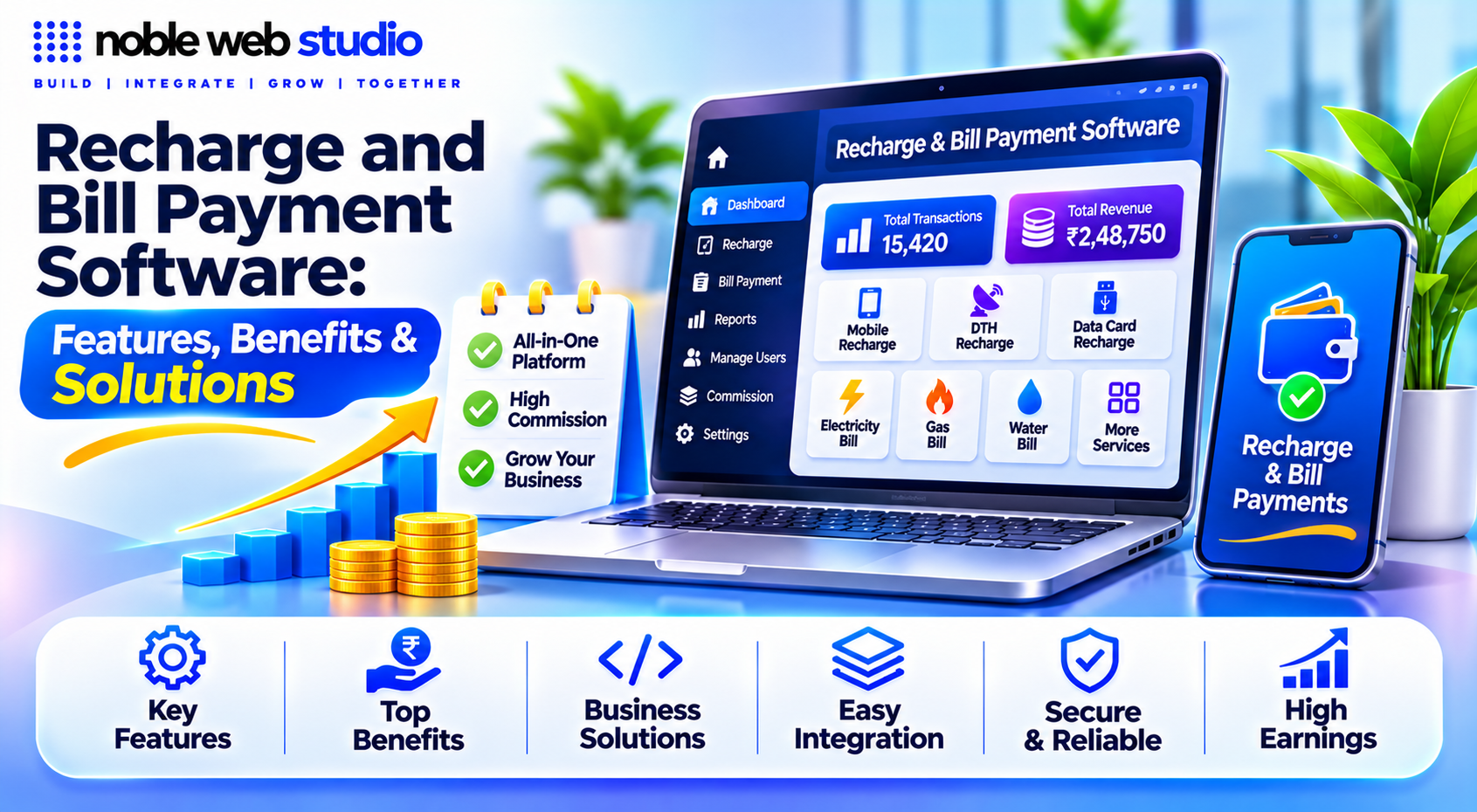
Managing mobile recharges and utility bill payments through different platforms can make business operations complicated for retailers, distributors and digital service providers. A reliable Recharge and Bill Payment Software brings multiple digital services together in one platform, allowing businesses to manage mobile recharge, DTH recharge, FASTag, electricity bills, water bills, gas bills and other supported payment services through a centralized system. Whether you want to start a new recharge business, expand an existing retail shop or build your own B2B digital payment network, the right software can help simplify daily transactions and organize your business operations.
Recharge and bill payment software enables businesses, retailers, and enterprises to process digital utility services, mobile top-ups, and Bharat Connect (Bharat Bill Payment System / BBPS) transactions.
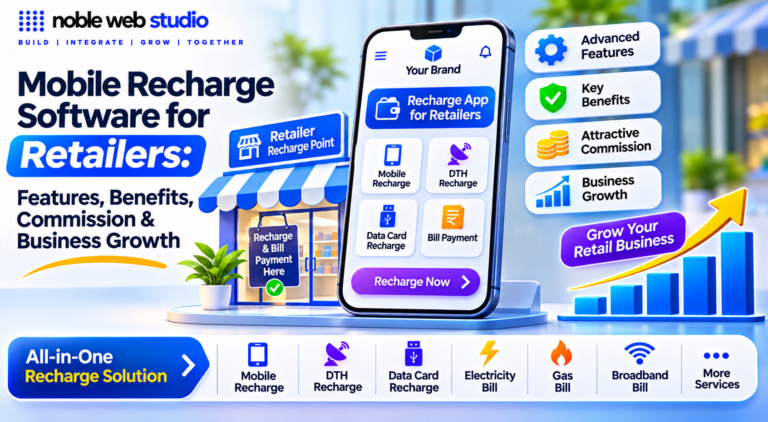
With Noble Web Studio, entrepreneurs, retailers, distributors and fintech startups can explore ready-made B2B Mobile Recharge Software designed to support multiple digital service requirements. The recharge platform provides a structured business hierarchy with Admin, Master Distributor, Distributor and Retailer management, helping business owners manage user accounts, wallet balances, fund transfers, commission structures and transaction activities. Through web portal and Android recharge application access, businesses can manage supported services such as Mobile Recharge, DTH Recharge, FASTag, BBPS, AEPS, Domestic Money Transfer, PAN services and utility payments, depending on the selected package and integrations.
A complete Recharge and Bill Payment Software solution should offer more than just mobile recharge and bill payment options. Businesses also need essential features such as retailer management, distributor control, transaction history, wallet and ledger management, commission tracking, service-wise reports, recharge admin dashboard and transaction status monitoring. For utility bill payment services, businesses should also evaluate bill enquiry, payment confirmation, receipt generation, complaint handling and applicable BBPS integration requirements. These capabilities help create a more organized mobile recharge platform for managing different digital services and serving customers efficiently.
For businesses planning long-term growth, choosing the right software is equally important. A flexible B2B recharge platform can help retailers offer more services, distributors manage their networks and entrepreneurs expand their digital service operations without building every business function from scratch. Noble Web Studio develops ready-made B2B Mobile Recharge Software for businesses looking for a practical foundation to establish or expand their recharge and digital payment operations.
In this guide, you will learn everything about Recharge and Bill Payment Software, including its features, benefits, working process, mobile recharge and BBPS integrate, utility bill payment services, retailer and distributor management, wallet and commission management, software pricing and how to choose the right software solution for your business with Noble Web Studio.
What Is Recharge and Bill Payment Software?
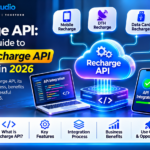
Recharge and bill payment software is a digital platform that lets users and businesses handle prepaid/postpaid mobile recharges, DTH top-ups, data cards, and utility bill payments from a single, centralized interface.
How Recharge and Bill Payment Software Works
Recharge and bill payment software acts as a centralized digital bridge connecting end-users or retail agents to telecom operators, utility providers, and financial networks.
How It Works (Step-by-Step)
User Request & Input:
- A customer or retailer enters details into a mobile app, web portal, or POS machine (e.g., mobile number, DTH operator, electricity consumer ID, or credit card number).
Bill Fetching (BBPS / Bharat Connect):
- For utility and bill services, the system connects via Bharat Connect (BBPS) or direct operator APIs to automatically fetch the exact live bill amount, due date, and consumer details.
Wallet / Payment Processing:
- The user pays via UPI, debit/credit card, net banking, or an internal pre-funded digital wallet maintained within the software.
API Routing & Operator Execution:
- The software’s backend routes the transaction request through specific operator recharge API, payment gateways, or aggregator switchboards to process the recharge or bill settlement in real time.
Commission & Ledger Update:
- If the best mobile recharge platform uses a multi-tier B2B model (Admin → Master Distributor → Retailer), the system automatically splits commissions, updates wallet balances, and generates transaction receipts and reports.
Role of Recharge and Bill Payment Software
Recharge and bill payment software is a digital platform that automates mobile top-ups, DTH recharges, data card activations, and utility bill payments (such as electricity, water, and gas) through a single system.
Core Roles and Functions
- Centralized Operations: Brings multiple telecom operators, DTH providers, and utility bill services into one unified dashboard, replacing separate manual workflows.
- Real-Time API Integration: Connects directly with Noble web studio server for instant transaction processing and automated failovers.
- Automated Reconciliation: Generates real-time ledger updates, GST invoices, and settlement reports without manual bookkeeping.
- Multi-Tier Reseller & Commission Management: Allows businesses to manage master distributors, retailers, and agents while automatically calculating and distributing margins per transaction.
- Financial Inclusion & Accessibility: Acts as a bridge for cash-reliant or rural communities, enabling local shopkeepers and agents to process digital payments safely on behalf of customers.
- Customer Retention & Revenue Growth: Enhances user engagement through 24/7 self-service or agent-assisted portals, white-label branding options, and promotional discounts.
Why Recharge and Bill Payment Software Important for Business
Recharge and bill payment software is important for businesses because it unifies multi-service digital transactions into a single automated platform, streamlines operations, and creates new revenue streams.
Key Business Benefits
- New Revenue and Commission Channels: Every mobile recharge (prepaid/postpaid), DTH, electricity, gas, broadband, and FASTag payment lets the business earn a commission or service margin on each transaction.
- Unified Centralized Operations: Consolidates mobile recharges, utility payments, user accounts, and wallet management into one dashboard instead of juggling separate vendor workflows.
- Automation via Recharge APIs: Recharge & Bill Payment Software for Fintech Businesses connects directly to multi-operator APIs to process transactions automatically in real time, cutting manual entry errors by up to 90%.
- Distributor and Retailer Network Scaling: Supports multi-tier B2B frameworks where master distributors can manage sub-agents, automated wallet balances, and commission settlements seamlessly.
- Enhanced Security and Fraud Protection: Incorporates enterprise-grade encryption, IP/MAC address verification, and OTP/2FA authentication to secure user data and wallet transactions.
- Data and Analytics: Tracks real-time transaction reports, customer behavior, and cash flows to help owners make informed business decisions.
Features of Recharge and Bill Payment Software
Recharge and bill payment software provides a unified platform to automate mobile top-ups, DTH, data cards, and multi-category utility bill payments like electricity, water, gas, and broadband.
Core Operational Features
- Multi-Operator & Multi-Service Support: Handles mobile operators (Jio, Airtel, Vi, BSNL), DTH providers, and 25+ bill categories (such as FASTag, loan repayments, and municipal taxes) through integration with systems like Bharat Connect (BBPS).
- Real-Time Processing & Smart Routing: Executes instant recharges with automated operator-and-circle detection and smart routing that picks the most reliable server connection.
- Pre-Payment Bill Fetching: Automatically retrieves exact due amounts and bill details before a user completes a transaction.
- Live Plan Browsing: Displays up-to-date prepaid and DTH plans (validity, data limits, and talktime) mapped to specific operators and circles.
Business & Management Features
- Multi-Tier Admin & Distributor Panels: Manages hierarchies for admins, master distributors, retailers, and end-users with customizable commission slabs.
- Digital Wallet & Ledger System: Built-in credit/debit tracking, digital wallets with one-tap top-ups, and automated transaction ledger maintenance.
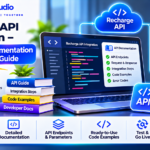
- API & White-Label Integration: Noble web studio offers white-label branding options, custom mobile recharge commission app (Android/iOS), and developer APIs (Mobile Recharge API, Bill Fetch API, and Plan API).
- Automated Reports & Analytics: Generates daily transaction summaries, commission logs, and operational reports for data-driven decisions.
Security & Reliability Features
- Payment Gateway & Card Security: Uses 256-bit SSL encryption, PCI-DSS compliant partners, tokenized card storage, and multi-factor authentication.
- Fraud Prevention & Device Binding: Incorporates velocity checks, real-time risk monitoring, and role-based access controls.
Benefits Recharge and Bill Payment Software
Recharge and bill payment software provides a unified digital platform to handle mobile/DTH top-ups and utility bill settlements such as electricity, water, gas, and broadband through automated workflows like Bharat Connect by NBBL.
Key Benefits for Businesses & Retailers
- Unified Dashboard: Manage all customer recharge requests, utility bills, account ledgers, and automated reports in a single interface.
- Instant Commissions & Margins: Retailers and B2B agents earn real-time commissions or cashbacks on every mobile recharge, DTH top-up, and bill settlement.
- Integrated BBPS: Process bulk or counter-based utility payments seamlessly via standardized frameworks like Bharat Connect by NBBL.
- White-Label & API Solutions: Entrepreneurs can launch branded digital portals or integrate top recharge APIs without building backend telecom infrastructure from scratch.
- High Uptime & Security: Built-in encryption, OTP verification, and multi-cycle fast settlements ensure safe, 24/7 operations.
Key Benefits for End Users
- Convenience & Speed: Pay mobile, DTH, electricity, credit card, and insurance bills in a few taps without visiting multiple apps or physical counters.
- Rewards & Cashback: Earn brand vouchers, cashbacks, or reward points on regular bill payments and recharges.
- Automated Reminders: Avoid missed due dates with scheduled or recurring payment features.
Recharge and Bill Payment Software for Different Business Models
Recharge and bill payment software generally separates into distinct structures based on your target audience and operational hierarchy.
1. B2C (Business-to-Consumer) Software
- Target Audience: Direct end-users who pay their own bills or top up personal devices (e.g., Paytm, PhonePe, Google Pay).
- How It Works: The customer logs into a high commission mobile recharge app or website, inputs a mobile number or consumer ID, and completes the payment via UPI, debit/credit card, or a built-in wallet.
- Revenue Model: Margins or convenience fees on select transactions, cashback rewards, third-party advertisements, and cross-selling financial services.
- Key Features Needed: Instant verification, automated operator plan synchronization (e.g., live mobile/DTH tariff updates), push notifications, and NPCI/BBPS compliance.
2. B2B (Business-to-Business) / White-Label Software
- Target Audience: Retailers, neighborhood store owners, local agents, and multi-tier distribution networks.
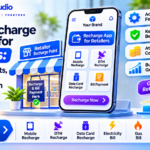
- How It Works: A central admin runs the platform and sets up a chain of Master Distributors, Distributors, Retailers, and Agents. Retailers use a web panel or Android recharge commission app to process walk-in recharges and bill payments for cash-preferring customers.
- Revenue Model: Commission splits passed down the hierarchy (Admin -> Distributor -> Retailer) on every successful transaction.
- Key Features Needed: Multi-tier wallet management, automated margin/commission engines, role-based access control, receipt generation, and white label recharge software branding options.
3. API & Enterprise Integration Models
- Target Audience: Existing businesses, fintech startups, or ERP systems wanting to embed recharge and utility features directly into their current recharge commission app.
- How It Works: The business integrates a third-party recharge/BBPS API into their backend rather than building the telecom/utility connectors from scratch.
- Revenue Model: Pay-per-use recharge API pricing, tiered SaaS subscriptions, or a percentage-share of the commission earned per hit.
- Key Features Needed: High-availability cloud infrastructure, automatic failover for carrier downtime, webhook status alerts, and real-time transaction reconciliation logs.
How to Choose the Right Recharge and Bill Payment Software Provider
Noble web studio one of the right recharge and bill payment software provider requires evaluating compliance, technical capabilities, and how well the system scales with your business model.
Key Factors to Evaluate
Regulatory Compliance and Authorizations
- Noble web studio is authorized by the certified Bharat Bill Payment Operating Units (BBPOUs) if you are operating a BBPS-based utility network. Compliance ensures real-time settlement, proper reconciliation, and protection against legal or technical failures.
Service Range and Multi-Operator Support
- Check whether the recharge and bill payment software supports a comprehensive suite of services, including prepaid and postpaid mobile recharges, DTH, FASTag, electricity, water, gas, broadband bills, and financial add-ons like AEPS or Domestic Money Transfer (DMT).
Real-Time Processing and Reliability
- Look for instant transaction execution, real-time status updates, and automated customer notifications (SMS or email receipts) to minimize failure rates and build trust with end users.
Network and Wallet Management Capabilities
- If you run a B2B or multi-tier network (such as retailers and distributors), the best recharge platform should include built-in hierarchy tools, wallet balance tracking, dynamic commission configurations, and dispute/refund management.
API Availability and Ease of Integration
- The recharge and bill payment software should offer robust developer documentation, clean mobile recharge API and seamless integration hooks so you can plug it into your existing website, best mobile recharge commission app, or enterprise resource planning (ERP) system.
Security and Ledger Verification
- Prioritize recharge platforms with multi-layered encryption, secure payment gateways, and real-time ledger verification to safeguard sensitive user data and financial flows.
Ready-Made vs. Custom Development
- Decide between a ready-made/white-label SaaS solution (faster to launch and budget-friendly) versus a custom-built architecture (tailored for high-scale enterprise control or unique multi-level networks) depending on your budget and core business model.
Pricing Transparency and Scalability
- Review the fee structure whether it is per-transaction, subscription-based, or commission-sharing and verify that the Noble web studio can handle growing transaction volumes as your user base expands.
Customer Support Availability
- Noble web studio offers reliable, responsive technical assistance (ideally 24/7) to resolve transaction failures or operator downtime immediately.
Common Recharge and Bill Payment Software Problems and How to Manage Them
Recharge and bill payment software (such as digital wallets, utility apps, and automated SaaS billing tools) often run into technical, financial, and operational hurdles.
Common Problems & How to Manage Them
1. Failed Transactions and Involuntary Churn
- The Problem: Payments fail due to expired cards, insufficient funds, or temporary network/bank server timeouts, causing sudden service disconnections or missed recharges.
How to Manage It:
- Use automated dunning management (retry logic and payment reminders).
- Set up backup payment methods or alternative rails like UPI Lite for low-value downtime resilience.
- Check account balances or switch default linked bank accounts before retrying manually.
2. Manual Calculation and Invoicing Errors
- The Problem: Human typos, outdated rate cards, or spreadsheet tracking lead to overcharging, undercharging, or miscalculated taxes.
How to Manage It:
- Adopt automated billing systems that pull predefined product prices, tax codes, and calculation rules dynamically.
- Implement a strict pre-send review or audit trail before dispatching statements to customers.
3. Delayed Invoice Generation and Tracking Gaps
- The Problem: Waiting until the end of the day or week to issue bills results in lost records, slow cash flow, and difficult reconciliations.
How to Manage It:
- Switch to real-time invoice generation right at the point of sale or service completion.
- Use a unified dashboard that consolidates multi-channel payment statuses into a single view.
4. Tax and Compliance Mismatches (e.g., GST)
- The Problem: Applying wrong tax slabs, omitting HSN/SAC codes, or misclassifying transactions causes filing penalties and audit headaches.
How to Manage It:
- Configure software with automated tax compliance modules that auto-map regional tax structures and keep codes updated.
5. App Crashes, Lag, and Cache Clutter
- The Problem: Mobile recharge or payment apps freeze, fail to load OTP screens, or crash due to corrupted local data or poor connectivity.
How to Manage It:
- Force-stop the application, clear local storage and cache via device settings, or update the higher recharge commission app to the latest version.
- Verify your mobile network stability or toggle airplane mode to re-establish a fresh handshake with payment gateways.
Recharge and Bill Payment Software Development Cost in India
Developing or deploying a mobile recharge and utility bill payment software solution ranges from ₹10,000 to over ₹3,00,000+ for ready-made or white-label mobile recharge and utility bill payment platforms, and can scale up to ₹6,00,000 – ₹20,00,000+ or $45,000–$350,000+ for custom, enterprise-grade multi-operator or AI-powered billing platforms.
Cost Breakdown by Software Model
Ready-Made / Shared Panel Solutions (₹10,000 – ₹25,000)
- Cheapest entry point; you share a hosted system with other operators.
- Limited custom branding, lower control, and dependent on the primary vendor’s uptime and security.
White-Label Recharge Software (₹25,000 – ₹1,50,000 setup + recurring renewals)
- Branded web portal and top mobile recharge commission app under your own company name and logo.
- Includes multi operator recharge API integration (DTH, mobile, electricity, fastag), recharge admin panel, and agent/distributor hierarchies.
- Incurs recurring yearly/monthly software maintenance and license renewals.
Custom Software & App Development (₹1,50,000 – ₹6,00,000+ for mid-scale; ₹20,00,000+ for enterprise)
- Built completely from scratch tailored to your exact workflows, compliance, and user load.
- Separate cost tiers typically follow standard regional estimation scopes:
- Basic Utility/Billing Module: ₹50,000 – ₹1,50,000
- Multi-Branch or Multi-Wallet System: ₹3,00,000 – ₹6,00,000
- Enterprise / Custom API & ERP Integration: ₹6,00,000 – ₹20,00,000+
Core Cost Components & Architecture
A complete recharge and bill payment system breaks down its expenses across the following pillars:
API Integration & Provider Setup
- Recharge / Bill Payment APIs (BBPS, operator APIs): ₹20,000 to ₹50,000+ depending on the number of telecom and utility operators connected.
- API Integration Fee: ₹1,000 to ₹5,000 per individual recharge and bill payment API link or ₹30,000–₹50,000 bundled.
Platform & Application Development
- Mobile recharge Admin dashboard, distributor/retailer panels, customer web portal, and Android/iOS mobile applications.
- Wallet management system (commission structures, cashbacks, agent credit/debit logs).
Payment Gateway Integration
- Setup, security compliance (PCI-DSS), and transaction-based MDR (Merchant Discount Rate) fees.
Infrastructure & Hosting
- Domain & SSL: ₹500 – ₹2,000 per year.
- Cloud Web Hosting / Dedicated Servers: ₹10,000 to ₹25,000+ per year (scaling higher with traffic volume).
Hidden & Ongoing Operational Costs
- Yearly software renewals or white-label maintenance.
- SMS and WhatsApp notification gateway charges.
- Working capital / float balance required inside your operator and BBPS admin wallets to process live recharges.
Recharge and Bill Payment Software Security and Responsible Payment Handling
Recharge and bill payment platform require multi-layered data protection and automated safety controls to safeguard user funds, prevent fraud, and ensure reliable transaction processing.
Core Security Controls
- Data Encryption: Implement SSL/TLS protocols for data in transit and End-to-End Encryption (E2EE) for sensitive credentials stored on servers.
- Authentication: Enforce Two-Factor Authentication (2FA) or biometric verification for account logins, high-value recharges, and administrative changes.
- Access Control & Audits: Apply Role-Based Access Control (RBAC) to restrict backend dashboard privileges, alongside immutable audit logs for tracking sensitive modifications.
- Payment Gateways: Integrate with compliant, tokenized payment channels supporting UPI, credit/debit cards, net banking, and digital wallets without raw card data storage.
Responsible Payment Handling & Operations
- Auto-Refund Safety Net: Automatically trigger real-time balance rollbacks or wallet refunds if a transaction fails due to operator server dropouts or network timeouts.
- Discrepancy Investigation: Provide transparent transaction status tracking and a clear dispute resolution workflow to log and investigate failed or stuck utility payments.
- Channel Verification: Validate authorization requirements and direct API/BBPS (Bharat Bill Payment System) connections for each Noble web studio rather than relying on unverified relays.
- Unified Ledger Safety: Maintain isolated, real-time ledger accounting across customer apps, retailer recharge portal and distributor/top recharge API tiers to prevent balance miscalculations.
Planning Your Recharge and Bill Payment Platform
Planning a recharge and bill payment platform like Noble web studio involves structuring your business model, integrating core utility APIs, and establishing financial compliance.
1. Define Your Business Model & Scope
- B2B (Business-to-Business) Model: Provide a white label recharge portal or high commission recharge app where retailers, distributors, and shopkeepers process recharges and earn commission margins.
- B2C (Business-to-Consumer) Model: Build a direct-to-consumer mobile app or web wallet where end-users pay their own bills.
- Core Services to Include:
- Mobile and DTH prepaid/postpaid recharges (Jio, Airtel, Vi, BSNL)
- Utility bills (Electricity, water, gas, broadband, landline) via the best BBPS
- Value-added services (FASTag, AePS, money transfers, insurance premiums)
2. Legal and Financial Setup
- Choose a Entity Structure: Register as a sole proprietorship with Noble web studio.
- Compliance & Licenses: Consult a Chartered Accountant (CA) to review regulatory requirements with Noble web studio.
- Banking & Wallet Architecture: Set up a unified digital recharge wallet system where a single balance funds all multi-operator requests, backed by automated rollback/refund safety nets for failed transactions.
3. Software Development & API Integration
- Partner with Noble web studio: Integrate multi-operator recharge and best BBPS API (such as through specialized Noble web studio) to enable real-time transaction routing and API switching (automatically shifting to a Noble web studio server if a primary operator server fails).
- Admin and Retailer Panels: Build a web dashboard and an Android/iOS app featuring real-time transaction tracking, automated commission slabs, ledger generation, and thermal receipt printing support.
- Testing: Run end-to-end sandbox tests on operator downtime, wallet loading (via UPI/net banking), and dispute resolution flows before public launch.
Recharge and Bill Payment Software Solutions by Noble Web Studio
Choosing a Noble web studio for a Recharge and Bill Payment Software Solution lets businesses, fintech startups, and digital entrepreneurs launch or scale multi-service digital payment platforms quickly and cost-effectively.
Core Reasons to Choose a Noble web studio
- Multi-Operator & Multi-Service Integration: Instead of building and maintaining separate, complex connections with individual telecom operators, DTH providers, FASTag networks, and bill payment ecosystems, Noble web studio bundles everything into a single platform (including Bharat Bill Payment System or BBPS).
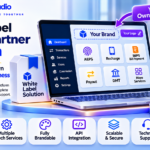
- White-Label Customization: Noble web studio offer white label mobile recharge software options that allow you to run recharge platform, web portal, and highest commission mobile recharge app under your own brand name, logo, domain, and custom recharge commission structure.
- High Transaction Success Rates & Smart Routing: Noble web studio use multi-switching and intelligent fast recharge API routing with automatic failovers to ensure high uptime (often ~99%+) and reliable real-time transaction completion.
- Automated Commission & Hierarchy Management: Built-in mobile recharge admin panels let you manage user tiers (such as admin, master distributor, distributor, and retailer), set automated commission slabs, and track wallet balances in real time.
- Operational Efficiency & Cost Reduction: Automation eliminates manual processing, reduces overhead operational costs, and speeds up service delivery for end customers.
- Scalability: As your customer base or retailer network grows, the software scales to handle higher transaction volumes without requiring a major structural overhaul.
- Compliance & Security: Noble web studio incorporate robust security measures like end-to-end encryption, IP restrictions, two-factor authentication (2FA), and alignment with regulatory standards.
Conclusion
Choosing the right Recharge and Bill Payment Software is an important step for businesses that want to start, manage or expand their digital recharge and payment services. A well-structured software platform allows retailers, distributors and entrepreneurs to manage mobile recharge, DTH recharge, FASTag, BBPS and supported utility bill payment services through a centralized system. With essential features such as retailer management, distributor control, wallet management, commission tracking, transaction reports and an admin dashboard, businesses can organize their daily operations and provide multiple digital services to customers through one top recharge platform.
Recharge and bill payment software enables businesses and consumers to handle mobile top-ups, DTH, and utility bills (electricity, water, gas, and FASTag) through automated platforms and API integrations.
With Noble Web Studio, businesses can explore ready-made B2B Recharge Software designed for different business requirements. The fast mobile recharge platform supports a structured hierarchy of Admin, Master Distributor, Distributor and Retailer, helping business owners manage their distribution network and monitor business activities. It also provides web portal and Android application access, along with supported services such as mobile recharge, DTH recharge, FASTag, BBPS, AEPS, Domestic Money Transfer and other digital services, depending on the selected package and integrations.
Whether you are a startup planning to enter the digital payment industry, a retailer looking to offer additional services or an entrepreneur interested in building a distributor and retailer network, choosing suitable Recharge and Bill Payment Software can provide the foundation for your business operations. Before selecting a Noble web studio, evaluate its supported services, integration capabilities, transaction management system, security practices, recharge commission structure, technical support and pricing to ensure that the solution matches your business goals.
If you are looking for a practical software solution to manage recharge and bill payment services, Noble Web Studio can help you explore the right B2B recharge software for your requirements. Discuss your business model, required features and future expansion plans with our team to identify a suitable solution.
Ready to start or expand your digital recharge and bill payment business? Contact Noble Web Studio today to explore our Recharge and Bill Payment Software, discuss available features and take the next step towards building your own digital service platform.
Recharge and Bill Payment Software with Noble Web Studio
Looking for reliable Recharge and Bill Payment Software for your business? Noble Web Studio offers software solutions to manage mobile recharge, DTH recharge, BBPS bill payments, distributor networks and retailer operations from one platform. Contact our team to discuss software features, white-label options, API integration and pricing for your business.
Frequently Asked Questions About Recharge and Bill Payment Software
Recharge and Bill Payment Software is a digital platform that allows businesses to offer mobile recharges, DTH recharges, and supported utility bill payment services through a single system. It helps manage transactions, users, retailers, commissions, and payment records.
The software connects with recharge and bill payment service providers through APIs. A user selects a service, enters the required details, submits a payment, and receives a transaction status after the request is processed by the Noble web studio.
Depending on API availability and integration scope, the platform may support:
Prepaid mobile recharge
Postpaid mobile bill payments
DTH recharge
Electricity bill payments
Water bill payments
Gas bill payments
Broadband and landline bill payments
Other supported utility bill payments
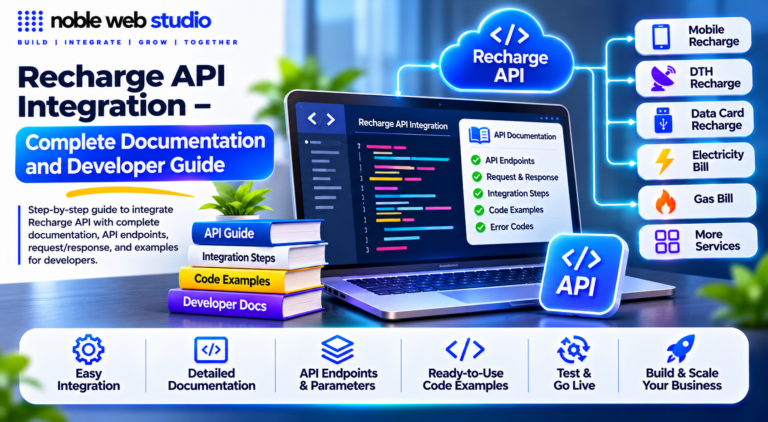
API integration connects the software with Noble web studio. It enables the platform to submit recharge or bill payment requests, receive transaction responses, check payment status, and retrieve relevant service information.
BBPS integration connects a bill payment platform with the Bharat Bill Payment System ecosystem through an eligible integration arrangement. It supports participating biller categories and applicable payment workflows. Access and operational requirements depend on the relevant authorised participants and agreements.
Yes. A combined platform can manage supported mobile recharge, DTH, and utility bill payment services from one dashboard. The actual service coverage depends on the APIs and integrations connected to the software.
Important features may include:
Admin dashboard and user management
Mobile and DTH recharge integration
Bill payment API connectivity
Retailer and distributor accounts
Wallet and fund management
Commission tracking
Transaction history and reports
Payment status monitoring
Failed transaction handling
Role-based access controls
Yes. A platform can include retailer accounts that allow authorised users to process supported recharges and bill payments, view transaction records, manage wallet balances, and monitor commissions according to their assigned permissions.
A B2B platform can include retailer, distributor, and master distributor roles. These roles can have separate dashboards, account balances, transaction reports, and commission settings based on the business structure.
Commission management allows businesses to configure or record applicable earnings for different users and services. Actual commission rates depend on Noble web studio agreements, service categories, transaction values, and applicable deductions. Rates should be confirmed before onboarding.
The software should provide transaction reference numbers, status checks, and reconciliation tools. Pending transactions should be verified with the connected Noble web studio before another request is submitted. Refunds and reversals must follow the Noble web studio process.
Where supported by the connected bill payment API, the platform can retrieve bill details using the required customer or account information. The customer can review the returned details before confirming payment.
A payment gateway may be required when customers or retailers need to add funds or pay through supported online payment methods. The integration depends on the chosen gateway, its eligibility requirements, settlement terms, and technical capabilities.
The cost depends on whether you choose ready-made, white-label, or custom software. Other factors include the number of APIs, service categories, Android or iOS applications, admin features, retailer management, security requirements, and ongoing maintenance.
B2B software is designed for businesses managing retailers, distributors, commissions, and wallet balances. B2C software focuses on direct customer transactions through a website or mobile application. A platform can support both models if developed for those requirements.
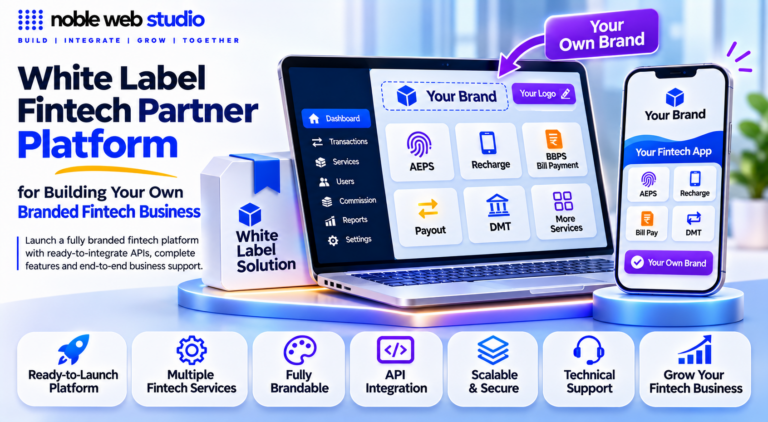
White-label software allows a business to launch recharge platform using its own branding. Branding options, customization, supported services, and integrations depend on the Noble web studio and agreed project scope.
Important security considerations include encrypted communication, secure API authentication, role-based access, protected transaction records, activity logs, and appropriate handling of customer information. The implementation should also follow applicable security and regulatory requirements.
Noble web studio development experience, API integration capabilities, supported services, transaction management features, security practices, documentation, customisation options, technical support, and total cost. Ask for a clear project scope before proceeding.
Noble Web Studio can discuss recharge and bill payment software development and integration requirements based on your business model. You should confirm the currently available features, supported APIs, bill payment arrangements, pricing, and project scope directly with the team.
Start by identifying the recharge and bill payment services you want to offer, your B2B or B2C business model, required user panels, and API integration needs. Contact Noble Web Studio to discuss the technical requirements, development scope, estimated cost, and implementation plan.