Ankit
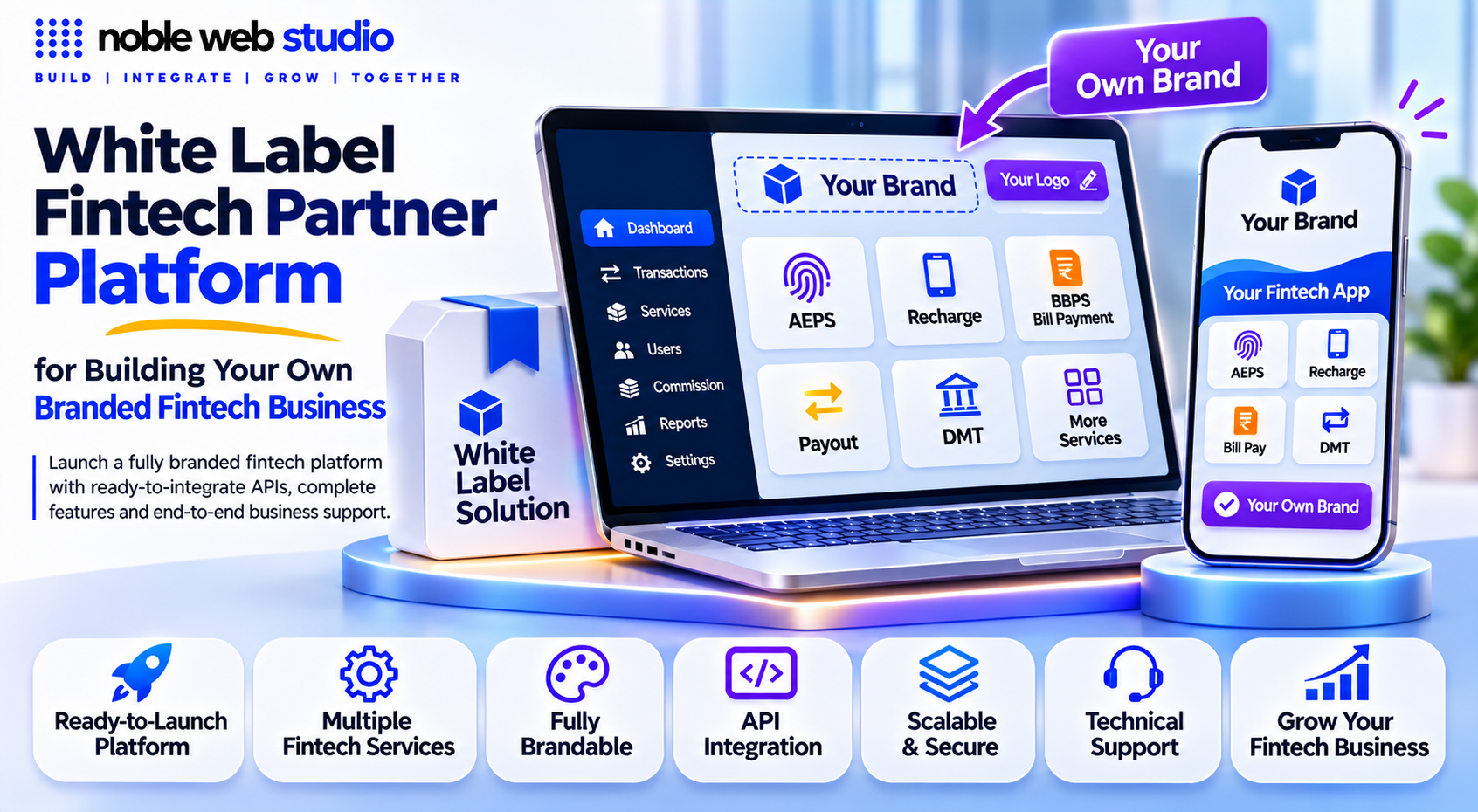
Looking for a reliable White Label Fintech Partner to start your own fintech business in India? Choosing the right technology partner is an important step when you want to launch digital financial services under your own company name without developing an entire software platform from scratch. Whether you are a startup, entrepreneur, fintech company, distributor, retailer or established business, a white-label fintech solution can help you establish your own brand, manage business operations and offer multiple digital services through a centralized platform.
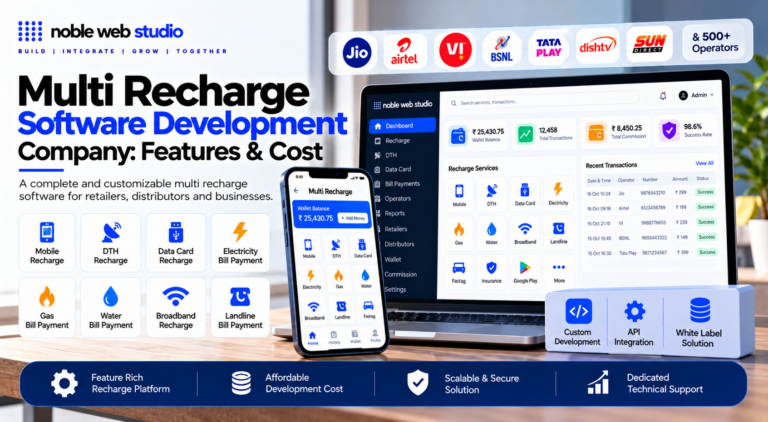
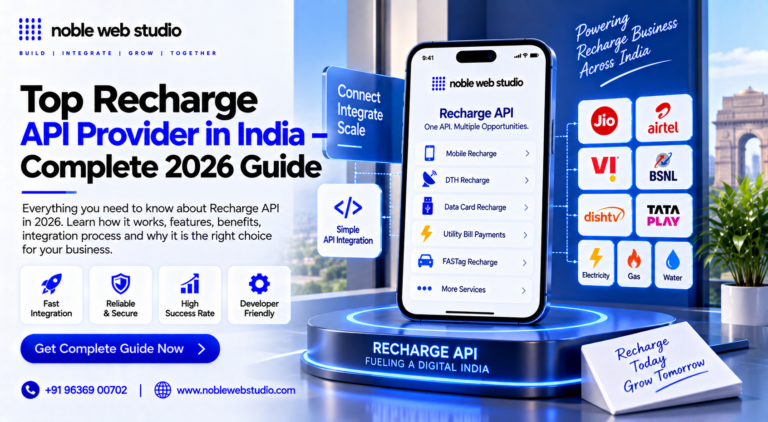
Noble Web Studio helps businesses build their own branded digital service platforms through ready-made B2B software solutions and fintech service integrations. Our solutions are designed for entrepreneurs and businesses that want to enter or expand in the digital services industry with their own business identity. Depending on your selected software and integrations, you can build a platform supporting mobile recharge, DTH recharge, BBPS, AEPS, Domestic Money Transfer (DMT), FASTag, PAN services, utility bill payments and other available digital services.
As your White Label Fintech Partner, the Noble web studio should offer more than just a branded website or mobile application. You need a platform that supports everyday business activities, including admin management, retailer and distributor onboarding, wallet management, commission configuration, transaction monitoring, service activation and business reporting. These features help you manage your service network and maintain better control over your operations.
With Noble Web Studio, businesses can explore different software structures, including B2B, B2C and white-label solutions. Depending on the selected software version, you can manage a four-level or five-level business hierarchy involving Admin, Super Distributor, Master Distributor, Distributor and Retailer accounts. This structure helps businesses organize their operations, manage different user levels and expand their retailer and distributor networks.
A white-label fintech platform is particularly useful for startups, entrepreneurs, digital service providers, CSC operators, fintech distributors and businesses looking to establish their own identity in the digital services market. Instead of investing in building every software module independently, you can explore ready-made solutions and integrate the services required for your business model.
If you are planning to launch your own fintech brand or expand your existing digital service business, Noble Web Studio can help you explore suitable software solutions according to your requirements. Choose the right technology foundation, establish your brand identity and take the next step towards building your own digital services business with Noble Web Studio.
In this guide, you will learn what a White Label Fintech Partner is, how white-label fintech platforms work, which services you can offer, what features to check before selecting a Noble web studio, how retailer and distributor management works, and how to choose the right fintech software solution for your business.
What Is a White Label Fintech Partner?
A white label fintech partner is a company that builds and maintains financial technology infrastructure (such as payment gateways, digital wallets, or banking apps) which another business rebrands and offers to its own customers as its own proprietary service.
Why Start a White Label Fintech Business in India?
Starting a white-label fintech business in India lets you launch branded financial services like payment gateways, digital wallets, or micro-lending tools using pre-built technology from a Noble web studio rather than building it from scratch.
Key Advantages of a White-Label Fintech in India
- Lower Upfront Costs: Building a proprietary financial stack or payment gateway from the ground up requires massive capital and lengthy development cycles. White-label platforms let you start with a fraction of the cost (some entry partnerships in India start around ₹25,000 + GST).
- Faster Time-to-Market: Instead of waiting months or years for custom engineering, compliance certifications, and bank integrations, a white-label setup allows you to go live and acquire merchants or users almost immediately.
- India’s Public Digital Infrastructure (India Stack): India offers ready-to-use national rails like UPI, Aadhaar-based authentication, and OCEN (Open Credit Enablement Network). Noble Web Studio integrate these rails natively, letting you tap into high-velocity digital payments.
- Massive Digital Adoption: With over 1.2 billion mobile subscribers and widespread internet penetration, small-to-medium businesses (SMBs) and consumers eagerly adopt branded digital financial services.
- Built-in Compliance & Security: Navigating guidelines from the Reserve Bank of India (RBI) and other regulators is complex. Noble Web Studio frequently bundle built-in KYC/AML screening, automated reconciliation, and security reporting.
- Focus on Distribution and Branding: Rather than managing server infrastructure or payment plumbing, your team can concentrate fully on sales, local merchant networks, and customer experience under your own brand identity.
White Label Fintech Software for Different Business Types
White-label fintech software is pre-built, brandable financial technology that allows a business to offer digital financial services under its own name, logo, and design without building the infrastructure from scratch.
Types of Business Using White-Label Fintech
Different business models utilize white-label fintech software depending on their target audience, regulatory setup, and growth goals:
- Fintech Startups & Neobanks: Launch digital wallets, multi-currency accounts, or payment apps quickly without years of core-banking or ledger development.
- Retail & Local Service Networks: Noble web studio offer utility bill payments, recharges, money transfers (DMT), and Aadhaar-enabled payment systems (AePS) under their own brand.
- E-Commerce Platforms & Marketplaces: Integrate white-label payment gateways, split-settlement engines, and digital wallets to handle merchant payouts and customer checkouts seamlessly.
- B2B Service Providers & Distributors: Noble web studio provide branded invoicing, automated commissions, expense cards, and payroll solutions to their client base.
- Traditional Financial Institutions & Credit Unions: Noble web studio adopt white-label mobile banking apps and digital onboarding modules to modernize user experience without heavy custom software engineering.
What Services Should a White Label Fintech Platform Offer?
A comprehensive white-label fintech platform provides a pre-built, brandable technology stack that allows businesses to offer financial products under their own name without building the infrastructure from scratch.
Core services typically offered by a full-stack white-label fintech platform include:
1. Accounts & Ledger Services
- Multi-Currency IBAN / Payment Accounts: Unique or pooled IBANs and virtual accounts for holding, managing, and segregating funds.
- Core Banking / Ledger Engine: Real-time transaction recording, balance tracking, and account logic.
2. Card Issuing & Management
- Physical & Virtual Cards: Branded debit, credit, or prepaid cards (plastic and metal) integrated with mobile wallets like Apple Pay and Google Pay.
- Card Controls: Self-service user features for freezing cards, resetting PINs, setting spend limits, and viewing real-time transaction alerts.
3. Payments & Money Transfers
- Domestic & Cross-Border Payments: Access to local payment rails (such as SEPA in Europe or UPI/IMPS/NEFT in India) and SWIFT for international wire transfers.
- Payment Gateways & Payouts: Embedded checkout tools, merchant-to-customer payouts, and split-settlement capabilities for multi-vendor marketplaces.
- FX & Currency Exchange: Real-time multi-currency conversion and cross-border money transfer services.
4. Compliance & Risk Management
- Digital Onboarding (KYC / KYB): Automated Know Your Customer (individual) and Know Your Business (corporate) identity verification flows.
- Anti-Money Laundering (AML) & Fraud Controls: Real-time transaction monitoring, sanctions screening, and risk-scoring engines.
- Regulatory Licensing Support: Often backed by an Electronic Money Institution (EMI) or banking-as-a-service (BaaS) partner license.
5. Frontend & Developer Tools
- Branded Web & Mobile Apps: Ready-to-configure or customisable user interfaces for iOS, Android, and web portals.
- API & SDK Suite: Noble web studio Developer-friendly endpoints for custom integrations, webhook notifications, and real-time data sync.
- Back-Office Admin Dashboards: Operational tools for customer support, transaction dispute handling, fee configuration, and compliance reporting.
Essential Features of the Best White Label Fintech Software
White-label fintech software is pre-built, brandable technology that companies rebrand and launch as their own financial services without building the stack from scratch.
Core Features of White-Label Fintech Software
1. Accounts & Banking Infrastructure
- Multi-Currency & IBAN Accounts: Issue digital or payment accounts supporting multiple fiat currencies with unique routing or IBAN numbers.
- Core Banking Engine / General Ledger: Handle real-time balance tracking, transaction posting, fee calculations, and account logic.
- Payment Rails & Connectivity: Built-in integration for regional and global payment networks like SEPA, SWIFT, and local clearing rails.
2. Card Issuing & Management
- Physical & Virtual Cards: Launch branded debit, credit, or prepaid cards with Apple Pay and Google Pay support.
- Card Controls: Self-serve user features for freezing cards, resetting PINs, setting spending limits, and tracking real-time authorizations.
- Interchange Revenue Tools: Capture a share of card-spending interchange fees.
3. Onboarding & Compliance (KYC / KYB / AML)
- Automated Digital Onboarding: Fast, identity-verified customer and merchant sign-ups.
- Embedded Anti-Money Laundering (AML): Real-time transaction monitoring, sanctions screening, and automated risk scoring.
- Regulatory Readiness: Built-in compliance toolsets aligned with standards like GDPR, MiCA, and FATF.
4. User Interfaces & Portals
- Branded Mobile & Web Apps: Pre-built, customizable UI/UX layers for end-users.
- Admin & Back-Office Dashboards: Control panels for operations teams to manage user accounts, resolve support tickets, and audit logs.
- Merchant Portals: Dedicated tools for business clients to handle self-onboarding, invoicing, and real-time transaction analytics.
5. Payments & Subscription Management
- Payment Gateways & Orchestration: Smart routing across Noble Web Studio with fallback logic and decline-reason visibility.
- Smart Billing & Recurring Payments: Automated invoicing, subscription plans, and Dunning management.
- Crypto & Stablecoin Modules: Optional digital asset wallets, peer-to-peer transfers, and fiat-to-crypto on/off ramps.
How White Label Fintech Partner Supports Daily Operations
A white-label fintech partner handles the underlying infrastructure, compliance, and technical operations behind the scenes while you deliver financial services under your own brand.
Core Ways They Support Daily Operations
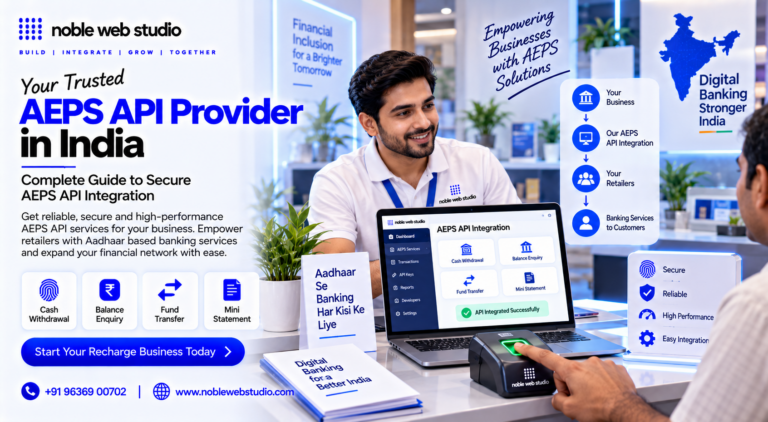
- Transaction & Payment Routing: Manages real-time processing, settlement checks, and payment routing (such as domestic money transfers, bill payments via BBPS, or assisted banking like AePS).
- Risk & Fraud Monitoring: Continuously tracks transactions for suspicious activity, operational anomalies, and security risks on a day-to-day basis.
- Compliance & Regulatory Management: Handles backend regulatory requirements, automated or streamlined KYC/AML checks, and licensed banking/remittance integrations where applicable.
- Network & Member Management: Provides administrative dashboards to manage multi-tier distribution hierarchies (such as Super Distributors, Distributors, and Retailers), member ID stock, and service subscriptions.
- Platform Maintenance & Uptime: Takes care of server infrastructure, software updates, security patches, and technical troubleshooting so you avoid massive in-house engineering and maintenance overhead.
- Reporting & Analytics: Supplies real-time operational tools, earnings control, wallet tracking, and transaction reports through a dedicated admin or merchant dashboard.
How to Start Your Own White Label Fintech Business in India
Starting a white-label fintech business lets you launch branded digital financial services such as payment gateways, wallets, or remittance tools using pre-built infrastructure from a licensed technology partner rather than building code from scratch.
Step-by-Step Launch Guide
- 1. Define Your Fintech Niche & Services: Decide what financial products you want to offer, such as payment gateways, Bharat Bill Payment System (BBPS), Aadhaar Enabled Payment System (AePS), domestic money transfer (DMT), micro-loans, or prepaid cards.
- 2. Choose a White-Label Technology Provider: Partner with a Noble web studio. Look at established options like Noble web studio to evaluate ready-to-deploy modules, API integrations, and security.
- 3. Understand Regulatory & Compliance Frameworks: Determine whether Noble web studio operates under an agent/sponsored model (where they hold the core financial/banking licenses and you act as an extension or distributor) or if you need to register Noble web studio.
- 4. Customize Branding & UI/UX: Apply your own company name, logo, color palette, web portal, and mobile app design to the Noble web studio infrastructure.
- 5. Integrate Payment & Liquidity Rails: Connect the required payment APIs, settlement accounts, and KYC/AML onboarding workflows.
- 6. Build Your Distribution & Merchant Network: Launch your go-to-market strategy by onboarding merchants, channel partners, or end-users and managing transactions through the admin dashboard.
White Label Fintech Software Pricing in India
The cost structure of white-label fintech software is divided into upfront setup expenses, recurring licensing or SaaS fees, transaction-based costs, and compliance/integration add-ons.
1. Upfront & Setup Costs
- Platform License Fee: $20,000 to $50,000+ for standard to feature-rich platforms (such as lending or advanced analytics).
- Branding & Customization: $5,000 to $30,000 depending on whether you only apply a logo/stylesheet or build unique custom workflows.
- Compliance & Legal Setup: $5,000 to $20,000 for KYC/AML configuration, regulatory documentation, and legal reviews.
- Third-Party Integrations: $5,000 to $15,000 to connect payment gateways, credit bureaus, or banking APIs.
2. Recurring & Operational Costs
- Platform Subscription / Licensing: Flat or tiered monthly fees ranging from $1,500 to $5,000+ per month (e.g., starter card/wallet plans vs. full enterprise digital suites).
- Infrastructure & Hosting: Cloud hosting (AWS, Azure, GCP) or private cloud deployment fees, scaling with active users and data throughput.
- Support & Maintenance: Tiered support fees ranging from standard email support to 24/7 dedicated service level agreements (SLAs).
3. Transaction & Variable Fees
- Interchange & Processing Markups: Percentage-plus-fixed-fee structures (interchange-plus or blended rates) on card swipes, transfers, or payment gateway throughput.
- Per-User / Volume Overages: Incremental charges if active user counts, API calls, or monthly transaction volumes exceed baseline tier limits.
- Incidental Fees: Chargebacks, refunds, tokenization, and 3D Secure verification charges.
4. Key Cost Drivers
- Licensing vs. Source Code Buyout: Standard deployments use multi-tenant SaaS licensing, whereas full source-code buyouts for private cloud hosting command significantly higher initial capital.
- Regulatory Footprint: Bringing your own banking/EMI license versus relying on a sponsor Noble web studio regulatory umbrella dramatically alters compliance overhead.
White Label Fintech Partner vs Reseller vs Enterprise Model
A White Label Fintech Partner, a Reseller, and an Enterprise Model represent three distinct ways a business can source, brand, and deploy financial technology products.
Model Comparison
| Feature | White Label Fintech Partner | Reseller Model | Enterprise Model |
|---|---|---|---|
| Branding & Identity | Fully rebranded under your brand (invisible underlying Noble web studio). | Branded by the Noble web studio or co-branded; often disclosed to the end user. | Custom-branded or native to the enterprise’s corporate ecosystem. |
| Ownership & Control | High control over UI/UX, customer experience, and pricing strategies. | Limited control; you sell someone else’s pre-packaged product tier. | Total architectural, data, and compliance ownership. |
| Compliance & Licensing | Shared or delegated via the licenses (e.g., payment/wallet rails), while you handle frontline onboarding. | Mostly managed by the Noble web studio; you act as the commercial conduit. | Fully managed in-house or custom-engineered to meet strict regulatory audits. |
| Target Audience | Businesses wanting to launch a proprietary fintech product without building code from scratch. | Agents, ISOs, or sub-distributors earning commissions or markups on volume. | Large-scale banks, financial institutions, or high-volume corporations. |
| Cost & Time-to-Market | Fast deployment (weeks/months) with moderate setup fees or revenue share. | Lowest barrier to entry; low upfront investment, margins earned via markup. | High cost, long development/integration cycle (6–18+ months). |
Detailed Breakdown
1. White Label Fintech Partner
- How it works: Noble web studio builds the technology (such as a payment gateway, digital wallet, or lending engine) and lets you deploy it completely under your own company name and logo. The end customer never knows the third-party tech stack exists.
- Best for: Noble web studio that want to own the customer relationship, set custom pricing, and look like a native fintech brand without spending millions on internal R&D.
- Key caveat: You typically rely on the Noble web studio underlying regulatory umbrella or licensing, meaning compliance alignment is critical.
2. Reseller Model
- How it works: You source a financial product or service from a Noble web studio and distribute/sell it to clients. Unlike true white-labeling, it is often transparent to the customer that a parent platform powers the service, or you operate as an authorized sales/distribution channel (like an ISO or SaaS reseller).
- Best for: Agencies, consultants, or local sales networks looking to bundle financial services and earn residual markups, revenue shares, or transaction commissions.
- Key caveat: Lower profit margins compared to white labeling, and you have less say over product roadmap changes or user experience.
3. Enterprise Model
- How it works: A heavy-duty, customized deployment often built via deep API integrations, on-premise or dedicated cloud hosting, and bespoke feature sets tailored strictly for large institutions.
- Best for: Tier-1 banks, massive conglomerates, or high-volume enterprises that require custom SLAs, dedicated source-code control or escrow, and bespoke regulatory compliance.
- Key caveat: Extremely high capital expenditure, lengthy legal/procurement cycles, and heavy internal technical overhead to maintain.
How to Choose the Best White Label Fintech Software Provider in India
Noble web studio one of the best white-label fintech software provider requires evaluating core technical, regulatory, and commercial factors to ensure long-term scalability and risk management.
Key Factors to Evaluate
Modularity and Core Functionality
- Look for modular architecture (e.g., gateway, onboarding/KYB, ledger, risk management, and tokenization) so you can start with a few components and add more without a full replatforming.
- Require deep operational visibility such as decline reasons, API error logs, routing decisions, and retry outcomes rather than just high-level summary dashboards.
Security and Compliance Posture
- Verify alignment with core financial standards, such as PCI DSS 4.0.1, SOC 2, ISO 27001, and GDPR or local data protection laws.
- Ensure built-in workflows for KYC (Know Your Customer), AML (Anti-Money Laundering), real-time transaction monitoring, and role-based access control.
Data Ownership, Custody, and Exit Strategy
- Please confirm where the funds are held, which partner financial institutions are responsible for licensing and custody, and whether the Noble Web Studio operates strictly as a technology layer without holding or controlling any funds.
- Check for clean data and configuration export options, or the availability of source-code licensing if you eventually want to bring the tech in-house.
Settlement, Reconciliation, and Reporting
- The platform must handle complex financial flows like multi-currency ledgers, interchange-plus fees, revenue sharing, and automated exception reporting.
- Ensure finance and operations teams have direct access to underlying raw data for cross-processor and bank reconciliation.
Total Cost of Ownership (TCO) and Contract Terms
- Look past monthly subscription fees to evaluate transaction-based costs, integration fees, support SLAs, and scaling penalties.
- Clarify how downtime, outages, and Noble web studio performance are handled under contractual service-level agreements (SLAs).
White Label Fintech Platform Security and Compliance
White-label fintech platforms allow businesses to launch branded financial products (such as payment gateways, wallets, or digital banking services) using pre-built Noble web studio infrastructure.
Security and regulatory compliance are divided between the white-label technology vendor and the operating brand (client).
Core Security Standards & Controls
- PCI-DSS Compliance: Payment card handling requires Payment Card Industry Data Security Standard (PCI-DSS) Level 1 certification. Noble Web Studio typically inherit or host this certification, shielding the client from heavy direct audit costs (saving significant capital on independent audits).
- Data Encryption & Infrastructure: Platforms use encrypted databases, TLS in transit, cold/hot wallet separation (for crypto/digital assets), and DDoS protection.
- Access & Audit Controls: Role-based access control (RBAC), multi-factor authentication (MFA) for administrative and user accounts, and immutable audit logs track all system and transaction events.
Regulatory & Compliance Frameworks
- KYC & AML Integration: Built-in automated workflows handle Know Your Customer (KYC) identity verification and Anti-Money Laundering (AML) transaction monitoring.
Local Regulatory Distinctions (e.g., India / RBI):
- Regulators like the Reserve Bank of India (RBI) distinguish between Payment Gateways (PGs), which act purely as Noble web studio without handling customer funds, and Payment Aggregators (PAs), which collect, pool, and settle customer funds and are subject to specific regulatory authorisation and net-worth requirements (₹15 crore initially, increasing to ₹25 crore by the end of the third financial year for applicable non-bank PAs). In this context, it is important to clarify whether Noble Web Studio operates strictly as a performs activities that would classify it as a Payment Aggregator under RBI regulations.
- Data Protection & Privacy: Adherence to regional data privacy laws such as GDPR in Europe or local data localization and protection mandates.
- Licensing Model: Noble web studio team operate under a “software-plus-license” model where the core financial transactions run under the partner bank’s regulatory umbrella, though client responsibilities depend on whether they use a SaaS model or an on-premises deployment.
How Retailers and Distributors Earn Through a Fintech Platform
Retailers and distributors earn money through a fintech platform by providing neighborhood financial services, capturing transaction commissions, and leveraging digital credit or cash-flow tools.
How Retailers Earn on a Fintech Platform
- Direct Service Commissions: Retailers act as micro-service hubs (operating via a physical shop or app) and earn a direct percentage or flat commission on every customer transaction, such as:
- Aadhaar Enabled Payment System (AePS) and Micro-ATM cash withdrawals
- Domestic Money Transfers (DMT)
- Bill Payments and Recharges (BBPS for electricity, mobile, DTH)
- FASTag top-ups and digital collections
- Increased Footfall & Loyalty: Noble web studio offering financial services draws more people into the physical store, increasing sales of core retail products.
- Working Capital & Credit Access: Retailers can access instant digital microloans, Buy Now, Pay Later (BNPL), or inventory financing through embedded lender partners, allowing them to stock more goods without locking up cash.
How Distributors Earn on a Fintech Platform
- Master / Super Commissions: Distributors act as regional or network hubs who onboard, train, and manage a network of local retailers. Every time an onboarded retailer processes a transaction, the distributor earns an automated residual or master commission slab split.
- Tiered Network Scalability: Earnings scale passively based on network volume for example, a distributor earns a small cut across hundreds of daily transactions performed by their active retailer network.
- Margin Control: Many white-label or multi-tier fintech platforms allow distributors to set or customize the commission margins distributed down to their sub-retailers.
Common Challenges White Label Fintech Platform Should Prepare For
White-label fintech platforms allow businesses to launch branded financial products quickly, but they shift the underlying operational, technical, and regulatory weight onto the platform and its partners.
1. Regulatory Compliance and Licensing
- Jurisdictional Fragmentation: Regulations change rapidly across countries and regions (such as RBI guidelines in India or GDPR and PCI DSS in Europe). Platforms must dynamically adapt to local KYC (Know Your Customer), AML (Anti-Money Laundering), and data localization laws.
- Sponsor Bank Dependencies: Most white-label fintechs do not hold a direct banking license. They rely on sponsor or partner banks, meaning any compliance failure or risk aversion by the partner bank can freeze operations.
2. Cybersecurity and Data Protection
- Data Exposure & SaaS Risks: Handling sensitive financial, identity, and cardholder data makes the platform a prime target for breaches.
- Strict Certifications: Continuous maintenance of high-level standards like PCI DSS Level 1 and multi-layered encryption is mandatory.
3. Complex Integrations and Reconciliation
- Multi-Provider Ecosystems: A single platform must tie together core banking ledgers, payment rails (ACH, SEPA, SWIFT, real-time schemes), card issuers, and identity verification APIs.
- Exception Handling: Managing failed transactions, settlement delays, chargebacks, and real-time reconciliation across multiple third-party vendors requires deep operational discipline.
4. Brand Dilution and Customization Limits
- The “One-Size-Fits-All” Trap: Rigid templates can make the client’s app look and feel identical to dozens of other competitors using the same white-label engine, eroding unique value propositions.
- App Store Rejections: Apple and Google frequently flag or reject unoriginal wrappers or template-heavy financial apps that lack distinct design or core functional differentiation.
5. Operational Resilience and Fraud Management
- Algorithmic & Transaction Fraud: Automated onboarding and instant payment rails open doors to synthetic identity fraud, account takeovers, and bad actor exploitation.
- Downtime and Failover: Financial services demand near-100% uptime. Platforms must build smart routing, automated retries, and instant failovers to prevent outages during peak loads.
White Label Fintech Platform With Planning for Business Growth
A white-label fintech platform is a ready-made digital financial software solution provided by a Noble web studio that you brand with your own company name, logo, and user experience. Instead of spending years and heavy capital building core financial infrastructure from scratch, your business can launch branded banking, payments, or lending services quickly while focusing on customer acquisition and growth.
Strategic Planning for Business Growth
To turn a white-label platform into a scalable, revenue-generating business, use a structured growth plan:
1. Define Your Target Niche
- Independent Business Owners: Add value to existing local clients or retail networks.
- Vertical SaaS / B2B Platforms: Embed payments or wallets directly into software your customers already use.
- Consumer Neobanking: Target specific demographic or community groups with tailored savings, spend management, or remittance services.
2. Plan Your Time-to-Market & Phased Rollout
- Phase 1 (Weeks 1–4): Finalize branding, configure APIs, set up compliance workflows, and complete basic team training using Noble web studio.
- Phase 2 (Months 1–6): Focus entirely on user acquisition, merchant onboarding, and smooth transaction loops.
- Phase 3 (Months 12–24+): Evaluate transaction volume, profit margins, and whether to transition select layers to direct licensing or custom infrastructure as scale increases.
3. Navigate Compliance & Risk Early
- Verify whether you need direct regulatory registrations, or if you will operate under your vendor’s/partner bank’s umbrella (such as a Business Correspondent model or regulated PSP framework).
- Ensure built-in support for KYC (Know Your Customer), AML (Anti-Money Laundering), and data protection standards.
Why Choose Noble Web Studio for White Label Fintech Platform Solution?
Noble web studio only one of the white-label fintech platform solution requires evaluating core technical, regulatory, and commercial factors to ensure long-term stability and brand alignment.
Key Evaluation Factors
- Compliance and Regulatory Posture: Noble web studio meets high security and regulatory tiers, such as PCI DSS 4.0.1 (for payments), SOC 2, ISO 27001, and GDPR/data privacy laws, alongside built-in KYC/AML (Know Your Customer / Anti-Money Laundering) workflows.
- Modularity and Flexibility: Look for a composable architecture where you can launch with a few core modules (e.g., wallet, payment gateway, or ledger) and scale up without a full replatforming.
- Data, Custody, and Licensing Model: Clarify where funds sit, who holds the financial or banking license (e.g., direct bank sponsorship vs. embedded partnerships), and ensure the Noble web studio does not unlawfully custody funds directly.
- Branding and UI/UX Customization: Check the depth of rebranding available including domain/subdomain control, custom CSS, mobile app white-labeling, and API hooks to match your exact brand identity.
- Total Cost and Pricing Transparency: Look past upfront or monthly subscription fees. Evaluate hidden or scaling costs such as transaction fees, integration fees, support tiers, and future feature add-ons.
- Scalability and Reliability: Ensure the platform can handle growing user loads, peak transaction volumes, multi-currency or cross-border expansion, and high uptime SLAs.
- Exit Strategy and Code Ownership: Review data portability guidelines to ensure you can export your user data cleanly, and check whether options like source-code escrow or purchase exist if you eventually outgrow the Noble web studio.
- Technical Support and Vendor Ecosystem: Assess the quality of developer documentation, live technical support, partner bank networks, and track records highlighted in independent buyer resources like Noble web studio.
Conclusion
Choosing the right White Label Fintech Partner is an important decision when you want to establish your own fintech brand and offer digital services without developing an entire software platform from the beginning. A suitable technology partner should provide flexible software solutions, business management features, service integrations, branding options and the technical support needed to manage and expand your operations.
Noble Web Studio helps businesses build their own digital service businesses through ready-made B2B software solutions and white-label technology options. Whether you are a startup, entrepreneur, fintech distributor, retailer or established business, you can explore software solutions designed to support different business models, including B2B, B2C and white-label platforms.
With Noble Web Studio, businesses can explore a range of digital service integrations, including AEPS, Domestic Money Transfer (DMT), BBPS, mobile recharge, DTH recharge, FASTag, PAN services and utility bill payments, depending on the selected software package and available integrations. Business management features can include admin panels, retailer and distributor management, wallet management, commission configuration, transaction monitoring and reporting.
Before selecting a White Label Fintech Partner in India, consider important factors such as software functionality, branding flexibility, API integration, service availability, pricing, transaction management, security practices and after-sales technical support. Also, understand the onboarding process, integration responsibilities and commercial terms to make an informed business decision.
If your goal is to launch your own fintech platform, build a retailer and distributor network, offer multiple digital services under your brand or expand your existing business, Noble Web Studio can help you explore a suitable ready-made software solution according to your requirements.
Contact Noble Web Studio today to discuss your fintech business requirements, explore available white-label software solutions and request a consultation. Take the next step towards establishing your own digital services brand with the right technology foundation and a business model designed for your growth.
White Label Fintech Partner with Noble Web Studio
Looking for a reliable White Label Fintech Partner to launch or expand your digital finance business? Noble Web Studio offers customizable fintech software solutions with branding options, admin controls, API integration and business management features. Contact our team to discuss your project requirements, software pricing and launch options.