Ankit
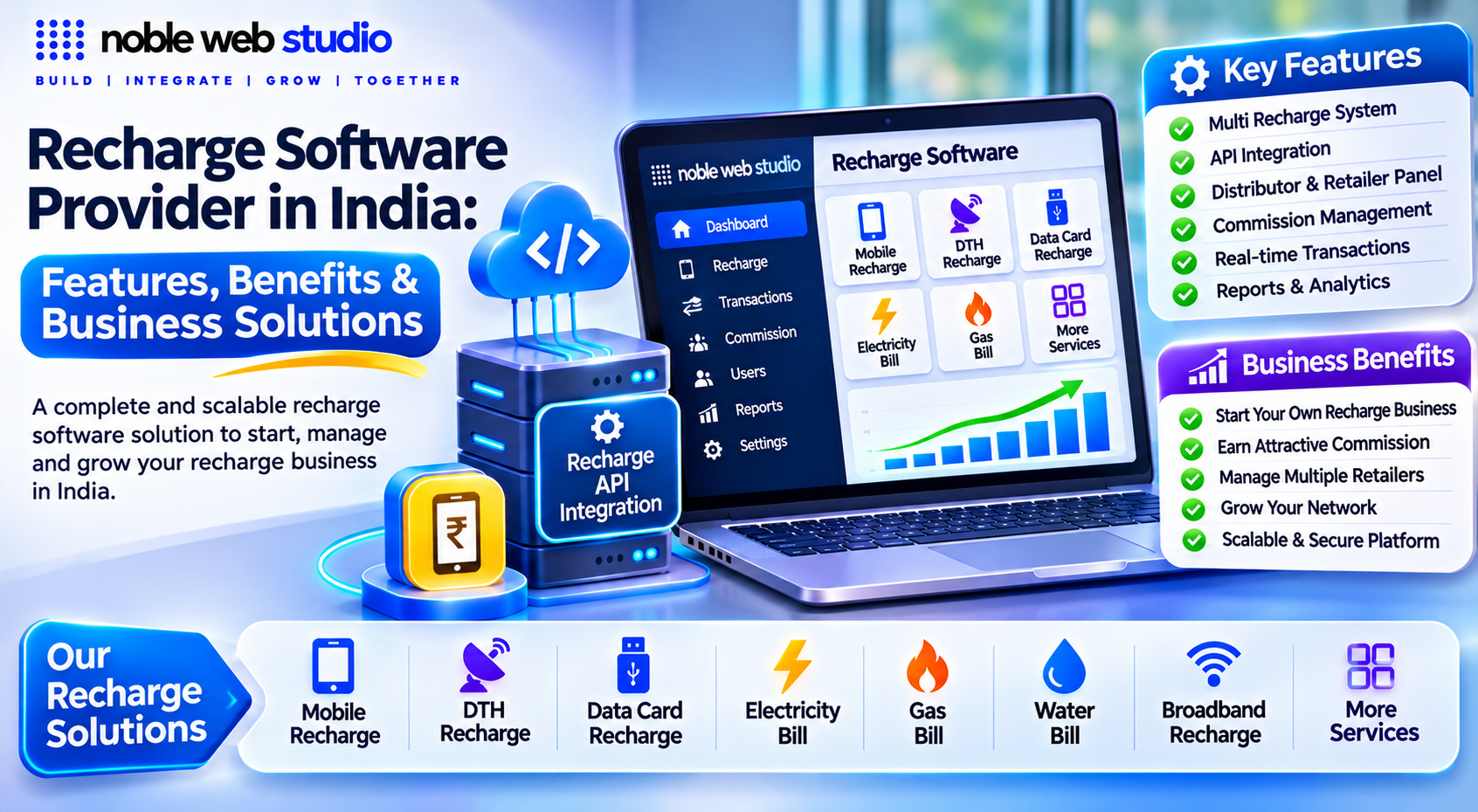
Are you searching for a trusted Recharge Software Provider to start your own mobile recharge business in India? Choosing the right recharge software is essential for managing mobile recharge transactions, building a retailer network, controlling distributor operations and offering multiple digital services from one platform. Whether you are a startup, entrepreneur, fintech company, retailer or established distributor, the right software can help you build and manage your recharge business more efficiently.
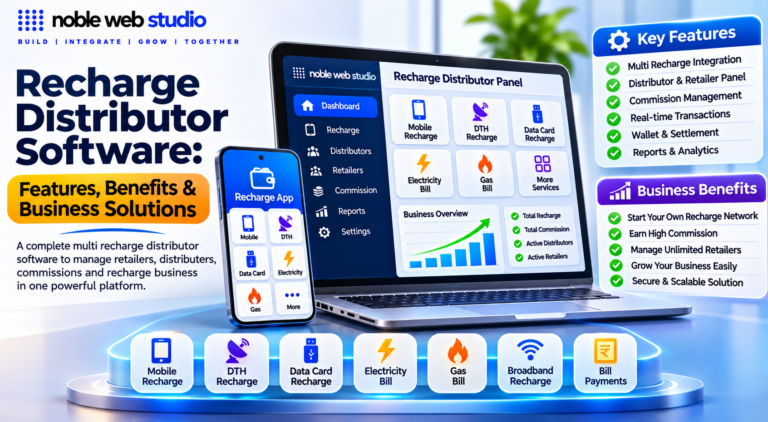
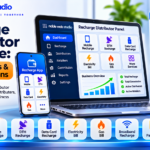
Noble Web Studio is a Recharge Software Provider offering ready-made B2B Mobile Recharge Software for businesses that want to launch their own branded recharge platform. Our recharge software designed to support different business models, including B2B, B2C and white label recharge businesses. Depending on the selected version, businesses can operate through a structured hierarchy of Admin, Super Distributor, Master Distributor, Distributor and recharge Retailer panel, making it easier to manage users, transactions and business activities.
A recharge software provider builds and supplies digital platforms that let businesses offer mobile, DTH, and utility bill recharges through web portals, mobile apps, or APIs.
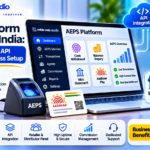
With Noble Web Studio, you can build a multi service recharge platform that supports prepaid and postpaid mobile recharge, DTH recharge, FASTag, BBPS, AEPS, Domestic Money Transfer (DMT), PAN services and utility bill payments through available service integrations. The platform also provides important business management capabilities, including retailer and distributor management, wallet management, commission configuration, transaction monitoring, recharge API integration and detailed reporting.
Unlike a basic mobile recharge application, a complete recharge software solution should help you manage the entire business network. From creating retailer accounts and assigning commissions to managing wallet balances and tracking successful, failed and pending transactions, the right recharge platform makes daily business operations more organized. It also gives business owners better visibility into their transactions and user activities.
If you want to start a B2B recharge company, launch white label recharge portal, become a mobile recharge distributor or expand your existing digital service business, Noble Web Studio provides ready made recharge software solutions to help you get started. You can choose a suitable mobile recharge software version according to your business requirements, explore the available features and build your own recharge service platform.
Choose Noble Web Studio as your Recharge Software Provider and take your first step towards building a scalable mobile recharge and digital services business.
In this guide, you will learn how to choose the right Recharge Software Provider, explore the essential features of recharge software, understand B2B and white-label business models, compare recharge software solutions and discover how Noble Web Studio can help you start and grow your own recharge business.
What Is Recharge Software?
Recharge Software is a digital platform that lets businesses, retailers, and entrepreneurs process instant prepaid/postpaid mobile recharges, Direct-to-Home (DTH) top-ups, and utility bill payments through a centralized system.
Supported Services & Transactions
- Mobile & Data Card: Prepaid and postpaid mobile recharges for all major telecom operators, plus data card top-ups.
- DTH Recharge: Direct-to-Home satellite TV top-ups for providers like Airtel Digital TV, Tata Play, Dish TV, and Sun Direct.
- Utility Bill Payments (BBPS): Electricity, gas, water, and landline bill payments.
- Automated Transport & Tolls: FASTag recharges for highway toll automation.
- Fintech & Value-Added Services: Domestic Money Transfer (DMT), Aadhaar Enabled Payment System (AEPS), insurance premium payments, and travel/hotel/bus/flight bookings.
Core Software & Administrative Features
- Multi-API & Operator Integration: Connects to multiple service providers with automated operator detection and live plan lookup tools.
- Retailer & Distributor Hierarchy: Multi-tier recharge wallet management, commission structures, and role-based access for agents, retailers, and master distributors.
- Automated Refund & Failure Handling: Instant or tracked reversal workflows for dropped, failed, or pending transactions.
- Reporting & Reconciliation: Real-time transaction logs, ledger balance tracking, and financial reconciliation reports.
- White-Label & App Support: Custom branding, web administrative dashboards, and Android/iOS mobile recharge application.
Why Choose a Recharge Software Provider in India?
Choosing a recharge software provider gives businesses centralized control, automated processing, and higher profit margins compared to basic consumer apps.
Key Reasons to Choose a Recharge Software Provider
- Centralized Management: Run all operations, track transactions, and manage user accounts from a single web dashboard or admin panel.
- Multi-Operator & Multi-Service Support: Connect with all major mobile operators (Airtel, Jio, BSNL, Vi), DTH providers, and utility bill services through a single unified interface.
- Automation & Speed: Mobile recharge API integration automates request submission, status updates, and error handling, eliminating manual work and delays.
- Retailer & Distributor Networks: Create multi-level distribution structures (up to 10 levels), assign role-based permissions (admin, manager, retailer), and automate commissions.
- Higher Commissions & Margins: Volume-based pricing in dedicated b2b recharge software often yields 1% to 2% higher commission rates than standard consumer recharge commission app.
- White-Label Branding: Launch custom-branded web portals and best mobile recharge commission app under your own company name.
- Comprehensive Reporting: Access real-time analytics, transaction histories, wallet logs, and automated GST-compliant reports.
Essential Features of Recharge Software
Recharge software providers offer multi service digital recharge platform that automate mobile top-ups, bill payments, and network management for businesses.
Core Features of Recharge Software
- Multi-Operator & Multi-Service Integration: Connects seamlessly with telecom operators, DTH providers, FASTag, BBPS (Bharat Bill Payment System), and AEPS/DMT banking services.
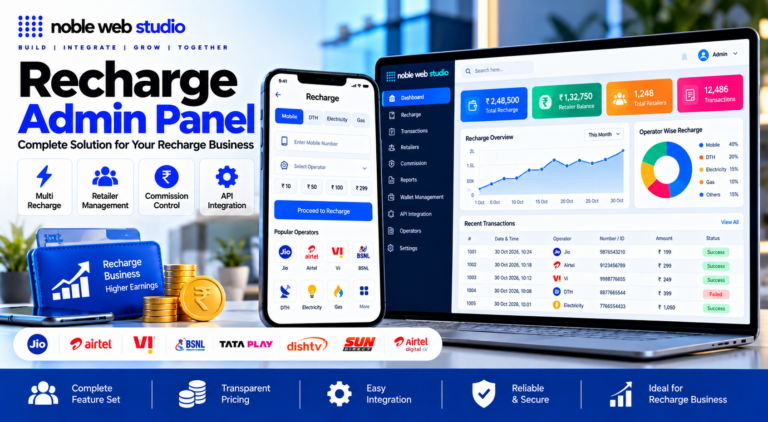
- Admin & Dashboard Controls: Provides a centralized control panel to manage users, monitor live transactions, configure commissions, and handle complaints.
- White-Label Customization: Allows businesses to run the platform under their own brand name, logo, domain, and custom Android mobile recharge commission app.
- Automated API & LAPU Switching: Uses automated routing and operator recharge API or LAPU (Local Area Plan Update) switches to ensure high transaction success rates and failover protection.
- Wallet & Commission Management: Features a secure digital wallet system where retailers and distributors can add funds, track earnings, and apply multi-tier commission structures.
- Real-Time Reporting & Analytics: Generates detailed ledgers, sales reports, commission logs, and status updates (success, pending, or failed).
- Security & Multi-Language Support: Implements strong encryption, IP/MAC security, and regional language interfaces (such as Hindi and English) to expand rural and local adoption.
Types of Recharge Software Solutions
Recharge software solution are categorized based on their target audience, deployment architecture, and operational model.
1. By Business Model (Target Audience)
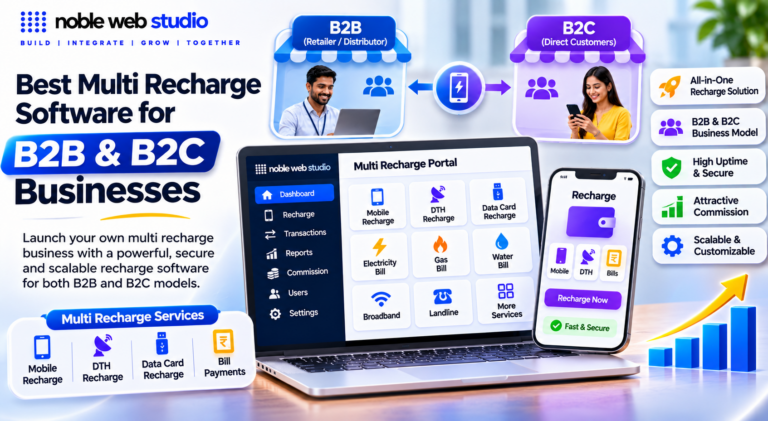
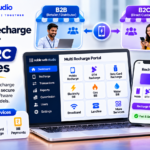
- B2B (Business-to-Business) Recharge Software: Mobile recharge software Designed to manage multi-tiered distribution networks, including master recharge admin, distributors, master distributors, and retail shop owners. It handles fund/wallet distribution, commission structures, and multi-operator transaction routing.
- B2C (Business-to-Consumer) Recharge Software: Built directly for end-users or online customers to handle mobile, DTH, data card, and utility bill payments via web portals or High commission mobile recharge app. It often integrates promotional modules, cashback offers, and self-service wallets.
2. By Platform & Architecture
- Web-Based / Cloud-Based Software: Allows authorized users and operators to manage transactions and balances through any standard web browser without needing heavy client-side application installations on every device.
- Mobile App & SMS-Based Software: Provides lightweight Android/iOS applications or SMS/USSD fallback command systems so rural or low-connectivity retailers can process recharges quickly.
- Multi-Recharge Software: A unified recharge platform that consolidates mobile (prepaid/postpaid), DTH, data cards, and utility bill payments (electricity, gas, water) across multiple telecom and utility operators through a single dashboard.
3. By Ownership & Customization
- White-Label Recharge Software: Ready made mobile recharge software provided by a recharge software development company that you can brand with your own company name, logo, and domain. It offers a fast launch time with minimal custom mobile recharge software development.
- Custom Recharge Software: Built from scratch to match specific business workflows, unique UI/UX designs, specialized reporting, and custom vendor integrations.
- Recharge API Integration: A backend connection module rather than a standalone mobile recharge platform. It lets businesses that already possess an established website or best recharge commission app plug in recharge capabilities via third-party operator gateways.
Recharge Software Price in india
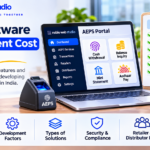
Recharge software pricing in India generally ranges from ₹3,999 to over ₹2,00,000, depending on whether you choose a basic package, a white label recharge B2B system, or a custom-built enterprise recharge b2b platform.
Typical Price Tiers and Structure
Entry-Level / Basic Packages (₹3,999 – ₹15,000):
- Includes a basic recharge admin or web panel, limited operator support, and often a single mobile recharge API.
Standard B2B / White-Label Packages (₹15,500 – ₹50,000):
- Includes a branded website, Android recharge earning app, recharge admin panel, multi-level hierarchy (retailers, distributors, master distributors), and multiple recharge API or BBPS integration. (For example, Noble web studio offer one-time tiers like Starter at ₹7,500, Gold at ₹15,500, and Platinum at ₹24,500 with no monthly recharge software setup fees).
Advanced / Custom Enterprise Solutions (₹75,000 – ₹2,00,000+):
- Tailored for large-scale operations with custom domains, iOS and Android apps, multi-operator DTH/bill payment integrations, payment gateways, and reseller rights.
Key Cost Breakdown Components
- Software / License Fee: One-time purchase (ranging from ₹5,000 to ₹50,000+) or monthly subscription models (approx. ₹1,499 to ₹35,000/month).
- Recharge APIs: Integrating mobile, DTH, or utility APIs typically costs ₹10,000 to ₹30,000 per top recharge API depending on the Noble web studio.
- Payment Gateway & Integration: Costs around ₹5,000 for the gateway setup plus ₹30,000 to ₹50,000 if custom bridge/recharge API integrated is required.
- Hosting, Domain & Maintenance: Domain registration (approx. ₹500/year) and cloud/VPS hosting (₹10,000 to ₹20,000/year) unless bundled into a SaaS package.
Recharge Software for Startups, Retailers, Distributors and Enterprises
Noble web studio offer for Multi-recharge and utility payment software scalable, white-label, and best recharge API-driven platforms for startups, retailers, distributors, and enterprises in India.
Key Features by Business Tier
- Startups & Entrepreneurs: White label recharge commission app scripts, custom branding, virtual recharge wallet system and ready-to-use fast recharge API connections. Entry-level recharge software package typically start around ₹5,000 to ₹20,000 (such as solutions via Noble web studio).
- Retailers & Shop Owners: Android/Web-based commission apps allowing daily earnings (typically 1% to 4%) on prepaid mobile, DTH, electricity, gas, water, and FASTag recharges. These feature instant wallet top-ups via UPI and zero-maintenance panels.
- Distributors & Master Distributors: Hierarchical management dashboards (Admin → Master Distributor → Distributor → Retailer) with automated commission engines, wallet controls, and failure-refund tracking.
- Enterprises & Corporations: High-volume cloud-based infrastructure, high speed recharge API failover/auto-switching, bulk operations, BBPS integrate, and custom reporting suites.
How to Choose the Best Recharge Software Provider in India
Noble web studio one of the best recharge software or recharge API provider depends on your business model, transaction volume, and long-term growth goals.
Key Factors to Evaluate
- Transaction Reliability & Uptime: Noble web studio offering high success rates and automatic route switching or fallback options so failed recharges are swiftly re-routed. Downtime directly hurts customer trust and revenue.
- API Reliability & Commission Transparency: Clear, stable commission structures and predictable settlement terms matter more than a low headline price once you process real volume.
- Operator Coverage & Plan APIs: Confirm support for all major mobile (prepaid/postpaid), DTH, data card, and utility operators. A live recharge plan API automatically fetches current operator plans and avoids failed or mismatched requests.
- Multi-Service Support (BBPS, AEPS, DMT): Consider a multi service mobile recharge platform that includes Bharat Bill Payment System (BBPS), Aadhaar Enabled Payment System (AEPS), and Domestic Money Transfer (DMT) under a single login if you plan to expand services.
- White-Label & Admin Controls: If you plan to build your own distributor and retailer network, check for a customizable white label recharge admin panel with branded web and mobile recharge earning app.
- Documentation & Developer Sandbox: Clear documentation with sample requests, responses, and error codes saves hours during integration. A sandbox environment lets your team test thoroughly before going live.
- Wallet Top-Up, Settlement & Ledger: Evaluate how quickly your wallet is credited after payment, whether you can download detailed transaction ledgers, and how failed recharges are refunded.
- Security & Compliance: Ensure strong data protection, proper user permissions, transaction monitoring, and secure payment gateways.
Benefits of Recharge Software for Fintech Businesses
Recharge software providers drive multiple new revenue streams and boost customer retention for fintech businesses by automating digital utility and telecom services.
Key Benefits for Fintech Businesses
- Multi-Operator & Multi-Service Connectivity: Connects b2b recharge platform to various telecom operators, DTH providers, FASTag, BBPS, AEPS, money transfers, and utility bill payments from a single unified wallet or recharge portal.
- Real-Time Processing & Uptime: Delivers instant transaction confirmation and high system uptime (often 99.9%), preventing delays and building user trust.
- Enterprise-Grade Security & Compliance: Protects sensitive financial data and builds customer confidence using strong encryption, role-based access control, and secure payment gateways.
- Scalable Business Models (B2B, B2C, & B2B2C): Enables you to build and manage multi-tier distributor networks, agent hierarchies, or direct-to-consumer digital applications.
- Automated Commission & Wallet Management: Simplifies tracking for retailer margins, distributor shares, and real-time ledger updates without heavy manual overhead.
- Comprehensive Analytics & Reporting: Provides clear dashboards to monitor daily transaction volumes, failure/pending logs, and revenue metrics.
Recharge Software Security, Data Protection and Transaction Reliability
Recharge software relies on multi-layered security, encrypted payment gateways, and real-time ledger verification to protect user data and ensure transaction reliability.
1. Data Protection & Privacy
- Encryption Standards: Uses HTTPS and SSL certificates to encrypt all data in transit between the client app, servers, and telecom/utility operators.
- Tokenization & PCI Compliance: Sensitive financial details (such as credit/debit card numbers) are handled through PCI-compliant third-party vaults or tokenization services rather than being stored on the platform’s native servers.
- Access Control: Implements Role-Based Access Control (RBAC) to separate admin, distributor, retailer, and customer permissions, ensuring users only access authorized data.
- Authentication: Incorporates modern authentication protocols like OAuth or JWT tokens, alongside Two-Factor Authentication (2FA) for login security.
2. Transaction Reliability
- Real-Time Processing: Integrate recharge API with mobile network and DTH operators to deliver instant recharge confirmations and live status updates (success, pending, or failure).
- Digital Wallet & Ledger Systems: Maintains a strict internal digital wallet and ledger for each distributor or retailer that automatically debits or credits balances upon verified transaction completions.
- Audit Logging: Keeps detailed logs of every action, transaction, and balance adjustment to trace and resolve discrepancies.
- Backup & Recovery Planning: Routine database backups and disaster recovery strategies prevent data loss during network or server outages.
3. Infrastructure Security
- Network Defense: Deploys firewalls and DDoS protection to shield the portal from malicious cyberattacks and unauthorized traffic spikes.
- Input Validation & API Security: Validates all incoming and outgoing data payloads to prevent injection attacks and secures third-party recharge API credential.
Custom Recharge Software Development vs Ready-Made Software
Choosing between custom recharge software development and ready made recharge software depends on your budget, speed requirements, and whether multi-recharge operations (mobile, DTH, utility, BBPS) are your core business model or an add-on service.
Comparison at a Glance
| Factor | Ready-Made Recharge Software | Custom Recharge Software |
|---|---|---|
| Time to Launch | Fast (days to 1–2 weeks) | Slow (weeks to several months) |
| Upfront Cost | Low to moderate | High (one-time build investment) |
| Ongoing Cost | Monthly/annual subscription or per-transaction commission | Hosting, API renewals, and maintenance |
| Ownership | You rent access or license the package | You own the source code, logic, and data |
| Customization | Restricted to vendor-provided modules and themes | Unlimited modifications and custom workflow rules |
| API & Operator Integrations | Pre-integrated with specific payment gateways and operators | Custom-built for any aggregator, operator, or banking API |
Ready-Made Recharge Software
Ready-made solutions are pre-built scripts, white-label panels, or SaaS platforms designed for multi-recharge, AEPS (Aadhaar Enabled Payment System), and bill payments.
- Best For: Startups, local multi-service retailers, or businesses wanting to test a recharge/utility business quickly with a tight budget.
Advantages:
- Immediate deployment: Often set up and branded with your logo within a few days.
- Lower initial investment: Predictable entry pricing or subscription tiers.
- Built-in features: Standard distributor/retailer commission trees, wallet systems, and basic operator mobile recharge API are already coded.
Disadvantages:
- Vendor dependency: You rely on the Noble web studio team for security patches, recharge API fixes, and new operator updates.
- Revenue/commission cuts: Noble web studio take a cut per transaction or charge recurring licensing fees.
- Rigidity: Scaling or changing the commission logic, UI/UX, or adding unique financial workflows can be difficult or impossible.
Custom Recharge Software Development
Custom recharge software is built from scratch or tailored on a flexible architecture specifically for your multi-level marketing (MLM), API distribution, or enterprise-scale recharge network.
- Best For: Noble web studio building a proprietary fintech platform for a competitive advantage.
Advantages:
- Full ownership: You own the intellectual property, source code, and customer/transaction data completely.
- High scalability: Built to handle high-concurrency traffic, heavy transaction volumes, and custom multi-tier commission structures without crashing.
- Tailored integrations: Can plug directly into any specialized payment gateway, SMS/WhatsApp gateway, or custom bank payout API.
Disadvantages:
- High capital requirement: Substantial upfront mobile recharge software development and testing costs before launch.
- Longer timeline: Requires weeks to months of scoping, coding, sandbox testing with operators, and bug fixing.
- Ongoing maintenance responsibility: You must retain a tech team or maintenance contract to handle server uptime and security.
Why Explore Noble web studio for Recharge Software Development?
Evaluating the Noble web studio for Mobile Recharge Software Development requires balancing technical capability, business model alignment, and operational security.
Core Factors to Explore
1. Operator & Service Coverage
- Multi-Service Support: Confirm whether b2b mobile recharge platform handles prepaid and postpaid mobile recharges, Direct-to-Home (DTH), data cards, and utility bill payments (electricity, gas, water, and FASTag / Bharat Connect/BBPS) through a unified wallet.
- Operator Pipes: Noble web studio uses direct operator connections or reliable recharge API to minimize routing failures.
2. Technical Performance & Reliability
- Transaction Success Rate (SR): Noble web studio boasting a high success rate (e.g., 99.9% SR) with automatic fallback switches to prevent failed transactions and lost trust.
- Latency & Speed: Ensure execution speed is fast (aim for sub-200ms latency) to prevent user drop-offs or duplicate payment submissions.
- Automated Webhooks: Verify that the best recharge system supports real-time asynchronous webhook callbacks rather than forcing your server to continuously poll for transaction status updates.
- Dynamic Plan Verification: Confirm that prepaid operator plans and pricing update automatically in real time.
3. Business Model & Architecture (B2B vs. B2C vs. White-Label)
- Platform Hierarchy: If you run a recharge B2B network, ensure the recharge admin software supports multi-tier structures like Master Distributors, Distributors, and Retailers with customizable commission slabs.
- White-Label Branding: Check if you can launch under your own brand name, custom domain, and proprietary Android app rather than being locked into the vendor’s branding.
- Admin & Wallet Controls: Evaluate the power of the admin dashboard for monitoring live transactions, managing user ledgers, generating reports, and controlling wallet balances.
4. Security & Compliance
- Data Encryption: Look for high-security standards such as TLS 1.3 encryption and IP whitelisting to protect wallet funds and user data.
- Regulatory Compliance: Verify that the setup accommodates required documentation, including personal KYC, business verification (KYB), and banking/payment gateway integrations.
5. Pricing & Scalability
- Transparent Pricing Structure: Distinguish between one-time setup fees, top recharge software licensing costs, recurring recharge API maintenance charges, and transaction-based commission cuts. Avoid decisions based solely on the lowest initial price.
- Scalability: Ensure the architecture can comfortably scale up as your transaction volume and retailer network grow.
6. Support & Documentation
- 24/7 Technical Support: Recharge processing is time-sensitive; ensure the provider offers round-the-clock assistance and incident handling.
- API Documentation & Testing Tools: Review the clarity of their smooth recharge API docs, sandbox/testing environments, and response format specifications if you plan to plug in external services.
Best Practices for Implementing Recharge Software
Implementing mobile recharge and digital payment software requires strict attention to system security, reliable transaction lifecycles, and multi-operator support.
Core Architecture & Transaction Lifecycle Best Practices
- Design a resilient transaction lifecycle: Build an internal transaction record before calling an external recharge service API. This ensures recharge earning platform has an audit trail for logging, customer support, and reconciliation if a network timeout occurs.
- Handle timeouts safely: A network timeout does not mean a recharge has failed. Always follow the connected telecom or recharge api documented status-check or callback process before updating wallet balances or marking a transaction as failed.
- Implement multi-operator integration: Connect with multiple telecom operators, DTH providers, and utility bill APIs to prevent service downtime and offer a complete one-stop platform.
- Use modern technology stacks: Build backends using scalable frameworks such as Node.js, Python (Django/Flask), or Java (Spring Boot), paired with reliable relational databases (MySQL, PostgreSQL) and Redis for fast caching.
Security & Data Protection Best Practices
- Enforce strong encryption and HTTPS: Use HTTPS for all client-server communications and enforce robust SSL/TLS encryption for sensitive data transmission.
- Secure API secrets and tokens: Store recharge API keys, gateway tokens, and secrets strictly on the backend. Never write credentials or tokens into application logs.
- Apply role-based access control (RBAC): Use strong authentication mechanisms such as JWT (JSON Web Tokens) or OAuth 2.0 along with role-based permissions for admin, distributor, and retailer accounts.
- Validate input and prevent replay attacks: Validate all user inputs on the server side and protect transaction endpoints against repeated, automated, or unauthorized requests.
- Maintain automated backups: Schedule regular database backups and periodically test disaster recovery and restoration procedures.
User Experience & Admin Controls
- Build an intuitive UI/UX: Provide a clean, fast-loading interface for end-users and retailers to minimize drop-offs during recharges.
- Integrate robust reporting and analytics: Equip administrators with real-time dashboards to track commission structures, success/failure rates, wallet balances, and operator-wise performance.
- Ensure 24/7 technical support: Partner with or build recharge platform that features continuous customer support and automated ticket escalation for stuck transactions.
Conclusion
Choosing the right Recharge Software Provider is an important decision when starting or expanding a mobile recharge business. A reliable recharge software solution should do more than process mobile recharges. It should help you manage retailers and distributors, monitor transactions, configure commissions, manage wallets, integrate multiple digital services and control your business operations through a centralized platform.
A recharge software provider is a company that builds and supplies digital systems allowing businesses to offer automated mobile, DTH, data card, and utility bill recharges (such as electricity, gas, and water) to their customers.
Noble Web Studio provides ready-made B2B Mobile Recharge Software designed for entrepreneurs, startups, retailers, distributors and businesses looking to establish their own fast recharge platform. With B2B, B2C and white label recharge software solution, you can choose a business model that matches your requirements. Our software offers different business structures, including a four-level Admin, Master Distributor, Distributor and Retailer hierarchy, as well as a five-level structure with Super Distributor.
From mobile recharge and DTH recharge to FASTag, BBPS, AEPS, Domestic Money Transfer (DMT) and utility bill payments through available integrations, Noble Web Studio helps businesses bring multiple digital services together. Features such as retailer management, distributor management, wallet management, commission configuration, transaction tracking and reporting help organize everyday business activities.
If you are comparing different Recharge Software Providers in India, consider the branded recharge software actual features, business hierarchy, best mobile recharge API integration, customization options, pricing, technical support and future expansion capabilities before making your decision. Selecting recharge commission software that meets these requirements can help you establish a more organized and manageable recharge business.
Whether you want to start a B2B mobile recharge company, launch your own white label recharge portal, build a retailer-distributor network or expand your existing digital services, Noble Web Studio can help you choose the right recharge software solution for your business goals.
Take the next step towards starting your own recharge business with Noble Web Studio. Explore our recharge software solutions, request a software demonstration and discuss your business requirements with our team today.
Contact Noble Web Studio today to get expert guidance, explore our Recharge Software solutions, request a live demo and find the right mobile recharge platform to start your own recharge business.
Recharge Software Provider with Noble Web Studio
Looking for a reliable Recharge Software Provider for your business? Noble Web Studio provides recharge software solutions for retailers, distributors and entrepreneurs who want to manage mobile recharge, DTH recharge and other digital services through a centralized platform. Contact our team to discuss software features, pricing, customization and setup options for your business.
Frequently Asked Questions About Recharge Software Provider
A Recharge Software Provider is a company that develops or supplies recharge software for managing mobile recharge services, DTH recharge, retailer accounts, distributor networks and digital service transactions. A complete recharge platform may include an top recharge admin panel, retailer and distributor dashboards, wallet management, commission configuration, transaction tracking and API integration. Businesses can use this trusted recharge software to start and manage their own online recharge operations.
The best Recharge Software Provider in India is one that offers suitable software features, reliable transaction management, secure recharge API integration, transparent pricing and responsive technical support. Noble Web Studio provides ready made B2B Mobile Recharge Software with different business models, including B2B, B2C and white label recharge software solutions. Businesses should compare available features and request a live demonstration before selecting a Noble web studio.
Noble Web Studio offers ready made recharge software solution for different business requirements. These include B2B Mobile Recharge Software, B2C Recharge Software and White Label Recharge Software. Depending on the selected version, businesses can manage administrators, super distributors, master distributors, distributors and retailers through a structured business hierarchy.
Yes. You can use Noble Web Studio’s ready-made mobile recharge software to establish your own recharge business. You can choose a suitable business model, configure your user network, connect available recharge services and manage transactions through the provided recharge software panels. It is suitable for entrepreneurs, startups, retailers, distributors and digital service businesses.
Depending on the selected package and available integrations, recharge service software can support multiple digital services, including:
Prepaid and postpaid mobile recharge
DTH recharge
FASTag recharge
BBPS bill payments
AEPS services
Domestic Money Transfer (DMT)
PAN card services
Electricity, water and other utility bill payments
Before purchasing, confirm the availability and activation requirements of each service with the Noble web studio.
B2B recharge software designed for businesses that operate through retailers, distributors and other business partners. It provides user-level management, wallet controls, commission configuration and business reporting. B2C mobile recharge software focuses more on serving individual customers through an online website or mobile application. The right option depends on your target customers and business model.
Yes. A multi-level recharge software solution can include separate panels for administrators, distributors and retailers. Noble Web Studio offers different hierarchy options, including a four-level structure (Admin, Master Distributor, Distributor and Retailer) and a five-level structure that also includes a Super Distributor. Each level can have its own assigned permissions and management features according to the selected software version.
Yes. With a white label recharge software solution, businesses can operate a reputed recharge platform under their own brand, subject to the available customization options. Branding may include your company name, logo, website domain and application interface. Confirm the included customization, hosting, source-code ownership and maintenance terms before purchasing.
Yes. Recharge software can connect with external service providers through fast response recharge API to process recharge and other supported digital service transactions. recharge API integrating helps transfer service requests, receive transaction responses and update transaction records. Before selecting a Noble web studio, check mobile recharge API documentation, supported services, authentication, status-check functionality and integration charges.
Recharge software can automate commission calculations and wallet-related records according to predefined business rules. Administrators can configure applicable commission rates for different user levels and services. Wallet management features can help monitor available balances, credits, debits and transaction-related adjustments. Actual commission rates and financial arrangements depend on the business agreement.
A good recharge platform should maintain separate transaction statuses, such as successful, failed and pending. When an external service does not return a final response, the software should check the original transaction through the supported status-enquiry process. Once the result is confirmed, the relevant transaction and wallet records can be updated according to the configured rules. This helps reduce duplicate requests and transaction-related confusion.
The cost of recharge software in India depends on the software version, number of user levels, available services, customization, API integrations and additional requirements. Ready-made recharge software and custom-developed platforms may have different pricing structures. Contact Noble Web Studio to discuss your business requirements and get pricing information for a suitable software package.
The launch time depends on the selected recharge software version, branding requirements, top mobile recharge API availability, account configuration and recharge API onboarding process. A ready-made recharge software solution may be launched faster than a completely custom-developed recharge platform. Noble Web Studio can help you understand the expected implementation timeline after reviewing your requirements.
Yes. Request a live demonstration before purchasing so you can understand how the recharge software works. Check the recharge admin dashboard, retailer and distributor panels, recharge process, wallet management, commission settings, transaction reports and available service integrations. A practical demonstration helps you evaluate whether the software meets your business requirements.
Noble Web Studio provides ready-made B2B Mobile Recharge Software design for businesses that want to start or expand their recharge operations. Its solutions support different business models, multiple user hierarchies and digital service integrations. Businesses can explore available recharge software features, select a suitable version and discuss their requirements with the Noble Web Studio team before starting their recharge business.