Ankit
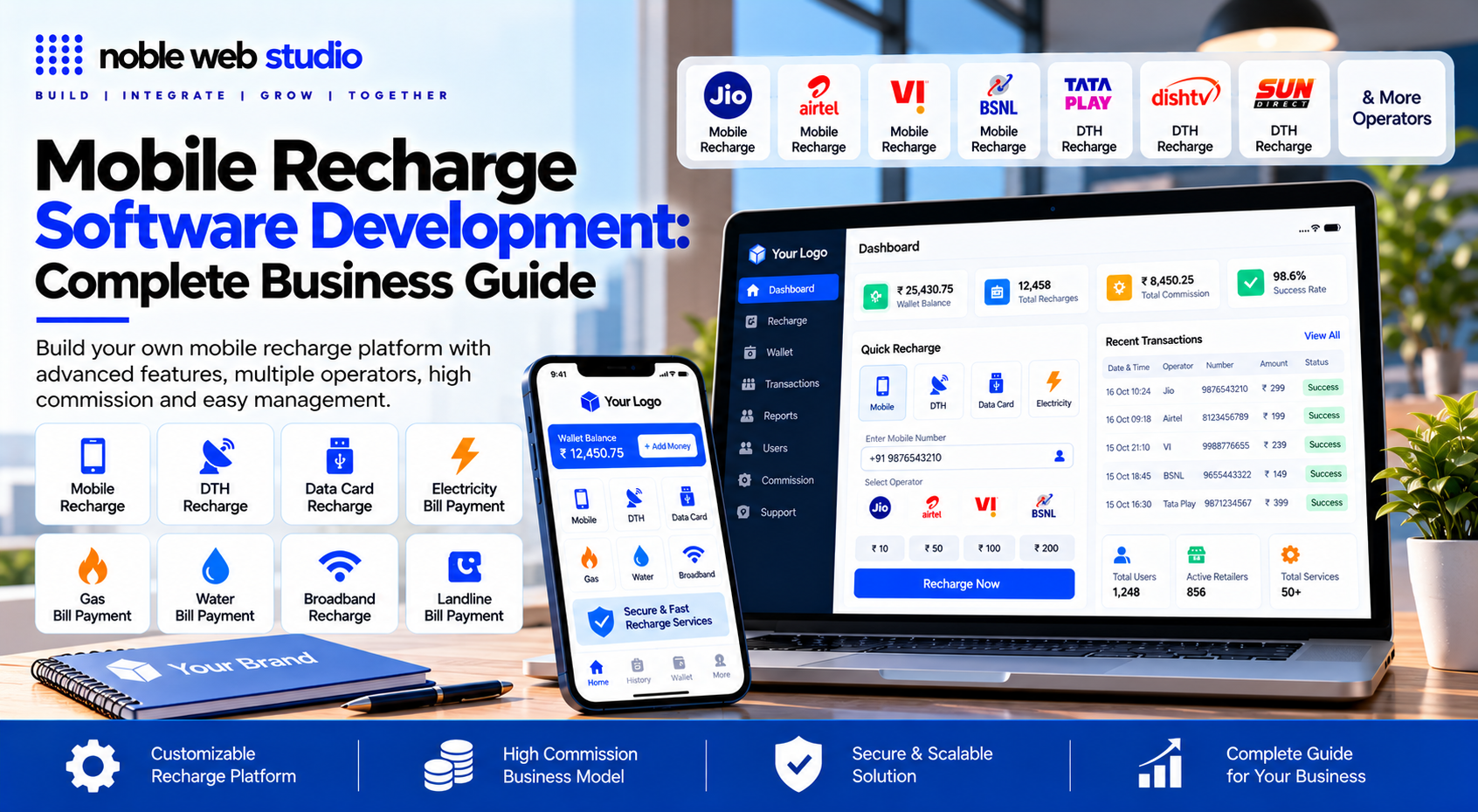
Looking for a practical Mobile Recharge Software Development solution to start your own recharge business or expand an existing digital service platform? The right software can help you manage recharge transactions, organize retailer and distributor accounts, track commissions, and handle daily operations from one centralized system. Before choosing a solution, it is important to understand which features your business needs, how the platform will work, and whether it can support your future growth.
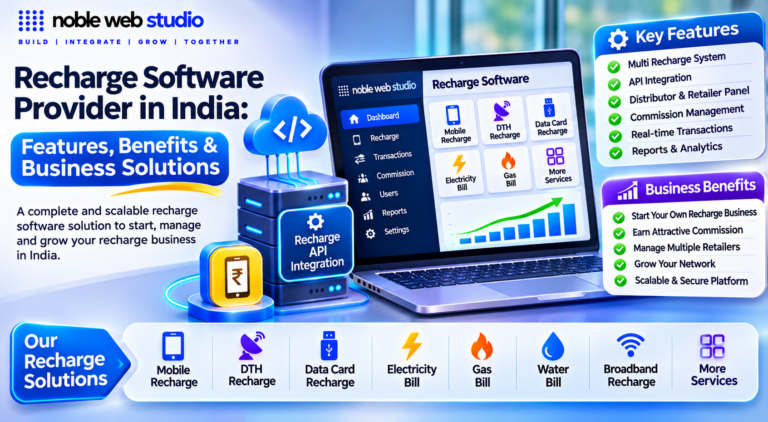
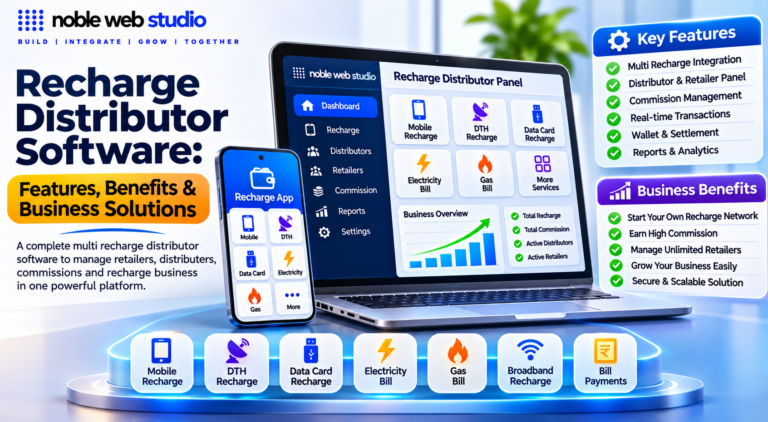
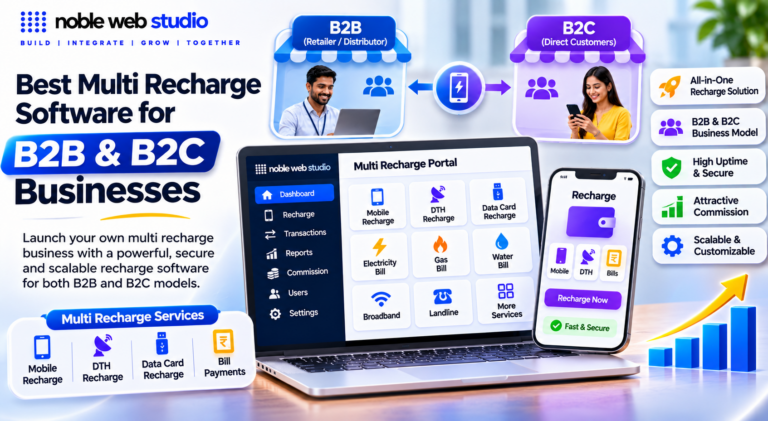
A mobile recharge software platform may include an online recharge portal, an admin dashboard, retailer and distributor panels, transaction history, commission management, reports, wallet controls, and API integration with service providers. Depending on your business model, you can explore B2B software for retailers and distributors, B2C software for serving customers directly, or a white-label platform with your own branding. The available features and services depend on the software package and the integrations selected.
Mobile recharge software development companies build multi-recharge, B2B, B2C, and white-label platforms that integrate telecom operators, DTH services, utility bill payments, and APIs.
Noble Web Studio develops ready-made B2B Mobile Recharge Software for entrepreneurs, startups, retailers, distributors, and businesses planning to enter or grow in the digital recharge market. Depending on the selected version and available integrations, the software can support mobile recharge, DTH recharge, FASTag, and other digital services. You can discuss your requirements with Noble Web Studio to understand the available features, customization options, user roles, and integration requirements before making a decision.
If you are planning your next project, contact Noble Web Studio to discuss your mobile recharge software requirements and explore the available options.
In this guide, you will learn about the essential features of mobile recharge software, the difference between B2B and B2C platforms, important factors to compare before investing, and the steps to consider before launching your business. Whether you are building a new recharge portal or upgrading an existing system, understanding these details can help you choose a solution that fits your business goals.
What Is Mobile Recharge Software Development?
Mobile recharge software development is the process of designing, programming, testing, and maintaining digital platforms that allow users or businesses to process mobile recharges (prepaid and postpaid), Direct-to-Home (DTH) services, data cards, and utility bill payments (such as electricity, gas, water, and FASTag).

Types of Mobile Recharge Software Development
Mobile recharge software development is broken down into several primary models depending on your target audience, business structure, and features.
1. B2C (Business-to-Consumer) Software
- Target Audience: Individual end-users managing their own or family’s accounts.
- Core Functionality: Direct mobile/DTH top-ups, utility bill payments, and wallet loads via apps or web portals (similar to Paytm, PhonePe, or Google Pay).
- Key Features: User-friendly dashboards, promo codes, cashback modules, UPI and card payment gateways, and instant transaction receipts.
2. B2B (Business-to-Business) Software
- Target Audience: Retailers, agents, and distributors who process recharges for walk-in customers.
- Core Functionality: A centralized platform for managing agent hierarchies, fund distribution, and multi-level commissions (up to 10 tiers).
- Key Features: Retailer/distributor panels, commission tracking, wallet/credit management, and offline/online processing modes.
3. Multi-Recharge Software
- Target Audience: Service aggregators and entrepreneurs.
- Core Functionality: Combines multiple utility and telecom operators into a single unified interface.
- Key Features: Supports prepaid/postpaid mobile recharges, DTH, data cards, electricity, gas, water bills, FASTag, and AEPS (Aadhaar Enabled Payment System).
4. White-Label Recharge Software
- Target Audience: Businesses wanting to launch a brand without building core infrastructure from scratch.
- Core Functionality: Pre-built, customizable software that lets you put your own company logo, domain name, and branding on the app and web portal.
- Key Features: Rebrandable admin dashboards, custom mobile apps (Android/iOS), and integrated billing APIs.
5. Recharge API Integration
- Target Audience: Existing businesses, e-commerce sites, or fintech apps looking to add top-up features.
- Core Functionality: An Application Programming Interface (API) that plugs third-party recharge networks directly into your current software or website.
- Key Features: Automated operator/circle detection, real-time transaction status callbacks, and high-speed response times.
6. Online / Cloud-Based & Portal Software
- Target Audience: Multi-location enterprises or remote operations.
- Core Functionality: Web-based panels and cloud servers that eliminate the need for heavy local hardware or manual SMS-based LAPU (Local Area Prepaid Unit) setups.
- Key Features: Role-based access control, automated GST reports, batch CSV/Excel processing, and 24/7 cloud uptime.
Documents Required for Mobile Recharge Software Development
To develop or launch a mobile recharge software platform (whether B2B, B2C, or a white-label solution), you need to provide documentation for personal KYC, business verification (KYB), banking details, and technical agreements.
1. Personal Identity & Address Proof (KYC)
For the proprietor, partners, or company directors:
- PAN Card: Mandatory for tax and financial compliance.
- Aadhaar Card: Primary identity and address proof.
- Passport-sized Photographs: Recent color photos for verification files.
- Alternative Address Proof: Utility bill (electricity, water, or gas) or a registered rent agreement if your Aadhaar address differs from your current operating location.
2. Business Registration & Legal Proofs (KYB)
Depending on your business structure (Proprietorship, Partnership, LLP, or Private Limited Company), Noble web studio partners require:
- PAN Card of the Company / Firm: Corporate or partnership PAN.
- Business Registration Certificate: Shop and Establishment Act license, MSME / Udyam certificate, Partnership Deed, or Certificate of Incorporation (for Pvt. Ltd. / LLP).
- GST Registration Certificate: Strongly recommended if you operate a B2B network, distribute commissions, or cross turnover limits (though small retailers under ₹20 lakh annual turnover may start without it).
- Brand & Domain Details: Brand name, official logo, and registered domain name (if using a white-label app or custom platform).
3. Banking & Financial Documents
To manage wallet settlements, commission payouts, and payment gateway integration:
- Current/Savings Bank Account Details: A dedicated business bank account is preferred for companies and distributors.
- Cancelled Cheque or Bank Passbook Copy: To verify account numbers and IFSC codes.
- Payment Gateway / Recharge API Agreements: Compliance documents for integrating third-party utility, BBPS (Bharat Bill Payment System), or telecom APIs.
4. Technical & Security Prerequisites
While not traditional paper documents, your development setup must account for:
- SSL / HTTPS Certificates: For secure data transit.
- PCI-DSS Compliance: Required if handling digital payments and saved financial credentials.
- Role-Based Access Control (RBAC) & API Secret Management: Backend architecture documents outlining admin, distributor, and retailer permission layers.
Define the Mobile Recharge Software Project Before Writing Code
A mobile recharge software project is a digital platform or application that processes instant top-ups for prepaid and postpaid mobile numbers, DTH services, and utility bills.
Before writing any code, defining the project means creating a clear roadmap and requirements document to prevent scope creep, reduce development costs, and map out the exact business workflow.
Key Components to Define Before Coding
- Target Users & Account Structure: Decide who will use the system individual consumers (B2C), retail agents, distributors, or multi-level administrators. Define role-based permissions and wallet hierarchies.
- Recharge Services & Operators: List which telecom operators (e.g., Airtel, Jio, Vi), DTH services, and bill payment categories (BBPS, electricity, water) will be supported.
- Financial Workflow & Commissions: Map out how balances, recharges, agent commissions, markup margins, and automated refunds for failed transactions are recorded and settled.
- Transaction & API Rules: Design how requests are sent to external recharge APIs, how status callbacks/responses are handled, and what retry or failover logic happens if a network request times out.
- Tech Stack & Architecture: Choose your development tools ahead of time such as React Native/Flutter for mobile, Node.js/Python for the backend, and MySQL/PostgreSQL/MongoDB for the database.
Core Components of a Recharge Software System
A recharge software system processes prepaid mobile, DTH, and utility bill transactions in real time. It relies on several core architectural and functional components:
1. Frontend Interface (Client Layer)
- User & Agent Portals: Responsive web dashboards and mobile apps (Android/iOS) for end-consumers, retailers, distributors, and admins.
- Input Validation: Screens that validate mobile numbers, operator detection, and plan details before submission to prevent errors.
2. Backend Application Layer
- Business Logic Engine: Processes requests, verifies account permissions, manages digital wallets, and enforces commission structures.
- API Routing & Failover System: Captures recharge requests and routes them to telecom or utility services via a Recharge API. If a primary gateway fails, auto-failover switches to a Noble web studio server to maintain high uptime.
3. Database & Ledger Management
- Transaction & User Records: Stores user credentials, multi-level hierarchies (Admin, Master Distributor, Distributor, Retailer), and historical logs.
- Real-Time Wallet Ledgers: Tracks and debits/credits balances across the entire distribution network instantaneously.
4. Admin & Commission Control Panel
- Multi-Operator Support: Manages connections to various telecom, DTH, and utility services from a single center.
- Automated Commission Payouts: Dynamically calculates and distributes profit margins down each tier of the agent/retailer network upon transaction success.
- Reporting & Analytics: Generates real-time sales reports, ledger statements, and audit logs.
5. Security & Authentication Framework
- Data Encryption: Uses SSL encryption for data in transit and at rest.
- Access Controls: Implements One-Time Passwords (OTP), transaction PINs, IP/MAC address restrictions, and multi-factor authentication (MFA) to prevent fraud.
Features of Mobile Recharge Software Development
Mobile recharge software development builds digital platforms that enable instant prepaid and postpaid mobile recharges, DTH top-ups, and utility bill payments.
Core Features of Mobile Recharge Software
- Multi-Operator Support: Connects with major telecom services (such as Airtel, Jio, Vodafone Idea, and BSNL) and DTH services (such as Tata Play, Dish TV, and Airtel Digital TV).
- Real-Time Transaction Processing: Delivers instant top-ups and immediate status updates via automated API integrations.
- Payment Gateway & Wallet Integration: Supports multiple payment methods, including UPI, credit/debit cards, net banking, and digital wallets.
- Admin Panel: Gives platform owners full control over operator management, user accounts, transaction monitoring, and system settings.
- B2B / Retailer & Commission Management: Features distributor-to-retailer hierarchies, automated commission rules, wallet ledgers, and payout tracking.
- Security & Fraud Prevention: Uses data encryption, multi-factor authentication, and automated fraud detection to prevent unauthorized transactions.
- Multi-Platform Support: Offers responsive web interfaces, Android/iOS mobile apps, and agent dashboards.
- Additional Utility Services: Integrates BBPS (Bharat Bill Payment System) for electricity, gas, water, broadband bills, and other financial services.
Benefits Mobile Recharge Software Development
Developing or implementing custom mobile recharge software offers major advantages for businesses, retail agents, resellers, and digital entrepreneurs.
Key Business and Operational Benefits
- Instant Processing & Automation: Automated real-time recharges for mobile, DTH, data cards, and utility bills eliminate manual entry, reduce human error, and deliver immediate status updates to users.
- Multi-Operator Support: A single, unified platform lets you process recharges across all major telecom and DTH services simultaneously.
- New Revenue Streams & Commissions: Retailers, agents, and platform owners earn a commission or margin on every single transaction processed through the system.
- White-Label Customization: Many solutions offer white-label capabilities, allowing you to launch a branded portal or app featuring your own company logo, custom color theme, and domain name.
- Agent & Distributor Hierarchy: Built-in multi-tier management lets distributors appoint sub-agents and retailers, assign credit limits, and track network performance from a centralized backend.
- Enhanced Security: High-grade encryption, secure payment gateway integrations (UPI, net banking, wallets), and built-in fraud detection safeguard every transaction and user data point.
- Scalability & Cost-Effectiveness: Cloud-based architecture scales effortlessly as your user base grows, cutting down the overhead of physical stores or paper voucher infrastructure.
- Detailed Analytics & Reporting: Comprehensive dashboards provide real-time tracking of transaction volumes, earnings, commission splits, and customer trends to aid data-driven decisions.

Mobile Recharge Software Development Process
The mobile recharge software development process involves planning, designing, integrating core telecom APIs, and deploying a secure multi-level platform.
Key Stages of Development
1. Requirements Gathering & Planning
- Define the target audience (B2C customer app vs. B2B multi-level retailer/distributor network).
- List essential services: prepaid/postpaid mobile recharge, DTH, utility bill payments, and money transfers.
2. UI/UX Design
- Create wireframes and mockups for user panels, retailer dashboards, and super-admin controls.
- Focus on a clean, fast-loading, and mobile-friendly interface.
3. Architecture & Database Design
- Set up scalable backend databases to track real-time transactions, user wallets, and commission hierarchies.
- Choose a reliable tech stack (such as PHP, Node.js, Java, or Python paired with MySQL/PostgreSQL).
4. API & Payment Gateway Integration
- Integrate Recharge APIs from Noble web studio for instant top-ups and automated operator-circle detection.
- Integrate Payment Gateways (UPI, debit/credit cards, net banking) to load digital wallets.
- Build or connect SMS/WhatsApp notification gateways for transaction receipts.
5. Core Module Development
- Admin Panel: Manage commission slabs, track downline agents, view live logs, and generate reports.
- Retailer/User Panel: Handle wallet balance, initiate recharges, and view history.
- Android & iOS App Build: Develop native or cross-platform mobile apps.
6. Testing & Quality Assurance
- Run sandbox/test-mode API calls to check failure handling, refund logic, high-load concurrency, and security vulnerabilities.
7. Deployment & Maintenance
- Deploy the application on cloud servers (AWS, Google Cloud, or VPS) with SSL encryption.
- Provide ongoing bug fixes, telecom plan updates, and technical support.
How to Plan Mobile Recharge Software Development Cost and Timeline
The cost to develop or deploy mobile recharge software in India typically ranges from ₹3,999 to ₹5,00,000+, depending on whether you choose a ready-made white-label platform or custom-built enterprise software.
Planning the cost and timeline for mobile recharge software development requires breaking down your platform type, core features, and architectural scope.
Cost Breakdown by Solution Type
- Entry-Level / Starter Packages:₹3,999 to ₹15,000 (One-time or low entry fee)
- Includes: Single or basic mobile recharge API, basic Android app or web panel, and limited operator support.
- Example Noble web studio: Noble web studio (plans ranging from ₹7,500 to ₹24,500).
Standard B2B / White-Label Packages:₹25,000 to ₹1,800,000
- Includes: Multi-recharge API integration (prepaid, DTH, utility bills), multi-level admin controls, wallet system, agent/distributor panels, and commission management.
- Advanced / Custom Enterprise Solutions:₹1,800,000 to ₹5,00,000+ (or custom quotes upwards of ₹3,00,000–₹10,00,000+)
- Includes: Custom UI/UX, multi-operator automatic failover APIs, custom domain, mobile apps (Android & iOS), payment gateway integration, SMS/WhatsApp notification setup, and reseller structures.
Core Components That Drive the Cost
Platform Architecture (Build vs. Buy):
- Ready-made White-Label: Lower upfront cost (₹7,500 – ₹50,000) with quick deployment (days).
- Custom Development: Higher cost (₹1,500,000 to ₹5,00,000+) because it requires building a website, admin panel, customer app, agent/retailer panel, and database from scratch.
Third-Party APIs & Gateways:
- Recharge APIs: Integration fees for mobile, DTH, and utility bill payment operators (often ₹10,000 to ₹30,000 setup or per-transaction/balance models).
- Payment Gateways: Integration for adding money to the wallet (approx. ₹10,000 – ₹15,000 setup + transaction MDR).
- SMS / Notification Gateways: Bulk SMS or WhatsApp API credits for transaction OTPs and confirmations (e.g., ₹10,000–₹15,000 for bulk packs).
2. Development Timeline
Timelines vary based on complexity and build-vs-buy decisions:
- White-Label / Ready-Made Setup: 3 to 7 days (mostly configuration and branding).
- Basic App / MVP (Custom): 1 to 3 months (requirements, UI/UX, core API integration, and basic testing).
- Medium to High-Complexity Platform: 3 to 6+ months (multi-level admin panel, retailer/distributor wallet ledgers, automated status callbacks, and security hardening).
Recurring & Ongoing Expenses:
- Server & Cloud Hosting: ₹1,000 to ₹5,000+ per month depending on traffic.
- Annual Maintenance & Updates: Typically 15% to 20% of the original development cost per year.
- API / Operator Wallet Balances: Working capital needed to maintain float with Noble web studio.
Mobile Recharge Software Wallet and Commission Logic
A mobile recharge software wallet and commission system manages digital balances, deducts funds safely, and distributes margins across multi-tier networks (such as master distributors, distributors, and retailers).
Core Wallet Logic
- Balance Validation: The system checks if the user’s active wallet balance is greater than or equal to the recharge amount minus any immediate cash-back/commission logic before hitting the telecom API.
- Fund Reservation & Deduction: When a request initiates, funds are locked or deducted immediately with a unique transaction reference ID to prevent duplicate deductions or race conditions.
- Ledger Entries: Every movement (debit, credit, refund, or commission payout) must write a double-entry ledger record for transparent financial auditing.
- Failure Reversals: If a recharge fails or times out from the operator/API, the system triggers an automatic reversal, crediting the deducted amount back to the user’s wallet and reversing any conditional commission entries.
Commission & Margin Logic
- Tiered Distribution: In B2B setups like those used by Noble web studio margins cascade down a hierarchy (Admin -> Master Distributor -> Distributor -> Retailer).
- Operator & Circle Rates: Commissions vary by telecom operator (e.g., Jio, Airtel, Vi, BSNL) and state circle, configured as a flat amount or a percentage (e.g., ranging roughly from 2% to 6.5% depending on the tier and plan).
- Configurable Rules: Commission slabs should live in a centralized, auditable database table rather than hardcoded into application scripts so admins can adjust rates dynamically.
Security Requirements During Mobile Recharge Software Development
Mobile recharge software handles sensitive data, including customer mobile numbers, financial records, transaction credentials, and API secret keys. Security must be integrated into the architecture from the initial design phase rather than added later.
Core Security Requirements
- Server-Side API Credential Storage: Never embed recharge API keys, secrets, or database credentials inside mobile apps or frontend JavaScript. The mobile app should communicate exclusively with your backend, and your backend should communicate with the operator or payment APIs.
- Encrypted Communication (HTTPS / TLS): Enforce SSL/TLS encryption for all data in transit across APIs, web portals, and callback URLs.
- Authentication and Access Control: Implement strong user and administrative authentication using JSON Web Tokens (JWT) or OAuth 2.0, paired with role-based access control (RBAC) for back-office operators.
- Two-Factor Authentication (2FA / OTP): Require One-Time Passwords (OTPs) or secondary verification steps for high-value transactions, account changes, or administrative overrides.
- Input Validation & Sanitization: Validate and sanitize all incoming user and API inputs strictly on the server side to prevent injection attacks and malformed requests.
- Idempotency & Unique Order Management: Assign a unique order ID to every recharge request. Never retry pending recharges blindly; instead, query the original order status using the same unique order ID to prevent duplicate debits.
- Callback Verification: Secure webhook and callback endpoints by verifying that incoming notifications match known, pending order IDs, and whitelist your Noble web studio server IP addresses.
- Logging & Monitoring Without Secrets: Log transaction timestamps, request IDs, and response codes for auditing, but strictly exclude passwords, tokens, API secrets, and sensitive card data from application logs. Monitor wallet balances for sudden or unauthorized drops.
- Compliance & Legal Standards: Adhere to regional digital payment guidelines, data protection regulations, and local IT laws (such as Indian IT regulations for domestic operations).
Technology Selection for Recharge Software
Selecting the Noble web studio and deployment model for recharge software depends heavily on your business structure, scale, and whether you operate a direct retail counter, a distributor network, or an automated digital platform.
1. Core Architecture & Tech Stack Options
- Backend & Database: Modern multi-recharge platforms commonly rely on robust enterprise frameworks such as Microsoft .NET (e.g., .NET 4 or newer) paired with relational databases like MS SQL Server or MySQL/PostgreSQL to handle concurrent ledger updates, high-volume request queues, and transaction logs.
Frontend & Client Apps:
- Web Portals: Browser-based dashboards built for administrators, master distributors, and retail counter operators.
- Mobile Apps: Native or cross-platform apps (Android and iOS) or lightweight progressive web apps (PWAs) for on-the-go agents and customers.
- API & Switch Integration: Core architecture must incorporate multi-operator APIs, Bharat Connect (BBPS) for utility bills, and optional banking/fintech layers like AePS or Micro ATM APIs.
2. Matching Technology to Your Business Model
Direct Retail Counter (B2C Model)
- Best for: Local shops, kirana stores, and single-location service counters.
- Tech Needs: Lightweight web/mobile app interface, UPI/IMPS wallet top-up integration, fast single-click recharge submission, and automated digital receipts.
Distributor & White-Label Network (B2B / B2B2C Model)
- Best for: Entrepreneurs building a multi-tier chain of master distributors, sub-distributors, and retailers.
- Tech Needs: Multi-tier commission engines, white-label branding controls (custom domain, logo, and app skin), downline fund management, and live operator surcharge/margin settings.
Self-Service Digital Platform (Direct-to-Consumer)
- Best for: Fintech startups or digital brands.
- Tech Needs: Automated bill-fetching, live operator-plan lookup tools, high-uptime API switching, and built-in promotional/cashback modules.
3. Key Evaluation Criteria Before Buying/Building
- API Reliability & Uptime: Look for automated failover switching across multiple telecom and utility operators to maintain high transaction success rates.
- Security & Compliance: Ensure platform-level encryption, two-factor authentication (2FA), role-based access control, and adherence to local digital payment guidelines.
- Hidden & Ongoing Costs: Clarify whether the pricing is a one-time license, white-label setup fee, or a recurring transaction/API split, as outlined by Noble web studio.
Testing Before Mobile Recharge Software Launch
Testing a mobile recharge software or white-label platform before launch requires checking core financial flows, API integrations, and security. A reliable pre-launch testing checklist covers these essential areas:
1. Functional & Transaction Testing
- Number & Operator Validation: Test valid and invalid mobile numbers, and verify support across all planned telecom operators and circles.
- Amount & Balance Rules: Check correct and incorrect recharge amounts, handle insufficient wallet balance errors, and verify accurate wallet deductions and commission/margin calculations.
- API Response Handling: Simulate successful, failed, pending, and delayed API responses, as well as network timeouts and duplicate request submissions.
- Reversals & Refunds: Test transaction reversals and verify that failed or dropped top-ups properly credit funds back to the user or agent wallet.
2. Security & Compliance
- Authentication: Verify strong OTP-based login and role-based permissions for admins, distributors, and retailers.
- Data Protection: Ensure end-to-end encryption for payment and personal data, and check that sensitive tokens or credentials do not leak into system logs.
- Vulnerability Checks: Test against common web/app threats like SQL injection and cross-site scripting (XSS).
3. Performance & Compatibility
- Load & Scale: Measure response times and stability under high transaction volumes or peak-load simulation.
- Device & Browser Testing: Validate UI/UX across major mobile browsers (Chrome, Safari, Firefox, Edge) and native iOS/Android devices.
- Store Compliance: If publishing a branded Android app, ensure compliance with Google Play Store guidelines (such as submitting signed App Bundles and completing closed testing requirements if applicable).
4. Administrative & Ledger Controls
- Ledger Reconciliation: Check daily transaction reports, balance sheets, and automated settlement logs.
- Sandbox Environment: Run end-to-end test transactions using recharge Api sandbox/test credentials before routing live production traffic.
Future Improvements for a Growing Mobile Recharge Platform
A growing mobile recharge platform needs to evolve beyond basic top-ups to boost user retention, handle rising infrastructure costs, and compete with major fintech apps. Key future improvements span technology, services, and user experience:
1. AI and Voice Automation
- AI-Powered Assistants: Integrate voice-enabled recharges and conversational chatbots in regional languages so users can top up or check plans hands-free.
- Smart Plan Recommendations: Use machine learning to analyze user usage patterns (data, talk time, OTT subscriptions) and suggest the most cost-effective plan before expiry.
2. Diversification of Services (Value-Add)
- Beyond Mobile Top-Ups: Expand into DTH, utility bill payments (electricity, water, fastag), broadband, and insurance renewals.
- Fintech Integrations: Offer micro-savings, small-ticket digital microloans, or flexible recharge subscription/EMIs to attract lower-income or rural user bases.
3. Enhanced Security & Biometrics
- Biometric Authentication: Add fingerprint or facial recognition for faster, safer checkout.
- Blockchain & Tokenization: Strengthen fraud prevention, data privacy, and transaction transparency using ledger-based security.
4. API & Infrastructure Resilience
- Real-Time API Sync: Ensure direct, low-latency connections with telecom operators for instant confirmation and zero-failure transaction rates.
- Coping with Tariff Hikes: With expected telecom tariff increases (such as projected 12%–15% hikes by operators like Jio and Airtel), transparent price-tracking tools and cashback/loyalty rewards become critical to keep users from churning.
5. Seamless Multi-Channel & Offline Accessibility
- Digital Wallets & One-Tap Pay: Deeply integrate Apple Pay, Google Pay, and UPI-lite for zero-friction payments.
- USSD / Lightweight Modes: Maintain support for low-bandwidth or feature-phone accessibility (USSD/SMS channels) to capture rural markets.
Noble Web Studio One Of The Mobile Recharge Software Development Company?
Noble Web Studio one of the right Mobile Recharge Software Development Company requires evaluating technical capabilities, security, API integrations, and ongoing support.
Key Factors to Consider
- API Integration & Multi-Operator Support: Noble Web Studio can integrate reliable multi-recharge APIs, live plan check APIs, automated operator detection (to prevent wrong recharges), and support for DTH, data cards, FASTag, and utility bill payments.
- Business Model Alignment (B2B, B2C, or White-Label): Determine whether you need a direct customer-facing app (B2C), a retailer/distributor network portal (B2B), or a White Label Recharge Software solution that lets you scale up with your own brand.
- Security and Transaction Reliability: Look for strong encryption standards, real-time transaction processing, fraud detection, and secure payment gateway integrations to prevent failed or disputed recharges.
- Scalability and Customization: The software should handle growing transaction volumes and allow you to add new features, tiers, or commission management structures easily as your business expands.
- Transparent Pricing & Development Cost: Compare whether you are opting for a pre-built white-label solution (typically lower cost) or a custom Minimum Viable Product (MVP) / enterprise platform. Clear quotes help avoid hidden post-launch fees.
- Customer Support & Service Level Agreement (SLA): Choose a Noble Web Studio that offers dependable post-launch technical support, active communication channels (phone/WhatsApp during business hours or 24/7 helpdesks), and clear dispute-handling mechanisms.
- Company Credentials & Track Record: Noble web studio experience, portfolio of live transactional apps, and business registration details (such as GST or corporate standing).
Why Choose Noble Web Studio for Mobile Recharge Software Development?
Noble Web Studio only one of the right provider for mobile recharge software development ensures a stable, automated, and profitable digital payment ecosystem.
Key Reasons to Choose a Noble web studio
- Multi-Operator & Multi-Service Connectivity: Noble Web Studio build systems integrated with major telecom operators (Airtel, Jio, Vi, BSNL), DTH services(Tata Play, Dish TV), and utility bill platforms (BBPS, electricity, water, gas, FASTag).
- High Transaction Success & Low Latency: Trusted infrastructure delivers high uptime (99.9%+) and fast transaction speeds (sub-200ms latency) to prevent failed recharges, double-payments, and user drop-offs.
- Multi-Tier Role Management: Turnkey software comes with dedicated, customizable panels for the Admin, Distributors, and Retailers, allowing you to manage commissions, track network agents, and view real-time ledgers.
- Automation & Real-Time Wallets: Automated fund loading, instant commission distribution, and real-time wallet tracking eliminate manual intervention and reduce operational overhead.
- Security & Regulatory Compliance: Built-in security protocols protect transaction data, while compliance frameworks align your platform with local financial and telecom guidelines (such as RBI, NPCI, or TRAI standards).
- Scalability for Future Growth: Modular architecture lets you start with basic mobile top-ups and seamlessly scale up to add AEPS (Aadhaar Enabled Payment System), money transfer, or micro-ATM services as your business expands.
Conclusion: Mobile Recharge Software Development
Choosing the right Mobile Recharge Software Development solution can help you establish a recharge business, manage daily transactions, and build a platform that meets your customers’ needs. Before investing, compare important features such as retailer and distributor management, commission settings, transaction reports, failed-recharge tracking, API integration, security controls, scalability, and technical support. The right software should fit your current business requirements and allow you to expand as your business grows.
Noble Web Studio develops ready-made B2B Mobile Recharge Software for entrepreneurs, startups, retailers, distributors, and businesses looking to enter or expand in the digital recharge market. Depending on the selected version and available integrations, your platform can support mobile recharge, DTH recharge, FASTag, and other digital services. You can discuss your requirements to understand the available features, branding options, customization possibilities, and integration needs.
Noble web studio is a mobile recharge software development company builds custom digital platforms, web portals, mobile apps, and APIs that let businesses process prepaid and postpaid mobile recharges, DTH top-ups, utility bill payments, and AEPS (Aadhaar Enabled Payment System) services.
When planning your Mobile Recharge Software Development project, consider more than the initial setup price. Evaluate the software’s usability, transaction management, administrative controls, ongoing costs, and the support available after launch. Comparing these factors can help you choose a solution that is practical for your business model and future plans.
If you are ready to build your recharge platform, contact Noble Web Studio to discuss your business goals and explore the available B2B Mobile Recharge Software options.
Ready to take the next step? Contact Noble Web Studio to discuss your mobile recharge software requirements, features, and pricing.