Ankit
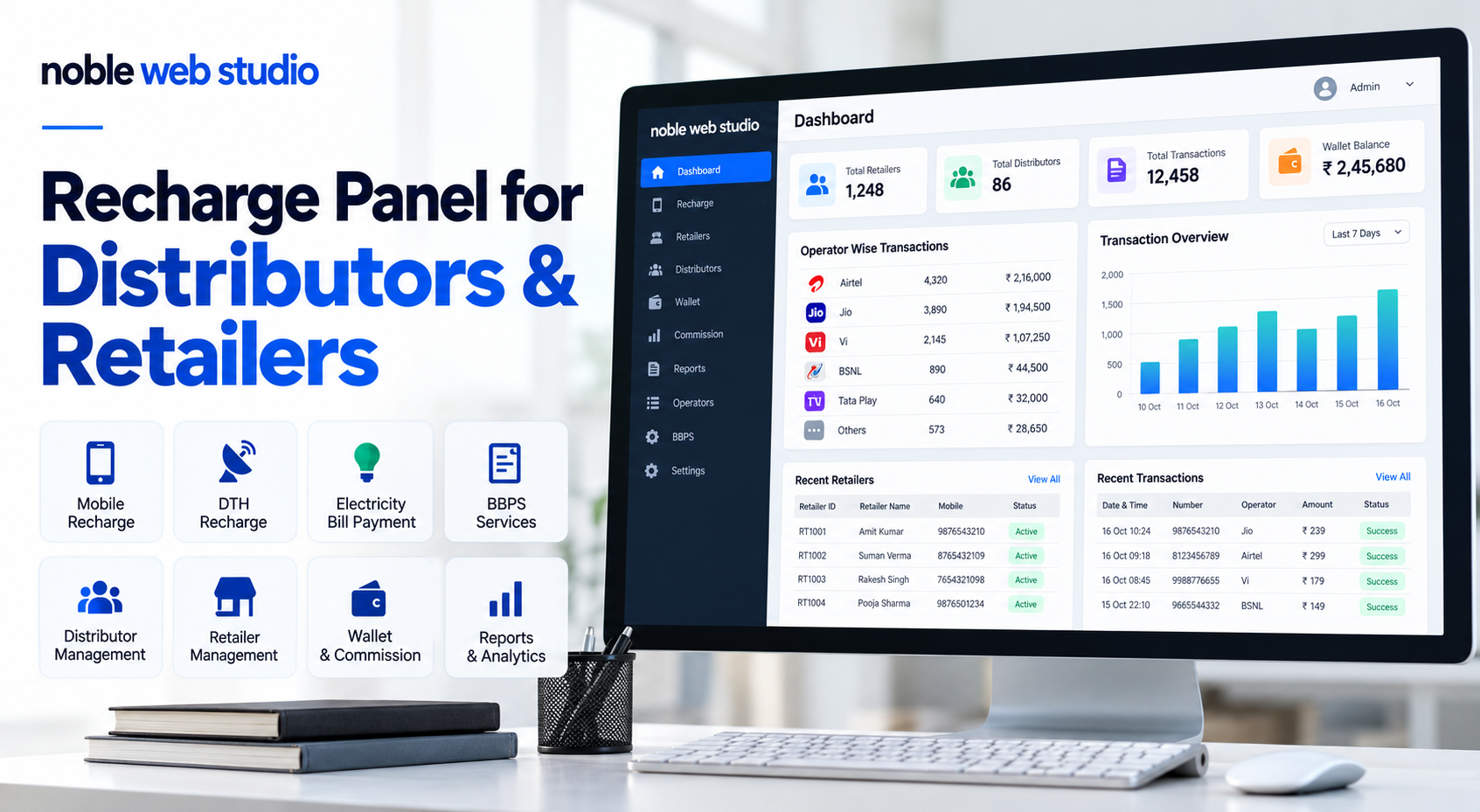
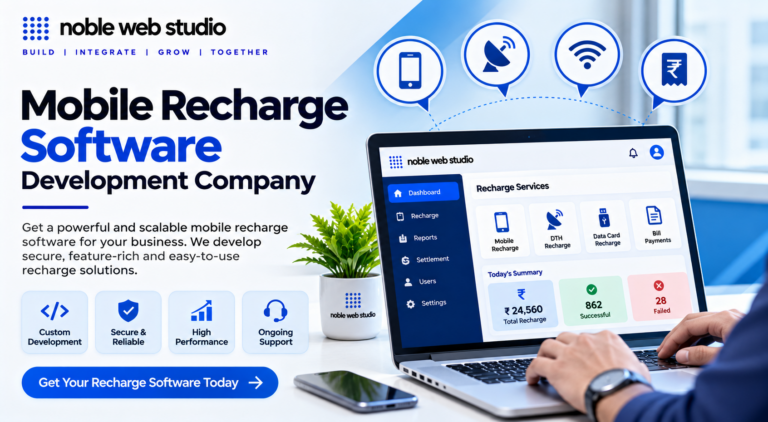
A Recharge Panel is a software platform that helps businesses manage online recharge services, process transactions, monitor users, and control daily operations from a centralized dashboard. Whether you are starting mobile recharge business, expanding an existing retailer network, or launching a B2B recharge platform, choosing the right recharge panel can help you organize services and manage business activities more efficiently. Noble Web Studio offers ready made B2B recharge software for businesses looking to establish or grow their online recharge operations.
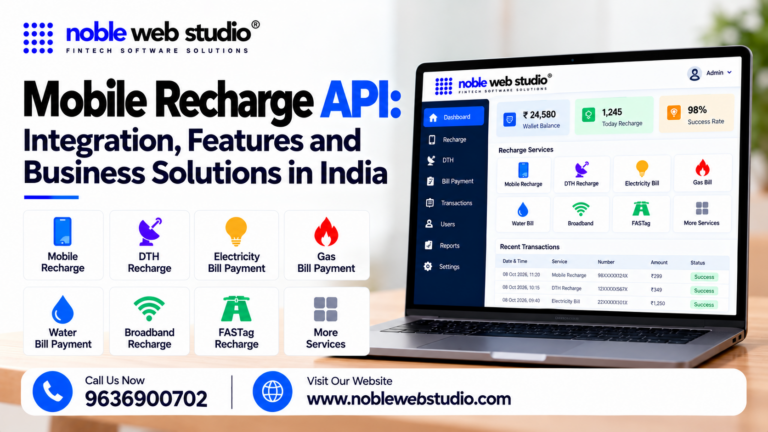
A reliable Mobile Recharge Panel can include an recharge admin dashboard, retailer and distributor management, commission configuration, transaction history, reports, and transaction-status tracking. Depending on the selected package and integrations, it may also support prepaid mobile recharge, DTH recharge, FASTag, and utility bill payments. These features help businesses manage users, monitor recharge activity, and review transaction records without relying on separate manual processes.
A recharge panel is a centralized web or mobile recharge dashboard used to manage, process, and monitor multi-recharge and digital bill payment services.
However, not every Recharge Panel Provider offers the same features, pricing, or service coverage. Before choosing a Noble web studio, compare the included services, recharge API integration options, security controls, user roles, customization capabilities, maintenance terms, and technical support. It is also important to understand how the reliable mobile recharge software handles pending transactions, failed recharges, and refund enquiries, as these processes can affect customer experience and daily business operations.
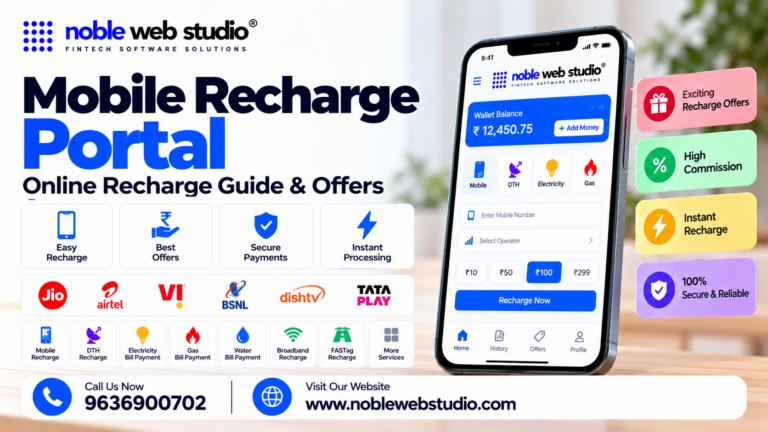
With Noble Web Studio, businesses can explore ready-made B2B mobile recharge software designed for different operational requirements. Depending on the selected configuration, you can evaluate retailer and distributor management, an recharge admin panel, commission settings, transaction reports, and supported recharge services. Whether you need a recharge panel for a smaller operation or a multi-level distribution business, the right recharge panel setup should match your budget, expected transaction volume, and expansion plans.
If you are planning to launch or upgrade an online recharge business, start by identifying the services you want to offer and the features your team needs to manage them. Contact Noble Web Studio to discuss your B2B mobile recharge software requirements and explore a suitable recharge panel solution.
In this guide, you will learn what a Recharge Panel is, how it works, which features to compare, how recharge API integrate fits into the recharge admin platform, and what to consider when evaluating costs, security, scalability, and support. This information can help you make a more informed decision before investing in recharge software.
What Is a Recharge Panel?
A recharge panel is a centralized, web-based recharge software platform or dashboard that allows businesses, distributors, and retailers to process, manage, and monitor digital recharges and utility bill payments from a single unified system.
How Does a Recharge Panel Work?
A recharge panel (or multi recharge admin panel) is a centralized software platform that lets businesses manage mobile recharges, DTH top-ups, FASTag, and utility bill payments from a single dashboard.
How a Recharge Panel Works
A recharge panel operates through an automated chain linking the user, the mobile recharge platform internal wallet, backend APIs, and telecom/utility servers.
1. Wallet and Fund Management
- Preloaded Balance (Float): Retailers, distributors, or administrators deposit money into a central digital wallet via UPI, net banking, debit/credit cards, or bank transfers (IMPS/NEFT).
- Real-Time Deductions: Every time a recharge or bill payment is triggered, the transaction amount (minus any commission) is instantly deducted from the user’s digital recharge wallet.
2. Request Initiation
- A customer or agent enters the recharge details such as the mobile number, telecom operator (e.g., Jio, Airtel, Vi, BSNL), DTH services, or utility bill account and selects a specific plan.
3. API Routing and Processing
- The panel routes the request through an integrated Recharge API (Application Programming Interface) or payment gateway connected directly to telecom operators or biller networks (such as BBPS – Bharat Bill Payment System).
- The Noble web studio server verifies the number and plan, credits the service in real time, and sends a confirmation back to the fast recharge panel within seconds.
4. Multi-Tier Hierarchy and Commissions
- Role-Based Access: B2B Recharge Panels typically operate on multi-tier structures, including Super Admin, Master Distributors, Distributors, and Retailers.
- Commission Slabs: The b2b recharge platform automatically calculates and distributes fixed or percentage-based margins (typically ranging from 1% to 6%) down the network chain for each successful transaction.
5. Monitoring and Administration
- Live Dashboard: Best Recharge Admins can track live transactions (successful, pending, or failed), block specific operator services or denominations, view wallet ledgers, and pull automated refund or dispute reports.
Recharge Services Supported by the Panel
An Top Recharge Panel supports a wide range of mobile, DTH, utility, and financial recharge and bill payment services across major Indian operators.
Mobile & Data Recharges
- Prepaid & Postpaid: Instant recharges and plan selections for major telecom providers including Jio, Airtel, Vi (Vodafone Idea), BSNL, and MTNL.
- Data Cards: Fast top-ups and data-pack activations for portable data card connections.
- International Roaming & OTT: Specialized packs and bundle add-ons through operator integrations.
DTH (Direct-to-Home) Services
- Satellite TV Providers: Instant channel package and account recharges for Tata Play (formerly Tata Sky), Dish TV, Airtel Digital TV, Sun Direct, and Videocon D2H.
- New Connections: Support for processing new DTH connection requests.
Utility & Bill Payments (BBPS / Bharat Connect)
- Electricity & Water: Monthly bill payments for state and private electricity distribution boards and water supply authorities.
- Gas & LPG: Piped natural gas (PNG) bill payments and LPG cylinder bookings.
- Broadband & Cable TV: Landline, broadband internet, and cable TV subscription payments.
- FASTag & Credit Cards: Toll-tag top-ups (such as HDFC, ICICI, Kotak) and monthly credit card bill clearances.
- Insurance & Municipal Taxes: LIC and general insurance premium payments along with municipal property tax collections.
- Loan EMIs: Periodic loan installment and financial services repayments.
Value-Added & Financial Services
- Digital Money Transfers (DMT): Domestic fund transfers to bank accounts across India.
- Aadhaar Enabled Payment System (AEPS) & Micro ATMs: Cash withdrawal and banking services via biometric authentication.
- Gift Cards & Digital Vouchers: Issuance and redemption of Google Play codes and brand gift vouchers.
- Identity Services: Assistance with new PAN card application.
- Wallet & Funding Tools: Unified Payments Interface (UPI) instant fund additions, balance transfers, and automated commission tracking.
Types of Recharge Panels for Businesses
Mobile recharge panels and recharge service software platforms are generally categorized based on their target audience, business model, and operational structure.
1. B2C (Business-to-Consumer) Portals
- Target Audience: Individual mobile and utility end-users.
- Functionality: Allows customers to log in via a website or mobile recharge commission app to directly top up their own prepaid/postpaid numbers, DTH connections, or pay utility bills (electricity, gas, water).
- Key Features: Features promotional discounts, cashback offers, and direct payment gateway integrations (UPI, debit/credit cards).
2. B2B / Multi-Recharge & Agent Commission Portals
- Target Audience: Retailers, local shopkeepers, and small-scale agents.
- Functionality: Acts as a centralized workspace where a local agent can handle recharges and bill payments for walk-in customers.
- Key Features: Includes tiered recharge commission structures, a shared or individual wallet system, operator switching, and real-time transaction reports.
3. White-Label Recharge Portals
- Target Audience: Entrepreneurs and new fintech startups wanting their own brand identity.
- Functionality: Provides a fully customizable, ready made recharge software architecture that you can launch under your own company brand name, domain, and custom Android recharge earning app.
- Key Features: Custom logo integration, brand-specific UI, independent wallet management, and backend control over distributor-retailer chains.
4. API Integration Portals & Multi-Recharge Admin Panels
- Target Audience: Larger businesses, recharge software developer, or master distributors.
- Functionality: Connects a business’s internal software directly to multiple telecom and utility operator backends via a unified Application Programming Interface (API).
- Key Features: Automated recharge processing, multi-operator redundancy, master distributor/distributor/retailer hierarchy management, and comprehensive MIS reporting.
Documents Required for Recharge Panel
To set up or register for a mobile recharge panel, retailer ID, or white label recharge portal in India, you need to submit personal KYC, business proof, and banking verification documents.
Personal & Identity KYC
- PAN Card: Essential for identity confirmation, tax ID, and settlements.
- ID & Address Proof: Government photo IDs like Aadhaar, Voter ID, Passport, or Driving License.
- Other Requirements: A recent passport-size photo and an active mobile/email linked for OTP verification.
Business & Entity Proof
- Registration & Taxes: MSME/Udyam certificate, Shop & Establishment license, or incorporation documents, along with GST registration if applicable.
- Business Address & Corporate Docs: Utility bills or lease agreements for physical shops, plus MoA/AoA for corporate entities.
Banking Verification
- Bank Details: A cancelled cheque, bank statement, or linked current/savings account matching the applicant’s or business’s name for payouts.
Who Can Use Recharge Panel
A recharge panel can be used by a multi-tiered hierarchy of users and businesses, ranging from individual consumers to large enterprise operators.
Key Users of a Recharge Panel
- Administrators / Business Owners: The main owners of the best mobile recharge platform who control system-wide settings, configure recharge commission structures, manage mobile recharge API, monitor real-time transactions, and oversee the entire network.
- Master Distributors: Noble web studio manage and supply balance or services to a network of distributors below them.
- Distributors: Middle-tier agents who onboard, fund, and manage local retailers and store owners.
- Retailers & Store Owners: Local shopkeepers, Kirana stores, or small businesses that use the panel or app to process mobile recharges, DTH top-ups, and utility bill payments for walk-in customers to earn commissions.
- API Partners / B2B Clients: External businesses or developers who integrate recharge API into their own existing websites or best mobile recharge commission app.
- End-Customers: Individual users who log into a consumer-facing recharge b2b portal or best recharge commission app to pay their own personal mobile bills, DTH, or utility services.
Why Use Recharge Panel
A recharge panel is a centralized Noble web studio use to manage mobile recharges, DTH, utility bills, FASTag, and other digital payment services from one recharge earning platform.
Key Reasons to Use a Recharge Panel
- Centralized Operations: Manage all services such as mobile top-ups, DTH, and utility payments from a single dashboard instead of using multiple disconnected portals.
- User & Network Hierarchy: Easily create and manage multi-level accounts like master distributors, distributors, and retailers under your own network.
- Real-Time Transaction Tracking: Monitor success, failure, and pending statuses live, reducing downtime and resolving issues quickly.
- Flexible Commission Control: Configure and customize custom commission slabs and profit margins for different tiers of distributors and retailers.
- Automated API & Gateway Integration: Connect seamlessly with multiple telecom operators and payment gateways for instant, round-the-clock (24/7) processing.
- Detailed Analytics & Reports: Generate comprehensive financial, transaction, and wallet reports to drive data-informed business decisions.
Top Use Cases of Recharge Panel
A recharge panel (or multi recharge software/recharge API dashboard) powers instant digital top-ups, utility payments, and financial services across B2B, B2C, and white-label business models.
Top Use Cases of a Recharge Panel
- Prepaid & Postpaid Mobile Recharges: Process instant airtime and data-pack top-ups across multiple telecom operators like Jio, Airtel, Vi, and BSNL.
- DTH Satellite TV Renewals: Enable instant monthly or annual recharges for Direct-to-Home providers such as Tata Play, Dish TV, Airtel Digital TV, and Sun Direct.
- Utility Bill Payments (BBPS): Fetch and pay electricity, piped gas, municipal water, landline, and broadband bills through integrated BBPS modules.
- FASTag & Toll Recharges: Allow vehicle owners to instantly top-up highway FASTag accounts linked to national toll systems.
- Retail Convenience Hubs & Over-the-Counter Shops: Power local grocery stores, pharmacies, and small-town agents to act as mini-recharge hubs, earning recharge commissions on every transaction.
- White-Label & Custom-Branded Portals: Enable entrepreneurs and fintech start-ups to launch their own branded multi-recharge website or Android recharge commission app under their custom domain and logo.
- B2B Distributor & Master-Distributor Hierarchies: Manage multi-tier agent networks, set margin/commission slabs, control single-wallet balances, and track automated ledger updates.
- Fintech & Digital Wallet Integration: Embed high-frequency recharge and bill-payment loops inside mobile wallets, banking apps, and Money Transfer platform to drive user retention.
Why Recharge Panel Are Gaining Popularity
Recharge Panels (also known as multi recharge panel or recharge admin portals) have surged in popularity among retailers, entrepreneurs, and digital service providers. These centralized backend dashboards enable users to manage multi-operator mobile top-ups, DTH connections, and utility bill payments from a single interface.
The sudden boom in their adoption stems from key technological and financial drivers:
Key Drivers of Popularity
- All-in-One Multi-Service Integration: Traditional recharging forced shop owners to maintain separate balances and high earning recharge app for different telecom providers (like Jio, Airtel, and Vi). A modern recharge panel integrates multi operator recharge API, allowing a business to process everything from mobile data packs to electricity and FASTag bills through one unified wallet.
- High-Margin Commission Earning: These b2b recharge panels are heavily utilized as High earning Recharge Commission App. Retailers and distributors earn instant, automated commission percentages on every transaction processed. With the rise of digital financial services, it offers small shops a low-investment stream for daily passive income.
- Network & User Tier Management: For business owners expanding into a B2B network, the branded recharge admin panel acts as a complete control center. Admins can seamlessly add, track, and manage a multi-tier hierarchy of master distributors, distributors, and localized retailers, setting custom recharge commission margins for each tier.
- Drastic Reduction in Errors & Fraud: Advanced recharge portal leverage automated transaction tracking and AI-powered monitoring. According to industry data, businesses using proper mobile recharge admin controls report a 65% increase in operational speed and a 40% improvement in fraud detection compared to manual logging.
- White-Label Customization: Entrepreneurs can easily purchase ready made recharge panel software and launch it entirely under their own company name, logo, and domain. This allows anyone to start an independent fintech business with almost zero core coding knowledge.
Recharge Panel Admin Dashboard: Modules and Functions
A Recharge Panel Admin Dashboard is a centralized backend control system used to manage digital top-ups, multi-service recharges, and B2B/B2C distribution networks (such as mobile prepaid/postpaid, DTH, and utility/BBPS payments).
Core Modules
- User & Hierarchy Management: Manages multi-level accounts including top recharge admin, master distributors, distributors, retailers, and end-customers with role-based permissions.
- Recharge & Plan Catalog Module: Controls and updates operator plans, data packs, talk-time offers, DTH packages, and special regional discounts.
- API & Service Provider Management: Configures third-party fast recharge API, operator switches, response handling, and failover routing rules.
- Commission & Margin Engine: Sets tiered commission structures, surcharges, and profit margins tailored for each tier of the distribution network.
- Wallet & Ledger System: Oversees credit/debit balances, fund transfers, online payment gateway integrations (UPI, cards, net banking), and manual wallet adjustments.
- Reporting & Analytics Engine: Generates filterable, exportable financial logs, transaction success/failure ratios, and revenue summaries.
Key Functions
- Real-Time Transaction Monitoring: Track live recharge requests, view pending or stuck transactions, and manually retry or refund failed orders.
- Automated & Manual Dispute Resolution: Review customer complaints, check recharge API logs, and resolve disputed or interrupted recharges.
- Gateway & Balance Alerts: Trigger automated notifications and low-balance warnings for operator trusted recharge API and payment gateways.
- Security & Access Control: Enforce multi-factor authentication (MFA), encrypted transaction channels, and restricted IP access logs.
- System Customization & Branding: Configure white-label settings, company logos, custom themes, and notification templates.
Recharge Panel Admin Dashboard: Modules and Functions
Recharge Admin Panel
Admin DashboardDashboard
Live sales & balance overview
Mobile Recharge
Prepaid & postpaid recharge
DTH Recharge
All DTH operator recharge
Bill Payment
Electricity, gas, water (BBPS)
Wallet Management
Credit / debit member balance
Fund Request
Approve / reject top-ups
User Management
Distributor & retailer control
Commission Setup
Slab-wise margin settings
Operator & API
API switching & routing
Reports
Transaction & ledger reports
Complaints
Dispute & refund handling
KYC Verification
Member document approval
Notifications
SMS & alert management
Settings
Security, roles & access
Recharge Panel for Retailers, Distributors and Fintech Startups
A recharge panel is a B2B recharge platform that lets businesses manage mobile recharges, DTH services, FASTag, and utility bill payments across a multi-tier network of agents, distributors, and fintech users.
Core Hierarchy & Roles
- Admin / Super Admin: Manages the main system, configures operator recharge admin API, controls wallet balances, sets commission slabs, and monitors all network transactions.
- Master Distributor / Distributor: Onboards, manages, and assigns commission margins to lower-level sub-distributors and retail networks.
- Retailer / Agent: Directly serves end customers at physical or digital touchpoints for mobile, DTH, and utility bill payments.
- API Users: Fintech startups or external developers integrating the panel’s white label recharge API into their own high recharge commission app.
Features Recharge Panel
A recharge panel is a centralized digital dashboard used by businesses and multi-level marketing networks to manage, process, and track mobile recharges, DTH top-ups, and utility bill payments.
Key Features of a Recharge Panel
- User Hierarchy Management: Create and manage multi-tier accounts, including Master Distributors, Distributors, Retailers, and reliable recharge API with role-based access.
- Multi-Service Support: Handle prepaid mobile recharges (Airtel, Jio, Vi, BSNL), DTH services, BBPS utility bills (electricity, gas, water), FASTag, and broadband.
- Commission & Margin Engine: Set customizable recharge commission structures, profit margins, and special incentive schemes for different user levels.
- Real-Time Transaction Tracking: Monitor live status updates for successful, pending, or failed transactions with automated routing and operator connectivity.
- Wallet & Fund Management: Manage a single-wallet or multi-wallet system supporting automated fund requests, UPI top-ups, and ledger tracking.
- API Integration: Seamlessly integrate telecom operator smooth mobile recharge API, payment gateways, and bulk SMS alerts.
- Comprehensive Reporting: Generate detailed accounting logs, day books, revenue analytics, and performance trends.
- Automation Tools: Configure WhatsApp automation and notification alerts for instant customer updates and dispute resolutions.
Benefits Recharge Panel
A multi recharge mobile admin panel centralizes business operations, user management, and transaction tracking for mobile, DTH, and utility bill payment services.
Centralized Management & Oversight
- Single Dashboard: Oversee all transactions, operator statuses, and active user accounts from one unified location.
- Real-Time Monitoring: Track successful, pending, or failed recharges instantly to identify errors or bottlenecks.
User & Hierarchy Management
- Multi-Level Control: Create and manage distinct roles such as master distributors, distributors, and retail agents.
- Custom Permissions: Assign specific access rights and monitor individual agent performance or sales volume.
Financial & Commission Automation
- Automated Commissions: Set up and calculate tiered commission slabs or instant credits for retailers and distributors.
- Single Wallet System: Manage fund transfers, balance distributions, and auto-settlements through a secure centralized digital wallet.
Operational Efficiency & Integration
- API Connectivity: Integrate seamlessly with multiple telecom operators and payment gateways using tools like modern Recharge Software.
- Expanded Service Portfolio: Handle mobile prepaid/postpaid, DTH, electricity, gas, FASTag, and insurance payments from a single recharge platform.
Recharge Panel development
Developing multi recharge panel (admin and user portal for mobile, DTH, and utility bill payments) requires a structured approach covering business compliance, robust architecture, and mobile recharge API integrate.
1. Business and Legal Setup
- Company Registration: Register your business entity as a proprietorship, partnership, or private limited company. Obtain essential documents like a PAN card, GST registration, and a current business bank account.
- Compliance & Agreements: Acquire required KYC compliance and Noble web studio agreements for handling digital transactions and merchant onboarding safely.
2. Defining Architecture and Roles
- Hierarchy Design: Plan multi-level user tiers such as trusted recharge Admin, Master Distributor, Distributor, and Retailer or end-customers.
- Wallet & Commission System: Establish clear ledger logic for wallet top-ups, operator-wise margin commissions, and automated commission distribution per successful transaction.
3. Technology Stack Selection
- Frontend: Build responsive web interfaces via React or Angular, and cross platform mobile recharge earning app using Flutter or React Native.
- Backend & Database: Implement scalable backend services using Node.js, PHP (Laravel), or Python, backed by a secure database like MySQL or MongoDB to store extensive transaction logs.
4. API and Gateway Integration
- Recharge APIs: Integrate multi operator Recharge API with automated fallback routing to ensure high transaction success rates if a primary operator route fails.
- Payment Gateways: Connect secure payment gateways or UPI/net banking options for seamless wallet loading.
5. Testing, Deployment, and Launch
- Quality Assurance: Run rigorous testing for load balancing, failure/reversal handling, data encryption, and security vulnerabilities.
- Deployment: Host the top recharge application on reliable cloud infrastructure (e.g., AWS or DigitalOcean) with SSL certification enabled, followed by public or pilot launch.
Recharge Panel Pricing and Setup Cost
Recharge panel software in India typically costs between ₹7,500 and ₹65,000 for a one-time purchase, or ₹1,499 to ₹1,999 per month for subscription-based models.
The pricing and setup cost structure varies by feature tier and Noble web studio model:
Entry-Level / Starter Plans
- Cost: ₹7,500 to ₹10,000 (One-time) or ~₹1,499/month (SaaS)
- Features: Basic website, Android recharge b2b app, trusted recharge admin panel, single-sim or entry mobile/DTH recharge, and 1 recharge API setup.
- Setup Fee: Generally zero setup fees for standard studio packages.
Standard / Mid-Range Plans (Startup/Gold)
- Cost: ₹10,000 to ₹25,000 (One-time) or ~₹1,999/month (SaaS)
- Features: Fully branded white label mobile recharge portal, free domain (.IN), multi-level user creation (Retailer, Distributor, Master Distributor), BBPS (Bharat Bill Payment System) bill payments, and 2 to 3 recharge API integrating.
- Setup Fee: Included in package pricing.
Advanced / Enterprise Portals
- Cost: ₹35,000 to ₹65,000+ (One-time)
- Features: Multi recharge admin panel, all bill payments and financial modules (AePS, DMT), unlimited custom recharge API setup, reseller management options, and dedicated support.
- Setup Fee: Usually bundled, though variable costs like SMS carrier pass-through or custom gateway integrations may apply.
Recharge Panel Commission and Revenue Model
A recharge panel commission structure defines how earnings and margins are split across different hierarchy levels (such as Admin, Master Distributor, Distributor, and Retailer) for mobile, DTH, and utility transactions.
Typical Commission Slabs by Service Type
- Prepaid Mobile Recharges: Ranges from 1% to 4.5% of the recharge value, varying significantly by telecom operator (e.g., higher margins for BSNL/Vi and lower tiers for Jio/Airtel depending on the Noble web studio.
- DTH Recharges: Ranges from 1% to 7% of the transaction value across operators like Tata Play, Dish TV, and Airtel Digital TV.
- BBPS Utility Bills (Electricity, Gas, Water): Often structured as a flat fixed fee of ₹2 to ₹15 per transaction or a small percentage share, regardless of the total bill amount.
- Other Services (FASTag, Loan Repayment, LIC): Typically range from 0.15% to 1.45% or small flat fees per transaction.
Distribution Hierarchy Spans
- Admin / Panel Owner: Sets the base commission and absorbs the Noble web studio cost, retaining the ultimate spread across the network.
- Master Distributor: Manages a network of distributors and receives the highest margin slab, sharing downstream margins.
- Distributor: Earns an override commission percentage from the active retailers registered under them.
- Retailer / Shopkeeper: Earns the direct face-value percentage or flat fee per customer transaction executed via the recharge earning app.
Recharge Panel Login, User Roles and Access Management
A Recharge Admin Panel manages digital recharges, bill payments, and network hierarchies through role-based access control (RBAC).
Panel Login & Authentication
- Standard Login: Access uses authenticated usernames, passwords, or registered mobile numbers.
- Security Layers: Modern panels protect sessions using Two-Factor Authentication (2FA), IP whitelisting, and JWT/encrypted session tokens.
- Platform Access: Depending on your setup (such as e-commerce subscription apps like Recharge Support), logins can route through merchant admin dashboards or dedicated direct portal sign-in pages.
User Roles and Hierarchy
Digital recharge and B2B utility platforms typically structure access across a multi-tier hierarchy:
Super Admin / Admin:
- Full system control, gateway configurations, and API integration settings.
- Ability to create, suspend, or delete user accounts and override transactions.
Master Distributor:
- Oversees a regional network of distributors and retailers.
- Manages wallet balances and monitors group-level transaction volumes.
Distributor:
- Onboards and manages local retail outlets.
- Distributes float/wallet balance and tracks commission margins.
Retailer / Agent:
- End-point user interface used to process customer mobile, DTH, and utility recharges.
- Access limited to transaction history, wallet top-ups, and customer receipts.
Support / Operator Staff:
- Restricted permissions to view customer logs, resolve failed recharges, and check live queue statuses without altering financial or system configs.
Access Management & Permissions
- Granular Permissions: Administrators assign specific capabilities per role (e.g., viewing analytics, editing telecom catalog plans, managing discount/gifting codes, or handling refund/error logs).
- Default Settings: New staff or merchant portal accounts inherit pre-configured permission templates (such as restricted access to Orders or Customer data) that can be customized in the portal settings.
- Activity Audit Logs: All sensitive actions including permission changes, balance transfers, and manual recharges are logged with timestamps for security and compliance.
Recharge Panel Wallet Management System
A Recharge Panel Wallet Management System is a digital ledger and fund control engine embedded inside B2B or B2C mobile recharge, DTH, and utility bill payment platforms. It lets admins, master distributors, distributors, and retailers store, transfer, and reconcile money in real time.
Core Components & Architecture
- Multi-Tier Hierarchy: Manages balances across a chain of Admin Owners, Master Distributors, Distributors, Retailers, and End-Customers.
- Real-Time Virtual Balance: Updates ledger values instantly upon transaction completion or wallet-to-wallet transfer rather than relying on batch end-of-day settlements.
- Add Money & Fund Pushing: Admins or upper-tier distributors manually or programmatically push/transfer float down the hierarchy, while lower-tier users load money via UPI, payment gateways (Razorpay, Paytm), or bank transfers.
- Automated Commission & Margin Engine: Calculates and credits/debits profit margins or cashback structures dynamically to each tier the moment a recharge or utility bill succeeds.
- Ledger & Reconciliation: Tracks every credit, debit, refund, and commission event with downloadable PDF or CSV financial statements.
Recharge Panel Operator and Service Management
A Recharge Panel Operator and Service Management system is a centralized web and mobile backend platform that allows businesses to manage multi-operator mobile recharges, DTH services, utility bill payments (BBPS), FASTag, and digital gift cards from a single dashboard.
Core Features & Architecture
- Multi-Operator Support: Handles live routing and recharges for telecom providers (Jio, Airtel, Vi, BSNL), DTH services (Tata Play, Dish TV, etc.), and utility/FASTag partners.
- Hierarchical User Management: Manages multi-level networks including Admin, Master Distributor, Distributor, Retailer, and Customer accounts.
- Wallet & Commission Engine: Operates a single-wallet or multi-wallet system with automated, real-time commission crediting and custom markup structures per user tier.
- API & Direct Connectivity: Integrates with operator APIs or aggregator gateways for automated transaction processing, validation, and failure refunds.
- Reporting & Analytics: Generates real-time transaction logs, ledger balances, success/failure ratios, and automated WhatsApp/SMS alerts.
Recharge Panel Transaction Reports and Analytics
A robust Recharge Panel handles high-volume microtransactions across mobile top-ups, DTH, and utility bill payments. To operate efficiently, prevent fraud, and manage agent networks, its backend relies heavily on real-time Transaction Reports and Analytics.
Core Modules of Recharge Analytics & Reporting
1. Live Transaction Monitoring
A real-time ledger records every transaction passing through the integrated APIs.
- Transaction Status Tracking: Instant classification of requests into Success, Pending, or Failed status.
- Auto-Failover Metrics: Tracks API switching logs if a primary operator route goes down and a backup API triggers.
- Dispute & Refund Logging: Monitors active complaints, automated refunds for failed recharges, and manual status adjustments.
2. Network & Multi-Level User Analytics
For B2B multi-recharge platforms running network models, the admin dashboard break downs analytics by hierarchy:
- Volume by Role: Identifies transaction counts and total turnover contributed by White-Label partners, Master Distributors, Distributors, and Retailers.
- Active Agent Ratios: Tracks daily active users (DAU) against dormant retail endpoints to measure network health.
3. Commission & Profitability Analysis
- Operator-Wise Performance: Breaks down margins earned from different telecom circles and providers (e.g., Jio, Airtel, Vi) to evaluate which operator generates the highest profits.
- Commission Distribution Tracking: A clear audit trail of commissions distributed downline versus the baseline margin retained by the platform owner.
4. Wallet & Liquidity Management
- Real-Time Balances: Live checking of individual retail virtual wallets and collective admin gateway balances.
- Low-Balance Alerts: Automated logs flagging agents whose balances dip below required thresholds to prompt timely top-ups.
- Fund Flow History: Tracks manual or PG-driven payment gateway deposits (e.g., UPI) into agent wallets.
Recharge Panel Customization and Scalability
A recharge admin panel provides centralized backend control for mobile, DTH, utility bill, and BBPS services. It balances brand adaptation with high-volume transaction handling.
Customization Capabilities
- Brand Identity: White-label options let you modify logos, color schemes, custom domains, and UI layouts to match your company brand.
- Hierarchical Control: Configure multi-tier roles including Admin, Master Distributors, Distributors, Retailers, and End Customers.
- Commission & Wallet Logic: Tailor tiered commission structures, markups, and wallet limits dynamically per user group.
- Service Expansion: Add or remove operator APIs (such as mobile, DTH, electricity, or FASTag) as your catalog grows.
Scalability Architecture
- High-Volume Processing: Recharge Panel Designed via modern stacks (such as PHP/Laravel and MySQL) to handle simultaneous batch recharges and massive user loads without downtime.
- Multi-API Failover: Routes transactions across multiple telecom and payment gateways to ensure high success rates.
- Cloud & App Readiness: Scalable cloud hosting (AWS-ready) paired with native Android and iOS mobile recharge application that sync seamlessly with core backend recharge API.
- Real-Time Analytics: Tracks transaction health, audit logs, and automated WhatsApp or SMS notifications at scale.
Recharge Panel Maintenance and Technical Support
A Mobile Recharge Panel Maintenance Support system provides technical oversight, bug fixes, recharge API connection monitoring, and operational updates for multi-recharge, B2B, and B2C white label recharge platform.
Key Components of Panel Maintenance Support
- Real-Time Transaction Monitoring: Tracking live status of mobile, DTH, and utility recharges (Jio, Airtel, Vi, BSNL) to detect and resolve operator recharge API failures.
- Wallet & Ledger Reconciliation: Managing fund additions, distributor/retailer commissions, automated refunds for failed hits, and settlement logs.
- Security & Database Upgrades: Handling SSL encryption, two-factor authentication (2FA), OTP login fixes, and regular database backups.
- API & Gateway Sync: Updating multi operator recharge API, BBPS (Bharat Bill Payment System) connections, and payment gateway webhooks.
Common Support Tiers & Options
- 24/7 Technical Support: Round-the-clock helpdesks provided by software developers for emergency downtime or routing issues.
- Role-Based Management: Support for multi-tier structures including Admin, Master Distributor, Distributor, and Retailer panels.
- Platform Access: Maintained across Web Dashboards and Android/iOS mobile applications.
Recharge Panel Selection Checklist Before Purchase
A mobile recharge panel (or multi-recharge software) is a centralized B2B mobile recharge platform that allows businesses, retailers, and distributors to process mobile, DTH, and data card recharges across various telecom operators.
Choosing the right mobile recharge panel is a critical decision for your business operation, as it directly impacts your transaction success rates, commission margins, and customer retention. Here is a comprehensive checklist to evaluate before making a purchase.
1. API Integration & Operator Coverage
- All-in-One Operator Support: Ensure the panel supports all major telecom operators (e.g., Jio, Airtel, Vi, BSNL) and DTH providers.
- API Flexibility: The panel should easily integrate with third-party APIs so you can swap or add backup APIs Noble web studio experiences downtime.
- BBPS Integration: Verify if it includes BBPS integration to offer electricity, water, gas, and fastag payments alongside mobile recharges.
2. Performance, Speed, & Success Rate
- Transaction Speed: Recharges must process within 2 to 5 seconds. Delayed recharges cause customer dissatisfaction.
- High Success Rate: Look for real time recharge software with a proven track record of a 99% or higher success rate.
- Automatic Failover/Routing: The panel should automatically switch to a backup recharge API route if the primary operator server fails, preventing transaction timeouts.
3. Financial & Commission Management
- Automated Commission Distribution: The system should instantly calculate and distribute commissions down the chain (Admin ➔ Master Distributor ➔ Distributor ➔ Retailer).
- Real-time Wallet Updates: Wallets must update immediately after every successful, failed, or refunded transaction.
- Instant Refunds: Failed transactions must trigger automated, instant refunds to the retailer’s wallet.
4. Security & Compliance
- Secure Protocols: The panel must use HTTPS/SSL encryption to secure sensitive financial and personal data.
- Two-Factor Authentication (2FA): Mandatory OTP verification via SMS or email for logins, balance transfers, and profile updates.
- IP Whitelisting: Ability to restrict panel access or high performance recharge API execution to specific IP addresses to prevent unauthorized access.
5. Panel Administration & Reporting
- User-Friendly Dashboard: A clean, intuitive UI for both administrators and everyday retail users.
- Detailed Ledger Reports: Clear, exportable statements tracking every penny including open balance, transaction amount, commission earned, and closing balance.
- White-Label Option: Check if the Noble web studio offers full white-labeling (using your own branding, logo, domain, and Android recharge service app).
6. Support & Scaling
- 24/7 Technical Support: Look for Noble web studio offering dedicated support (via call, WhatsApp, or chat) to resolve stuck transactions or server issues.
- Server Scalability: The backend should handle high concurrent transaction volumes during peak hours or festival seasons without crashing.
Recharge Panel Security and Performance
To ensure a Recharge Panel (a system used for mobile, utility, or wallet top-ups) remains secure and performs efficiently, you must address both infrastructure design and real-time monitoring. These recharge commission platform handle sensitive financial data and high volumes of concurrent requests, making them prime targets for fraud and performance bottlenecks.
Here is a comprehensive guide to securing and optimizing your recharge panel.
Core Security Practices
Financial panels require multi-layered security to protect recharge API keys, user wallets, and transaction data.
API & Integration Security
- IP Whitelisting: Restrict recharge API access exclusively to trusted Noble web studio and distributor IP addresses.
- Payload Encryption: Use AES-256 encryption for data in transit, alongside standard HTTPS (TLS 1.3).
- Request Signing: Implement cryptographic signatures (HMAC-SHA256) for every transaction request to prevent tampering.
Authentication & Access Control
- Multi-Factor Authentication (MFA): Require MFA (Google Authenticator or SMS OTP) for all recharge b2b admin and distributor logins.
- Role-Based Access Control (RBAC): Limit permissions strictly based on roles (e.g., agents can only branded mobile recharge admin can modify balances).
- Session Management: Enforce short session timeouts and automatically terminate concurrent logins from different locations.
Fraud & Anti-Tampering
- Database Locking: Use pessimistic or optimistic database locking during balance deductions to prevent race conditions (double-spending).
- Rate Limiting: Implement recharge API throttling (e.g., using Redis Token Bucket) to block brute-force attacks and denial-of-service (DoS) attempts.
Performance Optimization
Top Recharge panels must process requests in milliseconds to maintain a good user experience and prevent timeout errors from upstream operators.
Architecture & Database Efficiency
- Asynchronous Processing: Use message brokers like RabbitMQ or Apache Kafka to handle transaction queues. This ensures the user doesn’t wait on a frozen screen while the upstream operator processes the recharge.
- Database Indexing: Index critical columns such as transaction_id, user_id, and
statusto keep query times low as logs grow. - Read/Write Splitting: Route heavy transaction writes to a primary database and reporting/history queries to a replica database.
Caching Strategy
- In-Memory Caching: Use Redis or Memcached to store fast-changing, frequently accessed data like user wallet balances, active operator codes, and session tokens.
Recharge Transaction Management and Reconciliation
Effective recharge panel transaction management and reconciliation is critical for maintaining financial accuracy, preventing revenue leakage, and ensuring seamless service delivery.
Here is a structured, multi-channel operational framework to manage and reconcile your recharge transactions efficiently.
1. Transaction Management System (Core Operations)
To maintain control over daily activities, your recharge panel must track the entire lifecycle of every transaction.
- Real-Time Dashboard Tracking: Monitor live transaction statuses divided into four distinct categories: Success, Failed, Pending, and Refunded.
- Unique Identifier Generation: Assign a distinct Transaction ID (Txn ID) and reference operator ID (RRN) to every single request to prevent duplication.
- Automated Timeout Protocols: Set strict time limits (e.g., 30–60 seconds) for pending requests. Automatically push them to a retry queue or mark them as failed to free up stuck balances.
- Low-Balance Alerts: Configure automated SMS or email notifications for operators when recharge API wallet balances fall below a specific threshold.
2. The 3-Step Reconciliation Process
Reconciliation should be executed on a daily, weekly, and monthly schedule to ensure your system ledger perfectly matches Noble web studio statements.
[Your System Ledger] <====== Compare & Match ======> [API Vendor / Bank Statement]
Step 1: Data Extraction
- Download the internal ledger report (successful and failed transactions) from your panel database for the target period.
- Download the corresponding Noble web studio statement and payment gateway (PG) report for the exact same timeframe.
Step 2: Automated Matching
- Use an automated reconciliation tool or a standardized Excel VLOOKUP / INDEX-MATCH script.
- Match transactions based on three data points: Transaction ID, Operator Reference Number (RRN), and Exact Amount.
Step 3: Discrepancy Resolution (Exception Handling)
Identify and isolate the three common types of discrepancies:
- False Success: Your system marked it successful, but the Noble web studio server failed it.
- Action: Credit the money back to the user’s wallet.
- False Failure: Best Recharge system marked it failed, but the Noble web studio successfully charged it.
- Action: Deduct the wallet balance or request a manual operator reverse.
- Ambiguous Pendings: Transactions left uncommitted at midnight.
- Action: Query the Noble web studio status check endpoint to force a final Success/Failure state.
3. Financial Controls & Fraud Prevention
Implement strict security layers within the transaction channel to safeguard your capital.
- Idempotency Keys: Implement mobile recharge API idempotency to ensure that clicking “Recharge” multiple times quickly only triggers a single transaction.
- Velocity Checking: Set daily volume and value limits per user account or per retail agent to catch runaway bots or fraudulent activities.
- Automated Ledgers (Double-Entry): Ensure every recharge has a corresponding credit and debit entry. A user’s current balance must always equal Previous Balance – Recharge Amount + Commissions.
4. Channel Execution Checklist
Use this chronological checklist to manage everyday operations smoothly:
- 08:00 AM – Verify opening balances across all upstream Noble web studio pipelines.
- Every 2 Hours – Run an automated script to clear or status-check any remaining “Pending” queue items.
- 11:50 PM – Lock the daily ledger and pull the automated day-end reports.
- Next Morning – Reconcile the previous day’s bank settlements against successful payment gateway inputs.
Common Recharge Panel Problems and Their Solutions
Common mobile recharge software/admin panel issues typically relate to transaction failures, Recharge API connectivity drops, and balance or commission discrepancies.
Transaction and API Failures
- Problem: Recharges get stuck in a “pending” status or fail completely due to operator recharge API timeouts.
- Solution: Check the Mobile Recharge Admin Panel logs to verify mobile recharge API response codes, switch to a backup telecom operator route, or trigger a manual status query with the Noble web studio.
Balance and Commission Errors
- Problem: Wallet balances do not deduct correctly, or agent commissions calculate improperly.
- Solution: Reconcile transaction ledger reports in your database, audit the commission matrix settings, and run manual balance resets for affected retailer accounts.
Login and Authentication Lockouts
- Problem: Trusted Mobile Recharge admin or standard recharge API users get locked out due to session expiration or database connectivity issues.
- Solution: Clear expired server sessions, verify database credentials, and restart the backend application service (such as J2EE or node servers).
B2B Recharge Panel vs B2C Recharge Panel
A B2B (Business-to-Business) recharge panel is built for managing a multi-tier network of distributors and retailers who process transactions for walk-in customers, whereas a B2C (Business-to-Consumer) recharge panel connects directly to individual end-users who recharge their own devices.
Key Differences Comparison
| Factor | B2C Recharge Panel | B2B Recharge Panel |
|---|---|---|
| Target User | End consumers | Distributors, retailers, and agents |
| Business Structure | Single-tier (Direct to consumer) | Multi-tier (Admin, Master Distributor, Distributor, Retailer) |
| Transaction Flow | Customer processes it themselves via app/web | Retailer or agent processes it on behalf of the customer |
| Revenue Model | Micro-margins per transaction across a huge consumer base | Commissions distributed across a hierarchical network at every level |
| Marketing & Acquisition | High cost; competes directly with major wallets and apps | Low cost; focused on recruiting channel partners and local agents |
| Initial Investment | Higher (heavy app polish, automated payment gateways, mass ads) | Lower (ready-to-use admin and distributor/retailer modules) |
Core Breakdown
B2B Panel Operations: The B2B Mobile Recharge admin controls commission slabs, master distributors, and wallet fund transfers. Retailers use a simplified wallet balance assigned by the admin to handle utility bills, mobile, and DTH recharges for local walk-in clients.
B2C Panel Operations: Focuses heavily on a polished user interface, direct UPI/card loading, automated cashbacks, and promotional push notifications to retain individual users.
White Label Recharge Panel with Your Own Brand
A White Label Recharge Panel lets you launch a fully functional mobile recharge and bill payment business under your own brand name, domain, logo, and color scheme.
Core Features Included
- Multi-Service Support: Mobile recharges, DTH renewals, BBPS utility bills, FASTag, and money transfers (DMT/AEPS).
- Admin Dashboard: Centralized control to configure commission slabs, track wallet balances, and monitor live transactions.
- Android Application: Ready-made, white label mobile recharge application for your retailers and distributors.
- Automated APIs: Instant transaction processing and real-time reporting analytics.
Noble Web Studio One of The Right Recharge Panel Provider in India
Noble web studio one of the best recharge panel provider (especially for B2B, white label recharge, or multi recharge operations in India), evaluate these core factors:
Key Factors to Evaluate
- Reliability and Uptime (99.9%+): Look for direct telecom operator connections and high uptime to prevent transaction failures. Automated failover/retry systems ensure traffic re-routes seamlessly if a gateway drops.
- Transaction Speed & Latency: Sub-200ms processing speeds stop user drop-offs and prevent accidental double-payments.
- Service Coverage & Utility Options: Noble web studio should offer more than just mobile top-ups. Ensure they support DTH, FASTag, and BBPS (Bharat Bill Payment System) for electricity, gas, water, and broadband bills under a single wallet.
- Commission & Pricing Structure: Compare transparent, operator-wise commission slabs. Noble web studio that hide fees or settle commissions ambiguously, which hurt long-term margins.
- White-Label & Scalability Options: If you plan to build your own network of retailers, distributors, or recharge API users, check if they offer a full white-label admin panel with your own brand, domain, and custom logo.
- Security & Compliance: Ensure the best mobile recharge system uses strong encryption, fraud detection, and aligns with RBI, TRAI, and NPCI guidelines.
- Customer Support & Dispute Handling: Test their helpline or WhatsApp responsiveness before purchasing. Fast resolution for stuck recharges or failed wallet settlements is critical to maintaining downstream trust.
- Company Track Record & Registration: Verify the Noble web studio vintage, GST registration, and customer reviews.
Why Choose Noble Web Studio for Recharge Panel Development?
Choosing a Noble web studio for recharge panel development gives your business a centralized, automated platform to manage prepaid mobile, DTH, and utility bill payments across multiple operators through a single interface.
Key Benefits of Choosing a Noble web studio
- Centralized Management: Replace manual processes and separate operator logins (such as Jio, Airtel, Vi, and BSNL) with a unified admin dashboard to monitor all operations, user accounts, and transactions.
- Multi-Level Network Hierarchy: Build and manage tiered user structures including Admin, Master Distributors, Distributors, and Retailers with customized roles, permissions, and wallet controls.
- Automated Processing & Auto-Refunds: Ensure 24/7 instant recharges with automated failure refunds and digital receipts that cut down human error and support high uptime.
- White-Label & Custom Branding: Launch recharge platform under your own brand identity, logo, and domain, or integrate features into existing best recharge earning app via launch Recharge API.
- New Revenue Streams: Earn recurring margins and commissions on mobile top-ups, DTH packages, FASTag, and BBPS utility bill payments.
- Bank-Grade Security & Analytics: Protect financial data with encrypted payment gateways, IP whitelisting, two-factor authentication, and real-time transaction reporting.
Conclusion
Choosing the right Recharge Panel is an important step for businesses that want to launch or expand an online mobile recharge business. A well designed recharge panel helps you manage recharge transactions, monitor retailer activity, configure commissions, and oversee daily operations from a centralized dashboard. Whether you are a startup, retailer, distributor, or fintech entrepreneur, the right recharge platform can help you organize your services and build a foundation for business growth.
A reliable Mobile Recharge Panel should provide essential features such as an mobile recharge admin dashboard, retailer and distributor management, transaction history, commission settings, wallet or balance management where supported, reports, and transaction-status tracking. Depending on the selected reputed recharge software and service integrations, it may also support DTH recharge, FASTag, and utility bill payments. Before investing, confirm which services are included and whether additional mobile recharge API integration or setup charges apply.
A mobile recharge panel is a web-based dashboard or recharge commission software control center used to manage, process, and track digital recharges and utility bill payments in real time.
When comparing Recharge Panel Providers in India, look beyond the initial price. Evaluate the recharge panel’s ease of use, mobile recharge API integrating capabilities, security controls, transaction-status updates, failed-recharge handling, scalability, technical support, maintenance terms, and customization options. A clear process for checking pending transactions and resolving recharge complaints is especially important for maintaining customer trust.
Noble Web Studio offers ready made B2B mobile recharge software for businesses looking to build or expand their recharge operations. Depending on your selected configuration, you can explore features such as retailer and distributor management, an standard recharge admin panel, commission configuration, transaction reports, and supported recharge services. Whether you need a top recharge panel for a single business or a multi-level B2B distribution model, choosing the right mobile recharge panel setup can help you manage operations more efficiently.
Before launching, test the complete recharge process, review successful and failed transaction responses, and confirm how pending transactions and refund enquiries are handled. Consider your expected transaction volume, budget, required services, and future expansion plans so that your Recharge Panel remains suitable as your business grows.
Ultimately, the best Recharge Panel is one that matches your business requirements, provides the necessary features, and supports reliable transaction management. With suitable recharge earning software, clear operating procedures, and dependable technical assistance, you can build a more organized recharge business.
Ready to launch or upgrade your recharge business? Contact Noble Web Studio to discuss your B2B mobile recharge software and recharge panel requirements.
Request a Quote: https://www.noblewebstudio.com/request-a-quote
Recharge Panel with Noble Web Studio
Looking for a professional Recharge Panel for your business? Contact Noble Web Studio to discuss recharge software features, panel setup, pricing, and solutions for retailers and distributors.
Frequently Asked Questions About Recharge Panel
A recharge panel is a software platform that allows businesses to manage mobile recharges and other supported digital services from a centralized dashboard. Depending on its features, it may include retailer accounts, distributor management, wallet balances, commission settings, transaction reports and mobile recharge API integrated.
A recharge panel connects users with supported Noble web studio. A user selects a service, enters the required details and submits a recharge request. The system processes the request and displays the transaction status according to the Noble web studio response.
Common types include B2B recharge panels, B2C recharge panels, white label mobile recharge panel, multi-recharge panels and custom recharge platform. The right option depends on whether you serve retailers, distributors, individual customers or other businesses.
A useful recharge panel may include an mobile recharge admin dashboard, retailer and distributor accounts, mobile and DTH recharge, supported bill payment services, wallet management, commission configuration, transaction history, reports and failed-transaction tracking. Confirm that the features you need are included in the selected package.
Recharge panel costs depend on the best recharge service software type, customization, best mobile recharge API integration, branding, hosting, maintenance and additional modules. Ready-made, white-label and custom recharge panel developed solutions can have different pricing structures. Ask for an itemized quotation that separates setup charges, recurring costs and third-party fees.
A B2B recharge panel is designed for business networks, such as retailers, distributors and resellers. A B2C recharge panel designed for businesses serving individual customers directly. The main differences are user management, account hierarchy, commission structure and the intended customer experience.
A white-label recharge panel can allow a business to use its own branding, Noble web studio offering and licensing terms. Depending on the package, customization may include a logo, domain, color scheme, login interface and selected recharge API dashboard features. Confirm the available branding options before purchasing.
Yes, a recharge panel can support multiple operators when its connected Noble web studio offers the required operator coverage. Verify the supported operators, recharge types, service availability and any operator-specific limitations before launching recharge platform.
Recharge API integration connects the professional recharge panel to an external Noble web studio so it can submit requests and receive transaction responses. A suitable integration should handle authentication, request validation, transaction references, status checking and error responses according to the recharge API documentation.
Integration may be possible if the existing website or application is compatible with the recharge services and mobile recharge API access provided. The recharge software development process depends on your technology stack, user-management requirements, payment flow and transaction-handling needs.
A B2B recharge panel may provide separate accounts for administrators, distributors and retailers. Depending on its configuration, it can support account creation, access permissions, fund management, commission rules and transaction reporting. The available hierarchy depends on the software.
Commission management allows administrators to configure applicable commission rules for supported services and user categories. The recharge panel may calculate and display commissions based on configured settings and transaction data. Confirm the commission rates, calculation method, crediting process and applicable deductions with Noble web studio.
A pending transaction means the final result has not yet been confirmed. Check the transaction reference and verify the status through the Noble web studio supported status-checking process. Do not repeat a transaction until its outcome is established, as this helps reduce duplicate requests.
Security depends on the recharge software implementation and Noble web studio. Look for secure login, role-based permissions, protected recharge API credentials, HTTPS, transaction logs, data protection controls and appropriate backup procedures. Review the Noble web studio security practices before storing business or customer information.
Some recharge solutions include an Android recharge application or offer recharge commission app development as an additional service. Availability depends on the Noble web studio and selected package. Before purchasing, confirm the supported features, branding options, maintenance arrangements and compatibility requirements.
The setup time depends on whether you choose a ready-made, white-label or custom solution. Branding, high speed recharge API integration, additional modules, testing and third-party approvals can affect the timeline. Request a project schedule based on your actual requirements rather than relying on a universal estimate.
Compare the software features, supported services, mobile recharge API documentation, customization options, pricing transparency, transaction reconciliation, security controls and technical support. Request a demonstration and written proposal so you can verify what is included before making a commitment.
Businesses can approach Noble Web Studio to discuss recharge panel development, top recharge API integration and customization requirements. Before proceeding, confirm the available features, supported recharge services, project scope, pricing, delivery timeline and ongoing support arrangements.
Start by explaining your business model, required recharge services, expected number of retailers or users and preferred recharge business platform. Noble Web Studio can be contacted to discuss the applicable solution options. Review the proposal, integration requirements and commercial terms before beginning implementation.
Check the included features, supported operators, recharge API charges, wallet requirements, commission terms, transaction-status handling, customization options, security measures and support arrangements. Also confirm ownership and licensing terms, recurring expenses and the process for resolving failed transactions.