Ankit
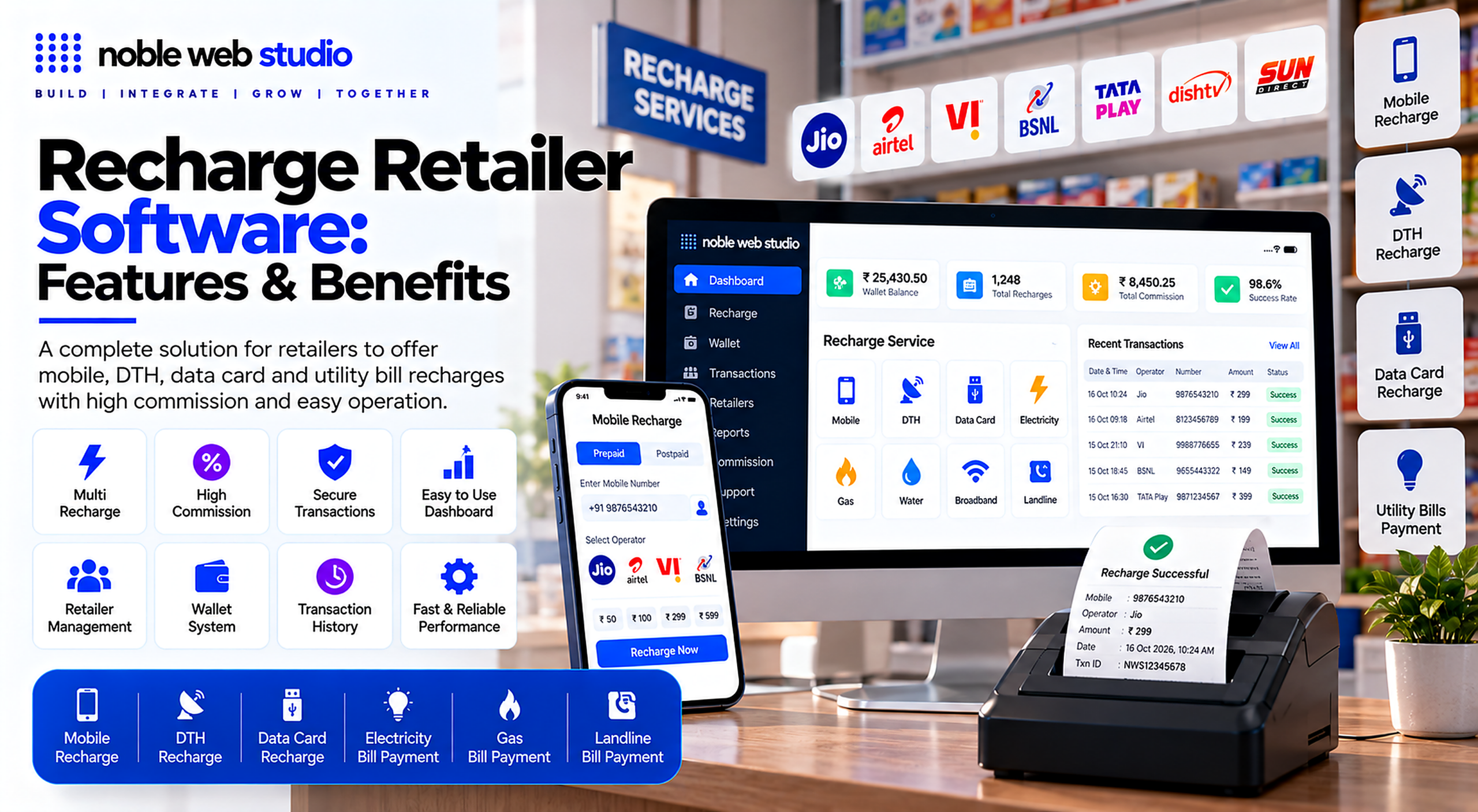
Recharge Retailer Software helps retailers, distributors, and entrepreneurs manage mobile recharge transactions and build a digital services business through a centralized platform. Whether you are starting a new recharge business or expanding an existing retailer network, the right recharge software can simplify daily operations, improve transaction tracking, and help you manage your services more efficiently. With Noble Web Studio, businesses can explore ready-made B2B Mobile Recharge Software designed to support retailer and distributor-based business models.
Recharge Retailer Software is a digital recharge platform that allows retailers to process supported mobile recharges and manage business activities through a web portal or compatible application. Depending on the selected package and available integrations, it may support prepaid mobile recharge, DTH recharge, FASTag, and other digital services. Businesses should verify the availability of each service before selecting a software package.
Recharge retailer software is a digital platform or web and mobile application that lets shopkeepers and agents sell prepaid mobile recharges, DTH connections, utility bill payments, and FASTag services to customers.
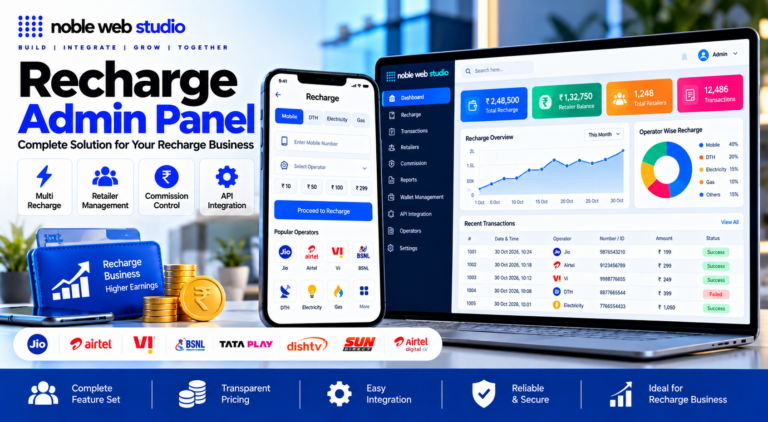
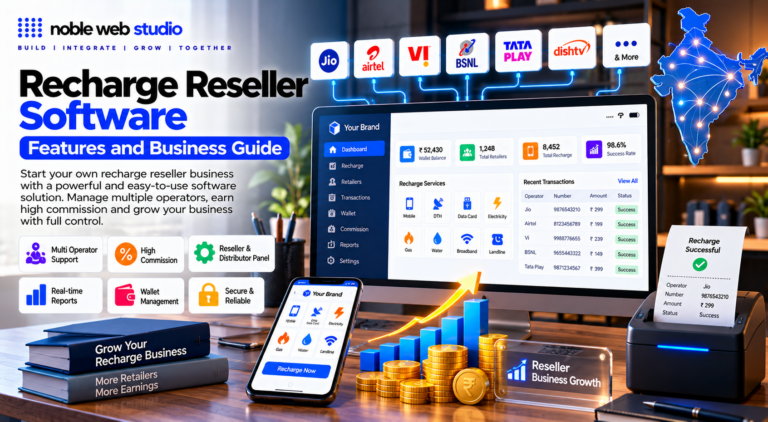
A well-designed recharge platform can include a retailer dashboard, recharge admin panel, distributor management, commission configuration, transaction history, recharge status tracking, balance management, and business reports. These features help retailers monitor transactions, review earnings, identify unsuccessful requests, and manage day-to-day activities from one place.
Before investing in Recharge Retailer Software, consider the features that matter to your business. Check the supported recharge operators, transaction processing workflow, commission structure, security controls, recharge API integration options, mobile accessibility, technical support, setup charges, and ongoing maintenance costs. If you plan to expand into BBPS, AEPS, money transfer, or utility bill payments, confirm that the required services are supported by the selected version and its authorized integration partners.
Noble Web Studio develops ready-made B2B Mobile Recharge Software for businesses that want to manage retailers, distributors, recharge transactions, and related digital services. Whether you are an entrepreneur, distributor, fintech startup, or digital service provider, choosing a recharge platform that fits your business structure can help you prepare for future expansion.
Ready to explore a solution for your business? Visit Noble Web Studio to discuss your Recharge Retailer Software requirements.
In this guide, you will learn about Recharge Retailer Software features, business benefits, retailer and distributor management, commission handling, integrations, pricing considerations, and the key factors to check before choosing a Noble web studio. This information will help you compare available options and make a more informed decision for your recharge business.
What Is Recharge Retailer Software?
Recharge retailer software is a digital application or web portal that allows shop owners to process customer recharges and utility payments from a single interface.
How Recharge Retailer Software Work
Recharge retailer software is a digital platform that lets shopkeepers, small business owners, and digital service providers process instant mobile, DTH, data pack, and utility bill recharges through a smartphone app or web portal.
How It Works
- Wallet-Based System: Retailers load money into a digital wallet in advance (via bank transfer, payment gateway, or from a distributor).
- Customer Request Entry: A customer visits the shop and asks for a recharge (e.g., Jio, Airtel, Vi, Tata Play). The retailer enters the mobile/account number, operator, and amount into the software.
- Instant Processing & API Routing: The mobile recharge software checks the retailer’s wallet balance, applies business rules, and routes the request through a backend API (Application Programming Interface) to the telecom operator or vendor.
- Real-Time Confirmation & Commission: The recharge completes in seconds. The recharge software cost is deducted from the retailer’s wallet, and an instant commission or margin is credited back to the wallet.
- Reporting & Reconciliation: Every transaction generates a digital receipt, SMS/WhatsApp confirmation, and a live ledger entry for daily tracking and profit analysis.
Recharge Retailer Software Cost in India
Recharge retailer software and white label recharge platform cost in India generally range from free/low-cost (using an existing distributor’s app) to ₹7,500 – ₹75,000+ for dedicated white-label or multi-level administration panels.
1. Retailer-Level Cost (Joining an Existing Network)
- Software Cost: ₹0 to ₹2,000 (one-time or free registration).
- Model: Individual retailers often use a master distributor’s or company’s app/web portal or operator-native apps.
- Requirements: Smartphone, internet connection, basic KYC documents (PAN, Aadhaar), and an initial wallet balance load (typically ₹1,000 to ₹5,000+).
- Ongoing/Hidden Fees: Usually zero monthly software fees, though wallet top-ups and commission splits are managed by the upstream distributor.
2. White-Label / Independent B2B Software Cost (Owning the Platform)
If you want to run your own multi-level network (with your own retailers, distributors, and branding), the pricing shifts to software licensing or subscription packages:
One-Time Purchase / White-Label Packages:
- Basic / Starter Plans: ₹5,000 to ₹10,000 (Includes branded website, basic Android app, mobile recharge admin panel, and limited API/BBPS integrations like Noble web studio).
- Standard / Mid-Range Plans: ₹11,000 to ₹25,000 (Adds multiple recharge API, priority support, utility services like FASTag, LIC, and gas/electricity bill payments).
- Advanced / Master Reseller Packages: ₹35,000 to ₹75,000+ (Unlimited APIs, white-label apps, payment gateways, and custom branding).
Monthly / Subscription Models:
- Noble web studio provide B2B recharge software starting around ₹1,499 to ₹1,999+ per month, or higher tiers scaling up based on active user counts and server/maintenance loads.
3. Additional & Variable Costs
- Recharge API Integration: ₹1,000 to ₹5,000 (one-time) or bundled into the package for connecting mobile and DTH operators.
- Payment Gateway Setup: ₹0 to ₹5,000+ (one-time KYC and merchant activation, plus transaction/gateway charges).
- Server & Maintenance: Sometimes free in one-time plans for the first year, or billed as an annual/monthly maintenance fee (AMF) after year one.
- Working Capital / Wallet Balance: You must maintain a float/wallet balance (often ₹6,000 to ₹10,000+ minimum) with the Noble web studio to ensure uninterrupted recharges.
Typical Retailer Commissions (Margins)
- Mobile Recharge: 2% to 4% (e.g., Jio base margin plus promotional offers).
- DTH Recharge: 2% to 7%.
- Utility Bill Payments (BBPS): Flat ₹5 to ₹20 per transaction or small percentage depending on the bill type.
Essential Features of Recharge Retailer Software
Recharge retailer software turns local shops into digital service hubs by managing prepaid recharges, utility bills, and financial transactions from a single platform.
Core Features for Retailers
- Simple Recharge Interface: Allows you to quickly select an operator, enter customer details, and submit requests without extra screens.
- Multi-Service & Operator Support: Covers prepaid/postpaid mobile recharges, DTH, data cards, electricity, gas, water, FASTag, and BBPS bill payments.
- Wallet, Fund Requests & Ledger: Tracks prepaid business balances, instant fund requests, and complete digital ledgers for reconciliation.
- Transaction History & Status Tracking: Provides real-time updates and logs for successful, pending, or failed transactions to handle customer inquiries.
- Automated Commissions: Calculates and credits margins per transaction based on operator and service slabs.
- Multi-API & Switching Support: Connects multiple telecom and payment APIs with automatic or manual switching to prevent downtime during slow routes.
- Role-Based Access & Hierarchy: Supports distinct panels for Admins, Master Distributors, Distributors, and Retailers.
- Reporting & Analytics: Generates daily summary reports, downloadable ledgers, and user-wise activity logs.
Benefits of Recharge Retailer Software for Small Businesses
Recharge retailer software provides small businesses with an all-in-one digital platform to process mobile recharges, DTH top-ups, and utility bill payments directly from a single dashboard.
Key Benefits for Small Businesses
- Additional Revenue & Commissions: Earn a small commission on every transaction. For example, mobile recharges typically yield ₹2 to ₹5 per transaction, DTH yields ₹3 to ₹6, and utility bills yield ₹5 to ₹10. High daily volumes can add significant monthly income with zero physical inventory.
- Multi-Operator Support: Handle all major telecom carriers, DTH providers, and utility billers through a single interface instead of managing separate scratch cards, paper vouchers, or multiple vendor accounts.
- Streamlined & Fast Operations: Eliminate manual processing and long queues. Instant confirmation and high success rates (often around 99%) build customer trust and repeat visits.
- Improved Record Keeping: Maintain searchable, automated transaction histories and digital ledgers to simplify daily cash reconciliation and track earnings.
- Low Initial Investment: Run the system using existing smartphones, computers, or web portals without needing heavy hardware investments.
- Customer Retention: Attract walk-in traffic by acting as a one-stop neighborhood payment hub for phones, electricity, water, and gas.
Recharge Retailer Software for Different Business Models
Choosing the right recharge retailer software depends directly on your business model, scale, and whether you sell directly to consumers or manage a network of agents.
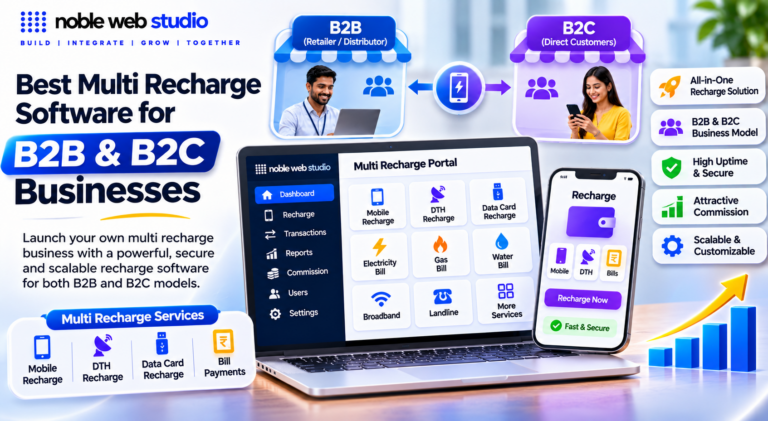
1. Direct Retail Shop (B2C Counter Model)
- Best for: Local kirana stores, mobile repair shops, and small neighborhood counters adding digital services.
- How it works: You process mobile, DTH, or utility recharges over-the-counter on behalf of walk-in customers.
- Key Software Features:
- Fast, single-click recharge submission and automated SMS/digital receipts.
- Simple prepaid wallet top-up via UPI, net banking, or IMPS.
- Straightforward daily transaction logs and instant commission tracking.
2. Multi-Tier Distributor & Retailer Network (B2B Model)
- Best for: Wholesalers, regional service aggregators, and entrepreneurs building a chain of sub-retailers.
- How it works: Operates on a multi-tier hierarchy (Admin → Master Distributor → Distributor → Retailer) where commissions spread across each level of the network.
- Key Software Features:
- Role-based access control so sub-retailers only see their own panels.
- Automated fund allocation, balance tracking, and customizable commission margins for lower tiers.
- White-label branding options (custom domain and logo).
3. Direct-to-Consumer Digital Platform (B2B2C / Web & App Model)
- Best for: Online service portals, fintech startups, or brands wanting customers to self-serve.
- How it works: End-users log into a branded web portal or mobile app to execute their own recharges and bill payments.
- Key Software Features:
- Integrated multi-recharge and utility APIs (BBPS, DTH, FASTag, and AEPS) with automatic operator switching.
- Built-in promotional and cashback modules to retain digital users.
- Automated bill-fetching and live operator-plan lookup tools.
Quick Comparison
| Business Model | Target User | Structure | Primary Revenue Source |
|---|---|---|---|
| Retail Counter (B2C) | Walk-in local customers | Single-tier (Retailer → Customer) | Per-transaction retail commission |
| Distributor Network (B2B) | Sub-distributors & retailers | Multi-tier hierarchy | Network commission spread + volume margins |
| Digital Portal (B2C/API) | Online end-users | Automated self-service platform | High-volume micro-margins |
How to Choose the Right Recharge Retailer Software
Choosing the right recharge retailer software requires evaluating core operational features, platform capabilities, and vendor reliability.
Key Factors to Evaluate
- Service Range & Multi-Operator Support: Ensure the platform supports all major prepaid mobile operators, DTH services, utility bill payments, and fastag recharges from a single wallet.
- Commission Slabs & Wallet Control: Look for transparent, customizable multi-level commission structures and full control over retailer/distributor margins.
- Platform & Accessibility: Decide whether you need a simple mobile app for single-shop operations or a complete web dashboard with multi-user roles (admin, manager, retailer).
- Reliability & API Uptime: Check the stability of the recharge APIs to minimize failed requests, delayed credit issues, and balance mismatches.
- Customer Support & Escalation: Pick a vendor offering 24/7 or responsive human support to resolve transaction failures and technical downtime quickly.
- Pricing Transparency: Avoid hidden platform fees; choose clear, competitive pricing structures or one-time/subscription setups that fit your scale.
- White-Label & Branding Options: If you plan to expand as a master distributor or brand your own app, look for white-label solutions.
Common Problems Recharge Retailers Should Understand
Running a mobile recharge business comes with daily operational and technical challenges. The core problems recharge retailers must understand involve low profit margins, multi-operator software failures, transaction delays, and strict regulatory compliance.
Understanding these challenges allows retailers to set up backups, protect their capital, and keep their customers happy.
Financial & Margin Issues
- Razor-Thin Commission Margins: Standard prepaid recharges often yield tiny commission percentages (usually 1.5% to 3.5%). High sales volume is mandatory to cover basic operational overhead.
- Capital Lockup in Multi-Wallets: Retailers using distinct wallets for different operators (Airtel, Jio, Vi) often find their cash trapped in one operator’s balance while another runs empty.
- Hidden Platform Fees: Some third-party business-to-business (B2B) portals quietly deduct processing fees, service charges, or monthly maintenance costs that eat directly into profits.
Technical & Software Glitches
- Pending Transactions: API server timeouts can freeze a transaction in a “Pending” state. The retailer’s balance is deducted, but the customer does not receive the talktime instantly, sparking friction.
- Server Downtime during Peak Hours: Multi-recharge portal servers frequently crash or slow down during high-traffic times (like evening rush hours or major holidays).
- Delayed Refund Cycles: When a recharge fails, getting the deducted money back into the agent’s wallet can take anywhere from 24 hours to several business days.
Customer & Operational Friction
- Wrong Number Entries: Customers or agents frequently mistype a single digit. Retrieving money sent to an incorrect, active mobile number is nearly impossible.
- Plan Mismatch & Expiry: Telecom operators constantly change their tariff plans and data benefits. If a retailer recharges using an outdated plan amount, the transaction may fail or activate an unwanted package.
- Tough Local Competition: Because the barrier to entry is so low, neighborhood grocery stores, pharmacies, and digital payment apps (like Paytm, PhonePe, or Google Pay) compete heavily for the same foot traffic.
Security & Compliance Hurdles
- Strict KYC & Verification Rules: Telecom regulatory bodies enforce stringent Know Your Customer (KYC) guidelines. Minor documentation errors during SIM activation can lead to heavy penalties or agent portal suspension.
- Phishing & Wallet Fraud: Retailers are prime targets for social engineering scams. Fraudsters posing as customer care executives often trick agents into sharing OTPs or passwords, wiping out their entire wallet balance.
Mobile Recharge App or Recharge Web Portal: Which Is Better?
Whether a mobile recharge app or a recharge web portal is better depends on whether you are an end-consumer/individual retailer or a business/distributor managing a network.
Mobile Recharge App
- Best for: Individual consumers, personal multi-number top-ups, or single-shop retail owners (like Kirana stores) handling basic walk-in recharges.
Pros:
- Convenience & Speed: Faster login using biometrics, one-tap UPI payments, and instant push notifications.
- Portability: Works anywhere from your smartphone without needing a computer or desktop setup.
- Offers & Cashback: Consumer recharge apps frequently bundle daily scratch cards, promo codes, and wallet offers.
Cons:
- Limited Management: Harder to view heavy data spreadsheets, manage multiple staff members, or handle multi-tier downline networks.
- Fixed Commissions: If used for business/retail, you are locked into standard, flat commission rates.
Recharge Web Portal
- Best for: Desktop-based shop counters, wholesale distributors, and business owners managing multi-level agent networks or high monthly volumes.
Pros:
- Screen Space & Reporting: Large displays make it easier to view detailed ledger histories, download tax/sales reports, and manage accounts.
- Multi-Tier Control: Web-based B2B software and panels let you create custom commission slabs, control sub-distributors, and switch operator APIs.
- Stability: Less prone to battery drain, minor OS compatibility bugs, or storage issues compared to mobile apps.
Cons:
- Less Portable: Tied to a desktop, laptop, or fixed terminal.
- Setup/Learning Curve: Requires basic computer proficiency compared to a tap-and-go mobile app.
Security Tips for Recharge Retailers
Mobile and DTH recharge retailers face unique digital and physical security risks, from credential theft to point-of-sale fraud and unsafe cash handling.
Account and Credential Security
- Protect Login Details: Never share your retailer portal username, password, or PIN with unauthorized staff, agents, or third parties.
- Enable Multi-Factor Authentication (MFA): Use strong passwords combined with OTP or biometric verification where supported by your portal.
- Sign Out After Use: Always log out of your retailer app or web portal when using shared computers, public terminals, or multi-user devices.
- Use Official Channels Only: Access your recharge software and customer support exclusively through official apps, portals, or verified helpline numbers.
Transaction and Customer Verification
- Verify Details Before Submitting: Double-check the mobile number, operator, circle, and recharge amount on the screen before confirming any transaction.
- Never Share UPI or Payment Credentials: Do not share your personal or merchant UPI PIN, banking OTP, or wallet credentials with anyone.
- Keep Records and Receipts: Save transaction reference IDs, digital logs, or physical slips to help reconcile accounts or track down failed recharges.
- Report Suspicious Activity Promptly: Vendor immediately if you notice unauthorized balance deductions or strange account access. For digital payment frauds in India, call the national cybercrime helpline at 1930 or report online via sancharsaathi.gov.in.
Store and Device Safety
- Secure Your Hardware: Lock your shop’s mobile phones, tablets, or point-of-sale (POS) computers with a strong screen lock, PIN, or fingerprint scanner.
- Avoid Public Wi-Fi for Transactions: Do not process store or customer recharges over open or public Wi-Fi networks where data can be intercepted; use a secure private connection or mobile data.
- Manage Cash and Physical Security: Install basic surveillance cameras, keep good lighting around the counter, and follow safe cash-handling habits if you accept physical cash for recharges.
How Recharge Retailer Software Supports Business Growth
Recharge retailer software supports business growth by automating transactions, centralizing multi-operator services, and unlocking new revenue streams from a single digital dashboard.
Key Ways It Drives Growth
- Faster Transaction Processing: Speeds up mobile recharges, DTH, and utility bill payments (such as BBPS) by up to 40%, reducing customer wait times and building repeat business.
- Automated Commission & Wallet Management: Credits commissions automatically per transaction in real time and tracks retailer/distributor account balances transparently.
- Error Reduction: Replaces manual typing with automated API routing and multi-operator switching to lower transaction failure rates.
- Service Expansion (Beyond Basic Recharge): Allows shops to expand into DTH, electricity, gas, water, broadband, and FASTag payments to attract more foot traffic.
- Network & Agent Scalability: Empowers master distributors and retailers to onboard sub-agents, assign login panels, and scale operations under white-label branding.
- Real-Time Analytics & Reporting: Provides central dashboards to monitor daily sales, check ledger records, and evaluate profit margins.
Noble Web Studio One of The the Right Recharge Retailer Software Provider
Noble Web Studio one of the right recharge retailer software provider requires evaluating technical reliability, financial transparency, and operational features.
Key Factors to Evaluate
- API Reliability & Uptime: High transaction success rates and minimal downtime are critical. Frequent failures or slow responses cause customer churn and lost revenue. Look for Noble web studio with strong uptime commitments and dependable server architecture.
- Commission Transparency & Payouts: Evaluate how commissions and margins are settled for mobile, DTH, and data pack recharges. Ensure there are no hidden deduction clauses or delayed settlements that eat into your profit margins.
- Multi-Service Support: Choose a platform that supports multi-operator mobile recharges, DTH, and broader utility services like Bharat Bill Payment System (BBPS), Aadhaar Enabled Payment System (AePS), and Domestic Money Transfer (DMT) under a single login if you plan to expand.
- White-Label & Admin Controls: If you plan to build your own network of sub-distributors or retailers rather than acting as a standalone shop, a white-label admin panel allows you to run the software under your own brand and domain.
- Pricing & Hidden Fees: Scrutinize setup costs, licensing fees, API integration fees, and ongoing maintenance charges. Transparent pricing models prevent unexpected expenses.
- Customer Support: Ensure technical support is accessible (ideally 24/7) to resolve transaction timeouts, wallet issues, or operator-side API glitches immediately.
- Scalability & Security: Verify that the system handles growing transaction volumes smoothly and features robust data protection, user permissions, and secure transaction tracking.
Recharge Retailer Software with Noble Web Studio
Choosing Noble Web Studio for recharge retailer software provides an all-in-one digital platform designed for high margins, multi-service operations, and brand customization.
Key Reasons to Choose Noble Web Studio
- All-in-One Multi-Service Integration: Manage mobile top-ups (Jio, Airtel, Vi), DTH connections, electricity, gas, water bills, and FASTag from a single unified wallet and dashboard.
- High-Margin Commission Structures: Earn automated, percentage-based cash commissions or profit margins on every transaction processed for walk-in customers.
- White-Label & Custom Branding: Launch the platform under your own company name, custom domain, brand logo, and dedicated Android recharge app.
- Multi-Level User & Network Hierarchy: Easily build, manage, and scale your own network of master distributors, distributors, and local retailers.
- Seamless API & Payment Integration: Connect smoothly with multi-operator telecom APIs and payment gateways (UPI, cards) for 24/7 instant processing.
- Real-Time Tracking & Reporting: Monitor live transaction statuses (success, failure, pending) to minimize downtime alongside detailed financial and wallet reports.
- 24/7 Technical Support: Access round-the-clock technical assistance and secure, reliable system architecture.
Conclusion
Choosing the right Recharge Retailer Software can help you build a more organized and scalable mobile recharge business. From processing recharge transactions to managing retailers, tracking commissions, and reviewing transaction reports, the right platform can simplify everyday operations and give you better control over your business activities.
Before selecting a Noble web studio, compare essential features such as the retailer and distributor panel, admin dashboard, transaction-status tracking, commission management, supported recharge operators, API integration, security, technical support, and total setup cost. If you want to offer additional services such as DTH recharge, FASTag, BBPS, AEPS, money transfer, or utility bill payments, confirm that these services are available through your selected package and supported integrations.
Recharge retailer software lets shop owners process prepaid mobile, DTH, utility bill payments, and financial services from a single digital wallet or web-and-app portal.
Noble Web Studio develops ready-made B2B Mobile Recharge Software for businesses that want to manage retailer networks, distributors, recharge transactions, and related digital services through a structured platform. Whether you are launching a new recharge business or expanding an existing operation, selecting software that matches your requirements can help you plan for sustainable growth.
If you are looking for Recharge Retailer Software with Noble Web Studio, discuss your business model, required features, integration needs, and budget with the team before making your decision.
Ready to take the next step? Contact Noble Web Studio to discuss your Recharge Retailer Software requirements and explore a suitable solution for your business.