Ankit
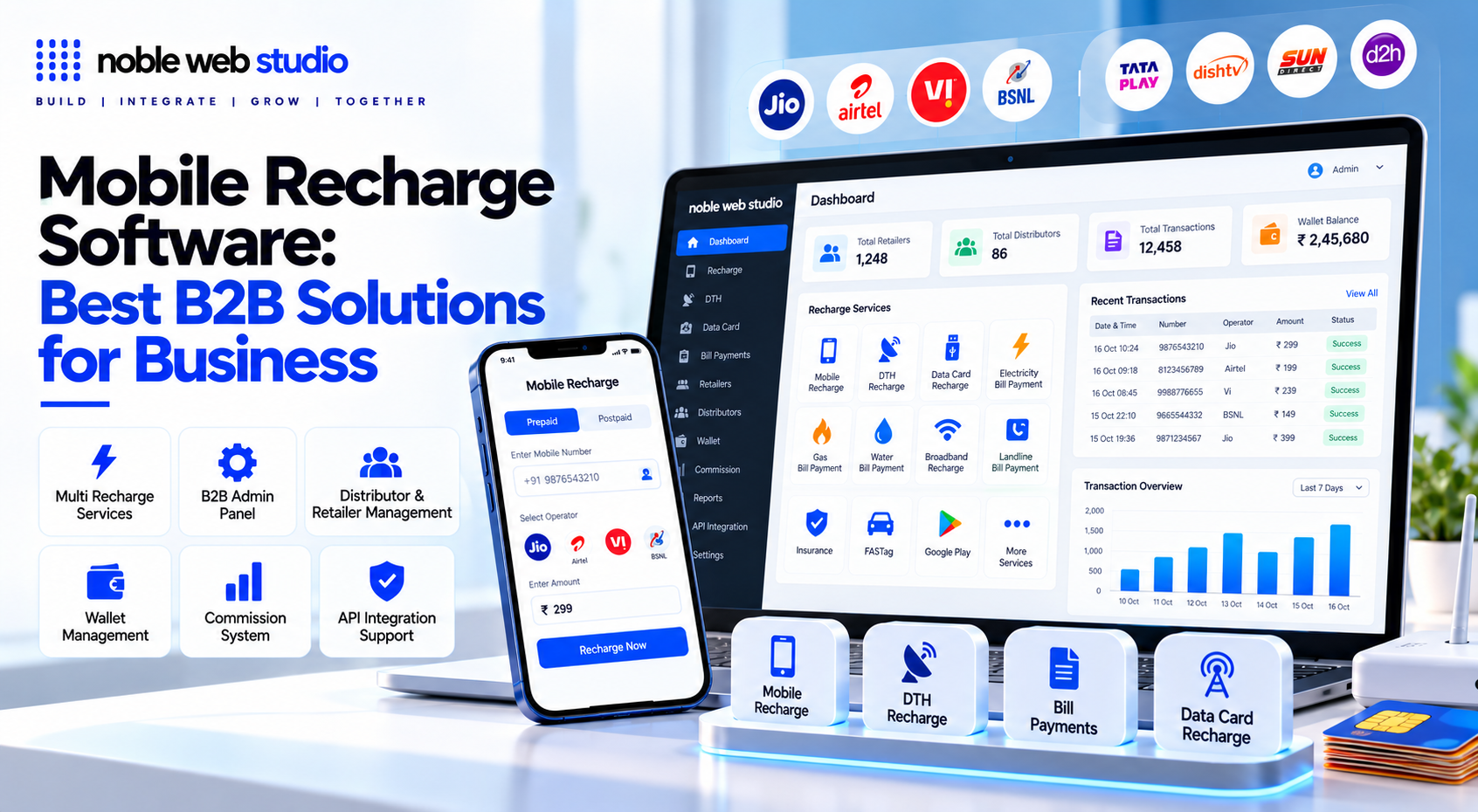
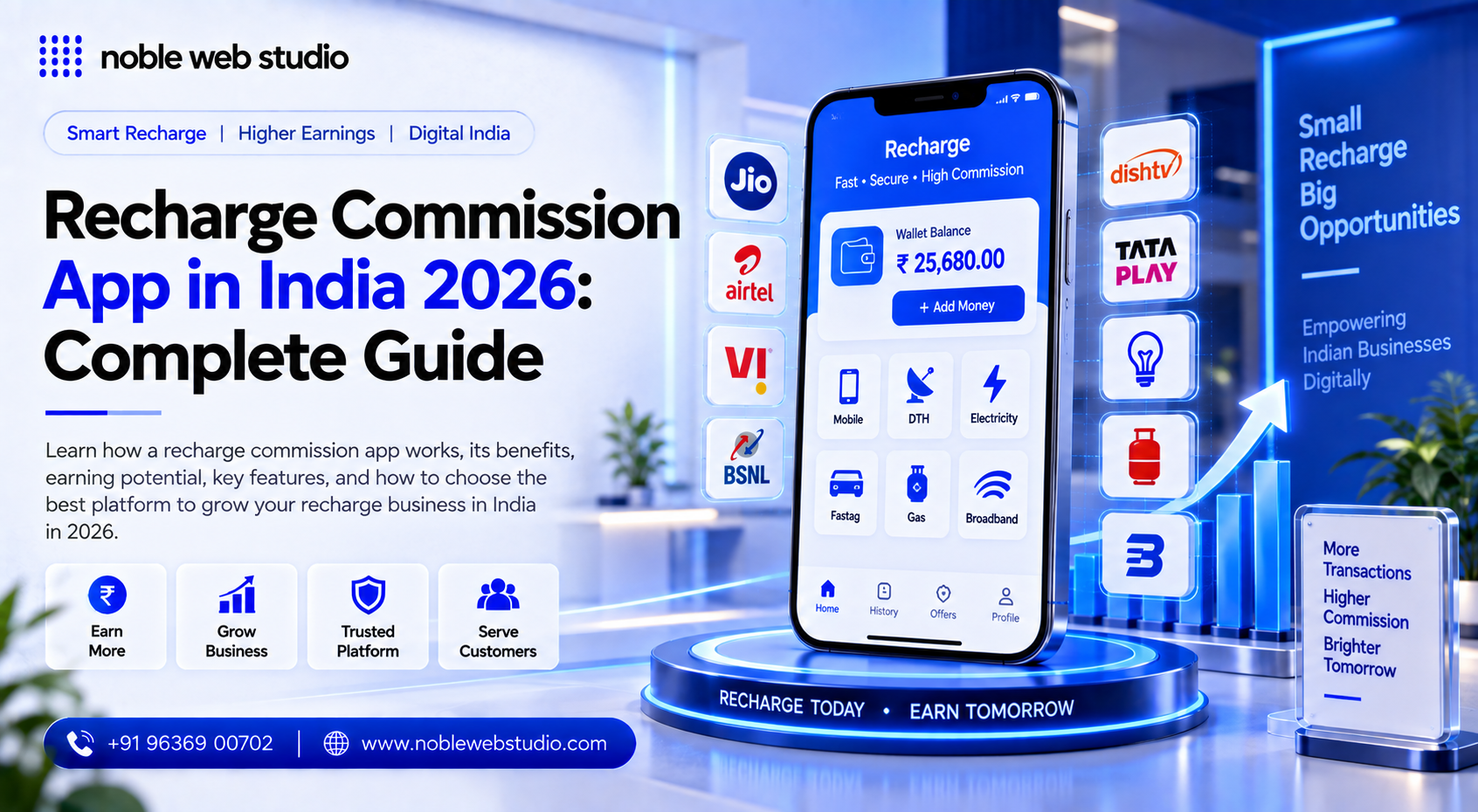
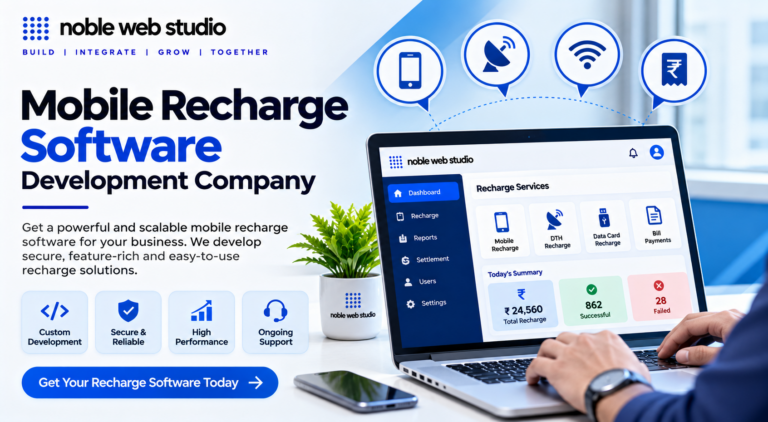
Starting a mobile recharge business requires more than a website or an app. You need a reliable way to process recharge requests, connect with supported operators, manage retailer accounts, track transactions, and monitor commissions. Mobile Recharge Software brings these essential operations together in one platform, helping businesses manage recharge services more efficiently.
With a suitable mobile recharge software solution, businesses can offer prepaid mobile recharge, DTH recharge, and other supported bill payment services through a website, mobile application, or retailer portal. Depending on the software configuration, features may include a multi-operator recharge API, admin dashboard, retailer and distributor management, wallet management, commission tracking, transaction reports, and payment gateway integration.
Mobile recharge software allows businesses to run a white-label recharge portal, manage distributor-retailer networks, and integrate multi-operator API services.
For entrepreneurs planning to launch their own recharge brand, B2B distributors building a retailer network, or fintech companies expanding their digital services, choosing the right software is an important business decision. The platform should fit your business model, support the integrations you need, provide clear transaction status updates, and make it easier to manage daily operations as your network grows.
Noble Web Studio helps businesses explore software development and integration requirements for recharge platforms. Whether you are planning a B2B recharge portal, a white-label solution, or a custom mobile recharge application, define your required features, operator connectivity, budget, and support expectations before selecting a solution.
In this guide, you will learn how mobile recharge software works, which features matter most, how API integration fits into the system, what affects development costs, and how to evaluate a solution for your business.
What is a Mobile Recharge Software
Mobile recharge software is a digital platform that automates the process of topping up prepaid and postpaid mobile balances, DTH services, and utility bills through direct API connections with telecom operators and payment gateways.
Mobile Recharge Software Work
Mobile recharge software is a digital platform that automates prepaid and postpaid mobile, DTH, and utility bill payments by connecting users, retailers, and distributors through a central admin panel and telecom operator APIs or LAPU hardware. You can explore turnkey solutions like Noble Web Studio to launch a branded portal.
How Mobile Recharge Software Works
- User Request: A customer or retailer enters the mobile number, operator, and amount on an app or web portal.
- Wallet & Commission Check: The system verifies the user’s wallet balance, calculates the tier-based commission (Admin, Master Distributor, Distributor, Retailer), and deducts funds.
- API / LAPU Routing: The software sends the request to the telecom operator (such as Jio, Airtel, VI, or BSNL) via an integrated API or local SIM-box (LAPU).
- Operator Confirmation: The operator processes the recharge and sends a real-time status update back to the software.
- Instant Settlement: If successful, the recharge confirms immediately; if it fails, the system triggers an instant wallet refund.
Types of Mobile Recharge Software
Mobile recharge software is split into B2B reseller platforms, B2C consumer apps, multi-recharge systems, and API integration solutions. These systems handle prepaid/postpaid mobile top-ups, DTH bills, and utility payments through automated operator routing and digital wallets.
Core Types of Mobile Recharge Software
- B2B Reseller & Multi-Level Software: Built for master distributors, distributors, and retailers. It includes commission management, wallet-to-wallet transfers, downline tracking, and admin panels.
- B2C Consumer Mobile Apps: Designed for direct end-users to top up personal numbers, pay DTH bills, or use BBPS (Bharat Bill Payment System) via UPI, cards, or digital wallets.
- API Integration Software: A technical bridge that allows third-party websites or apps to plug into telecom operator networks without building a custom backend from scratch.
- White-Label Recharge Portals: Turnkey software sold with custom branding, domain hosting, and automated multi-operator switching for startups launching their own recharge brand.
- Retail & POS Recharge Terminals: Cloud or web-based software meant for local brick-and-mortar stores, convenience shops, and multi-service kiosks.
Mobile Recharge Services Supported by the Software
Multi-recharge software platforms typically support prepaid and postpaid mobile recharges (Jio, Airtel, Vi, BSNL), DTH recharges (Tata Play, Sun Direct, Airtel TV), data card/broadband recharges, and Bharat Bill Payment System (BBPS) utility payments like electricity, water, gas, and broadband bills.
Core Telecom & TV Services
- Mobile Recharge: Prepaid, Postpaid, and Data (3G/4G/5G) packages across major Indian telecom operators.
- DTH Recharge: Direct-to-home satellite TV provider top-ups.
- Data Cards & Broadband: Portable internet dongle and fiber-optic broadband renewals.
Utility & Bill Payments (BBPS)
- Electricity Bills: State and private power distribution company bill desks.
- Water & Gas Bills: Municipal water supply and piped natural gas (PNG) or LPG cylinder bookings.
- Postpaid & Landline: Monthly mobile postpaid and fixed-line telephone bills.
Financial & Value-Added Services
- FASTag: Highway toll tag recharges.
- AEPS & Micro-ATM: Aadhaar-enabled cash withdrawals, balance inquiries, and mini-statements.
- Domestic Money Transfer (DMT): IMPS/NEFT peer-to-peer bank transfers.
- Digital Vouchers & Cards: Google Play gift codes, insurance premium payments, municipal taxes, and PAN card registration services.
Documents Required for Mobile Recharge Software
To launch or purchase a mobile recharge software or white-label B2B/B2C platform in India, you need core KYC, tax, and business setup documents. Requirements typically include:
Identity & Address Proof (KYC)
- Aadhaar Card: Mandatory for personal or proprietor identity and address verification.
- PAN Card: Essential for individual PAN or business PAN compliance, settlements, and tax filings.
- Secondary Address Proof: Utility bill (electricity or water, max 2 months old) or a rent/lease agreement if your Aadhaar address differs from your current operating location.
Business & Registration Proof
- Business Registration: MSME / Udyam Certificate, Shop & Establishment Act Certificate, or company incorporation documents (Partnership Deed, LLP Agreement, or Certificate of Incorporation/MoA/AoA for Private Limited).
- GST Certificate: Compulsory if your annual turnover exceeds ₹20 lakh (or ₹10 lakh in special category states), or voluntarily required if dealing with specific B2B partners.
- Business PAN: Required if operating as a registered firm, partnership, or company.
Financial & Technical Details
- Bank Account Verification: A cancelled cheque or recent bank statement matching the exact name of the proprietor or registered business entity for wallet loading and commission payouts.
- Branding & Domain Assets: Your chosen domain name, company logo, and a Google Play Store Developer Account (if publishing a branded white-label Android app).
Who Can Use Mobile Recharge Software
Mobile recharge software can be used by software admins/owners, master distributors, distributors, local retail shop owners/agents, end-customers (B2C), and corporate businesses managing employee plans.
User Hierarchy & Roles
- Admin / Platform Owners: Individuals or companies that own and operate the recharge software, connect with telecom/utility APIs, manage wallets, set commission structures, and white-label the platform.
- Master Distributors & Distributors: Middle-tier network operators who manage, onboard, and assign commission slabs to a downline of local distributors and retail agents.
- Retailers & Local Agents: Small shop owners, kirana stores, or local digital service providers who process prepaid/postpaid mobile, DTH, and utility bill payments for walk-in customers to earn commission.
- End-Customers (B2C Users): Individual consumers who use a branded customer-facing app or website to top up their own phones, DTH, or pay personal utility bills.
- Corporate & Enterprise Businesses: Organizations that use business-grade recharge portals to bulk-manage or automate employee mobile plans, office DTH/broadband connections, and facility utility expenses.
Why Use Mobile Recharge Software
Mobile recharge software automates and centralizes prepaid mobile, DTH, and utility payments through a single digital platform. For consumers, it offers 24/7 instant top-ups, while for small businesses and retailers, it provides multi-operator support, automated commission tracking, and higher customer retention.
Key Benefits for Businesses & Retailers
- Multi-Operator Support: Manage recharges for all major telecom operators (such as Jio, Airtel, Vi, and BSNL), DTH providers, and utility bills from one dashboard.
- Instant Commissions: Earn real-time margins and track wallet balances automatically with built-in commission management.
- 24/7 Operations: Process automated transactions round the clock without manual intervention or downtime.
- Business Growth: Expand service offerings to attract more foot traffic, boost transaction volumes, and build a local reseller or retailer network.
Key Benefits for End Users
- Speed & Convenience: Top up mobile credits or pay bills instantly from a smartphone or web app without visiting physical stores.
- Secure Payments: Integrated payment gateways support UPI, digital wallets, credit/debit cards, and net banking with encrypted data protection.
- Transaction Tracking: View complete recharge histories, active data packs, and instant receipt notifications.
Role of Mobile Recharge Software
Mobile recharge software automates and manages prepaid and postpaid mobile, DTH, data card, and utility bill payments through a single digital platform. It acts as a real-time mediator between end-users or retailers and telecom operators via APIs, handling multi-operator transactions, instant refunds, and commission distribution.
Core Functions
- Multi-Operator Integration: Connects to major telecom and DTH providers (such as Jio, Airtel, and Vi) through a unified system.
- Automated Processing: Executes instant top-ups, handles failed transaction refunds automatically, and sends real-time SMS notifications.
- Commission & Wallet Management: Tracks earnings, sets custom commission slabs for distributors and retail agents, and manages single-wallet balances.
- Bill & Utility Payments: Supports broader financial services like electricity, water, and gas bill payments via integration with systems like BBPS.
Business and Retail Impact
- B2B & White-Label Solutions: Enables local shopkeepers and entrepreneurs to run branded recharge businesses without building telecom links from scratch.
- Unified Dashboard & Analytics: Provides admins and agents with detailed transaction logs, revenue reports, and growth analytics.
- Operational Efficiency: Eliminates manual errors, cuts down processing time, and operates 24/7 to boost customer retention.
Mobile Recharge Software Growth in India 2026
The mobile recharge software market has entered a high-growth phase, expanding into a multi-billion dollar service layer that bridges telecom infrastructure with localized digital finance. In large developing markets like India, the B2B mobile recharge software ecosystem alone is valued at over ₹75,000 crores ($9B+ USD) and is compounding at a rapid 25% annual growth rate.
This growth curve illustrates how mobile recharge software handles a large volume of transactions. A large portion of transactions flows through thousands of white-label distributors, retail agents, and integrated APIs.
Market Valuation & Growth Trajectory
- Current Market Size (2026): USD 5.65 billion
- Projected Market Size: USD 13.8 billion
- Master Recharge API Market (Historical to Forecast): Grew from USD 10,279.4 million (2017) to USD 16,159.3 million, climbing at a steady 5.2% CAGR.
- Core Drivers: Rapid rise in B2B white-label software, prepaid mobile penetration, DTH expansion, and Bharat Connect (BBPS) integration.
Market Metrics & Economics
- Transaction Share: Over 70% of SIM connections are prepaid, generating billions of recurring transactions.
Commission Margins:
- Mobile Recharges: ~4.2% to 7.2%
- DTH Recharges: ~5.2% to 8.2%
- Bill Payments: ~1.8% to 3.8%
- Development Costs: Pre-built white-label software ranges from ₹50,000 to ₹3,00,000, while custom-built, scalable MVP platforms range from ₹5.0 lakhs to ₹15.0+ lakhs.
Key Catalysts Powering Market Growth
- Evolution into All-in-One Fintech Hubs: Modern software platforms no longer support just basic talk-time recharges. They have expanded via unified Master APIs to offer DTH, electricity, water, gas, FASTag recharges, and AePS (Aadhaar Enabled Payment Services). This diversification secures steady repeat customer traffic.
- The Rural & Sub-Urban Digital Boom: Small retailers act as micro-ATM banking points in areas with sparse banking infrastructure. The software bridges the urban-rural gap, empowering local shopkeepers to become digital financial agents.
- High-Volume B2B Infrastructure: Features like RESTful APIs, bulk CSV recharge engines (handling 10,000+ operations in minutes), volume-based commission structures, and multi-user access control have made white-label setups highly attractive to corporate houses, IT companies, and large distribution networks.
B2B Mobile Recharge Software for Retailers and Distributors
B2B mobile recharge software is a multi-tier digital platform that connects admins, master distributors, distributors, and local retailers to process instant mobile/DTH recharges, BBPS utility bills, and AEPS services. Noble web studio offer turnkey white-label packages starting around ₹4,999 to ₹49,999.
Core Architecture & Hierarchy
- Admin / Owner: Controls multi-operator APIs, global commission structures, switch routing, and system-wide ledgers.
- Master Distributors & Distributors: Create, fund, and manage networks of sub-distributors and local shops.
- Retailers & Agents: Process end-customer mobile, DTH, data card, and utility payments via web or Android apps.
Why Retailers and Business Need Mobile Recharge Software in 2026
Retailers and businesses need mobile recharge software in 2026 to streamline multi-operator recharges, earn high-margin retailer and distributor commissions, adapt to TRAI’s 30-day and voice/SMS plan mandates, and handle BBPS utility, DTH, and enterprise-wide expense management from a single platform.
Key Reasons for Retailers and Businesses in 2026
- Multi-Operator & Unified Access: Process prepaid, postpaid, DTH, and utility bill payments for Noble Web Studio portal or app.
- Compliance with 2026 TRAI Rules: Align with recent telecom directives requiring transparent display of all recharge options, 30-day validity choices, and voice/SMS-only special tariff vouchers.
- Commission & Revenue Diversification: Earn recurring margins on every transaction while expanding into ancillary fintech services like AEPS, money transfers, and insurance via platforms such as Noble web studio.
- White-Label Branding: Build custom-branded agent networks and distributor hierarchies using B2B infrastructure to strengthen local customer loyalty.
- Enterprise Expense Control: For non-retail businesses, tools like Noble web studio deliver role-based access, bulk uploads, GST invoicing, and 25–40% telecom cost reductions for employee and facility recharges.
- Automated Reliability & Security: Avoid failed transactions and missing OTPs with encrypted wallet systems, instant API sync, and built-in auto-refund workflows.
Features Mobile Recharge Software
Mobile recharge software provides digital platforms that automate prepaid/postpaid recharges, DTH, and utility bill payments. Core features include multi-operator support, automated API switching, tiered commission controls, digital wallet management, and real-time transaction reports.
Core Operational Features
- Multi-Operator & Multi-Service Support: Connects major telecom providers (Jio, Airtel, Vi, BSNL) along with DTH, data cards, electricity, gas, broadband, and FASTag services.
- Auto-Operator & Circle Detection: Automatically identifies the telecom operator and geographical circle directly from an entered mobile number.
- Instant Processing & API Switching: Routes transactions through multiple recharge APIs with automatic fallback routing if a Noble web studio experiences delays or downtime.
- Digital Wallet & Fund Management: Manages balance top-ups, retailer fund requests, distributor approvals, and automated wallet-to-wallet transfers.
B2B & White-Label Capabilities
- Multi-Tier Hierarchy: Supports administrative, master distributor, distributor, retailer, and API user roles.
- Custom Commission Slabs: Allows granular configuration of profit margins per operator and per user tier (admin, distributor, retailer).
- White-Label Branding: Enables businesses to deploy custom-branded web portals and native Android apps featuring their own logo and company name.
- Comprehensive Reporting: Generates daily sales, commission breakdowns, ledger logs, and downloadable status reports for month-end reconciliation.
Security & Integration Tools
- Payment Gateway & UPI Integration: Supports UPI, net banking, credit/debit cards, and wallet add-money features (such as Paytm integration).
- IP/MAC & Data Security: Secures endpoints using IP/MAC address whitelisting, data encryption, and instant automated refunds for failed or stuck recharges.
- Developer APIs & Webhooks: Provides JSON-based REST APIs, webhook callbacks, and sandbox testing environments for third-party software integrations.
Benefits Mobile Recharge Software
Mobile recharge software streamlines prepaid mobile, DTH, and utility payments through a single digital platform. For businesses and retailers, it delivers instant multi-operator support, automated commission tracking, real-time wallet management, and higher customer retention.
Key Business and Retailer Benefits
- Multi-Operator Support: Recharge all major telecom providers (Airtel, Jio, Vi, BSNL) and DTH services from one unified wallet without switching apps.
- Automated Commissions: Track, calculate, and disburse margins or cashbacks automatically for sub-retailers and agents.
- All-in-One Services: Expand revenue by offering utility bill payments, data cards, and BBPS services alongside standard mobile top-ups.
- White-Label Branding: Customize the platform with your own business logo, domain name, and custom UI.
- Real-Time Analytics: Access centralized dashboards to monitor daily transaction volumes, success rates, and live wallet balances.
End-User Benefits
- 24/7 Convenience: Top up mobile or DTH plans anytime from a smartphone or web browser.
- Multiple Payment Options: Pay seamlessly using UPI, credit/debit cards, net banking, or digital wallets.
- Error Reduction: Avoid manual entry mistakes and get instant confirmation messages or SMS alerts.
Mobile Recharge Software Development Process
Developing mobile recharge software involves planning, integrating telecom APIs, building tiered user panels, and ensuring real-time transaction security. The entire lifecycle spans from initial market research to deployment and live maintenance.
1. Requirements & Planning
- Define Business Model: Decide between a B2C direct-to-customer app, a B2B white-label network (Admin -> Master Distributor -> Distributor -> Retailer), or an API reseller platform.
- Feature Scope: List required services such as prepaid/postpaid mobile recharges, DTH, FASTag, utility bills (BBPS), and money transfer (DMT).
- Compliance & Legal: Register the Noble web studio, arrange GST compliance, and outline KYC procedures for agent networks.
2. Architecture & Tech Stack Selection
- System Architecture: Design a multi-layered framework separating the front-end interfaces, central wallet ledger, and external API routing layer.
- Tech Stack: Common choices include PHP/Laravel, Node.js, or Java for the backend, MySQL/PostgreSQL for databases, and Flutter or Android (Kotlin) for mobile apps.
- Security Framework: Implement SSL encryption, role-based access control (RBAC), and PIN/OTP transaction safety.
3. Core Module & Panel Development
- Admin Panel: Build a master dashboard to manage user hierarchies, commission slabs, wallet balances, live transaction logs, and Noble web studio switches.
- Distributor & Retailer Portals: Create lower-tier web and mobile interfaces for agents to add funds, accept cash/digital payments, and trigger recharges.
- Customer App / B2C Interface: Design a clean UI for end-users to input numbers, browse operator plans, and pay via UPI or wallets.
4. API Integration & Routing
- Recharge APIs: Integrate multi-operator telecom and utility APIs to handle instant recharges.
- Smart Routing & Failover: Set up auto-failover mechanisms so that if a primary telecom gateway drops or delays, the system switches to a backup API within milliseconds.
- Payment Gateways: Integrate UPI, net banking, and debit/credit card gateways for instant wallet top-ups.
5. Testing & Quality Assurance
- Sandbox Testing: Run mock transactions across all supported telecom operators (Jio, Airtel, Vi, BSNL) and DTH providers.
- Load & Stress Testing: Simulate high-volume concurrent recharges to test server stability and database lock handling.
- Security Audits: Check for SQL injections, cross-site scripting (XSS), and wallet tampering vulnerabilities.
6. Deployment & Maintenance
- Cloud Hosting: Deploy on scalable cloud infrastructure (AWS, DigitalOcean, or Azure) with automated database backups.
- Go-Live & Onboarding: Distribute login credentials to master distributors and train initial retail agents.
- Ongoing Support: Monitor uptime, reconcile daily wallet-to-API ledger sheets, and push regular updates as telecom plans change.
Mobile Recharge Software Cost in India
Mobile recharge software in India generally ranges from ₹1,000 to ₹1,50,000+, varying by the deployment type, such as basic scripts, SaaS subscriptions, or comprehensive white-label solutions.
Cost Structures by Pricing Model
| Pricing Model | Cost Range | What is Typically Included |
|---|---|---|
| Basic / Entry-Level Scripts | ₹1,000 – ₹10,000 | Basic multi-recharge utility for mobile and DTH. |
| Standard & Mid-Range Packages | ₹7,500 – ₹35,000 | Admin web panels, Android apps, and basic recharge API support. |
| Monthly Subscription / SaaS | ₹1,499 – ₹1,999 / month | Retailer/distributor hierarchies, BBPS, AePS, and low-setup options. |
| Advanced White-Label Portals | ₹50,000 – ₹1,50,000+ | Custom Android/iOS apps, payment gateway integration, and multi-API switching. |
Core Cost Components
- Software / License Fee: Ranges from one-time fees (₹7,500–₹35,000) to monthly SaaS models (₹1,499–₹1,999/month).
- APIs and Integrations: Utility and recharge APIs generally cost ₹10,000 to ₹30,000 for setup, while payment gateway integration adds ₹10,000 to ₹50,000.
- Hosting & Apps: Custom apps and annual cloud infrastructure range from ₹10,000 to ₹75,000+.
- Ongoing Expenses: Includes variable costs like SMS alerts (~₹0.20/SMS) and domain/server maintenance.
How Retailers Earn Profit from Mobile Recharge Software
Retailers earn profit from mobile recharge software primarily through per-transaction commissions (typically ranging from 0.2% to 5% depending on the telecom operator and plan) credited directly to a digital wallet upon completing a customer’s top-up. Instead of buying and reselling physical inventory, retailers maintain a prepaid balance in a multi-service portal and keep a margin on every processed transaction.
Core Ways Retailers Profit
- Operator Commissions: Earn a percentage-based or flat commission on every prepaid or postpaid mobile recharge across major networks like Jio, Airtel, Vi, and BSNL.
- DTH & Data Pack Top-Ups: Expand earnings by processing satellite television (e.g., Tata Play, Dish TV) and special internet data pack activations.
- Ancillary Utility Services: Use the same software platform to handle BBPS electricity, water, gas, and broadband bill payments, domestic money transfers (DMT), or Aadhaar-enabled payment system (AePS) cash withdrawals.
- Cross-Selling & Footfall: Attract repeat customers into a physical shop (such as a kirana or general store) to sell physical goods, accessories, or new SIM cards alongside digital services.
- Network Building (Distributors): Scale earnings by operating as a master distributor or sub-dealer through white-label or multi-recharge platforms, earning a slice of the commission generated by downline retailers.
Ramped Monetization & Network Slabs
The financial model scales aggressively depending on the business tier tier:
| Business Tier | Operation Volume / Scale | Typical Commission Spread | Projected Monthly Earnings |
|---|---|---|---|
| Retailer | 80 – 120 Transactions/day | Baseline Operator Slabs | ₹3,000 – ₹8,000 |
| Distributor | 20 – 30 Active Retailers | Network Commission Spread | ₹15,000 – ₹40,000 |
| B2B Master Platform | ₹1 Lakh to ₹2+ Crores/month | 4.2% – 8.2% Volume Tiers | Highly scalable wholesale yields |
Mobile Recharge Software Admin Panel
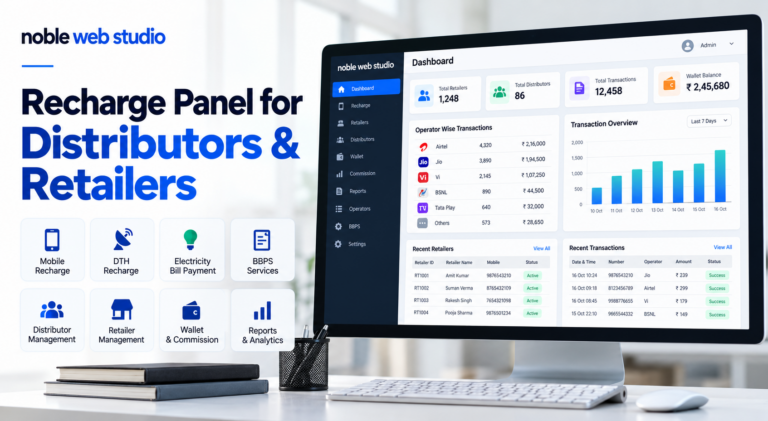
A mobile recharge software admin panel is a centralized web-based control center used to manage multi-operator recharges (mobile, DTH, BBPS), utility bills, and digital wallets. It allows business owners to handle user hierarchies, commissions, API routing, and live transaction reports.
Key Features of the Admin Panel
- User Management: Control multi-tier networks including Master Distributors, Distributors, Retailers, and API users.
- Commission & Slab Setup: Configure custom profit margins, operator-wise commissions, and cashback rules per user level.
- Wallet & Fund Control: Approve manual or UPI fund requests, manage virtual e-wallets, and process credit/debit balances.
- Multi-API Routing: Integrate and switch between multiple recharge providers with automatic failover to ensure high uptime.
- Reports & Analytics: Track live or pending recharges, ledger histories, day books, and automated settlement logs.
- White-Label & Branding: Customize company logos, domain names, app themes, and SMS/WhatsApp notification templates.
Mobile Recharge Software Wallet and Commission Management
Mobile recharge software with a wallet system and commission management allows B2B platforms, distributors, and retailers to process prepaid, postpaid, and DTH recharges while automating tiered earnings. Top white-label solutions include providers like Noble Web Studio.
Core Components
- Digital Wallet System: Holds pooled or individual agent floats. It supports instant top-ups via UPI, net banking, or debit cards, and allows real-time debit for transactions.
- Automated Commission Engine: Calculates and credits margins instantly upon transaction completion. It handles multi-tier structures like Admin, Master Distributor, Distributor, and Retailer.
- Multi-Operator & API Switching: Connects to multiple telecom gateways (Jio, Airtel, Vi, BSNL) with automatic failover routing if a primary API slows down.
- White-Label Branding: Lets businesses run the portal and Android apps under their own brand name, domain, and logo.
Typical Commission Margins in India
| Operator / Service | Average Commission Range |
|---|---|
| BSNL | 4.0% – 5.5% |
| Vodafone Idea (Vi) | 3.0% – 4.0% |
| Reliance Jio | 2.5% – 4.0% |
| Airtel | 1.5% – 2.2% |
| DTH Recharges | 2.0% – 4.5% |
| BBPS / Utility Bills | Flat fee or small percentage |
Mobile Recharge Software Security and Performance
Mobile recharge software relies on end-to-end SSL/TLS encryption, two-factor authentication (2FA), and verified UPI or payment gateway integrations to protect financial data, while real time recharge API processing and multi-operator failovers ensure high performance and uptime.
Security Features
- Data Encryption: Implements transport-layer and database-level encryption to safeguard sensitive customer information and transaction logs.
- Two-Factor Authentication (2FA): Secures mobile recharge admin panel, distributor accounts, and user access via secondary OTP or mobile verification.
- Payment Gateway & UPI Security: Integrates PCI-DSS compliant payment rails, wallets, and UPI handles to prevent data leaks or unauthorized interception.
- Regulatory Compliance: Adheres to national digital payment guidelines and local data protection regulations.
Performance Metrics
- Real-Time API Processing: Uses lightweight REST and JSON architectures for near-instantaneous top-ups and immediate transaction status updates.
- Multi-Operator Failover: Automatically switches traffic between active telecom operator APIs (e.g., Airtel, Jio, BSNL) if a specific server lags or goes down.
- Virtual Wallet Architecture: Eliminates physical inventory or scratch card delays through instant ledger deductions and automated commission calculations.
Mobile Recharge Software Transaction Management
Mobile recharge software transaction management automates the end-to-end lifecycle of prepaid and utility payments handling request routing, live wallet settlements, multi-tier commission splits, and automated mobile recharge service API failovers. Platforms like Noble web studio centralize these workflows for B2B and B2C operators.
Core Transaction Workflow
- Request Initiation: A retailer or consumer enters the phone number, operator, and plan via a web portal, Android recharge commission app, or POS terminal.
- API Routing & Failover: The platform sends the request through a primary telecom or top Recharge API, automatically switching to a backup route if the primary gateway times out.
- Wallet & Ledger Settlement: User digital wallets are debited in real-time, and channel balances are updated across the network.
- Commission Distribution: The software calculates and credits tiered margins instantly to Admins, Master Distributors, Distributors, and Retailers.
- Status & Refunds: Instant callbacks update transaction logs (Success, Pending, or Failed), triggering automatic wallet refunds for dropped or failed requests.
Key Management Modules
| Module | Primary Function |
|---|---|
| Admin Dashboard | Real-time overview of active volume, revenue, operators, and platform health. |
| Wallet & Fund Management | Tracks balance deposits, manual adjustments, credit limits, and ledger histories. |
| API & Route Manager | Configures multi-operator endpoints, priority routing, and auto-switch rules. |
| Recharge History & Logs | Full search, filter, export, and status-tracking tools for every ticket. |
| Automated Commission Engine | Sets tiered margins for mobile, DTH, BBPS, and utility services. |
Mobile Recharge Software vs Recharge API
Mobile Recharge Software is a complete, ready-to-use backend and recharge admin platform used to manage B2B/B2C recharge businesses, retailer hierarchies, wallets, and commission structures. A best recharge API is a set of code endpoints that lets developers plug recharge features directly into their own custom recharge commission app or websites.
Core Differences
Mobile Recharge Software
- What it is: A turnkey web portal or application with built-in recharge admin dashboards, multi-tier user hierarchies (Master Distributor, Distributor, Retailer), wallet management, and automated ledgers.
- Best for: Kirana shop owners, individual entrepreneurs, or B2B network builders who want to launch a branded recharge business quickly without writing code.
- Setup & Control: Ready out-of-the-box in 1–7 days, requires no developers, but offers less custom code control over UI/UX design.
Recharge API
- What it is: A programmatic interface (JSON/REST) that connects your existing software, mobile recharge commission app, or fintech platform directly to telecom operators and billers.
- Best for: Noble web studio developers that need to embed recharge capabilities as a single feature inside a larger custom ecosystem.
- Setup & Control: Requires a recharge software development team for integration, testing (sandbox), and maintenance, but provides total creative and structural freedom.
Comparison
| Feature | Mobile Recharge Software | Recharge API |
|---|---|---|
| Primary Use | Running an independent B2B/B2C recharge & utility portal | Adding recharge features into an existing custom app/site |
| Technical Skill | None required (turnkey dashboard) | Developer required (REST/JSON integration) |
| User Hierarchy | Built-in (Admin, Distributor, Retailer) | Custom (built by your own developers) |
| Customization | Limited to white-label branding & settings | Unlimited (full control over front-end & flow) |
| Time to Launch | Instant to a few days | Depends on dev sprint (weeks) |
White Label Mobile Recharge Software
White-label mobile recharge software lets you launch your own branded recharge and bill-payment business using ready-made web portals and mobile apps. Noble web studio supply the technical framework so you do not need custom software development from scratch.
Core Features
- Custom Branding: Add your own company logo, color theme, and custom domain.
- Multi-Level Network: Create and manage unlimited Master Distributors, Distributors, and Retailers.
- Supported Services: Offer mobile recharge, DTH, data-card recharge, utility bill payments (electricity, gas, water), and Domestic Money Transfers (DMT).
- Branded Mobile App: Get a ready-to-publish Android application for your users or retailers.
- Multi-API Integration: Connect multiple third-party recharge and telecom APIs to ensure high success rates.
Noble Web Studio One Of The Best Mobile Recharge Software Provider
Noble web studio one of the best mobile recharge software provider depends on API reliability, commission transparency, direct operator connectivity, and white-label capabilities. A stable platform minimizes transaction failures and maximizes long-term profits.
Key Factors to Evaluate
- Direct Operator Connectivity: Noble web studio links to major networks like Jio, Airtel, Vi, and BSNL. Direct or near-direct connections reduce processing delays, lower failure rates, and prevent stuck recharges.
- Transaction Success Rate & Uptime: Demand verified uptime statistics and test the system with live micro-transactions. High success rates mean fewer customer refunds and consistent earnings.
- Commission Structure & Transparency: Review the payout slabs for prepaid, postpaid, and DTH services. Transparent, predictable settlement models protect your profit margins.
- Multi-Service & Multi-Operator Support: Look for unified platforms that bundle mobile recharges with DTH, FASTag, BBPS, and utility bill payments.
- White-Label & Branding Options: Ensure the software allows you to launch the app and web portal under your own company brand name, logo, and custom domain.
- B2B & Distributor Management: If you plan to build a network, verify if the admin panel supports multi-tier structures like master distributors, distributors, and retail agents.
- Security & Encryption: Confirm that data transfers use SSL encryption and that payment gateway integrations (UPI, wallets, cards) meet standard financial compliance.
- Customer Support & Responsiveness: Test their helpdesk before buying. Fast human support is critical when a high-volume batch or wallet settlement gets stuck.
Why Noble Web Studio is the Mobile Recharge Software Solution
Mobile recharge software serves as a complete digital platform that automates prepaid and postpaid top-ups, DTH payments, and utility bills through a single-wallet interface. It eliminates manual errors, provides real-time API routing, and generates recurring commission revenue for B2B and B2C businesses.
Core Benefits for Businesses
- Operational Efficiency: Automated API routing handles recharges and bill payments within seconds while replacing manual entry to cut down on errors.
- Multiple Income Streams: Built-in commission engines automatically calculate and credit profit margins for retailers, distributors, and master distributors on every transaction.
- 24/7 Availability: Cloud-based and web-based architectures ensure continuous uptime and real-time processing.
- White-Label Branding: Noble Web Studio can brand the software with their own logos, names, and customized admin panels.
Key Features
- Multi-Operator Support: Instant compatibility with major telecom providers (like Jio, Airtel, Vi, and BSNL), DTH services, and data cards.
- Unified Wallet System: Allows seamless balance deductions, instant failed-transaction refunds, and integration with payment gateways or UPI.
- Hierarchical User Management: Structured tiers for the Admin, Master Distributor, Distributor, and Retailer.
- Data Security: Advanced SSL/TLS encryption, OTP logins, and automated fraud detection.
Future Trends Mobile Recharge Software for Retail Business
The future of mobile recharge software centers on AI-driven automation, voice and biometric authentication, 5G-enabled instant processing, and expanded utility and financial services. Platforms are shifting from basic phone top-ups to comprehensive white-label B2B and B2C digital ecosystems.
Key Future Trends
- AI & Voice Integration: Platforms are adopting AI-powered voice assistants and predictive analytics to suggest personalized plans and automate queries.
- Biometric & Enhanced Security: Login and transaction approvals increasingly rely on fingerprint scanning and facial recognition to prevent fraud.
- 5G & Low-Latency Speed: The nationwide rollout of 5G infrastructure enables near-instantaneous transaction callbacks and zero-lag multi-operator routing.
- IoT & Automated Top-Ups: Internet of Things devices and smart hardware are building triggers for background, automated recharges without manual user intervention.
- Crypto & Alternative Payments: Select modern architectures are beginning to test cryptocurrency and stablecoin gateways alongside traditional UPI, wallets, and net banking.
- Beyond Mobile Recharges: Software is consolidating DTH, electricity, water, gas, microloans, and savings plans into single all-in-one B2B and B2C portals.
Conclusion: Choose the Right Mobile Recharge Software for Your Business
Choosing the right Mobile Recharge Software is an important step for businesses that want to offer mobile recharge, DTH recharge, bill payment, and other digital services through a single platform. The right solution should make daily operations easier with a reliable admin panel, retailer and distributor management, wallet and commission tracking, API integration, and clear transaction reports.
Before selecting a solution, consider your business model, required features, integration costs, customisation options, technical support, and future expansion plans. Check how the software handles pending recharges, failed transactions, refunds, and transaction reconciliation. These practical details matter when managing customers and retailers on a daily basis.
Mobile recharge software is a digital platform that automates and processes prepaid and postpaid mobile recharges, DTH services, and utility bills by connecting telecom operators and payment gateways via APIs. It operates in both consumer-facing and multi-tier business models to provide instant, real-time balance top-ups.
Noble Web Studio offers a starting point for businesses exploring mobile recharge software development and fintech integration requirements. You can discuss your project needs, including B2B or B2C recharge panels, white-label options, retailer and distributor management, and recharge API integration. Confirm the available features, pricing, implementation scope, and support arrangements before making a decision.
If you are planning to launch a new recharge business or upgrade an existing platform, define your requirements first and choose software that can support your current operations as well as your future business goals.
Looking for Mobile Recharge Software for your business? Contact Noble Web Studio to discuss your requirements, explore suitable development options, and request a project consultation.
Frequently Asked Questions (FAQs) – Mobile Recharge Software
Mobile Recharge Software is a digital platform that allows businesses to process mobile recharges through supported telecom operators. Depending on its configuration, it can also support DTH recharge, bill payments, retailer management, commission tracking and transaction reporting.
A retailer or customer selects a service, enters the required mobile number, chooses the recharge amount and submits the request. The software sends the request to an Noble web studio, receives the transaction status and records the result. The system should handle pending and failed transactions according to the Noble web studio status and refund procedures.
Important features include multi-operator support, an admin dashboard, retailer and distributor management, wallet tracking, commission reports, transaction history, API integration, payment options, and failed-transaction handling. Businesses should also evaluate security controls, reporting accuracy, maintenance and technical support.
The cost depends on the software model, number of user levels, API integration requirements, branding, customisation, hosting and maintenance. Before purchasing, request a written quotation that separates setup charges, recurring costs, API fees, transaction charges and optional development work.
B2B Mobile Recharge Software designed for businesses that manage retailers, distributors or resellers. B2C software focuses on serving individual customers through a website or mobile app. The right choice depends on whether your business will serve a distribution network, end customers or both.
White Label Mobile Recharge Software allows a business to offer a recharge platform under its own brand, Noble web studio agreement. Depending on the package, it may include a branded website, mobile app, admin panel, retailer portal and API integration. Confirm which components, customisation rights and ongoing fees are included.
Yes, software can provide the technical foundation for a recharge business. You will also need a Noble web studio, a business model, transparent commission terms, payment and wallet processes, customer support, and a plan for handling failed transactions. Revenue depends on actual transaction volume, commissions and operating expenses.
Mobile Recharge API Integration connects your software, website or app with a recharge service. The API enables your application to submit recharge requests and receive supported responses or transaction updates. Review the API documentation, authentication requirements, operator coverage, testing process and error-handling rules before integration.
Depending on the integrated APIs and service agreements, a platform may support prepaid mobile recharge, postpaid bill payment, DTH recharge, electricity bills, FASTag recharge and other utility services. Confirm the currently available operators and services with Noble web studio before promising them to customers.
Commission management records the commission applicable to eligible transactions and assigns it according to the configured business rules. B2B platforms may support separate commission levels for retailers and distributors. Check the Noble web studio commission chart, deductions, reversal rules and settlement terms; commissions and profit margins are not guaranteed.
A B2B recharge platform may let administrators create retailer and distributor accounts, assign permissions, manage wallet balances, configure commission rules and review transaction reports. The exact hierarchy and available controls depend on the software package.
First, check the transaction status through the Noble web studio official status-checking process. A request may be failed, pending or successful even if the initial response was delayed. Record the transaction reference and follow the Noble web studio refund or reversal procedure before retrying, to reduce the risk of duplicate transactions.
Yes, a properly designed platform can record pending transactions and support status checks or reconciliation where the integrated makes those functions available. It should not treat a pending request as successful without confirmation. The system should follow documented retry, timeout and refund rules.
It can be suitable for startups and small businesses that want to offer recharge services without developing every component from scratch. Compare the initial investment, recurring fees, available services, retailer management, integration options and support requirements before choosing a solution.
Yes, where the software and APIs support the required integration. A business can evaluate a website, Android app, retailer panel or existing application depending on its requirements. Confirm API compatibility, authentication, user access, payment workflows and maintenance responsibilities before development begins.
Mobile Recharge Software is the application or platform used to manage recharge operations. A Recharge API is the interface that allows software to communicate with an external recharge service. A ready-made platform may already include API integration, while a business building its own app may need to integrate the API separately.
Review the recharge API documentation, supported services, demonstration environment, transaction-status process, security controls, pricing terms and support arrangements. Ask how failed recharges are handled, whether test access is available, and who is responsible for API issues, maintenance and production deployment.
Some platforms include a wallet or prepaid balance ledger for retailers, distributors or business users. Available functions may include fund requests, balance history, transaction deductions and commission records. Confirm how funds are held, transferred, reconciled and protected under the Noble web studio actual arrangement.
Multi-operator support is a common feature of recharge platforms, but actual coverage depends on the Noble web studio and available API connections. Verify the supported operators, recharge types, status-checking methods and any operator-specific limitations before launch.
Check the software features, supported services, API integration, retailer and distributor controls, commission configuration, transaction reports, security, pricing and support. Also clarify hosting, software licence, source-code ownership, customisation rights, data access and exit arrangements in writing.
If you are considering Noble Web Studio, ask its team to confirm the available software models, supported recharge services, API integration options, retailer and distributor features, customisation scope and support arrangements. Request a demonstration and written quotation so you can evaluate the solution against your business requirements.
Start by identifying your target customers, required recharge services, user hierarchy and preferred platform. Discuss these requirements with Noble Web Studio, then confirm the available features, API dependencies, pricing, testing process, deployment scope and ongoing support before proceeding.