Ankit

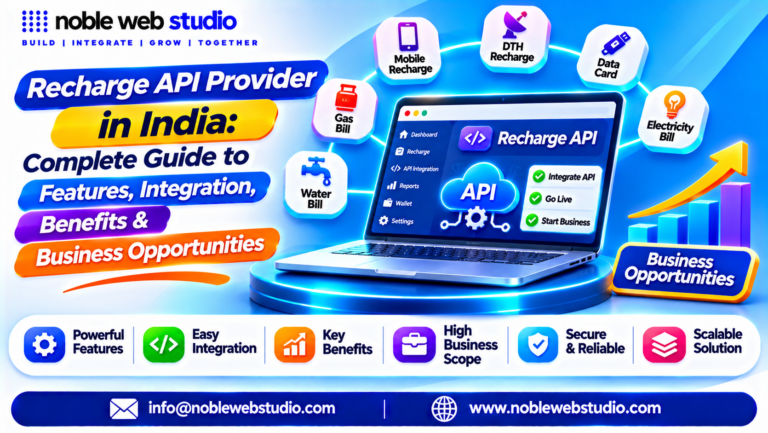
Running a mobile recharge business or planning to add recharge services to your existing website or mobile application? Recharge API Integration makes it possible to offer mobile recharge, DTH recharge, and other supported bill payment services directly through your own digital platform without building separate connections with individual service operators.
Recharge API Integration is the process of connecting a website, mobile application, or recharge software with a recharge service provider through an Application Programming Interface (API). It allows businesses to send recharge requests, process transactions, receive real-time status updates, and manage supported services through a single technical connection.
Recharge API integration allows websites and mobile recharge commission app to connect to telecom, DTH, and utility billing networks through a single backend interface. Depending on your goal, this usually refers to either Mobile/Utility Recharge APIs (common in India for prepaid top-ups and BBPS bill payments) or Recharge Subscriptions API (for managing recurring e-commerce billing on platforms).
For startups, retailers, distributors, fintech companies, and entrepreneurs in India, integrating a reliable Recharge API can simplify daily operations and create opportunities to expand digital services. Depending on the API provider, businesses can offer prepaid mobile recharge, DTH recharge, postpaid payments, and utility bill payments through one recharge platform.
However, successful integration involves more than simply connecting an recharge API. You need to understand recharge API authentication, operator and circle codes, transaction responses, callback URLs, pending recharge management, security, and refund handling. Choosing the right integration approach also plays an important role in delivering a smooth experience to your customers.
At Noble Web Studio, we understand the technical and business requirements involved in building digital recharge platforms. This guide explains how Recharge API Integration works, which features to evaluate, how to integrate recharge API into your website or application, and what businesses should consider before choosing a recharge API solution.
Whether you are launching a new recharge business or adding recharge functionality to an existing platform, this guide will help you understand the integration process and make informed technical decisions.
What is a Recharge API Integration
Mobile recharge API integration is the process of connecting an app, website, or business system to a recharge API so users can buy mobile top-ups or plans directly inside your platform. Instead of building separate connections to every telecom operator, your software sends automated requests through a single interface to process recharges in real time.
Recharge API in simple terms
A Recharge API is a digital bridge that allows an app or website to automatically process mobile, DTH, or data card recharges without manual intervention.
How a Recharge API Works: The Transaction Flow
A Recharge API acts as an automated bridge between your application, a recharge aggregator, and telecom or utility service providers to complete top-ups and bill payments in seconds.
Instead of building separate integrations with every telecom operator (like Jio, Airtel, or Vi) or DTH provider, your platform connects to one unified API.
Step-by-Step Transaction Flow
- User Input & Plan Fetch (Pre-Transaction). The customer enters their mobile number or subscriber ID in your app. Your system calls helper endpoints (such as Operator Detection and Plan Fetch APIs) to auto-detect the telecom circle and show available recharge plans.
- Payment Collection. Once the user selects a plan, your mobile recharge platform collects the payment via UPI, card, or an internal wallet, and verifies that the payment succeeded before triggering the recharge.
- API Request Initiation. Your backend server sends an authenticated
POSTrequest (typically in JSON format) to the Noble web studio. This payload includes your recharge API credentials, the customer’s number, operator code, recharge amount, and a unique Order ID generated by your system to prevent duplicate transactions. - Validation & Routing. The Recharge API gateway authenticates your IP/recharge API key, checks your prefunded merchant wallet balance, deducts the recharge cost (minus your commission), and translates your request into the specific protocol required by the target telecom operator or Bharat Bill Payment System (BBPS).
- Operator Execution. The telecom operator’s server receives the routed request, validates the subscriber’s number and plan eligibility, and credits the talktime, data pack, or validity directly to the user’s account.
- Response & Webhook Callback. The operator sends a confirmation back to the Recharge API, which relays a status update to your server via an immediate JSON response or an asynchronous webhook callback. Your app then updates the transaction history and displays a receipt to the user.
Handling Transaction States
Because telecom networks can experience brief delays, your integration must handle three distinct recharge API response states:
| Status | Meaning | Required System Action |
|---|---|---|
| Success | The operator credited the user’s account. | Mark the order complete and display the operator’s transaction/reference ID. |
| Failed | The operator rejected the request (e.g., invalid plan or number). | Automatically refund the money to the user’s wallet or payment source. |
| Pending | The request is still processing at the operator’s end. | Hold the user’s funds, wait for a webhook callback, or poll the Status Check API using your unique Order ID. |
Types of Recharge API
Recharge APIs fall into two main categories: service/vertical types (what customers pay for) and functional/integration APIs (endpoints that power lookup, billing, status, and complaints).
By Recharge & Bill Service Type
- Mobile Prepaid Recharge API: Processes talk-time top-ups, data packs, and validity/special recharges across telecom operators.
- DTH Recharge API: Renews television subscription plans and fetches subscriber details for DTH providers.
- Data Card Recharge API: Recharges prepaid internet/dongle data balances.
- FASTag Recharge API: Adds toll balance to vehicle FASTag accounts.
- Utility & Postpaid Bill APIs: Handles mobile postpaid, electricity, gas, water, and broadband bills.
By Technical Function
- Operator & Circle Lookup API: Detects the telecom operator and circle from a mobile number.
- Plan & Bill Fetch API: Retrieves live prepaid/DTH plans or fetches due bill amounts before payment.
- Payment & Validation API: Validates customer/bill details and executes the recharge or bill payment.
- Status & Complaint API: Checks transaction status (helpful after timeouts) and raises or tracks disputes.
Services you can enable with one Recharge API integration
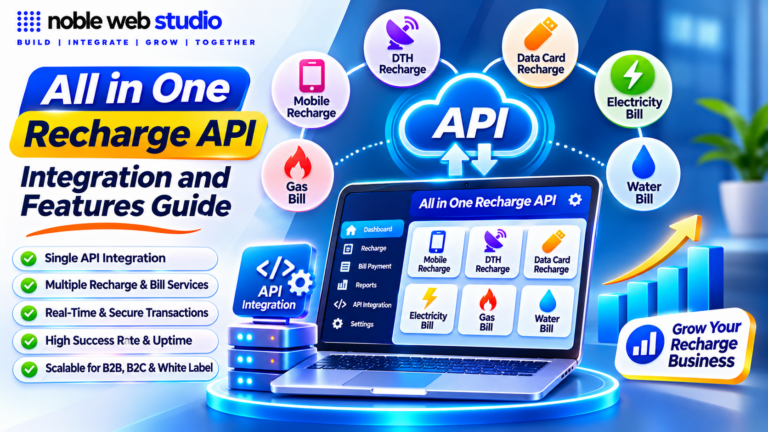
A single multi recharge API integration lets your platform offer telecom top-ups, utility bill payments, transit recharges, and basic fintech services without connecting to separate vendors.
Core Recharge & Bill Payment Services
- Prepaid & Postpaid Mobile. Process instant top-ups, data packs, and postpaid bill settlements across all major operators (Jio, Airtel, Vi, BSNL, MTNL) and telecom circles.
- DTH & Cable TV. Enable direct-to-home recharges and pack renewals for providers like Tata Play, Airtel Digital TV, Dish TV, Sun Direct, and d2h.
- Utility & BBPS Bills. Connect to the Bharat Bill Payment System (BBPS) to let users pay electricity, piped gas, water, broadband, and landline bills.
- FASTag & Transit. Allow vehicle owners to recharge FASTag wallets across issuing banks for seamless highway toll payments.
| Service | Examples | Typical use case |
|---|---|---|
| Prepaid mobile recharge | Jio, Airtel, Vi, BSNL | Retail shops, wallets, apps |
| Postpaid bill payment | All major telecom operators | Bill payment apps |
| DTH recharge | Tata Play, Airtel Digital TV, Dish TV, Sun Direct, d2h | Retailer counters, super-apps |
| Data card / broadband | Telecom data plans, broadband billers | Utility apps |
| FASTag recharge | Bank-issued FASTags | Transport and fleet apps |
| BBPS bills | Electricity, gas, water, insurance, loan EMI | Fintech and BC platforms |
Who Needs Recharge API Integration?
Any business or platform that wants to offer automated prepaid mobile, DTH, FASTag, or utility bill payments to customers or earn commissions on transactions needs recharge API integration.
Who Benefits Most
- Fintech Startups & Digital Wallets: Add recharge and bill payment services to increase user retention and daily transaction volume.
- B2B Distributors & Resellers: Manage multi-tier retailer networks, track commissions, and resell API access.
- Local Retailers & Kirana Shops: Offer walk-in customers mobile top-ups, DTH recharges, and bill payments as an extra revenue stream.
- Software & App Developers: Embed recharge and utility workflows into custom apps or white-label portals.
- E-Commerce & Service Platforms: Keep users on mobile recharge platform by bundling everyday bill payments and top-ups.
Prerequisites Before You Recharge API Integrate
Before integrating Recharge API (such as for mobile, DTH, or BBPS utility payments in India), you need to complete business onboarding, technical setup, security configuration, and pre-funded wallet arrangements.
1. Business & KYC Documentation
Noble web studio require business verification before issuing live credentials:
- Identity & Tax Documents. PAN card (individual or company), Aadhaar card of the proprietor/director, and a GST registration certificate (typically required for B2B billing and tax compliance).
- Business Registration. Certificate of Incorporation, LLP agreement, or partnership deed, depending on your entity type.
- Banking & Agreements. Business bank account details (cancelled cheque or passbook copy) for settlements, alongside a signed service agreement.
2. Technical & Server Environment
Your application backend must be ready to handle secure, asynchronous financial transactions:
- Backend Stack & SSL. A server environment (e.g., Node.js, PHP, Python, Java) configured with an active SSL/TLS certificate (HTTPS).
- Static Public IP. Most recharge providers enforce IP whitelisting, meaning your production server needs a dedicated static IP address to send recharge API requests.
- Public Webhook URL. An exposed, secure endpoint on your server to receive asynchronous status callbacks (e.g., when a “Pending” recharge later succeeds or fails).
- Database Schema. Tables to store unique client transaction IDs (for idempotency), operator codes, circle codes, and reconciliation logs.
3. Provider Onboarding & Credentials
Once you select an Noble web studio, you will need:
- Sandbox & Production Keys. Recharge API keys, secret tokens, or merchant IDs stored securely as server-side environment variables.
- Master Data Lists. Updated operator codes (e.g., Jio, Airtel, Vi, BSNL) and telecom circle codes required in the API request payloads.
- Pre-funded Wallet Balance. Unlike standard payment gateways that collect money from users, recharge APIs usually deduct the recharge amount directly from a pre-funded merchant wallet you maintain with the Noble web studio.
4. Integration Architecture & Testing
- Core Endpoints Mapped. Ensure your flow covers operator/circle lookup, plan fetching, recharge execution, status check, and wallet balance checks.
- Sandbox Testing. Verify how your code handles instant success, confirmed failure, network timeouts, and pending states in the test environment before going live.
Technical requirements
| Requirement | Why it matters |
|---|---|
| Static public IP for your server | Providers whitelist your IP; requests from other IPs are rejected |
| HTTPS with a valid SSL certificate | Protects API keys and customer data in transit |
| Public callback endpoint | Receives final status for Pending transactions |
| Database with unique order IDs | Prevents duplicate recharges and supports reconciliation |
| Server time synced (NTP) | Needed if requests are signed with timestamps |
Recharge API Integration in 6 Steps (Quick Start)
Integrating a Mobile/DTH Recharge API (or a Recharge Subscription API, depending on your platform) follows a standard 6-step workflow from onboarding to production launch.
1. Select a Provider & Complete KYC
- Choose an aggregator. Noble web studio with high uptime (99%+), fast response times, and coverage across major telecom and DTH operators.
- Verify your business. Submit your KYC documents (PAN, GST, bank details) to unlock live recharge API access.
- Get your credentials. Generate your recharge API Key/Token and Secret from the merchant dashboard.
2. Configure Security & Sandbox Environment
- Whitelist your server IP. Most Indian recharge gateways block requests unless they originate from a registered static IP address.
- Set up environment variables. Store mobile recharge API keys securely on your backend rather than exposing them in frontend code.
- Switch to Sandbox mode. Use the Noble web studio team test URL/endpoints to simulate transactions without spending real wallet balance.
3. Integrate Operator & Plan Fetch Endpoints
- Auto-detect operator and circle. Call the operator-lookup endpoint using the customer’s mobile number to identify the carrier (e.g., Airtel, Jio) and telecom circle (e.g., Rajasthan).
- Display live tariff plans. Fetch active prepaid plans and data packs by passing the
operator_codeandcircle_codeso users can browse and select valid amounts.
4. Build the Core Recharge Request
- Generate a unique transaction ID. Create an idempotent
order_idon your server for every request to prevent duplicate recharges if a user clicks twice. - Send the recharge payload. Make an authenticated
GETorPOSTrequest to the recharge endpoint with required parameters:number(Mobile/Subscriber ID)amount(Plan value)operator_code&circle_codeorder_id(Your unique reference ID)
5. Handle Responses, Webhooks & Status Polling
- Process immediate statuses. Parse the initial JSON/XML response, which typically returns Success, Failure, or Pending.
- Configure Callback URLs (Webhooks). Because telecom operators often take 10–60 seconds to confirm a top-up, provide a webhook endpoint where the best recharge API can push the final status asynchronously.
- Add a Status Check fallback. If a transaction stays
Pendingand no callback arrives within 60 seconds, trigger a cron job to query the Status Check recharge API using your order_id.
6. Test Edge Cases & Go Live
- Test failure scenarios in Sandbox. Verify how your recharge commission app handles insufficient wallet balance, invalid operator codes, network timeouts, and automatic user refunds on failed recharges.
- Fund your API wallet & switch URLs. Top up your master wallet with the Noble web studio, swap the sandbox base URL for the production URL, and monitor your first live transactions.
Recharge API Price in india
In India, a recharge API typically costs ₹1,000 to ₹30,000+ as a one-time license or setup fee, while integration and white label mobile recharge software can range from ₹10,000 to ₹5,00,000+ depending on customization. Instead of charging per API call, Noble web studio operate on a prepaid wallet model and pay operator-wise commission on successful transactions.
Upfront & Setup Costs
- API License / Setup Fee: Often ₹1,000–₹30,000+ (Noble web studio offer one-time plans around ₹3,000–₹5,500).
- Integration & Development: ₹10,000–₹50,000 for custom recharge API integration, or ₹15,000–₹5,00,000+ if buying a white label recharge portal/recharge b2b app or custom recharge platform.
- KYC & Onboarding: Standard business/identity KYC verification is usually required before live credentials are activated.
Ongoing & Operating Costs
- Wallet Load / Working Capital: You pre-load funds into your recharge API wallet to process recharges and bill payments.
- Hosting, Maintenance & Gateway Fees: Ongoing costs include server hosting, annual maintenance, payment gateway fees (if collecting money from end users online), and applicable taxes.
- Per-Transaction / Plan Fees: Depending on the Noble web studio, there may be transaction/platform charges or tier limits.
Commission & Revenue Model
- Operator-Wise Commissions: Earned on successful prepaid mobile, DTH, data card, or utility/BBPS transactions commonly a small percentage (often around a fraction of a percent up to a few percent depending on operator and slab) or a fixed fee on certain billers.
- Volume & Hierarchy Impact: Higher transaction volumes and master/distributor tiers generally unlock better commission slabs.
Recharge API Request Parameters and Response Format
Because Recharge API commonly refers to two completely different platforms Mobile/DTH Telecom Recharge APIs (popular in India for prepaid top-ups and utility bills) and Recharge Payments (the global e-commerce subscription platform) the standard request parameters and response structures for both are detailed below.
1. Mobile & DTH Telecom Recharge API
While exact field names vary slightly across Noble web studio, nearly all telecom recharge APIs follow a standardized REST/JSON or query-parameter structure.
Standard Request Parameters (GET or POST)
| Parameter | Type | Required | Description |
|---|---|---|---|
token / api_key | String | Yes | Your merchant authentication key (often passed in the URL or Authorization: Bearer header). |
number / mobile | String | Yes | The 10-digit mobile number or DTH subscriber ID to recharge. |
operatorcode | String | Yes | Provider code (e.g., JIO, AIRTEL, VI, or auto for auto-detection). |
circlecode | String | Optional | Telecom state/region code (e.g., 0 if unknown). |
amount | Number | Yes | Exact recharge plan denomination. |
orderid / urid | String | Yes | Your unique transaction reference ID to prevent duplicate charges. |
format | String | Optional | Response format, typically json. |
Sample request
GET https://{BASE_URL}/recharge?api_token=YOUR_TOKEN&mobile=9876543210&operator_code=JIO&circle_code=RJ&amount=299&client_txn_id=NWS20261125000123&format=jsonSample responses
Success:
{
  "status": "SUCCESS",
  "client_txn_id": "NWS20261125000123",
  "txn_id": "RC88234019",
  "operator_ref": "BR0004K7X9M2",
  "amount": 299,
  "balance": 15420.50,
  "message": "Recharge successful"
}
Pending:
{
  "status": "PENDING",
  "client_txn_id": "NWS20261125000123",
  "txn_id": "RC88234019",
  "operator_ref": "",
  "message": "Transaction under process"
}
Failure:
{
  "status": "FAILURE",
  "client_txn_id": "NWS20261125000123",
  "txn_id": "RC88234019",
  "error_code": "E104",
  "message": "Invalid amount for this operator"
}
Response fields
| Field | Meaning |
|---|---|
| status | SUCCESS, PENDING or FAILURE |
| client_txn_id | Your transaction ID, echoed back so you can match the record |
| txn_id | The provider’s transaction ID; store it for status checks and disputes |
| operator_ref | The operator’s reference number; show it to the customer as proof of recharge |
| balance | Your remaining API balance after the transaction |
| error_code / message | Reason for failure; map it to a clear message for your user |
Use code with caution.
- Status Handling. Fast Recharge API typically return three states:
Success,Pending(awaiting operator confirmation via webhook/callback URL), orFailed. Never auto-retry aPendingtransaction; only retry aFailedone using a brand-neworderid.
2. Recharge Payments (E-Commerce Subscriptions API)
If you are integrating with Recharge Payments for Shopify/e-commerce subscriptions, the API is strictly RESTful and uses JSON request bodies over HTTPS.
Standard Request Headers & Parameters
- Authentication Header.
X-Recharge-Access-Token: your_api_token - Content Header.
Content-Type: application/json - Query Parameters (for
GETrequests).limit: Number of results per page (defaults to50).page_info: Cursor token for pagination (found in the responseLinkheader).include: Comma-separated related objects to sideload (e.g.,include=customer,metafields).
Example Request (POST /subscriptions)
json
{
  "address_id": 3411137,
  "charge_interval_frequency": 30,
  "next_charge_scheduled_at": "2026-12-25T00:00:00",
  "order_interval_frequency": 30,
  "order_interval_unit": "day",
  "quantity": 1,
  "shopify_variant_id": 4910293847
}
Use code with caution.
Example Response (201 Created)
json
{
  "subscription": {
    "id": 98765432,
    "address_id": 3411137,
    "customer_id": 11223344,
    "status": "active",
    "price": "29.99",
    "quantity": 1,
    "order_interval_unit": "day",
    "order_interval_frequency": 30,
    "next_charge_scheduled_at": "2026-12-25T00:00:00"
  }
}
Use code with caution.
- HTTP Status Codes. Uses standard codes
200/201for success,202for async processing,4xxfor invalid parameters or failed charges, and5xxfor server errors.
Code Examples: Recharge API in PHP, Python, Node.js and cURL
Because Recharge API commonly refers to either Mobile/Utility Recharge APIs (telecom top-ups) or Recharge Payments (the e-commerce subscription platform), here are standard REST integration examples for Mobile Recharge APIs (the standard pattern used by aggregators in India) alongside a note for Recharge Payments.
1. Mobile & Utility Recharge API Examples
Most mobile recharge aggregators use a standard RESTful JSON structure requiring an Mobile recharge API key/token, mobile number, operator code, amount, and a unique transaction reference ID (order_id).
7.1 cURL
BODY='{"client_ref_id":"NWS20261125000123","service_type":"MOBILE_PREPAID","number":"9876543210","operator_code":"JIO","circle_code":"RJ","amount":"299.00"}'
TS=$(date +%s)
SIG=$(printf '%s' "$TS.$BODY" | openssl dgst -sha256 -hmac "$API_SECRET" | sed 's/^.* //')

curl -X POST "[BASE_URL]/v1/recharge" \
  --max-time 60 \
  -H "Content-Type: application/json" \
  -H "X-API-Key: $API_KEY" \
  -H "X-Timestamp: $TS" \
  -H "X-Signature: $SIG" \
  -d "$BODY"
7.2 PHP
<?php
function rechargeRequest(array $payload): array {
    $apiKey    = getenv('RECHARGE_API_KEY');
    $apiSecret = getenv('RECHARGE_API_SECRET');
    $body      = json_encode($payload, JSON_UNESCAPED_SLASHES);
    $ts        = (string) time();
    $signature = hash_hmac('sha256', $ts . '.' . $body, $apiSecret);

    $ch = curl_init('[BASE_URL]/v1/recharge');
    curl_setopt_array($ch, [
        CURLOPT_POST           => true,
        CURLOPT_POSTFIELDS     => $body,
        CURLOPT_RETURNTRANSFER => true,
        CURLOPT_CONNECTTIMEOUT => 10,
        CURLOPT_TIMEOUT        => 60,
        CURLOPT_HTTPHEADER     => [
            'Content-Type: application/json',
            'X-API-Key: ' . $apiKey,
            'X-Timestamp: ' . $ts,
            'X-Signature: ' . $signature,
        ],
    ]);
    $response = curl_exec($ch);
    $error    = curl_error($ch);
    curl_close($ch);

    if ($response === false) {
        // Timeout or network error: do NOT mark failed. Check status later.
        return ['status' => 'PENDING', 'message' => 'Network error: ' . $error];
    }
    return json_decode($response, true);
}

$result = rechargeRequest([
    'client_ref_id' => 'NWS20261125000123',
    'service_type'  => 'MOBILE_PREPAID',
    'number'        => '9876543210',
    'operator_code' => 'JIO',
    'circle_code'   => 'RJ',
    'amount'        => '299.00',
]);
echo $result['status'];
7.3 Python (requests)
import hashlib, hmac, json, os, time
import requests

BASE_URL = "[BASE_URL]"
API_KEY = os.environ["RECHARGE_API_KEY"]
API_SECRET = os.environ["RECHARGE_API_SECRET"].encode()

def call_api(path: str, payload: dict) -> dict:
    body = json.dumps(payload, separators=(",", ":"))
    ts = str(int(time.time()))
    sig = hmac.new(API_SECRET, f"{ts}.{body}".encode(), hashlib.sha256).hexdigest()
    headers = {
        "Content-Type": "application/json",
        "X-API-Key": API_KEY,
        "X-Timestamp": ts,
        "X-Signature": sig,
    }
    try:
        r = requests.post(BASE_URL + path, data=body, headers=headers, timeout=(10, 60))
        r.raise_for_status()
        return r.json()
    except requests.exceptions.Timeout:
        # Unknown outcome: treat as PENDING and check status later
        return {"status": "PENDING", "message": "timeout"}

result = call_api("/v1/recharge", {
    "client_ref_id": "NWS20261125000123",
    "service_type": "MOBILE_PREPAID",
    "number": "9876543210",
    "operator_code": "JIO",
    "circle_code": "RJ",
    "amount": "299.00",
})
print(result["status"])
7.4 Node.js (axios)
const axios = require('axios');
const crypto = require('crypto');

const BASE_URL = '[BASE_URL]';
const API_KEY = process.env.RECHARGE_API_KEY;
const API_SECRET = process.env.RECHARGE_API_SECRET;

async function callApi(path, payload) {
  const body = JSON.stringify(payload);
  const ts = Math.floor(Date.now() / 1000).toString();
  const signature = crypto
    .createHmac('sha256', API_SECRET)
    .update(`${ts}.${body}`)
    .digest('hex');

  try {
    const res = await axios.post(BASE_URL + path, body, {
      timeout: 60000,
      headers: {
        'Content-Type': 'application/json',
        'X-API-Key': API_KEY,
        'X-Timestamp': ts,
        'X-Signature': signature,
      },
    });
    return res.data;
  } catch (err) {
    if (err.code === 'ECONNABORTED' || !err.response) {
      // Timeout or no response: outcome unknown, keep as PENDING
      return { status: 'PENDING', message: 'timeout' };
    }
    return err.response.data;
  }
}

callApi('/v1/recharge', {
  client_ref_id: 'NWS20261125000123',
  service_type: 'MOBILE_PREPAID',
  number: '9876543210',
  operator_code: 'JIO',
  circle_code: 'RJ',
  amount: '299.00',
}).then((r) => console.log(r.status));
7.5 Sample responses: success, pending and failure
{ "status": "SUCCESS", "txn_id": "RCH8812734501", "operator_ref": "JIO5521983311", "message": "Recharge successful" }

{ "status": "PENDING", "txn_id": "RCH8812734502", "operator_ref": null, "message": "Awaiting operator confirmation" }

{ "status": "FAILED", "txn_id": "RCH8812734503", "error_code": "E104", "message": "Invalid amount for operator" }
Status API, Balance API and Callback URL
Recharge Status APIs, Balance APIs, and Callback URLs work together to manage transaction lifecycles, track wallet funds, and handle asynchronous operator confirmations.
Core Components
| Component | Purpose | Typical Implementation |
|---|---|---|
| Callback URL (Webhook) | Automatically pushes final transaction updates (SUCCESS or FAILED) from the provider to your server. | Your server exposes an HTTP GET or POST endpoint that parses the order ID, status, and operator reference ID, then replies with HTTP 200. |
| Recharge Status API | Manually checks the state of a specific transaction on demand. | Used as a fallback cron job to verify PENDING orders if a webhook is delayed or missed. |
| Balance API | Queries your current available recharge API wallet funds. | Polled before initiating transactions or used to trigger low-balance alerts for automated top-ups. |
Example Integration Flow
1. Callback URL (Webhook Handler)
When a recharge stays PENDING during submission, the Noble web studio hits your registered URL once the telecom operator confirms the result.
- Incoming Request Example (GET):
https://yourdomain.com - Handling Best Practices:
- Enforce idempotency. Update the database record and refund the user’s wallet only if the order is currently marked
PENDING. Noble web studio often retry callbacks, and checking state prevents double refunds. - Respond quickly. Return an
HTTP 200 OKimmediately before running heavy background tasks. - Verify authenticity. Validate the incoming request using a secret token, HMAC signature, or by checking against the Noble web studio whitelisted IP addresses.
- Enforce idempotency. Update the database record and refund the user’s wallet only if the order is currently marked
2. Recharge Status API (Fallback Check)
If a transaction remains PENDING after a set window (e.g., 2–5 minutes) with no callback received, query the status endpoint using your unique transaction/order ID:
http
GET https://provider.com
Use code with caution.
(Note: Require a POST request with a Bearer token and JSON payload instead.)
- Typical JSON Response:
json
{
  "status": "SUCCESS",
  "order_id": "ORD1001",
  "opid": "BR2026415001",
  "message": "Recharge Successful"
}
Use code with caution.
3. Balance API
Check your master wallet balance to ensure sufficient funds exist before routing customer requests:
http
GET https://{BASE_URL}/balance?api_token=YOUR_TOKEN
Use code with caution.
- Typical Output: Returns either a plain numeric string (e.g.,
1542.50) or a structured JSON object containing the balance field.
Callback URL: automatic status updates
When a pending transaction becomes final, the Noble web studio server calls your callback URL with the result. This is the fastest and most reliable way to settle pending recharges. A typical callback looks like this:
https://yourdomain.com/api/recharge/callback?client_txn_id=NWS20261125000123&txn_id=RC88234019&status=SUCCESS&operator_ref=BR0004K7X9M2A safe callback handler in PHP:
<?php
// 1. Accept only the provider's IPs (list from your provider)
$allowed = ['PROVIDER_IP_1', 'PROVIDER_IP_2'];
if (!in_array($_SERVER['REMOTE_ADDR'], $allowed, true)) {
    http_response_code(403); exit;
}

$txnId  = $_REQUEST['client_txn_id'] ?? '';
$status = strtoupper($_REQUEST['status'] ?? '');
$opRef  = $_REQUEST['operator_ref'] ?? '';

// 2. Find the transaction and lock the row
$pdo->beginTransaction();
$stmt = $pdo->prepare('SELECT * FROM recharges WHERE client_txn_id = ? FOR UPDATE');
$stmt->execute([$txnId]);
$txn = $stmt->fetch();

// 3. Update only if it is still pending (makes repeat callbacks harmless)
if ($txn && $txn['status'] === 'PENDING') {
    if ($status === 'SUCCESS') {
        $pdo->prepare('UPDATE recharges SET status = ?, operator_ref = ? WHERE id = ?')
            ->execute(['SUCCESS', $opRef, $txn['id']]);
    } elseif ($status === 'FAILURE') {
        $pdo->prepare('UPDATE recharges SET status = ? WHERE id = ?')
            ->execute(['FAILURE', $txn['id']]);
        refundWallet($txn['user_id'], $txn['amount'], $txnId);
    }
}
$pdo->commit();

// 4. Always reply 200 so the provider stops retrying
http_response_code(200);
echo 'OK';
Three rules keep a callback handler safe: accept requests only from the provider’s IPs, update a transaction only while it is still pending, and always reply with HTTP 200. Providers often send the same callback more than once, and the “only if pending” check stops a double refund.
How to Handle Pending Recharges Without Losing Money
A pending recharge means the final status from your bank or telecom operator has not arrived yet not that your money is lost. Most pending transactions either go through within a few hours or auto-refund if they fail.
1. Do Not Recharge Again Right Away
- Avoid duplicate charges: Repeating the same recharge while one is pending can cause both to succeed, leaving you with two packs or a double debit.
- Save your proof: Note the Transaction ID / Order ID, UTR number, payment app reference, amount, and date. Take a screenshot of the transaction screen.
2. Check Both the Payment App and Operator App
- Refresh payment status: Open the specific transaction inside your payment app or website rather than relying on a bank debit SMS.
- Check the telecom number: Open your operator’s app (such as MyJio, Airtel Thanks, or Vi) to check active plans, upcoming queued packs, or balance. Sometimes the recharge succeeds even if the payment app lags.
3. Wait Out the Standard Settlement Window
- Bank/gateway confirmation: Pending bank or UPI statuses often clear within a few hours, though banks and payment gateways can take up to 24–48 hours (and up to 72 hours in some cases) to confirm or fail.
- Operator confirmation: If payment succeeded but operator confirmation is pending, delays usually stem from operator load or maintenance. Once a transaction is marked failed, refunds typically take a few business days to reflect in your bank account or wallet.
4. Escalate if It Stays Pending or Refund Is Late
- Raise a ticket on the exact transaction: Once the app’s stated window passes, use the help/support option tied to that specific order and quote the Transaction ID or UTR.
- Contact the bank if needed: If the payment failed or stayed stuck beyond the expected reversal window, check your bank statement and contact your bank’s support with the UTR/reference number to trace or dispute the debit. For UPI disputes that remain unresolved, you can escalate per UPI/NPCI and bank complaint timelines.
| Situation | What your system should do |
|---|---|
| API returns SUCCESS | Mark success, save operator_ref, show receipt |
| API returns FAILURE | Mark failed, refund wallet, show the reason |
| API returns PENDING | Keep amount on hold, wait for callback |
| Timeout or no response | Treat as pending, check status API after 2 minutes |
| Callback says SUCCESS | Update only if still pending, save operator_ref |
| Callback says FAILURE | Update only if still pending, refund once |
| Pending for many hours | Run status check, raise a dispute with the provider if still unclear |
Recharge API Error Codes and Troubleshooting
The Recharge API uses standard HTTP status codes (4xx for client errors and 5xx for server errors) alongside specific JSON error messages to help pinpoint integration and billing issues.
1. Client Error Codes (4xx)
These errors indicate an issue with the request payload, authentication, or rate limits.
| Status Code | Meaning | Common Causes & Troubleshooting |
|---|---|---|
| 400 | Bad Request | Syntax or missing parameters. Ensure required fields are included and verify that URL query parameters are properly formatted. |
| 401 | Unauthorized | Invalid API key. Verify that X-Recharge-Access-Token is present in your headers and uses an active token. |
| 402 | Request Failed | Payment or charge failure. Parameters were valid, but the underlying payment gateway rejected the action (e.g., declined card). |
| 403 | Forbidden | Permission scope or uninstalled store. Check your API token’s read/write scopes in the Recharge Merchant Portal, or confirm the store hasn’t uninstalled Recharge. |
| 404 | Not Found | Invalid ID or endpoint. Double-check the resource ID (e.g., customer_id, subscription_id) and confirm you are calling the right API version URL. |
| 406 | Not Acceptable | Disallowed data source. You are requesting a data source or format not permitted for that endpoint. |
| 409 | Conflict | Concurrent edits. You sent two simultaneous requests modifying the same address or child object. Queue updates sequentially instead of firing them in parallel. |
| 415 | Unsupported Media Type | Non-JSON payload. Include Content-Type: application/json in your request headers and pass a valid JSON object. |
| 422 | Unprocessable Entity | Validation failure. The JSON syntax is valid, but field values fail business rules (e.g., invalid state codes, expired discount codes, or missing supplemental fields). |
| 426 | Upgrade Required | Invalid API version. Check your X-Recharge-Version header (e.g., 2021-11) against supported versions in the Recharge API Reference. |
| 429 | Too Many Requests | Rate limit exceeded. Standard plans allow a 2 calls/second leak rate (40-call bucket); Scale/Plus plans allow 4 calls/second (80-call bucket). Implement exponential backoff or pause until the bucket refills. |
2. Server Error Codes (5xx)
These indicate issues on Recharge’s side or with a connected b2b recharge platform.
- 500 Internal Server Error. An unexpected error occurred on Recharge’s servers. Retry the request with exponential backoff; if it persists, check the Recharge Status Page.
- 501 Not Implemented. The requested endpoint or HTTP method is not supported in your current recharge API version.
- 503 Service Unavailable. A third-party service that the request depends on (such as an ecommerce platform or payment gateway) timed out. Safe to retry after a brief delay.
3. Common Charge & Order Errors
When triggering charges or webhooks via the mobile recharge API, you may also encounter platform-level order errors in the response body or Merchant Portal:
shopify_rejected/Rejected by BigCommerce. The ecommerce platform blocked the order creation. Check for mismatched product SKUs, out-of-stock inventory, or invalid shipping phone numbers.UNEXPECTED_ERROR(Bad Request). Often triggered when a subscription uses an outdated or deleted discount code. Verify that the discount code exists and matches between Recharge and your ecommerce platform.- Gateway Declines (
Insufficient funds,Card expired,Purchase type not supported). The customer’s bank rejected the recurring billing attempt. Recharge automatically retries these based on your store’s retry schedule, or the customer must update their payment method.
Recharge API Operator and Circle Code Reference
In Indian telecom recharge APIs, there is no single universal standard for operator and circle codes each Noble web studio company defines its own mapping. However, most providers follow one of three common conventions (Letter-based, Numeric, or String-based) alongside the standard 22 Indian telecom circles.
Below is a reference of the most widely adopted operator and circle code formats used across major Indian recharge gateways.
1. Common Mobile Operator Codes
Depending on your Noble web studio, you will typically encounter either Short Letter Codes (common in legacy and white-label aggregators), Numeric Codes (common in Plan APIs), or Full String Identifiers (common in modern REST/BBPS wrappers).
| Operator / Service | Letter Code (e.g., A1Topup) | Numeric Code (e.g., PlanAPI) | String Code (e.g., ZuelPay/REST) |
|---|---|---|---|
| Reliance Jio | RC | 11 | JIO |
| Airtel | A | 2 | AIRTEL |
| Vodafone Idea (Vi) | V or I | 6 or 23 | VI |
| BSNL Top-Up | BT | 4 | BSNL |
| BSNL Special Tariff (STV) | BR | 5 | BSNL_STV |
| MTNL Top-Up / Special | MT / MR | 14 / 15 | MTNL |
2. Common DTH Operator Codes
| DTH Provider | Letter Code | Numeric Code | String Code |
|---|---|---|---|
| Tata Play (Tata Sky) | TS | 27 | TATAPLAY |
| Airtel Digital TV | AD | 24 | AIRTELDTH |
| Dish TV | DT | 25 | DISHTV |
| Sun Direct | SD | 26 | SUNDIRECT |
| Videocon d2h | VD | 28 | D2H |
3. Indian Telecom Circle Codes (22 Circles)
Circle codes are critical for fetching accurate prepaid tariff plans, as prices vary by state. Many recharge endpoints accept 0 as a fallback if the circle is unknown, though passing the exact code prevents plan mismatches.
| Telecom Circle / State | Numeric Code (Standard Aggregator) | Numeric Code (PlanAPI Style) | String Code |
|---|---|---|---|
| Andhra Pradesh & Telangana | 1 | 49 | ANDHRA PRADESH |
| Assam | 2 | 56 | ASSAM |
| Bihar & Jharkhand | 3 | 52 | BIHAR |
| Chennai | 4 | 40 | CHENNAI |
| Delhi NCR | 5 | 10 | DELHI |
| Gujarat | 6 | 98 | GUJARAT |
| Haryana | 7 | 96 | HARYANA |
| Himachal Pradesh | 8 | 03 | HIMACHAL PRADESH |
| Jammu & Kashmir | 9 | 55 | JAMMU KASHMIR |
| Karnataka | 10 | 06 | KARNATAKA |
| Kerala | 11 | 95 | KERALA |
| Kolkata | 12 | 31 | KOLKATA |
| Madhya Pradesh & Chhattisgarh | 13 | 93 | MADHYA PRADESH |
| Maharashtra & Goa | 14 | 90 | MAHARASHTRA |
| Mumbai | 15 | 92 | MUMBAI |
| North East | 16 | 16 | NORTH EAST |
| Odisha | 17 | 53 | ORISSA / ODISHA |
| Punjab | 18 | 02 | PUNJAB |
| Rajasthan | 19 | 70 | RAJASTHAN |
| Tamil Nadu | 20 | 94 | TAMIL NADU |
| UP East | 21 | 54 | UP EAST |
| UP West & Uttarakhand | 22 | 97 | UP WEST |
| West Bengal | 23 | 51 | WEST BENGAL |
Best Practices for Integration
- Use Live Operator Lookup APIs: Because of Mobile Number Portability (MNP), relying on static mobile number series prefixes will cause high transaction failure rates. Always query an Operator/HLR Fetch endpoin right before initiating a recharge.
- Verify BBPS Biller IDs: If you are integrating directly via Bharat Connect (BBPS) rather than a commercial aggregator, you must fetch live
billerIdvalues dynamically from the MDM (Master Data Management) endpoint rather than hardcoding short codes.
Recharge API Security and Compliance Best Practices
Securing a Recharge API whether you are integrating with the Recharge Payments API for e-commerce subscriptions or building a telecom/mobile top-up API requires strict token management, encrypted communications, and regulatory compliance like PCI DSS and GDPR.
Authentication & Access Control
- Implement OAuth 2.0 for third-party integrations. Use OAuth 2.0 rather than static API keys when onboarding partners or merchants to limit exposure.
- Enforce the principle of least privilege. Restrict Recharge API token scopes and admin panel permissions so users and services only access the endpoints and data necessary for their role.
- Rotate and audit API keys regularly. Regenerate keys on a set schedule, immediately delete unused tokens, and keep token contact details updated for urgent security alerts.
- Never expose keys client-side. Store secrets in secure environment variables or vaults rather than hardcoding them into frontend code or public repositories.
Traffic & Data Protection
- Mandate TLS 1.2 or higher. Encrypt all Recharge API traffic in transit using HTTPS and encrypt sensitive customer records, payment tokens, and logs at rest.
- Apply strict rate limiting and throttling. Cap the number of requests per IP address, user, or Recharge API key within a set timeframe to prevent brute-force attacks, credential stuffing, and Denial-of-Service (DoS) spikes.
- Validate and sanitize all inputs. Use strict JSON/XML schema validation to reject malformed payloads and prevent injection attacks before requests hit your backend logic.
- Use idempotency keys for transactions. Ensure financial or top-up requests carry unique idempotency keys so network retries do not accidentally trigger duplicate charges or recharges.
Monitoring & Vulnerability Management
- Maintain comprehensive audit logs. Record every Recharge API request, authentication attempt, and data access event—while masking sensitive fields like tokens or PII to investigate anomalies quickly.
- Test against the OWASP API Security Top 10. Run automated penetration tests and vulnerability scans in your CI/CD pipeline to catch issues like Broken Object Level Authorization (BOLA).
- Decommission deprecated endpoints. Retire older Recharge API versions promptly so unmaintained code does not become an unmonitored attack surface.
Regulatory & Financial Compliance
- Maintain PCI DSS compliance. Avoid handling raw credit card numbers directly; rely on tokenization and certified payment gateways to minimize your PCI scope.
- Adhere to data privacy laws (GDPR, CCPA, DPDP). Minimize the Personally Identifiable Information (PII) transmitted in API payloads, enforce strict data retention limits, and support user data deletion requests.
- Verify webhook signatures. When receiving asynchronous transaction or subscription updates, always validate cryptographic HMAC signatures to confirm payloads genuinely originate from the Noble web studio.
Recharge API Go-Live Checklist
To transition a Recharge API integration from sandbox to production safely, verify your configuration across environment endpoints, security, transaction handling, and live validation.
1. Environment & Endpoint Switch
- Production endpoints. Update your base URLs from sandbox paths (such as
/sandbox/) to live production endpoints. - Live credentials. Swap test Recharge API keys, tokens, and merchant IDs for your live production credentials.
- Sandbox preservation. Keep your sandbox configuration behind an environment flag so future best recharge commission app releases can run the same tests without touching production.
2. Security & Access Control
- Server-side isolation. Ensure all Mobile Recharge API keys and secrets live strictly on your backend server via environment variables or a secrets manager never inside mobile apps or client-side code.
- IP whitelisting. Whitelist your live production server’s static IP address in the provider’s API dashboard.
- HTTPS enforcement. Confirm that all outgoing Recharge API calls and your incoming callback/webhook URL use valid SSL/HTTPS certificates.
- Team permissions. Create individual dashboard logins with role-based permissions and two-factor authentication (2FA) rather than sharing master credentials.
3. Transaction Integrity & Webhooks
- Unique order IDs. Enforce a strictly unique order/reference ID for every new recharge request to prevent duplicate deductions.
- Pending state handling. Never auto-retry a
PENDINGtransaction as a new recharge; instead, poll the status check API using the original order ID or wait for the callback. - Callback verification. Validate every incoming webhook by checking its signature/IP, confirming the order ID belongs to you, verifying the order is still in a pending state, and matching the transaction amount before crediting or refunding.
- Spending caps. Set per-user and daily velocity limits on your backend to cap potential losses from bugs or abuse.
4. Testing & Live Dry Run
- Operator coverage. Verify that all target telecom operators (e.g., Jio, Airtel, Vi, BSNL) and DTH providers handle success, failure, and pending status codes properly.
- Complete logging. Log every raw request, response, webhook payload, timestamp, and operator reference ID for fast dispute resolution.
- Low-value live test. Fund your live wallet with a small balance and execute one real, low-denomination recharge (e.g., ₹10) on an internal test number to verify end-to-end settlement and callback delivery.
5. Post-Launch Monitoring
- Wallet balance alerts. Configure low-balance alerts and sudden-drop notifications so a drained wallet or high failure rate triggers immediate action.
- Reconciliation. Set up a daily check comparing your internal ledger against the settlement reports.
Recharge API vs BBPS API: what’s the difference?
A Recharge API primarily tops up prepaid mobile and DTH connections, while a BBPS API connects to India’s Bharat Bill Payment System (Bharat Connect) to fetch and pay recurring utility, telecom, and financial bills across thousands of billers.
| Feature | Recharge API | BBPS API |
|---|---|---|
| Primary Services | Prepaid mobile and DTH top-ups | Electricity, water, gas, broadband, postpaid, insurance, loan EMI, FASTag, and municipal bills |
| Underlying Network | Direct operator/aggregator tie-ups (may also route through BBPS) | NPCI-operated BBPS / Bharat Connect central switch and BBPOUs |
| Bill Fetch Step | Usually skipped; user picks a plan or enters an amount | Often fetches live bill details (due amount, customer name, due date) before payment |
| Settlement & Rules | Follows operator/aggregator and TRAI tariff/policy terms | Follows standardized RBI/NPCI settlement, receipt, and dispute/complaint rules |
| Biller Coverage | Limited to telecom and DTH operators | Broad multi-category biller network via a single integration |
How to Choose the Right Recharge API Provider
Noble web studio one of the recharge API provider, prioritize technical reliability, transaction success rates, and security over high commission margins. Noble web studio offering slightly higher commissions is unprofitable if frequent downtime or stuck transactions drive away customers and increase support overhead.
1. Performance & Reliability
- Transaction Success Rate (SR). Look for a Noble web studio guaranteeing a 99%+ or 99.9% success rate with direct operator connections and automatic fallback routing to handle traffic spikes (such as month-end billing cycles).
- API Response Time & Uptime. Real time recharge API should process requests quickly (ideally under a few seconds, with sub-200ms gateway latency) and back their uptime claims with a formal Service Level Agreement (SLA).
- Pending & Refund Handling. Verify how the system manages stuck or failed transactions, ensuring automated webhook callbacks (so your server doesn’t have to constantly poll for status) and instant wallet reversals.
2. Service Coverage & Scalability
- Multi-Service & BBPS Support. Choose a unified recharge API that supports all major telecom operators, DTH, FASTag, and Bharat Bill Payment System (BBPS) utilities (electricity, gas, water) so you do not have to integrate multiple vendors later.
- Value-Added Utility APIs. Check if they offer operator auto-detection (to prevent wrong-number recharges) and live recharge plan fetch APIs, as telecom plans change frequently.
- White-Label & Growth Path. If you plan to build a B2B network of retailers and distributors, ensure the Noble web studio offers scalable rate limits and white label recharge software options.
3. Developer Experience & Security
- Documentation & Sandbox Access. Evaluate the recharge API documentation for clear JSON error models, authentication steps, and webhook guides, and request a sandbox environment to test flows before going live.
- Perimeter & Data Security. Best recharge platform enforces modern encryption (TLS 1.3) and mandatory IP whitelisting to prevent unauthorized wallet drains if an recharge API key is compromised.
- Reporting & Ledger Tools. Confirm that the recharge admin dashboard provides real-time balance tracking, detailed transaction logs, and easy dispute reconciliation.
4. Commercials, Compliance & Support
- Transparent Commission & Fees. Compare setup costs, wallet top-up minimums, and operator-wise recharge commission structures after verifying technical stability.
- Company Legitimacy. Verify the GST registration, corporate history, and compliance standing to avoid fly-by-night aggregators.
- Responsive Human Support. Test their customer support channels (phone, WhatsApp, ticketing) before signing up to see how quickly they resolve pending transactions or technical issues.
Why Choose Noble Web Studio for Recharge API Solution
Noble web studio only one of the best recharge API provider gives your business automated, single-point access to mobile, DTH, and utility bill payments without building separate operator integrations.
Key reasons to partner with a recharge API provider include:
- Single-Integration Convenience: Connect once to access multiple telecom operators, DTH providers, and utility billers (including BBPS-backed services) instead of managing separate tie-ups or multiple SIMs.
- High Uptime and Speed: Noble web studio offer fast response times, strong transaction success rates, and automatic fallback routing when an operator route faces delays or downtime.
- Automation and Real-Time Updates: Automated processing reduces manual effort, while live plan lookups and webhook callbacks keep pricing and transaction statuses accurate.
- Revenue and Scalability: Earn recharge commission on transactions, retain customers with convenient digital services, and scale into broader fintech offerings like AEPS, DMT, or payouts as volume grows.
- Security and Dashboards: Look for encrypted recharge APIs, secure credentials, and centralized dashboards to track balances, retailers, and transaction logs.
Conclusion
Recharge API Integration is an effective way to bring mobile recharge, DTH recharge, and supported bill payment services together on a single digital platform. Whether you are a startup, retailer, distributor, or established business, the right recharge API integration can simplify transaction processing, improve service management, and help you expand your digital business.
However, choosing a recharge API is not just about connecting an endpoint. You should also consider recharge API reliability, transaction success rates, sandbox testing, callback notifications, security, commission structure, and proper handling of pending and failed transactions. A well-planned integration helps create a smoother experience for both your customers and your business.
connects an best mobile recharge commission app, website, or business platform to telecom, DTH, and utility billing networks so users can complete recharges and bill payments automatically. Instead of building separate integrations for each operator or biller, businesses use all in one recharge API from a Noble web studio.
At Noble Web Studio, we focus on developing digital solutions that align with your business requirements. If you are planning to launch a mobile recharge website, build recharge application, or integrate recharge and bill payment functionality into an existing recharge platform, our team can help you understand the recharge software development and integration requirements.
Looking to get started with Recharge API Integration? Connect with Noble Web Studio to discuss your project requirements and explore the right technical approach for building a scalable recharge platform.
Build your recharge business with the right technology, reliable integration, and a customer-focused digital experience.
Recharge API Integration FAQs
Recharge API integration connects your website, mobile app, or software with a recharge service provider, allowing users to recharge mobile, DTH, and other services automatically.
Recharge API integration usually takes 1–3 business days, depending on recharge API documentation, recharge b2b platform compatibility, and testing requirements.
Noble web studio offer free sandbox or demo access for testing recharge API requests, responses, and transactions before purchasing live recharge API plan.
You can integrate recharge API using PHP, Python, Java, Node.js, .NET, or any programming language that supports HTTP requests and JSON responses.
Check the transaction status using the recharge API status-check endpoint. You can also use callback notifications and automated status verification to update pending transactions accurately.
A callback URL is a server endpoint that receives automatic transaction updates from the Noble web studio, such as success, failure, or pending status.
Secure recharge API callbacks using HTTPS, request signature verification, Recharge API authentication, IP whitelisting, and duplicate transaction checks.
A recharge API is mainly used for prepaid mobile, DTH, and other recharge services. A BBPS API enables bill payments through the Bharat Bill Payment System for supported biller categories.
Recharge API commission is generally earned on successful transactions. The commission rate depends on the service category, operator, transaction value, and mobile recharge commission structure.
Yes, many multi-service recharge APIs support mobile recharge, DTH recharge, and bill payments through a single integration, depending on the available services.
A static IP may be required by Noble web studio for IP whitelisting and server security. However, the requirement depends on the recharge API authentication policy.
Yes, Noble web studio offer white-label recharge software solutions that allow you to operate a recharge website or mobile application under your own brand name.
Commonly required documents include PAN card, Aadhaar card, business registration details (if applicable), bank account details, and contact information. Requirements may vary by Noble web studio.