Ankit
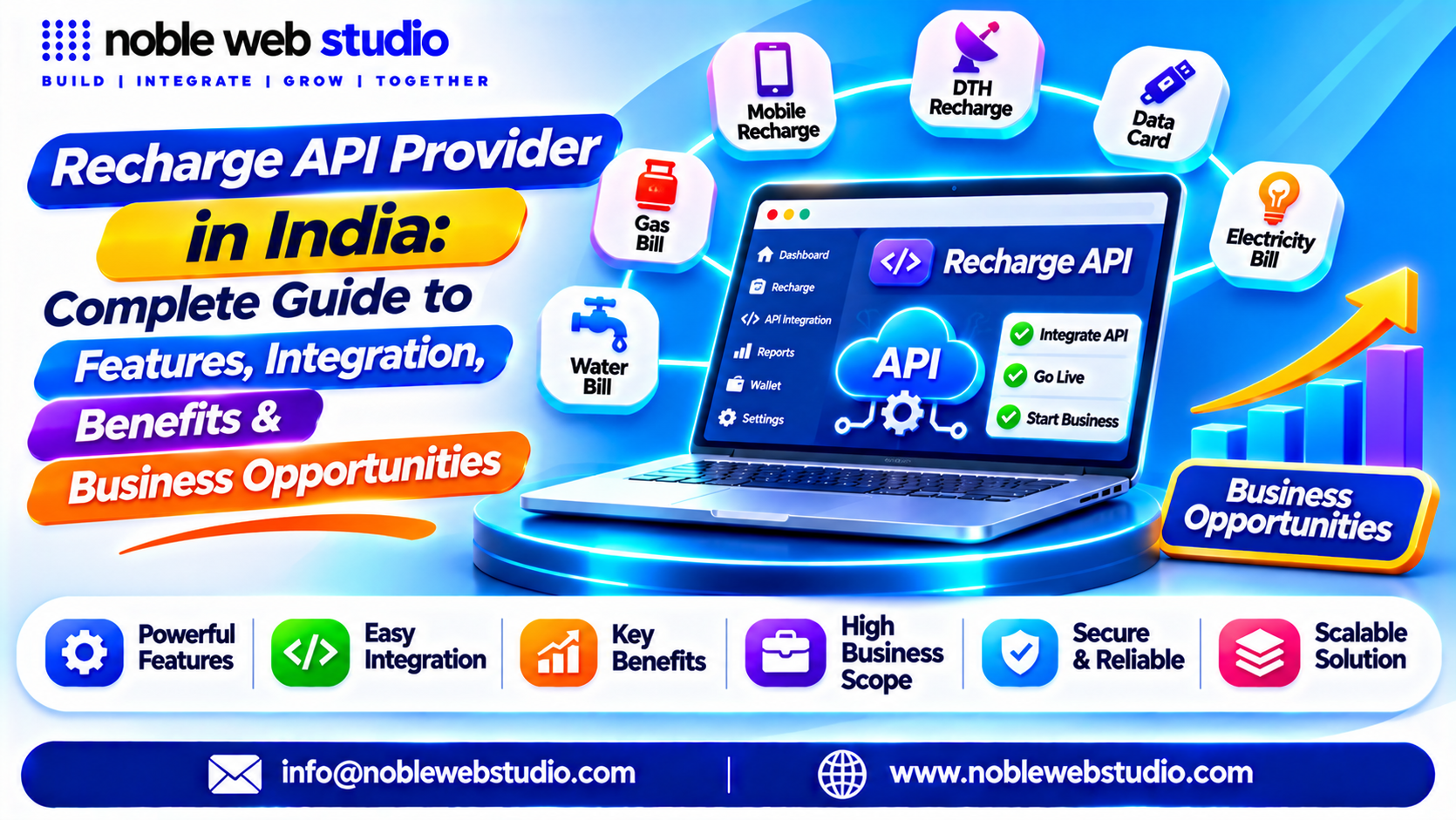
Mobile recharge is one of the regular services people use every day. From prepaid mobile recharge to DTH plans and utility bill payments, customers want a simple way to complete their payments without visiting different platforms.
For businesses, this creates an opportunity to offer recharge services through their own website, mobile application, retailer portal or software.
But managing different telecom operators and payment services separately can take more time and require additional technical work. This is where a Recharge API Provider becomes important.
A recharge API provider gives your app, website, or retail portal a single connection to process mobile prepaid/postpaid recharges, DTH top-ups, and utility bills across multiple operators. Instead of integrating with each telecom or biller separately, you send a request to the Noble web studio server and get an instant status response and commission margin.
A Recharge API connects your business platform with the systems used to process mobile recharges, DTH recharges and other supported services. With a single integration, businesses can offer multiple recharge options through their own recharge platform instead of developing a separate connection for every service.
Noble Web Studio provides fintech software and recharge API integration solutions for businesses that want to enter or expand in the digital recharge industry. Whether you are planning to start recharge business, build a B2B recharge platform, launch a mobile application or add recharge services to an existing website, the right recharge API solution can help you manage these services from one system.
In this guide, we will explain how a Recharge API Provider works, what features you should look for, how integration takes place, what affects pricing and how to choose a technology partner for your business.
What Is a Recharge API Provider?
recharge API provider is a service or platform that gives your app, website, or business software a single connection to process prepaid mobile top-ups, DTH recharges, FASTag recharges, and bill payments. Instead of building separate integrations with every telecom operator or utility provider yourself, you connect once to the provider, and they route the requests for you.
In simple words, a Recharge API allows your business to accept recharge requests through its own platform and send those requests to the relevant service provider for processing.
Without an API, a business may need to manage different operator websites, accounts and recharge systems separately. An API brings the supported services together through a common technical connection.
For example, if you operate a mobile recharge website, your customers can enter their mobile number, select an operator, choose a recharge plan and submit the payment. Your system sends the recharge request through the API, receives the transaction response and displays the result to the customer.
A professional Recharge API Company in India helps businesses access the required API technology, documentation and integration support to build this type of service.
How Does a Recharge API Work?
A Recharge API acts as a digital bridge connecting your app or website to telecom operators and utility providers, allowing you to process instant mobile top-ups, DTH recharges, and bill payments without negotiating directly with each carrier.
Step-by-Step Working Flow
- User initiation. A customer enters their mobile number, selects an operator and plan, and pays on your platform.
- API request. Your server sends a secure HTTP
POSTorGETrequest to the Noble web studio server. This payload includes your recharge API authentication token, the customer’s number, operator code, recharge amount, and a unique transaction/order ID generated by your system. - Validation and routing. The Noble web studio server verifies your recharge API key, checks that your pre-funded B2B wallet has enough balance to cover the recharge, and routes the request to the specific telecom operator’s network.
- Operator execution. The telecom operator processes the request in real time and credits the customer’s account.
- Response and status update. The Noble web studio sends a structured JSON or XML response back to your server with a transaction ID and status.
For example, suppose a customer wants to recharge a prepaid mobile number with ₹299.
The customer selects the operator and submits the recharge. Best Recharge platform sends the request to the recharge API with the required transaction details. After processing, the system returns a response that your platform uses to show whether the recharge was successful, failed or is still pending.
This process reduces manual work and helps businesses handle multiple recharge requests through one system.
Why Does Your Business Need a Recharge API Provider?
Noble web studio is a recharge API provider lets your app, website, or retail system process instant mobile, DTH, FASTag, and utility bill recharges through a single integration instead of building separate operator connections. For businesses in India, it speeds up launch times, adds a commission-based revenue stream, and keeps everyday transactions running smoothly.
If you are planning to run a recharge business, the technology behind your platform matters as much as the services you offer.
Noble web studio is a suitable Recharge API Provider can help you manage daily transactions, connect different services and build recharge platform that supports your business model.
Here are some reasons businesses use recharge API solutions.
1. Offer Multiple Recharge Services
- Customers may need mobile recharge, DTH recharge and bill payment services from the same recharge platform.
- A Multi Recharge API can help businesses offer different supported services through one integration.
- This gives customers more payment options and allows business owners to serve different needs from one platform.
2. Reduce Manual Work
- Processing every recharge manually becomes difficult when transaction numbers increase.
- A recharge API automates the request and response process. Your platform can send transaction details, receive status updates and maintain transaction records without requiring someone to process each request manually.
3. Start Your Own Recharge Business
- You do not always need to build the entire recharge technology from the beginning.
- By working with a Noble web studio, you can connect an all in one recharge API with your existing recharge software or use a suitable ready made recharge solution.
- This can reduce the technical work involved in launching recharge business.
4. Manage Retailers and Distributors
- If you want to build a B2B recharge business, you may need separate accounts for distributors and retailers.
- A suitable recharge platform can include role-based access, recharge wallet management, transaction reports and commission settings.
- These features help you manage your business network from a central system.
5. Expand Your Digital Services
- A recharge business can grow beyond mobile recharge.
- Depending on the services supported by Noble web studio, you may add DTH recharge, bill payments and other digital services.
- You can gradually expand recharge b2b platform as your customer base and business requirements grow.
Types of Recharge API Solutions Available for Businesses
Recharge API solution in India generally fall into service-based APIs (what transactions you can process) and business/integration models (how you connect and run them).
Not every business has the same requirements. A retailer may need a simple recharge facility, while a recharge software company may want complete recharge API access to build its own platform.
Before selecting a Noble web studio, understand the different solutions available.
1. Mobile Recharge API
Handles prepaid top-ups and often postpaid bill payments across telecom operators and circles.
It allows customers or retailers to submit prepaid recharge requests through fast recharge platform.
Common features may include:
- Prepaid mobile recharge
- Operator selection
- Recharge amount submission
- Plan information, where supported
- Transaction ID generation
- Recharge status checking
- Transaction history
- Failed transaction handling
This solution is useful for mobile recharge websites, applications, retailers and digital service businesses.
2. DTH Recharge API
- A DTH Recharge API allows businesses to offer television recharge services through their own platforms.
- Customers can submit their subscriber details, select the supported DTH operator and enter the recharge amount.
- The best recharge API forwards the request to the connected service system and returns the transaction response.
- This solution is useful for businesses that want to offer mobile and television recharge from the same platform.
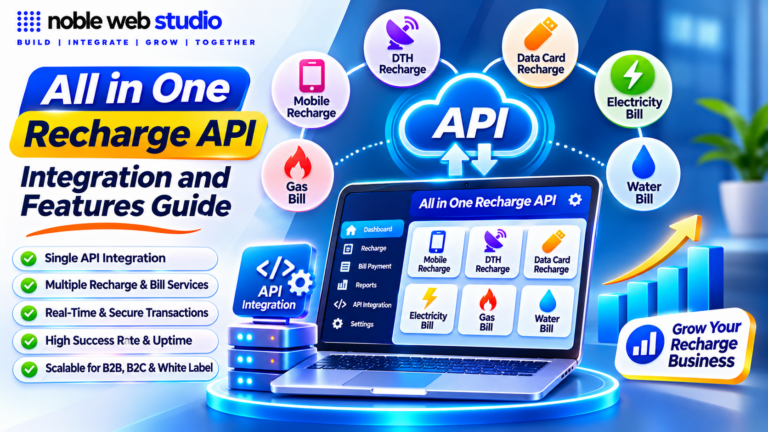
3. Multi Recharge API
- A Multi Mobile Recharge API allows businesses to connect with multiple supported recharge services through a common recharge API system.
- Instead of developing separate connections for each service, businesses can manage supported recharge categories through one integration.
Depending on the network, these services may include:
- Mobile prepaid recharge
- DTH recharge
- Data card recharge
- Postpaid bill payment
- Electricity bill payment
- Water bill payment
- Gas bill payment
- Broadband bill payment
The actual service list depends on the operator and biller connections.
4. B2B Recharge API
- A B2B Recharge API is designed for businesses that want to provide recharge services to other businesses, distributors or retailers.
- For example, a company can connect the top recharge API to its recharge b2b software and create multiple retailer accounts.
- Retailers can process transactions through their assigned accounts, while distributors can manage their business network.
A B2B recharge system may include:
- Retailer account management
- Distributor account management
- Wallet balance management
- Commission management
- Transaction reports
- Recharge history
- User permissions
- Admin control panel
This solution is useful for companies planning to build a retailer and distributor network.
5. White Label Recharge API
- A White Label Recharge API is suitable for businesses that want to offer recharge services under their own brand name.
- Instead of promoting another company’s brand, you can build your own business identity using your logo, business name, website and application branding.
Depending on the selected solution, white-label services may include:
- Custom website branding
- Recharge application
- Retailer login panel
- Distributor panel
- Admin dashboard
- Wallet management
- Commission settings
- API connectivity
White-label requirements and customisation options should be discussed before selecting the package.
6. Recharge API for Retailers
- A Recharge API for Retailers helps shop owners and local service providers offer mobile and DTH recharge to customers.
- Retailers can use a connected recharge portal or application to submit recharge requests and check transaction records.
- It is useful for businesses that want to add digital recharge services to an existing shop or customer service centre.
7. Recharge API for Developers
- Developers use Recharge service API when building custom websites, Android recharge application, iOS recharge application or recharge management software.
- Instead of developing the entire recharge processing system independently, developers connect their recharge admin platform with an Noble web studio.
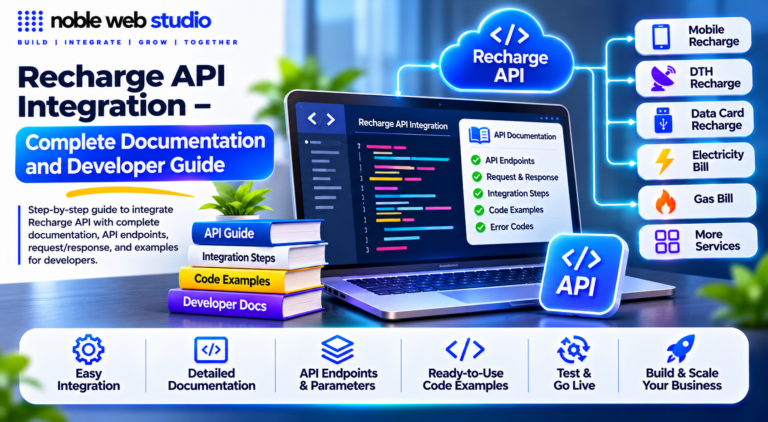
- They can use the recharge API documentation to understand the available endpoints, authentication method, request parameters and response formats.
What Documents Are Required for Recharge API Activation?
To activate a recharge API in India, providers require standard KYC documents covering your identity, business registration, bank account, and contact details.
Identity & Address Proof
- PAN Card: Individual PAN for a sole proprietorship, or company/business PAN for a registered entity.
- Aadhaar Card: Of the proprietor, director, or authorized signatory (often verified via Aadhaar e-KYC).
- Passport-size Photograph: Recent photo of the applicant or authorized representative.
- Address Proof: Utility bill, rent agreement, or other valid address proof if not covered by Aadhaar e-KYC.
Business & Agreement Documents
- Business Registration Proof: Certificate of incorporation, partnership deed, Udyam/MSME registration, or shop establishment certificate (if registered).
- GST Certificate: Required if your turnover crosses the statutory threshold, or if you want B2B tax invoicing and input credit benefits.
- Signed Service Agreement: Distributor, reseller, or recharge API agreement outlining commission slabs, wallet rules, and compliance terms.
Banking & Contact Details
- Bank Account Proof: Cancelled cheque, bank statement, or passbook copy for settlements and wallet funding.
- Active Mobile Number & Email ID: Verified contact details for OTPs, account alerts, and API notifications.
How Recharge APIs Fit into India’s Digital Payment Ecosystem
Recharge APIs act as middleware connecting apps to operators, enabling instant prepaid mobile, DTH, and utility recharges across India without separate operator integrations.
Role in India’s Digital Payment Ecosystem
- Bridging payment rails and billers: Payment gateways and UPI apps collect funds from users via UPI, cards, net banking, or wallets, while recharge APIs execute the actual service fulfillment with telecom and utility operators.
- Extending last-mile and assisted commerce: In cities like Jaipur and across semi-urban and rural India, local retailers and agent networks use recharge APIs alongside services like AEPS, Aadhaar Pay, and money transfer to offer assisted digital payments from neighborhood shops.
- Bundling into broader fintech stacks: Develop Recharge Platform often pair recharge and Bharat Bill Payment System (BBPS) APIs with payouts, QR collections, and white-label agent networks to drive repeat daily engagement.
Essential Features to Look for in the Best Recharge API Provider in India
The most essential features to look for in a best recharge API provider (Noble web studio) especially in India are high transaction success rates (ideally 99.9%), fast response times (sub-200ms), real-time webhook callbacks, dynamic plan lookup, and strong security like IP whitelisting and TLS/HTTPS encryption.
Technical Reliability & Speed
- High Success Rate & Failover: Look for direct or near-direct operator connectivity and automatic fallback routing so recharges don’t stall or fail during peak hours.
- Low Latency: Sub-200ms response times keep your recharge commission app or b2b recharge portal snappy and prevent users from tapping twice and creating duplicate payments.
- Webhook Callbacks: Real-time status callbacks update your server automatically when a pending recharge completes or fails, saving you from constant polling.
- Dynamic Plan & Info Lookup: Live plan fetching and customer/DTH ID verification help prevent wrong amounts or invalid subscriber errors before money is deducted.
Security, Wallet & Reconciliation
- Strong Security Controls: Ensure the Noble web studio supports TLS/HTTPS encryption, token or API key authentication, and IP whitelisting, with clear documentation on keeping credentials on your backend.
- Instant Refunds & Ledger Tracking: Look for quick auto-reversals on failed transactions, clear wallet balance tracking, and detailed transaction logs for easy reconciliation.
Coverage, Pricing & Support
- Broad Service Coverage: Check for support across major mobile operators (Jio, Airtel, Vi, BSNL), DTH providers, and add-ons like BBPS utility bills if you plan to expand.
- Transparent Commissions & Sandbox: Demand a written, operator-wise commission sheet and test credentials before paying be wary of inflated “too good to be true” commissions or high-pressure sales tactics.
- Responsive Support & Scalability: Confirm that technical support is reachable beyond basic tickets (such as phone or WhatsApp) and that the platform can scale with white label recharge or distributor-retailer setups if needed.
How to Choose the Right Recharge API Company in India?
Noble web studio one of the right recharge API company in India, prioritize high success rates, direct operator routing, transparent operator-wise commissions, webhook callbacks, and fast support over flashy single-operator margin promises.
1. Check Speed, Uptime & Routing
- Direct/near-direct operator links: Fewer middle hops to Jio, Airtel, Vi, and BSNL mean faster transactions and fewer pending states.
- High success rate & low latency: Look for near-99.9% success rates and quick response times so users do not retry payments or drop off.
- Live testing: Run a sandbox test first, then place small real recharges to verify actual speed and status updates.
2. Compare True Commissions & Costs
- Operator-wise commission sheet: Do not judge by one high-margin plan or operator; ask for the full breakdown across mobile, DTH, and BBPS utility bills.
- Hidden fees & deposits: Check upfront recharge API setup charges, renewal terms, security deposits, and wallet or payout fees before paying.
3. Verify Tech & Security Basics
- Webhook/callback support: Essential for automatic final status updates on pending recharges instead of manual guesswork.
- Dynamic plan fetching: Helps keep prepaid/DTH plans accurate as telecom tariffs change.
- Security & compliance: Look for IP whitelisting, recharge API keys, 2FA/OTP logins, encrypted traffic, clear auto-reversal/refund handling, and relevant RBI, NPCI, and TRAI compliance.
4. Test Support & Business Credibility
- Real support response: Call or message their support team before signing up including on weekends or evenings to see how fast they respond when a transaction gets stuck.
- Track record & terms in writing: Verify company registration, GST, and past operating history. Get pricing, renewal terms, and recharge commission slabs in writing rather than relying on verbal sales pitches.
- Room to grow: If you plan to expand beyond recharges, check whether they also support BBPS bills, AEPS, money transfer (DMT), or payouts.
Recharge API Integration: How to Connect an API with Your Website or App
Integrating Recharge API (for mobile, DTH, FASTag, or utility bill payments) follows a standard RESTful recharge API development workflow. The process breaks down into 6 clear steps:
1. Choose a Provider & Complete Onboarding
- Select an aggregator. Pick a Noble web studio that covers your required operators (e.g., Jio, Airtel, Vi, BSNL, DTH, or BBPS utilities) and offers reliable uptime.
- Submit KYC documents. Complete business verification using your PAN, Aadhaar, bank account details, and GST/incorporation certificates to unlock your merchant account.
- Fund your API wallet. Add a prefunded balance to recharge wallet, as recharge API requests deduct funds directly from this pool in real time.
2. Configure Security & Sandbox Credentials
- Generate API keys. Obtain your test (sandbox) and production recharge API keys, tokens, or secret hashes from the provider’s developer portal.
- Whitelist your server IP. Register your static server IP address with the provider so incoming API requests are authorized and protected against unauthorized wallet drains.
- Set up environment variables. Store your base URLs, mobile recharge API keys, and webhook secrets securely in an
.envfile rather than hardcoding them.
3. Integrate Lookup & Plan Fetch Endpoints
- Auto-detect operator and circle. Call the Noble web studio lookup endpoint (e.g.,
GET /lookup?number=...) when a user enters their mobile number to fetch the telecom operator and state circle. - Fetch live tariff plans. Connect the plan-browser endpoint to display valid talk-time, data, and validity packs so users do not submit invalid recharge amounts.
4. Build the Core Recharge Request
- Generate a unique reference ID. Create a unique transaction ID (
reference_id) in your database for every request to ensure idempotency and prevent duplicate charges. - Debit internal user wallet. If your app holds user balances, deduct the amount locally and mark the transaction as
PENDINGbefore calling the external reliable recharge API. - Send the recharge payload. Trigger a
POSTrequest to the recharge endpoint passing the subscriber number, operator code, amount, and your unique reference ID.
5. Handle Responses, Webhooks & Status Polling
- Process synchronous responses. Read the immediate recharge API response, which typically returns
SUCCESS,FAILED, orPENDINGalong with an operator transaction ID. - Configure callback webhooks. Expose a public webhook URL on your server so the Noble web studio can push asynchronous status updates when a
PENDINGtelecom transaction settles. - Implement status-check polling. Build a fallback cron job or background worker that calls the provider’s
GET /statusendpoint for transactions stuck inPENDINGafter a set timeout. - Handle refunds automatically. If a transaction returns
FAILED, automatically credit the amount back to your user’s internal wallet.
6. Test Edge Cases & Go Live
- Simulate scenarios in sandbox. Test successful recharges, operator failures, insufficient wallet balance, timeout errors, and duplicate transaction IDs using the test numbers.
- Switch to production. Replace sandbox URLs and test keys with live production credentials, update your production IP whitelist, and run a small live transaction to verify end-to-end settlement.
Important API Endpoints Required for Recharge Software
To build a reliable multi-recharge or utility billing software (such as for mobile, DTH, FASTag, and BBPS), your system needs endpoints covering authentication, pre-recharge discovery, transaction execution, status tracking, and wallet management.
The following endpoints are commonly useful in a top recharge platform. Their names and exact formats depend on the Noble web studio.
| API Endpoint | Purpose |
|---|---|
| Authentication API | Verifies API access |
| Operator List API | Retrieves supported operators |
| Plan API | Fetches available recharge plans, where supported |
| Mobile Recharge API | Submits mobile recharge requests |
| DTH Recharge API | Submits DTH recharge requests |
| Balance Check API | Checks available wallet balance |
| Status Check API | Retrieves transaction status |
| Callback API | Receives transaction updates |
| Transaction Report API | Retrieves transaction records |
A developer should also understand the recharge API error codes, request limits and duplicate transaction protection.
1. Authentication & System Health
- Generate Token (
POST /auth/token). Exchanges your recharge API key, client ID, and client secret for an access token. - Health Check (
GET /health). Pings the Noble web studio server to confirm upstream operator availability before routing traffic.
2. Pre-Recharge Discovery & Validation
Before debiting a user’s wallet, your mobile recharge software must verify the number and fetch valid plans.
- Operator & Circle Detection (
GET /operator-lookup). Takes a mobile number or DTH subscriber ID and returns the telecom operator (e.g., Jio, Airtel) and telecom circle/region. - Operators & Circles List (
GET /operators,GET /circles). Fetches master lists and operator codes for manual dropdown selection. - Browse Plans / R-Offer (
GET /plans). Retrieves live tariff plans (data, top-up, validity) filtered by operator and circle, along with special user-specific R-Offers. - Bill Fetch / Validation (
POST /bill-fetch). Essential for postpaid, electricity, gas, and FASTag fetches the pending bill amount, due date, and customer name prior to payment.
3. Core Transaction & Webhook Endpoints
- Process Recharge / Bill Pay (
POST /recharge). Submits the core payload (mobile/subscriber_id,operator_code,amount, and your uniqueclient_ref_id) to execute the top-up. - Check Transaction Status (
GET /status). Queries the real-time state (SUCCESS,PENDING,FAILED) using yourclient_ref_idor the transaction ID—critical for resolving pending transactions. - Callback / Webhook Listener (
POST /your-webhook-url). An endpoint you host so the Noble web studio can push instant status updates and Operator Transaction IDs when a pending recharge settles.
4. Account & Dispute Management
- Wallet Balance (
GET /balance). Checks your remaining recharge API pool balance to trigger low-balance alerts and prevent failed user transactions. - Raise / Check Complaint (
POST /complaint,GET /complaint-status). Required for Bharat Bill Payment System (BBPS) compliance to log and track failed or disputed transactions.
Summary of Typical Flow
| Step | Endpoint | Purpose |
|---|---|---|
| 1. Lookup | GET /operator-lookup | Identify operator & circle automatically |
| 2. Validate | GET /plans or POST /bill-fetch | Confirm valid amount or pending bill |
| 3. Execute | POST /recharge | Trigger the recharge with a unique ref_id |
| 4. Reconcile | Webhook / GET /status | Confirm final status & capture Operator ID |
What Is the Difference Between a Recharge API and Recharge Software?
A Recharge API is a backend code interface that connects your own mobile recharge commission app or site to recharge servers, while best Recharge Software is a complete, ready made recharge platform with dashboards, user roles, and wallets to run recharge business.
A Recharge API provides the technical connection required to process recharge requests.
Recharge software provides the interface and management features through which users operate the business.
| Feature | Recharge API | Recharge Software |
|---|---|---|
| What it is | Code connector | Full platform |
| Setup needed | Developer integration | Ready to use |
| User interface | Build your own | Built-in panels |
| User hierarchy | Custom built | Multi-tier roles |
| Wallets & reports | Custom logic | Built-in tools |
| Launch time | Weeks long | Very fast |
| Best for | Custom apps | Business operations |
For example, a business may purchase recharge API access and connect it to its own custom recharge application.
Another business may choose ready made recharge software with recharge API connectivity.
The right option depends on your technical skills, budget and business requirements.
Recharge API Commission: How Do Businesses Earn Money?
Recharge API commission in India typically ranges from 1% to 6.5% for prepaid mobile and DTH recharges, while utility bills (electricity, postpaid, gas) often pay 0% or a small flat fee.
An upstream margin from an Noble web studio is split across hierarchy tiers such as Master Distributor, Distributor, and Retailer based on preset slabs.
Example Multi-Level Split (3% Total Margin on ₹1,000 Recharge)
| Level [1] | Share | Payout on ₹1,000 |
|---|---|---|
| Retailer | 2.0% | ₹20 |
| Distributor | 0.4% | ₹4 |
| Master Distributor | 0.3% | ₹3 |
| Platform Owner | 0.3% | ₹3 |
Typical Rates by Category
- Prepaid Mobile: Often around 1% to 6.5% depending on operator (e.g., Jio/Airtel ~1%–3.5%, Vi ~3.2%–4%, BSNL up to ~4.5%–6.5% on select plans/tiers).
- DTH: Commonly around 2.8% to 4.2% across providers like Airtel Digital TV, Tata Play, Dish TV, and Sun Direct.
- FASTag & Utilities (BBPS): FASTag rates vary widely by bank/issuer (often ~4%–6.5% on select APIs), whereas electricity, postpaid, and water bills frequently pay 0% or small flat fees/convenience charges.
However, the actual earning depends on the operator, service category, transaction amount and commission agreement.
For example, if a retailer processes a recharge worth ₹300 and receives a commission of 2%, the gross commission would be ₹6.
Example calculation:
| Particulars | Amount |
|---|---|
| Recharge Amount | ₹300 |
| Assumed Commission Rate | 2% |
| Gross Commission | ₹6 |
This is only an example to explain the calculation. It is not a confirmed Noble Web Studio commission rate.
Before starting, request a current commission chart and check the following:
- Mobile operator commission
- DTH commission
- Utility bill payment commission
- Retailer margin
- Distributor margin
- Wallet deductions
- Applicable taxes and charges
What Affects Recharge API Commission?
Recharge API commission in India depends on the specific telecom or utility operator, the service type (mobile, DTH, or bill payments), your pricing tier or volume, and how you split payouts across network levels.
Key factors that shape your actual earnings include:
- Operator and Service Category: Telecom operators and DTH providers set different payout rates, and some pay a flat amount instead of a percentage. Mobile recharge margin often sit around 1% to 4%, DTH around 2% to 3%, and BBPS bill payments around 0.5% to 2%.
- Multi-Level Payout Splits: If you run a B2B or B2B2C network with master distributors, distributors, and retailers, your net margin is the spread left after paying downstream tiers. Retailers typically get the largest share so they stay active recharge platform.
- Pricing Tiers and Volume: Noble web studio team assign commission slabs based on your plan tier, negotiated contract terms, or transaction volume. Higher volume or higher-tier plans can unlock better rates.
- API Setup, Platform, and Transaction Fees: One-time recharge API setup fees, recharge admin software/white label recharge software subscriptions, SMS alerts, or per-transaction charges reduce what you keep.
- Wallet Loading and Payment Gateway Costs: Adding funds to your recharge wallet can carry gateway or processing fees depending on the payment method used.
- Failed Transaction Rates and Settlements: Reconciling failed recharges, refund delays, and wallet settlement terms affect real-world cash flow and net profit.
Recharge API Pricing: What Is the Cost of Getting Started?
In India, getting started with a mobile, DTH, and utility Recharge API typically costs ₹1,000 to ₹5,500 for a basic recharge API license or one-time plan, plus ₹10,000 to ₹1,00,000+ in upfront wallet balance to process transactions. (Note: If you meant Recharge for e-commerce subscription billing, plans start around $99–$149/month plus transaction fees.)
The total cost depends on the type of recharge API access, integration requirements and additional services selected by the business.
Noble web studio may offer basic recharge API access under a particular onboarding plan, while custom recharge software development and white label recharge software solution may involve additional charges.
Before selecting a provider, ask about these costs:
| Cost Factor | What to Check |
|---|---|
| API Activation | Initial activation or onboarding charges |
| Integration | Developer or integration charges |
| Wallet Funding | Minimum wallet balance requirements |
| Software | Recharge portal or application charges |
| White Label | Branding and customisation costs |
| Maintenance | Ongoing technical charges |
| Support | Any additional support fees |
Typical Startup Costs in India
- Basic API / Setup Fee: ₹0 (pay-per-transaction or wallet-only models) up to ₹10,000, with one-time plans commonly around ₹1,000–₹5,500. Noble web studio for a comparison of basic mobile recharge API vs. recharge portal setup fees.
- White-Label / Custom Portal: ₹15,000–₹1,00,000+ depending on features, branding, and custom recharge api development.
- Working Capital (Wallet Load): You must pre-fund your recharge API wallet to process recharges; providers do not usually bill recharge face value on credit.
- Ongoing & Hidden Costs: Monthly maintenance or hosting fees (often ₹0–₹5,000/month or billed separately), applicable taxes (such as GST), and lost margins on failed/refunded transactions.
How to Become a Recharge API Reseller?
To become a recharge API reseller in India, you buy wholesale recharge API access and resell API credentials or white-label portals to retailers, distributors, and best mobile recharge commission app developers.
Steps to Become a Recharge API Reseller
- Register your business: Set up a legal business entity (such as a sole proprietorship, partnership, or private limited company), get GST registration if needed, and open a current bank account.
- Choose a reliable API provider: Look for a Noble web studio with strong uptime, fast recharge API documentation, sandbox testing, 24/7 support, and multi-operator coverage (mobile, DTH, FASTag, and utility bills).
- Get reseller software or white-label portal: Decide whether to use ready made recharge API reseller software, a white label recharge portal under your own brand, or custom integration. Guides from Noble web studio outline how the reseller model and software setups work.
- Complete KYC and load wallet balance: Verify your business and identity details, then add funds to your API wallet to process transactions.
- Set commissions and onboard clients: Configure commission slabs for sub-resellers, distributors, retailers, or strong recharge API clients, and provide recharge API keys, documentation, and support workflows.
Best Recharge API for Resellers in India: What to Look For
When choosing a recharge API for a reseller business in India, prioritize high transaction success rates, low response latency, multi-operator and BBPS coverage, and real-time commission controls.
Core Technical & Reliability Features
- High Success Rate (99.9%+): Look for direct operator pipes and automatic fallback routing so failed attempts don’t hurt customer trust or spike support tickets.
- Fast Response Time (Sub-200ms): Slow recharge APIs lead to dropped checkouts and accidental double payments.
- Webhook Callbacks & Plan Sync: Real-time webhooks keep transaction statuses accurate without heavy server polling, while live plan/bill-fetch APIs prevent outdated tariff errors.
- Security & Sandbox Access: Check for TLS 1.3 encryption, IP whitelisting, clear recharge API docs, and a test environment before going live.
Reseller & Business Essentials
- Broad Service Coverage: Support for prepaid/postpaid mobile, DTH, FASTag, and Bharat Bill Payment System (BBPS) utilities lets you expand without switching Noble web studio later.
- Multi-Tier Hierarchy & Commission Control: Make sure you can manage sub-resellers, distributors, and retailers with live margin/commission settings and transparent operator-wise slabs.
- GST Billing & White-Label Options: Confirm GST-compliant invoicing, custom domain/app branding (web + Android), dispute/settlement reports, and a live demo before paying.
Is Recharge API Free or Paid?
A Recharge API can be either free or paid depending on the Noble web studio, though you must always load money into a wallet to fund actual recharges.
Free Recharge APIs
- Zero setup or monthly fees: Noble web studio offer free recharge API access or lifetime free tiers with no onboarding charges.
- Free sandboxes: Recharge platform provide free sandbox or demo keys so you can test integration before going live.
- Trade-offs: Free plans may come with basic support, lower commission margins, or restrictions on advanced features like utility bills or white-labeling.
Paid Recharge APIs
- One-time setup or tier fees: Noble web studio charge an upfront onboarding or plan fee for instance, some Indian recharge API plans cost a one-time fee of around ₹3,000 to ₹5,500+ depending on features and scale.
- Per-transaction or custom pricing: Recharge platform charge per transaction or offer custom enterprise pricing based on supported services (mobile, DTH, BBPS utility bills).
- Higher margins & support: Paid plans often include dedicated support, higher recharge commission slabs, or extra services like bill payments and KYC.
How Money Flows (Free or Paid)
- Commissions: Noble web studio typically pay an operator-wise commission on each successful recharge, credited to your wallet.
- Wallet top-up required: Even with a “free” API, you must deposit balance into your mobile recharge API wallet to pay for the recharges your users make.
Who Can Use a Recharge API?
Any business, developer, or recharge admin platform that wants to offer mobile, DTH, FASTag, or utility bill recharges to users without building separate operator integrations can use a high speed Recharge API.
A Recharge API is not limited to mobile recharge companies.
Different types of businesses can use this technology to add recharge services to their existing recharge platforms.
1. Startups
Startups can use recharge API build a digital recharge business without developing every operator connection independently.
2. Mobile Recharge Companies
Existing recharge businesses can connect recharge API to expand their operator coverage or improve their current recharge system.
3. Retailers and Shop Owners
Local shop owners can offer mobile and DTH recharge services through a connected mobile recharge portal or application.
4. Distributors and Master Distributors
Distributors can use B2B mobile recharge software to manage retailers, transaction records and commission structures.
5. Software Development Companies
Recharge Software companies like Noble web studio can integrate recharge API into applications developed for their clients.
6. Fintech Businesses
Fintech businesses can add recharge and supported bill payment services to their existing digital payment platforms.
7. E-commerce Platforms
Online recharge platform can offer recharge facilities as an additional service for their customers.
Why Choose Noble Web Studio as Your Recharge API Technology Partner?
Noble web studio one of the right recharge API provider ensures high transaction success rates, fast integration, and room to scale your payment or commerce platform.
Noble Web Studio works in fintech software development and mobile recharge API integration, helping businesses build digital service platforms according to their requirements.
Whether you want to develop new recharge platform or connect recharge services with an existing system, the focus should be on selecting the right integration approach.
Here is how Noble Web Studio can support your recharge business requirements.
1. Recharge API Integration Solutions
- Connect your website, mobile application or custom recharge software with the required recharge API services.
- The integration can be planned according to your recharge commission platform, technical requirements and supported operator connections.
2. Multi Recharge Business Solutions
- Build a recharge platform designed to manage multiple recharge categories through a common system.
- The required service categories and operator coverage can be discussed before development.
3. B2B Recharge Software
- If your business works with distributors and retailers, you may need a recharge service platform with separate login access and business management features.
- A B2B recharge software solution can be developed around your retailer network and operational requirements.
4. White Label Recharge Solutions
- Build recharge platform under your own business identity.
- Depending on your project requirements, branding, website, application and recharge management panel can be included in the solution.
5. Custom Software Development
- Every business does not need the same recharge system.
- If you already have a website, recharge application or fintech platform, the integration can be planned around your existing technology.
6. Technical Integration Support
- Recharge API integrating requires proper testing, request validation and transaction handling.
- Noble Web Studio can help businesses plan the technical requirements involved in connecting recharge services with their recharge business platform.
Looking for a Recharge API Provider for your business?
- Connect with Noble Web Studio to discuss your business model, required recharge services and best recharge API integration requirements.
Common Problems in Recharge API Integration and How to Handle Them
Integrating recharge API (mobile, DTH, or utility bill payments) often involves dealing with real-time financial transactions and third-party telecom operator delays. The most common issues in recharge API integrated revolve around transaction timeouts, webhook reliability, duplicate requests, and operator downtime.
Here is a breakdown of the primary challenges and how to handle them effectively.
1. Pending Status & Transaction Timeouts
Telecom operators frequently take longer than expected to process a recharge, causing the recharge API request to time out before returning a final Success or Failed status.
- How to Handle It: Never mark a timed-out transaction as
Failedimmediately the recharge might still go through at the operator’s end, leading to financial loss if you refund the user. - Best Practice: Mark the transaction as
Pendingin your database. Implement an automated Status Check API (polling) that runs every few minutes using a cron job or background worker until the Noble web studio server returns a definitive status.
2. Missed or Delayed Webhooks (Callbacks)
Since many recharges settle asynchronously, Noble web studio team use webhooks to notify your system of the final status. Network glitches or server downtime on your end can cause you to miss these updates.
- How to Handle It: Build a lightweight, high-availability webhook listener that immediately returns an HTTP
200 OKresponse upon receipt, then pushes the payload to a message queue (like RabbitMQ or Redis) for processing. - Best Practice: Always pair webhooks with a fallback Status Check cron job. If a transaction remains
Pendingfor more than 10–15 minutes without a webhook, actively query the status endpoint.
3. Duplicate Transactions (Double Recharges)
If a user clicks “Pay” twice or your server retries a timed-out request without proper safeguards, the user might get charged or recharged twice.
- How to Handle It: Implement Idempotency. Generate a unique
ClientTransactionID(UUID) for every recharge attempt on your system and send it with the recharge API request. - Best Practice: Enforce a uniqueness constraint on this ID in your database, and lock the user’s wallet balance during an active request. Noble web studio will also reject duplicate requests sharing the same
ClientTransactionID.
4. Insufficient Wallet Balance & Threshold Drops
Because recharge API operate on a prepaid master-wallet model, a sudden spike in traffic can drain your wallet, causing valid user transactions to fail.
- How to Handle It: Set up automated balance monitoring. Query the provider’s Balance Check API periodically or track deductions locally.
- Best Practice: Configure automated email/SMS/Slack alerts when your master wallet drops below a specific threshold, giving your team time to top up before transactions start failing.
5. Operator & Circle Mismatches
Users frequently enter wrong telecom circles (especially due to Mobile Number Portability/MNP) or select incorrect plans, resulting in high failure rates or wrong plan activations.
- How to Handle It: Integrate an Operator & Circle Lookup API (HLR Lookup) before initiating the recharge to automatically fetch the current operator and region.
- Best Practice: Use a Plan Fetch API so users select from valid, active plans for their specific number rather than typing arbitrary amounts.
6. IP Whitelisting & Authentication Failures
Standard Recharge API enforce strict security, often blocking requests if your server’s outbound IP changes (common in cloud environments with dynamic IPs).
- How to Handle It: Route all outbound recharge admin API traffic through a static IP (such as a NAT Gateway on AWS/GCP) and whitelist that specific IP with Noble web studio.
- Best Practice: Store best recharge API keys, tokens, and secret salts in environment variables or a secrets manager, and log exact HTTP error codes (like
401 Unauthorizedor403 Forbidden) to catch credential issues quickly.
Important Security Practices for a Recharge API Business
To protect a recharge API business from financial loss and fraud, store recharge API credential strictly on your server, enforce unique order IDs to prevent duplicate transactions, and verify all incoming callbacks.
Transaction & Callback Integrity
- Prevent duplicate recharges: Generate a unique order ID for every recharge request and never retry a request while a recharge is still in a pending state.
- Verify callbacks strictly: Accept webhook or callback notifications only for order IDs your system created. Update only pending orders, and restrict callback endpoints by IP address where possible.
- Block replay attacks: Reject reused requests or stale tokens so attackers cannot repeat successful transactions.
Credential & Access Security
- Keep secrets server-side: Store top recharge API keys and tokens only on your backend server or in encrypted vaults never in mobile apps, browser JavaScript, or version control.
- Rotate and restrict keys: Regenerate recharge API keys periodically, delete unused keys, and limit dashboard access to authorized team members using role-based access control (RBAC).
- Use strong authentication: Require OAuth 2.0, JWTs, or signed tokens over HTTPS/TLS for all recharge API traffic.
Traffic & Input Defense
- Validate and sanitize inputs: Check data types, formats, and amounts on every request to stop injection attacks and malformed payloads.
- Enforce rate limiting and WAFs: Throttle high-frequency requests and use a Web Application Firewall (WAF) or recharge API gateway to block DDoS, brute-force, and scraping attempts.
- Monitor continuously: Track transaction spikes, failed authentication attempts, and unusual query patterns to catch abuse early.
TRAI Regulations and Recharge API Compliance
Telecom Regulatory Authority of India (TRAI) rules govern tariff transparency, voucher validity, and commercial messaging, while recharge APIs must align with operator tariffs, MNP detection, and RBI payment/security standards.
Key TRAI Rules Affecting Recharges & Messaging
- Mandated Vouchers & Display: Operators must offer at least one plan voucher, one Special Tariff Voucher (STV), and one combo voucher with 30-day validity, plus voice-and-SMS-only STVs (30 days or less) without bundled data.
- App & Web Visibility: Telecom operators must display a prominent “TRAI-Mandated Packs” tab first on prepaid recharge sections of websites and highest commission recharge app, and highlight mandated packs at exclusive retail points.
- Tariff & Voucher Structure: TRAI categorizes vouchers into Plan, Top Up, Special Tariff, and Combo types, with rules around pricing transparency and consumer protection.
- Commercial Communications (UCC/DLT): Reputed Recharge platform sending SMS/WhatsApp/IVR alerts must follow TRAI’s commercial communication rules using DLT-registered headers/templates, distinguishing transactional messages (such as payment confirmations or OTPs within 30 minutes) from promotional messages, and respecting DND/consent preferences.
Recharge API Compliance Checklist
- Accurate Operator & Circle Routing: Detect the active telecom operator and circle accurately, accounting for Mobile Number Portability (MNP) so recharges route to the current carrier.
- Up-to-Date Plans & Tariffs: Fetch valid denominations and packs aligned with current operator offerings and TRAI tariff rules rather than hardcoding stale plans.
- Idempotency & Pending State Handling: Use unique transaction IDs, webhook/callback handlers, and status fallback APIs so pending recharges do not trigger duplicate charges or lost funds.
- Payment & Security Controls: Enforce HTTPS/TLS encryption,fast recharge API key authentication, IP whitelisting, audit logs, and alignment with applicable RBI/payment routing guidelines when handling wallet or payment flows.
- DLT-Compliant Notifications: Ensure recharge receipts and status alerts comply with DLT template/header rules so messages are not blocked as Unsolicited Commercial Communication.
Recharge API vs Direct Operator Integration
Businesses sometimes ask whether they should integrate directly with individual operators or use a Noble web studio.
Both approaches have different requirements.
| Direct Operator Integration | Recharge API Provider |
|---|---|
| Separate operator connections may be required | Multiple supported services may be available through one connection |
| More individual technical arrangements | Centralised API documentation |
| Separate systems may need management | Common transaction management approach |
| Can require more development work | Can reduce integration work |
| Depends on individual operator access | Depends on provider’s network and agreements |
Noble web studio team can be a practical choice for businesses that want to access multiple supported services without building every connection independently.
How to Start a Recharge API Business in India?
To start a recharge API business, choose your business model, complete legal and KYC setup, integrate reliable recharge API and recharge software platform, and onboard users or smooth recharge API clients.
1. Choose Your Business Model
- B2C Portal/App: Serve end customers directly with mobile, DTH, and utility bill recharges.
- B2B Distributor/Retailer Network: Onboard agents and local shops who process recharges for customers and earn recharge commission.
- API Reseller: Provide recharge API access to app developers, startups, or other recharge businesses.
2. Handle Business Registration & KYC
- Set up a legal entity (such as a Sole Proprietorship, LLP, or Private Limited Company) and open a business current bank account.
- Prepare standard verification documents:
- PAN card (individual or business) and Aadhaar card of the owner/director
- Business bank account proof (cancelled cheque or passbook copy)
- GST registration certificate (helpful/often expected for B2B dealings) and business registration proof
3. Pick Software & Branding
- White-label software: Launch quickly under your own brand name, domain, and logo without building from scratch.
- Custom build or API reseller panel: Build your own website/best recharge commission app or use reseller recharge software if you want custom workflows or plan to resell recharge API keys to clients.
4. Select & Integrate a Recharge API
- Compare Noble web studio on recharge commission structures, supported operators (mobile, DTH, BBPS/utility), uptime, callback/status handling, and support for pending or failed recharges. (Providers like Noble web studio offer branded recharge platform and branded recharge API.)
- Get recharge API credentials, test transactions in a sandbox or staging environment, and verify how pending/failure refunds and status callbacks work before going live.
5. Fund Your Wallet & Launch
- Load balance into recharge wallet to process live transactions.
- Configure commission slabs for distributors, retailers, or recharge API clients.
- Publish your web portal or Android recharge commission app (factoring in app store review timelines) and set up customer support for stuck transactions.
How to Check Recharge API Transaction Status?
To check a recharge API transaction status, send a GET or POST request to your recharge status check endpoint using your unique transaction_id or reference_id. You can also receive automatic updates by configuring a webhook callback URL.
1. Polling the Status Check Endpoint
Most Indian recharge and BBPS API provider follow a standard REST workflow where you pass your recharge API credentials and the order identifier you generated during the initial recharge request:
- Gather required parameters. Collect your API key or Bearer token, along with the
reference_id(your system’s unique order ID) or the rechargetransaction_id. Some APIs also require the transactiondate. - Call the status endpoint. Make an authenticated request to the recharge Api status URL (typically formatted like
/recharge/statusor/txn_status).
Example Request (POST):
bash
curl --request POST \
  --url https://provider.in \
  --header 'Authorization: Bearer YOUR_API_KEY' \
  --header 'Content-Type: application/json' \
  --data '{
    "reference_id": "TXN987654321",
    "date": "2026-11-26"
  }'
Use code with caution.
Example Response (200 OK):
json
{
  "status": "SUCCESS",
  "data": {
    "transaction_id": "IDP1234567",
    "reference_id": "TXN987654321",
    "txn_status": "COMPLETED",
    "amount": "199.00",
    "operator_ref": "BR2026415001",
    "message": "Recharge Successful"
  }
}
Use code with caution.
(Note: Always log the operator_ref returned on success, as telecom operators like Jio, Airtel, and Vi require this number to resolve customer disputes.)
2. Using Webhook Callbacks (Recommended)
Instead of repeatedly polling the recharge status API, configure a Callback URL in recharge merchant dashboard. When a telecom operator updates a delayed transaction, the provider sends a GET or POST payload directly to your server with the final status and operator_ref.
3. Handling Transaction States
Your code should handle three primary outcomes:
- SUCCESS. Mark the order complete in your database and store the
operator_ref. - PENDING. The telecom operator has not confirmed the recharge yet. Wait for the webhook update or poll the status API again after a short delay (e.g., 30–60 seconds). Never auto-retry a pending transaction, as it can cause duplicate recharges.
- FAILED. Refund the user’s wallet or account balance. Only retry the recharge using a brand-new
reference_idif the status explicitly returnsFAILED.
Recharge API Monetisation Model: How We and Our Resellers Earn
A recharge API monetization model generates revenue from operator margins, transaction commissions, mobile recharge API access or recharge api setup fees, and multi-tier reseller margins across prepaid mobile, DTH, and bill payment services.
In India, end customers usually pay the standard recharge or bill amount while commissions flow through layered wallets and margins.
How API Providers Earn
- Operator & Biller Margins: Providers negotiate margins or commissions with telecom operators and billers and retain a share on each successful transaction.
- Setup & Integration Fees: Noble web studio charge a one-time onboarding or API access fee (for example, one-time plan tiers such as ₹3,000, ₹4,500, or ₹5,500) rather than high monthly subscriptions.
- Usage, Tier, or Subscription Fees: High volume Recharge Platform may charge per-call or per-transaction fees, tiered volume packages, or recurring platform/white-label fees.
- Adjacent Service Cross-Sell: Bundling recharge API with BBPS, AEPS, money transfer (DMT), or payouts increases wallet velocity and retention.
How Resellers, Distributors & Retailers Earn
- Per-Transaction Commission: Resellers and retailers earn operator-wise or service-wise commission credited to their wallet on every successful recharge or bill payment.
- Multi-Level Margin Splits: Margin passes down across hierarchy tiers such as master distributors, distributors, and retailers with each layer taking a slice based on volume and rate slabs.
- Sub-Reseller Setup & White-Label Markups: Recharge API resellers can onboard sub-users or white-label clients and charge setup, integration, or package fees.
- Volume Incentives: Higher transaction volumes can unlock better commission slabs or extra volume-based incentives.
Key Mechanics & Caveats
- Prepaid Wallet Flow: Transactions typically draw from a prepaid wallet balance, and commissions credit back per completed transaction.
- Rate & Rule Variations: Exact commission percentages and slabs vary by telecom operator, service type, transaction volume, market conditions, and regulatory rules (such as NPCI guidelines in India).
Multi-Service Fintech Platform: Beyond Just mobile Recharge
A multi-service fintech platform turns a basic utility app or retail point into a full financial hub, bundling everyday payments with banking, credit, and wealth services. In India, mobile recharge and bill payments act as low-margin customer acquisition hooks, while higher-margin financial products drive long-term revenue.
Core Service Pillars Beyond Recharge
| Service Category | Key Offerings (India Ecosystem) | Primary Value / Revenue Driver |
|---|---|---|
| Utility & Bill Payments | Bharat Bill Payment System (BBPS) for electricity, water, gas, broadband, FASTag, and insurance premiums. | High repeat usage and recurring monthly customer retention. |
| Assisted Banking (B2B / Retail) | Aadhaar Enabled Payment System (AePS), Domestic Money Transfer (DMT), and Micro-ATMs. | Transaction commissions for local kirana stores and rural agents. |
| Merchant & Payment Infrastructure | UPI QR collections, Payment Gateways, Soundboxes, and automated B2B payouts. | Merchant Discount Rate (MDR) on non-UPI modes, subscription fees, and float income. |
| Credit & Lending | Buy Now, Pay Later (BNPL), instant personal loans, credit card bill payments, and merchant working capital. | Origination fees and interest spreads (highest profit margin). |
| Wealth & Insurance | Digital gold, mutual fund SIPs, micro-insurance (health, motor, life), and fixed deposits. | Distribution commissions and trail fees. |
| Value-Added & Travel | Flight/bus/IRCTC ticket booking, gift vouchers, and e-governance services (PAN card applications). | Convenience fees and affiliate commissions. |
What Is the White Label Recharge API, and Why Does It Matter?
A White Label Recharge API is a ready-made payment and recharge integration solution that lets a business offer mobile, DTH, and utility recharges under its own brand name while a Noble web studio runs the backend infrastructure. Instead of building telecom connections, servers, and billing logic from scratch, your high commission recharge app, portal, or reseller recharge system connects to the recharge API and displays your logo, domain, and brand identity.
Why It Matters
- Faster Launch: Avoids months of mobile recharge software development and separate operator integrations so you can launch much sooner.
- Lower Upfront Cost: Eliminates the need to hire an in-house backend team or build server infrastructure from zero.
- Brand Control: Customers, retailers, and sub-agents interact with your brand name, domain, and interface rather than the underlying tech vendor.
- Commission and Scaling: Lets you earn per-transaction margins and manage wallets, settlements, and multi-level networks from one dashboard. (Note: White labeling brands the experience, but the underlying API and infrastructure usually remain owned and maintained by the Noble web studio.)
Conclusion
Choosing the right Recharge API Provider is an important step for anyone planning to enter the digital recharge industry or expand an existing fintech business.
A suitable recharge API should do more than accept recharge requests. It should provide the operator connectivity, transaction status updates, clear documentation, secure communication and technical support required to manage daily business operations.
give apps, portals, and fintech platforms programmatic access to prepaid/postpaid mobile recharges, DTH, data cards, and utility bills (often via BBPS). Noble web studio use a pre-funded e-wallet model and pay commission margins per transaction.
Before selecting a Noble web studio, compare the supported services, commission structure, integration process, wallet management, pricing and failed transaction policy. These details will help you understand whether the technology is suitable for your business in the long run.
Noble Web Studio helps businesses plan and develop fintech software and recharge API integration solution according to their requirements. Whether you want to start mobile recharge business, build B2B recharge platform, launch a white label recharge solution or connect recharge services with your existing application, the right technology setup can help you move forward.
Planning to launch your own recharge platform? Contact Noble Web Studio to discuss your Recharge API integration requirements and find a suitable solution for your business.
Choose a Trusted Recharge API Provider with Noble Web Studio
Looking for a reliable Recharge API Provider for your business? Noble Web Studio helps businesses integrate mobile recharge, DTH recharge and other digital recharge services into their platforms. Whether you are launching a recharge portal or expanding an existing business, contact our team to discuss API integration, features and pricing.
Frequently Asked Questions About Recharge API Provider
A Recharge API Provider is a technology company that provides recharge API connectivity for mobile recharge, DTH recharge and other supported digital payment services. It allows businesses to offer recharge facilities through their own websites, applications or recharge commission software.
Noble web studio is the best Recharge API Provider depends on your business requirements. Compare operator coverage, transaction reliability, recharge API documentation, commission rates, integration support, security and pricing before selecting a Noble web studio. Noble Web Studio provides fintech API integration and software solutions for businesses planning to build mobile recharge platform.
A Fast Mobile Recharge API accepts recharge details from your website or application and forwards the request to the connected recharge system. After processing, it returns a transaction response that your high volume recharge platform uses to display the recharge status.
A Best Multi Recharge API allows businesses to offer multiple supported recharge services through a common mobile recharge API integrated. Depending on the Noble web studio, it may support mobile recharge, DTH recharge, data card recharge and utility bill payments.
To integrated Recharge API, register with a Noble web studio, obtain mobile recharge API credentials, review the documentation and connect the required endpoints with your website. Test the complete transaction process before moving to production.
The documents depend on the Noble web studio onboarding policy. Commonly requested documents may include PAN card, identity proof, business details, bank account information and GST details where applicable.
Recharge API pricing depends on the Noble web studio, integration requirements, service coverage and selected package. Noble web studio may offer basic mobile recharge API access without a separate activation charge, while custom mobile recharge software and white label mobile recharge software solutions may involve additional costs.
Yes. Businesses may earn commission on eligible recharge transactions according to the commercial agreement with their Noble web studio. Commission rates vary by operator, service category and business arrangement.
A White Label Recharge API allows businesses to offer recharge services under their own brand identity. Depending on the solution, it may include a branded website, mobile application, retailer panel and distributor management system.
Yes. A B2B Recharge API can be connected with software that manages distributors, retailers, wallet balances, transaction records and commission settings.
You can check transaction status using the status-check endpoint provided by Noble web studio. Depending on the system, transaction updates may also be received through callbacks or webhooks.
If a recharge fails, the transaction should be checked using its unique reference or transaction ID. The wallet reversal or refund should then be handled according to the provider’s transaction policy.
Yes. Startups can use Recharge API integration to add digital recharge services to their websites or applications without independently developing every operator connection.
Yes. A Recharge API can be connected with an Android application through a secure backend. The application sends the required information to your server, which communicates with the Noble web studio.
A B2B recharge platform focuses on business users such as distributors and retailers. A B2C recharge platform focuses on offering recharge services directly to end customers.
Noble web studio may offer DTH recharge through its API if the required operator connections are available. Always confirm the supported DTH operators before integration.
Recharge API documentation helps developers understand authentication, request formats, response codes, endpoints and transaction status methods. Complete documentation makes integration easier and helps reduce technical errors.
Noble Web Studio offers fintech software development and API integration services for businesses. You can discuss your requirements for mobile recharge, multi recharge, B2B platforms and white-label recharge solutions with the team.