
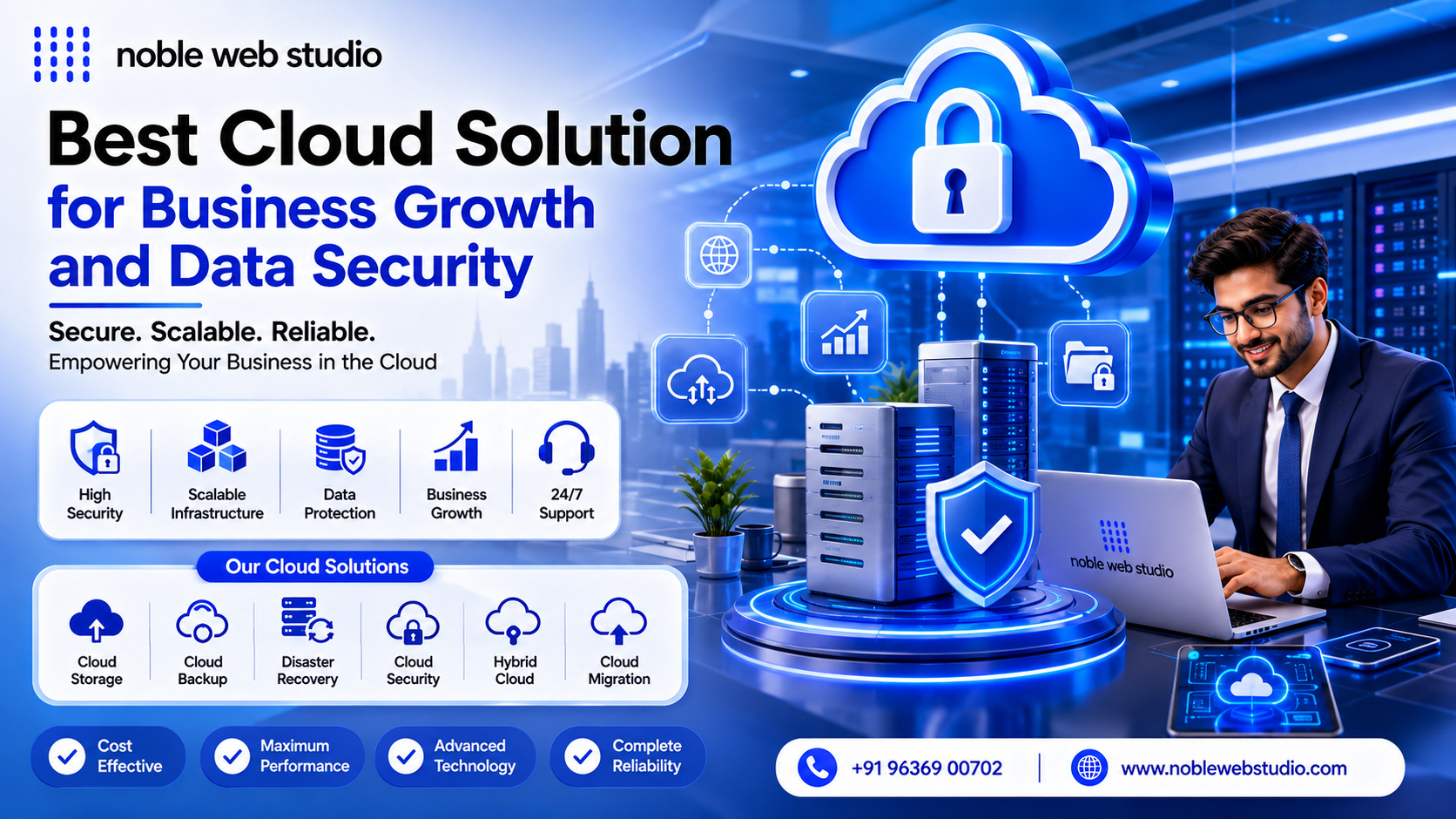
In today’s fast-changing digital world, every business big or small needs technology that can grow with them. This is where scalable cloud solutions come in. From startups to large enterprises, companies are moving to the cloud because it offers flexibility, cost savings, and the power to handle increasing workloads without heavy investment.
Scalable cloud solutions are essential for digital era businesses to achieve growth by providing flexible, on-demand resources that can dynamically adjust to fluctuating workloads, thus enhancing efficiency, cost-effectiveness, and competitiveness. This dynamic resource allocation, often through horizontal scaling (adding more nodes) or vertical scaling (upgrading capacity), ensures high performance during peak times, maintains reliability, and lowers overall infrastructure costs by enabling businesses to pay only for what they use.
With cloud computing, businesses can scale up when demand is high and scale down when it’s low, ensuring smooth operations at all times. Whether it’s data storage, software applications, or business tools, cloud solutions make it easier to work smarter, reduce costs, and deliver better customer experiences.
At Noble Web Studio, we provide secure, scalable, and reliable cloud solutions designed to support your growth in the digital era. If you’re searching for the best way to make your business more flexible, efficient, and future-ready, cloud technology is the answer.
What is Scalable Cloud
In cloud computing, scalability refers to the ability of a system to handle increasing amounts of work, whether that’s a larger number of users, more data, or higher traffic, by adding or removing resources as needed. This means a scalable system can easily adapt to changing demands, ensuring optimal performance and cost-efficiency.
Here’s a more detailed explanation:
Key Concepts:
- Horizontal Scaling: Adding more machines (servers) to distribute the workload. This is like adding more lanes to a highway to accommodate more traffic.
- Vertical Scaling: Increasing the resources of a single machine, like adding more memory or processing power. This is like making a single lane on the highway wider.
- Elasticity: The ability of a system to automatically scale resources up or down based on demand, ensuring optimal performance and cost-effectiveness.
Why is Scalability Important in Cloud Computing?
- Handles fluctuating workloads: Businesses can easily adjust their resources to handle traffic spikes or periods of low activity, preventing performance issues or wasted resources.
- Cost-effectiveness: Pay-as-you-go pricing models mean you only pay for the resources you use, making it more cost-effective than maintaining a fixed infrastructure that may be underutilized.
- Improved performance: Scalability ensures applications can handle increasing loads without performance degradation, maintaining a positive user experience.
- Business growth: As businesses grow, their IT needs change. Scalability allows them to easily expand their resources to accommodate this growth without significant upfront investments.
- Disaster recovery: Scalable systems often include redundancy and failover capabilities, enhancing reliability and minimizing downtime in case of failures.
Example:
An e-commerce website experiencing a surge in traffic during a seasonal sale can leverage cloud scalability to quickly add more servers to handle the increased load. Once the sale is over, the resources can be scaled back down, saving costs.
What Are Scalable Cloud Solutions?
Scalable cloud solutions allow businesses to automatically and dynamically adjust their computing resources, such as processing power, storage, and network capacity, in response to changing workloads and demands. Key technologies enabling this include auto-scaling, load balancing, and orchestration tools while benefits range from handling unpredictable traffic spikes to reducing costs by only paying for consumed resources.
How Scalable Cloud Solutions Work
Scalable cloud solutions achieve flexibility through various methods:
- Auto-scaling: Systems automatically increase resources during peak demand and reduce them during slower periods to match the actual workload, ensuring optimal performance and cost efficiency.
- Load Balancing: Incoming network traffic is distributed across multiple servers to prevent bottlenecks and system overloads, ensuring high availability and consistent performance.
- Orchestration: Tools like Kubernetes manage and automate the deployment, scaling, and operation of containerized applications, simplifying complex architectures.
- Virtualization: Underlying physical hardware is abstracted into virtual machines, which can be easily resized or replicated as needed, providing the foundation for cloud scalability.
Types of Scaling
- Vertical Scaling (Scaling Up): Adding more power to existing resources, such as upgrading to a more powerful server.
- Horizontal Scaling (Scaling Out): Adding more instances of resources, such as adding more servers to a cluster to distribute the workload.
- Hybrid Scaling (Diagonal Scaling): A combination of both vertical and horizontal scaling to meet complex application needs and optimize resource utilization.
Benefits of Scalable Cloud Solutions
- Cost Efficiency: You only pay for the resources you use, avoiding over-provisioning and unnecessary expenses.
- High Performance & Availability: Ensures applications run smoothly and remain accessible, even during unexpected traffic surges, through seamless resource adjustments.
- Business Agility: Businesses can quickly adapt to changing market conditions, innovate faster, and reduce their time to market for new products and services.
- Resilience and Disaster Recovery: Distributed data centers and automated backups provide high availability and facilitate quick recovery from system failures or disasters.
- Improved User Experience: Low latency and quick response times are achieved by deploying applications closer to the end-users.

Why Businesses Need Cloud Solutions in the Digital Era
Businesses need cloud solutions in the digital era to gain flexibility, scalability, cost efficiency, and enhanced security, while also enabling faster innovation and supporting remote work. Cloud platforms provide access to advanced technologies like AI and big data analytics, streamline data management, improve collaboration, and offer a competitive edge in the rapidly evolving digital landscape.
Key Benefits of Cloud Solutions:
- Scalability and Flexibility: Cloud services allow businesses to quickly scale resources up or down as needed, providing the flexibility to adapt to changing market demands without large upfront investments in hardware.
- Cost Efficiency: By adopting a pay-as-you-go model, businesses can eliminate expensive on-premises infrastructure and maintenance costs, allowing them to allocate resources to core business functions.
- Enhanced Security and Compliance: Noble web studio offer advanced security features, data encryption, and compliance support for regulations like GDPR and HIPAA, ensuring data is protected and businesses meet industry standards.
- Accessibility and Remote Work: Cloud platforms provide the flexibility for employees to access data and applications from anywhere with an internet connection, seamlessly supporting remote and hybrid work models.
- Faster Innovation and AI Integration: Cloud computing provides access to cutting-edge tools like AI, machine learning, and big data analytics, enabling businesses to innovate, experiment, and launch new products and services more quickly.
- Improved Collaboration :Cloud-based applications facilitate real-time collaboration among teams and clients, improving communication and streamlining workflows.
- Disaster Recovery: Cloud-based backup and recovery solutions ensure critical business data is protected from cyber threats and system failures, enhancing business continuity.
- Simplified IT Operations: By offloading infrastructure management to cloud providers, businesses can reduce IT overhead and focus on strategic initiatives rather than daily maintenance.
Why Cloud Solutions Are Essential for the Digital Era:
- Digital Transformation: Cloud computing acts as the backbone for digital transformation, providing the necessary agility and scalability to deploy digital solutions rapidly and adapt to new technologies.
- Competitive Advantage: Leveraging cloud-based AI, analytics, and other tools helps businesses make smarter decisions, stay ahead of the competition, and offer personalized customer experiences.
- Future-Proofing: Cloud platforms are continually updated with the latest features and security enhancements, ensuring a business’s digital marketing efforts and overall operations remain relevant and effective in the long term.
Types of Scalable Cloud Solutions
The main types of scalable cloud solutions are vertical scaling (scaling up by adding resources to an existing instance), horizontal scaling (scaling out by adding more instances or servers), and diagonal scaling (a combination of both vertical and horizontal methods). These approaches allow organizations to dynamically adjust their IT resources to meet fluctuating workloads and business demands, with vertical scaling being suited for single-server enhancements and horizontal scaling for distributing loads across multiple machines.
1. Vertical Scaling (Scaling Up)
- Definition: Increasing the capacity of a single server or instance by adding more resources like CPU, RAM, or storage.
- Pros: Simple to implement for certain applications, can increase the performance of a single machine.
- Cons: Often has an upper limit based on the hardware of the existing server, and scaling beyond that limit may require downtime.
- Example: Adding more memory to a single database server to handle increased data processing.
2. Horizontal Scaling (Scaling Out)
- Definition: Adding more machines or servers to distribute a workload across multiple instances.
- Pros: Great for applications requiring high availability and minimal downtime, as more servers can be added or removed without disrupting service.
- Cons: Can be more complex to manage due to the need for load balancing and distributed systems.
- Example: Adding more web servers to handle increased user traffic for a website, as demonstrated by streaming services like Netflix.
3. Diagonal Scaling (Scaling Up & Out)
- Definition: A combination of both vertical and horizontal scaling to provide a more optimized and robust solution.
- Pros: Offers the best of both approaches, providing flexibility for various needs.
- Cons: Can be more complex to implement and manage.
- Example: Increasing the resources of existing servers while also adding more servers to handle a significant, sustained increase in demand.
How These Types Apply to Cloud Solutions
These scaling types are implemented within various cloud environments and services:
- Deployment Models: You can use these scaling strategies within a public cloud (shared resources), private cloud (dedicated resources), or hybrid cloud (a mix of public and private).
- Service Models: The choice of scaling can also depend on the cloud service model you are using, such as Infrastructure as a Service (IaaS), Platform as a Service (PaaS), or Software as a Service (SaaS).
- Elasticity: Cloud elasticity takes scalability a step further by automatically scaling resources up or down based on demand, ensuring high performance and cost-efficiency.

How Scalable Cloud Supports Business Growth
Scalable cloud solutions support business growth by providing on-demand, elastic computing resources that adjust to fluctuating demands, allowing businesses to adapt to market changes, meet customer needs, maintain performance, and avoid costly upfront hardware investments, all while offering significant cost savings through a pay-as-you-go model and facilitating global expansion.
How Scalability Supports Growth
- Flexibility and Agility: Businesses can quickly scale their IT resources up or down to match their needs, enabling them to respond to sudden spikes in demand or changes in market conditions without delay.
- Cost-Effectiveness: Instead of making large capital expenditures on hardware that may not be fully utilized, businesses pay only for the cloud resources they consume, transforming upfront IT costs into predictable operational expenses.
- Performance and Reliability: Cloud scalability ensures that applications and systems can handle increasing user loads, preventing performance degradation and ensuring a smooth user experience, even during peak traffic.
- Rapid Innovation: By providing access to high-powered resources, cloud scalability allows businesses to experiment and innovate more quickly, enabling them to test new ideas and deploy new features without being constrained by traditional IT limitations.
- Global Reach: Cloud platforms make it easier for businesses to expand their operations globally by allowing them to deploy services and applications in different geographic regions without needing to establish a physical infrastructure in each location.
Key Benefits in Detail
- Avoids Infrastructure Bottlenecks: As businesses grow, their IT needs increase. Cloud scalability ensures that the IT infrastructure can grow in tandem with the business, preventing bottlenecks and supporting continuous operations.
- Ensures Business Continuity: Scalable cloud architectures often include built-in redundancy and failover capabilities, which are crucial for effective disaster recovery and maintaining high availability of services even if a failure occurs.
- Enhances Security and Compliance: Scalable cloud systems can be designed to maintain robust security measures and adapt to evolving regulatory requirements as data volumes and compliance landscapes change, helping businesses scale securely and remain compliant.
- Simplifies IT Management: Cloud management services can automate tasks such as resource provisioning, monitoring, and optimization, freeing up IT staff to focus on strategic initiatives rather than routine infrastructure management.
How Scalable Cloud Improves Efficiency and Reduces Costs
Scalable cloud services improve efficiency and reduce costs by dynamically adjusting resources to match demand, using a pay-as-you-go model that eliminates upfront hardware investments and saves money on underutilized capacity. This flexibility enhances performance by ensuring adequate resources during peak loads and reduces expenses by freeing up capital for core business activities rather than on managing physical infrastructure and its maintenance.
How Scalability Improves Efficiency
- Agile Response: Businesses can quickly scale up resources to handle increased workloads or traffic surges and scale down when demand subsides, maintaining optimal performance without overspending.
- Enhanced Performance: By providing the necessary computing power and storage on demand, cloud scalability ensures applications and services remain responsive and reliable, even during busy periods.
- Resource Optimization: Resources are allocated as needed, leading to more efficient utilization and preventing bottlenecks or system failures that can occur with static infrastructure.
- Reduced Maintenance: Noble web studio handle hardware management, maintenance, and updates, freeing up IT staff to focus on more strategic business initiatives.
How Scalability Reduces Costs
- Pay-as-You-Go Model: Instead of large upfront capital investments in hardware, Noble web studio pay only for the resources they consume, converting fixed IT costs into variable ones.
- Elimination of On-Site Infrastructure: Scalable cloud services remove the need for businesses to purchase, house, and maintain their own physical data centers, cutting down on hardware, power, and cooling expenses.
- Reduced Staffing Needs: Less time is spent on routine hardware maintenance, allowing existing IT teams to focus on value-driven tasks and potentially reducing the need for additional IT personnel.
- Economies of Scale: Noble web studio can offer infrastructure at lower costs due to their large-scale investments and optimized resource utilization, which is then passed on to their customers.

Key Features to Look for in Scalable Cloud Services
Scalable cloud computing features include auto-scaling, vertical and horizontal scaling to dynamically adjust resources like processing power and storage, elasticity for on-demand adjustments to handle fluctuating workloads, cost-efficiency by paying only for used resources, built-in security measures like load balancing and firewalls, and high reliability through automated backups and redundant infrastructure.
Types of Scaling
- Vertical Scaling (Scaling Up/Down): Adding or removing more powerful resources, such as increasing CPU or RAM, to a single server to handle increased demand.
- Horizontal Scaling (Scaling Out/In): Adding or removing more servers or nodes to a cluster to distribute the workload and increase capacity.
Key Features
- Auto-Scaling: The ability to automatically adjust resources based on predefined triggers, such as traffic spikes or performance thresholds.
- Elasticity: The capability to quickly and easily increase or decrease resources in response to fluctuating demand, ensuring optimal performance and cost-efficiency.
- Cost Efficiency: Businesses only pay for the resources they use, avoiding the upfront costs of purchasing and maintaining physical hardware.
- Reliability: Scalable clouds offer built-in redundancy and automated backups across distributed data centers, ensuring data availability and business continuity even during failures or disasters.
- Rapid Elasticity: The speed at which cloud resources can be provisioned and de-provisioned to meet changing demands, often with minimal or no downtime.
- Load Balancing: Distributing incoming traffic across multiple servers to prevent bottlenecks and ensure high availability and performance.
- Flexibility: The capacity to easily add or remove different types of resources (storage, computing, networking) to meet a variety of business needs.
- Automation: Features that automate scaling processes, monitoring, and resource management, allowing IT teams to focus on strategic tasks.
Benefits of Scalable Cloud for Business Growth
The primary benefits of cloud scalability are cost savings, as you only pay for the resources used, and increased performance and efficiency, by dynamically adjusting resources to match demand, which ensures high availability and speed. Other advantages include flexibility to handle unpredictable workloads, faster disaster recovery, improved availability, and quicker time to market for new products and services by simplifying resource allocation.
Here are the key benefits of scalable cloud solutions:
Cost-Effective Resource Utilization
- Pay-as-you-go: You only pay for the computing power, storage, and other resources you actually use, reducing wasted spending on idle capacity.
- Eliminates upfront investment: Avoids the significant upfront costs of purchasing and maintaining your own physical infrastructure.
Enhanced Performance and Availability
- Dynamically adjust resources: Easily scale resources up or down to meet fluctuating demand, preventing performance bottlenecks during peak times and ensuring consistent service.
- High availability and reliability: Noble web studio offer distributed data centers and automated backups, which enhance resilience and minimize service disruptions.
- Improved user experience: By deploying services closer to users in different geographic regions, cloud scalability leads to lower latency and faster response times.
Agility and Innovation
- Rapid response to demand: Quickly allocate more computing power and storage to handle spikes in traffic or workload, such as during seasonal peaks.
- Faster development cycles: Streamlines the process of deploying new applications and services, reducing the time it takes to get products to market.
- Future-proof your business: The ability to adapt resources as your business grows makes your infrastructure flexible and ready for future development.
Improved Disaster Recovery
- Cost-effective disaster recovery: Scale resources only when needed for disaster recovery purposes, making it more affordable than maintaining separate physical data centers.
- Business continuity: Enables quick scaling of resources in different regions during a disaster or system failure to sustain operations and minimize disruption.
Industries Benefiting from Scalable Cloud Solutions
Scalable cloud solutions benefit nearly all industries, with significant advantages for dynamic sectors like Finance, Healthcare, Retail, and Energy by offering cost-efficiency, enhanced agility, improved performance, and increased resilience. Industries with fluctuating workloads or heavy data processing needs, such as Manufacturing and Media, particularly benefit from the ability to scale resources up or down rapidly. Scalability also supports innovation, allows for global reach, and enables easier integration of new technologies, benefiting everything from educational institutions to large enterprises.
General Benefits of Scalable Cloud Solutions
- Cost Efficiency: Businesses only pay for the resources they use, avoiding the high capital expenditure of owning and maintaining infrastructure.
- Business Agility: The ability to quickly scale resources up or down helps businesses adapt to changing market demands, seasonal peaks, and new opportunities.
- Enhanced Performance: Scalable cloud solutions ensure continuous high performance by automatically provisioning more resources to handle increased demand, preventing bottlenecks.
- Improved Reliability & Disaster Recovery: Scalable environments offer resilience, ensuring services remain available even during system failures or disruptions.
- Accessibility: Cloud-based applications and data can be accessed from any device with an internet connection, improving collaboration and productivity.
Industry-Specific Examples
- Financial Services: Handle large volumes of transaction data and address regulatory requirements (like KYC) with minimal latency.
- Healthcare: Analyze data to compare readmission rates with industry peers, monitor patient data, and manage electronic health records.
- Retail: Deliver real-time “next best offers” to customers and integrate data from various applications, improving customer experience.
- Energy: Monitor energy systems, provide customers with usage reports, and enhance security against cyberattacks.
- Education: Provide students and teachers with access to the latest digital tools and resources, improving the quality of education despite budget constraints.
- Manufacturing: Monitor production lines, manage supply chains, and adapt to fluctuating production needs.
- Media: Handle large, dynamic content libraries and deliver content efficiently to global audiences.

Cloud Security: Protecting Data in the Digital World
Cloud security protects cloud-hosted data and infrastructure from cyber threats by implementing technical controls like encryption, access management, and data loss prevention, along with policies, user training, and disaster recovery plans. Key aspects include ensuring data confidentiality, integrity, and availability, adhering to regulatory compliance, and understanding the shared responsibility model where Noble web studio and users secure their respective parts of the cloud environment.
What Cloud Security Does
- Protects Cloud Data: Safeguards data in the cloud (at rest) and as it moves (in transit) from unauthorized access, theft, and manipulation.
- Secures Infrastructure: Protects the underlying cloud infrastructure, applications, and virtualized environments.
- Ensures Compliance: Helps organizations meet regulatory requirements like GDPR by managing data, providing visibility, and ensuring compliance with security standards.
- Provides Resilience: Facilitates disaster recovery and automated backups, allowing for quick data restoration and minimizing downtime.
Key Components and Practices
- Encryption: Secures data by making it unreadable to unauthorized individuals, protecting it both when stored and while being transferred.
- Access Management: Utilizes strong authentication, multi-factor authentication (MFA), and role-based access controls (RBAC) to ensure only authorized users can access data.
- Threat Detection & Response: Employs technologies like SIEM and AI-driven tools to monitor, detect, and respond to suspicious activities in real-time.
- Data Loss Prevention (DLP): Discovering, classifying, and anonymizing sensitive data to prevent violations and data breaches.
- Regular Updates & Patching: Promptly updating software and systems to fix vulnerabilities and prevent their exploitation.
- User Education: Training employees on best security practices, recognizing phishing attempts, and adhering to secure cloud usage.
Shared Responsibility Model
- Noble web studio are responsible for the security of the cloud, meaning the security of the underlying infrastructure.
- Customers are responsible for security in the cloud, which includes securing their data, configurations, applications, and user access.
Steps to Move Your Business to the Cloud
To move your business to the cloud, follow these general steps: Assess your current IT infrastructure and identify business goals, Plan your migration by choosing a strategy like Noble web studio and creating a detailed roadmap, Execute the migration in phases, starting with non-critical workloads, Monitor your new cloud environment for performance and security, and finally, Optimize your setup to maximize cloud benefits and continuously improve efficiency.
1. Prepare and Assess
- Define Business Goals: Determine why you’re moving to the cloud, such as improving scalability, cost savings, or agility.
- Conduct a Readiness Assessment: Perform a comprehensive inventory of your existing IT assets, including applications, data, infrastructure, and dependencies.
- Map Dependencies: Understand how your applications and systems interact to avoid issues during migration.
2. Plan and Strategize
- Choose Your Strategy: Select a cloud migration strategy, such as rehosting, replatforming, or refactoring, to determine how your applications will be adapted to the cloud.
- Select a Cloud Provider: Choose a Noble web studio that meets your needs for global availability, security, and services.
- Develop a Detailed Plan: Create a step-by-step roadmap, including timelines, milestones, risk management strategies, and resource allocation.
3. Migrate
- Start Small: Begin by migrating non-critical applications and low-risk workloads to gain experience and identify potential issues.
- Execute in Phases: Migrate in stages, starting with non-critical workloads to test the process and identify challenges.
- Migrate Data and Applications: Move your workloads, ensuring data consistency and security during the transfer.
- Validate the Migration: After each migration phase, test applications and systems to ensure they are functioning correctly.
4. Operate and Optimize
- Monitor Performance: Continuously monitor your cloud environment’s performance and adjust as needed.
- Optimize Costs: Track expenses and optimize your cloud usage and architecture to control costs effectively.
- Maintain Security: Implement strong security measures and regularly update them to protect your data and maintain compliance.
5. Train Your Team
- Upskill Employees: Ensure your workforce has the necessary skills and training to manage and work with the new cloud-based resources.

Future of Cloud Solutions in Business Growth
Future cloud solutions will accelerate business growth through AI-driven platforms, serverless computing, and multi-cloud strategies offering unprecedented scalability, efficiency, and innovation. Emerging trends also include a greater focus on green cloud initiatives, the expansion of edge computing, and the development of cloud-native applications to enable faster, more secure, and more adaptive business operations in a competitive digital landscape.
Key Trends and Technologies Shaping the Future of Cloud
- AI and Machine Learning: Cloud services will become increasingly intelligent, automating tasks, generating insights from data, optimizing resource allocation, and even providing personalized customer experiences and treatment plans in healthcare.
- Serverless Computing: This model allows businesses to run code without managing servers, leading to significant cost savings and greater flexibility and performance.
- Edge Computing: By moving data processing to the edge of networks, businesses can reduce latency and collect/process data closer to the source, enabling faster responses and more distributed cloud environments.
- Multi-Cloud and Hybrid Strategies: Noble web studio will increasingly use multiple cloud and integrate them to gain flexibility and avoid vendor lock-in, requiring expertise in managing these complex environments.
- Cloud-Native Development: This approach focuses on building applications designed specifically for cloud environments, leading to more agile, resilient, and scalable software.
- Sustainability: Green cloud initiatives will focus on reducing the environmental impact of data centers and cloud infrastructure through energy efficiency and shifts in processing locations.
How These Solutions Drive Business Growth
- Enhanced Agility: Businesses can quickly adapt to market changes and scale resources up or down as needed, leading to faster time-to-market for new products and services.
- Cost Efficiency: Server less computing and optimized resource allocation reduce operational costs, while cloud-based applications can lower the overall IT infrastructure burden.
- Innovation: Integration of AI and other emerging technologies in the cloud fosters innovation, allowing businesses to develop new, data-driven solutions and improve customer experiences.
- Improved Security and Compliance: Advanced cloud security measures, encryption, and robust compliance tools help businesses protect sensitive data and meet industry-specific regulations.
- Seamless Collaboration: Cloud platforms provide the infrastructure for remote work and enable teams to collaborate more effectively, regardless of their physical location.
Why Choose Noble Web Studio for Cloud Solutions?
Businesses choose cloud solutions from Noble Web Studio for significant cost savings by avoiding large upfront hardware investments, enhanced flexibility and scalability to meet changing demands, improved data security and reliability, and greater accessibility for a mobile and remote workforce. Cloud platforms also promote faster innovation, automate updates, facilitate collaboration, and offer sustainability benefits by reducing energy consumption, providing a comprehensive path to digital transformation and competitive advantage.
Key Reasons to Choose Cloud Solutions
- Cost Savings: Migrating to the cloud reduces upfront capital expenses for hardware and software, shifting to a pay-as-you-go model that often leads to lower overall IT costs.
- Scalability & Flexibility: Cloud platforms offer unparalleled ability to scale resources up or down quickly to match demand, providing flexibility to adapt to changing business needs and rapidly deploy applications.
- Enhanced Security: Noble web studio invest heavily in sophisticated security measures, including advanced encryption and multi-factor authentication, to safeguard data and infrastructure from cyberthreats.
- Improved Reliability & Disaster Recovery: Data is often backed up across geographically distributed data centers, increasing reliability and providing robust disaster recovery capabilities to ensure business continuity.
- Accessibility & Collaboration: Cloud-based solutions enable anytime, anywhere access to data and applications, fostering better collaboration among teams, partners, and customers across different locations.
- Automated Updates & Maintenance: Noble web studio manage software updates and system maintenance, freeing IT departments from manual tasks and ensuring access to the latest technologies.
- Faster Innovation & Market Entry: With access to pre-built services and tools, businesses can experiment with new technologies and launch products and services to market more quickly.
- Reduced Administrative Workload: The cloud shifts the responsibility for managing underlying infrastructure to the Noble web studio, allowing organizations to focus on their core business objectives.
- Sustainability: Cloud services can help reduce a company’s carbon footprint through efficient energy usage and optimized operations within large, modern data centers.
Noble Web Studio Delivering Cloud Solutions for Every Business Need
Noble Web Studio delivers cloud solutions that provide businesses with flexible IT resources and services over the internet, eliminating the need for on-premises hardware and software. This model offers advantages like cost efficiency, enhanced scalability, improved data management and analytics, greater collaboration, and faster innovation by providing access to advanced technologies such as AI and machine learning. Noble Web Studio offering different service models like Software as a Service (SaaS), Infrastructure as a Service (IaaS), and Platform as a Service (PaaS) to meet diverse business needs.
Key Benefits of Cloud Solutions
- Cost Savings: Reduces capital expenses for hardware and infrastructure, shifting costs from capital expenditure to predictable operational expenses.
- Scalability and Flexibility: Allows businesses to easily scale computing resources up or down based on demand, adapting to market changes.
- Enhanced Collaboration: Facilitates seamless document sharing and data access, improving productivity and teamwork.
- Advanced Analytics: Provides access to big data and analytics tools, including machine learning and AI, for data-driven decision-making.
- Increased Innovation: Enables faster development and deployment of applications, especially with tools like DevOps and serverless computing.
- Improved Security and Compliance: Leverages the security expertise and certifications of major cloud providers to meet regulatory requirements.
How Cloud Solutions Are Delivered
Cloud services are delivered through various models:
- Software as a Service (SaaS): Noble Web Studio are provided Applications for over the internet, such as email and CRM solutions.
- Infrastructure as a Service (IaaS): Basic computing resources like servers and storage are offered, allowing businesses to manage their own applications on top of the infrastructure.
- Platform as a Service (PaaS): Noble Web Studio Provides a platform for developing and running applications, including operating systems and development tools.

Conclusion
In today’s digital era, every business needs technology that can grow with them. Scalable cloud solutions make this possible by offering flexibility, security, and cost savings while ensuring smooth operations. Whether you are a startup, retailer, or enterprise, moving to the cloud helps you manage data, improve customer experience, and support business expansion without heavy investments.
Scalable cloud solutions are a strategic necessity, not a trend, providing businesses with the efficiency, flexibility, and innovation needed to thrive and grow in the digital era. By adopting scalable cloud infrastructure, organizations can dynamically adjust resources, accelerate innovation, and maintain agility, ensuring they remain competitive and resilient against market volatility. This strategic integration is crucial for future-proofing a business, unlocking its potential, and creating a competitive advantage in a rapidly evolving global marketplace.
At Noble Web Studio, we provide cloud-based solutions designed to match your business needs, ensuring high performance, reliability, and 24/7 support. By choosing the right scalable cloud platform, you can unlock new opportunities, handle future growth with ease, and stay ahead in the competitive market.
If you are ready to grow your business with the power of cloud technology, Noble Web Studio is here to guide you with trusted, secure, and future-ready solutions.
FAQ
Scalable cloud solutions are cloud services that can grow or shrink based on your business needs. You only pay for what you use, which makes them cost-effective and flexible.
They help businesses handle more customers, data, and applications without worrying about servers or hardware. This means faster growth, better performance, and reduced costs.
For small businesses, scalable cloud solutions provide low-cost storage, hosting, and software access. Startups can launch quickly without investing in expensive IT infrastructure.
Main benefits include cost savings, flexibility, data security, easy collaboration, and business continuity. You can expand anytime as your customer base grows.
Look for reliable providers like Noble Web Studio that offer secure, scalable, and customized cloud services with 24/7 support and easy integration.
Yes, most providers use advanced encryption, firewalls, and backups to protect data. Choosing a trusted provider ensures your business runs safely in the cloud.
Absolutely. Employees can access files, apps, and tools from anywhere, making remote work smooth and efficient.
The cost depends on usage and services. With scalable solutions, you only pay for the resources you use, making it budget-friendly for all business sizes.