Ankit

Are you planning to start your own online recharge business or expand your existing digital services? Recharge Website Development is an effective way to establish an online platform where customers, retailers, and distributors can access supported recharge and digital payment services through a single, user-friendly website.
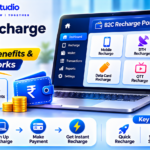
Recharge website development builds digital platforms for mobile prepaid top-ups, DTH services, utility bill payments (BBPS), FASTag, and multi-tier B2B or B2C network management.
At Noble Web Studio, we understand that a successful recharge business requires more than just a website with a recharge form. It needs a reliable recharge platform with a smooth user experience, secure payment integration, recharge API connectivity, transaction management, and an efficient administration system.
Whether you want to launch a B2C mobile recharge website, develop a B2B retailer and distributor portal, or create a fully customized white label recharge platform, choosing the right mobile recharge website development approach is essential for your business.
Our recharge website development approach focuses on creating scalable, responsive, and business-oriented platforms that can be tailored to your requirements. Depending on your business model, mobile recharge platform can include mobile recharge, DTH recharge, data card recharge, utility bill payments, digital wallet management, transaction tracking, commission management, and multiple user dashboards.
With a well-planned mobile recharge website development solution, you can bring different recharge services together, simplify daily operations, manage customer transactions, and create a professional digital presence under your own brand.
In this comprehensive guide, we will explain everything you need to know about recharge website development, including essential features, B2B and B2C recharge platform, recharge API integration, payment gateway connectivity, development processes, security considerations, and cost-related factors.
If you are looking for a professional solution to turn your recharge business idea into a functional online platform, Noble Web Studio can help you plan the right development strategy according to your business requirements.
What Is Recharge Website Development?
Recharge website development is the process of building an online digital platform that lets users process prepaid and postpaid mobile recharges, Direct-to-Home (DTH) top-ups, utility bill payments (electricity, water, gas), and related financial or micro-payment services.
Essential Features of a Recharge Website
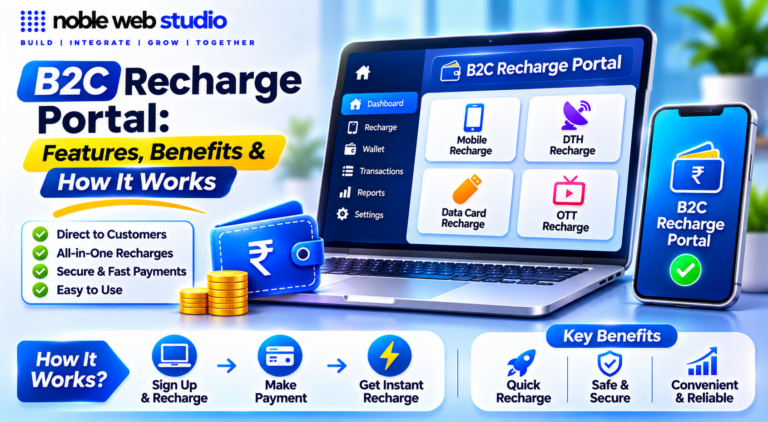
An online recharge website provides a fast, centralized platform for users or retailers to handle mobile recharges, DTH top-ups, data packs, and utility bill payments.
Core User & Front-End Features
- Simple Registration and Login: Quick onboarding via mobile number, OTP verification, or email login.
- User-Friendly Interface: Clean, clutter-free dashboards with fast navigation and minimal ads on the main landing page.
- Multi-Operator & Multi-Service Support: Compatibility with major telecom providers (such as Jio, Airtel, Vi, and BSNL), DTH services, and 25+ bill categories (like electricity, gas, water, and FASTag).
- Live Plan Browsing: Real-time lookup of up-to-date prepaid, data, and DTH plans mapped to specific operators and geographical circles.
- Pre-Payment Bill Fetching: Automatic retrieval of exact due amounts and subscriber details before completing a transaction.
- E-Wallet Integration: Built-in digital wallets allowing users to store funds, get instant refunds for failed transactions, or make one-click recharges.
- Transaction History and Status Tracking: Detailed logs of past recharges, receipts, and live status updates (Success, Pending, or Failed).
Backend & Technical Features
- Payment Gateway Integration: Support for diverse payment methods including UPI, credit/debit cards, net banking, and wallets.
- Recharge & Bill Payment APIs: Seamless backend integration with telecom servers, payment switches, and infrastructure like Bharat Bill Payment System (BBPS).
- Smart Routing & Real-Time Processing: Automated operator detection and intelligent request routing that routes traffic through the most reliable gateway.
- Admin Dashboard: A control panel for site owners to monitor live transactions, manage profit margins/commissions, view revenue analytics, and block or unblock specific operators during downtime.
- Security & Encryption: SSL encryption, two-factor authentication (2FA), and fraud detection to safeguard user financial data.
- 24/7 Automated Operations: Continuous uptime so automated recharges and callbacks process instantly around the clock.
Why Should You Invest in Recharge Website Development?
Investing in recharge website development provides a scalable entry point into the high-demand digital payments and fintech ecosystem.
Key Reasons to Invest
- Constant Utility Demand: Mobile recharges, DTH services, and utility bill payments are daily necessities across both urban and rural regions, ensuring consistent, year-round traffic.
- Multiple Revenue Streams: A dedicated recharge platform lets you earn recharge commission or service fees on mobile/DTH top-ups, electricity, gas, water bills, domestic money transfers (DMT), and AEPS services.
- Empowering Retail Networks: You can scale your business model from a direct-to-consumer (B2C) portal into a business-to-business (B2B) white label recharge software network, allowing local shopkeepers and small retailers to use your portal as digital agents.
- High Customer Retention: Noble web studio offering instant transaction confirmations, automated wallet systems, multi-operator plans, and integrated bill fetch APIs builds long-term user trust and repeat visits.
- Low Overhead and Scalability: Compared to physical inventory businesses, a digital recharge platform features lower startup overheads, automated backend synchronization via mobile recharge API and easy feature expansion.
Types of Recharge Websites Businesses Can Build
Businesses can build several distinct types of recharge websites depending on their target audience, operational role in the payment chain, and monetization strategy:
1. B2C (Business-to-Consumer) Recharge Websites
- Target Audience: Direct end-consumers.
- How It Works: Customers visit the website directly to recharge their own mobile numbers, renew DTH packages, or pay monthly utility bills (electricity, water, gas, broadband) using UPI, credit/debit cards, or net banking.
- Monetization: Driven by small operator commissions, cashback/volume incentives, or convenience fees.
2. B2B Retail Agent / Multi-Recharge Portals
- Target Audience: Local shopkeepers, small retail stores, or neighborhood agents.
- How It Works: A centralized recharge portal where registered local retailers load money into a digital wallet and process recharges or bill payments on behalf of walk-in customers.
- Monetization: The portal owner, distributors, and retail agents share commission margins on every completed transaction.
3. White-Label Recharge Platforms
- Target Audience: Entrepreneurs and sub-brands who want their own branded fintech ecosystem without building recharge software from scratch.
- How It Works: Noble web studio licenses a ready-made, customizable engine that lets the business owner put their own logo, custom domain, and multi-tier distributor/retailer hierarchy in place.
4. Multi-Service Utility & Bill Payment Platforms
- Target Audience: Consumers or agents looking for an all-in-one financial utility hub.
- How It Works: Expands beyond basic telecom/DTH top-ups to integrate Bharat Bill Payment System (BBPS) APIs for fastags, credit card bill payments, cash management systems, and municipal utilities.
- Monetization: High-frequency monthly retention yields steady transaction volume and stacked recharge commission structures.
Recharge Website Development for Different Business Models
Developing a recharge website requires tailoring the architecture, user roles, and workflows to your specific business model. Whether you are serving end-consumers directly or building a multi-layered distribution network, the technical framework changes significantly.
1. B2C (Business-to-Consumer) Model
- Target Audience: Individual end-users topping up their own mobile phones, DTH, or paying utility bills.
- Core Focus: Speed, simplicity, minimal clicks, and trust.
- Key Features:
- Clean, responsive UI/UX for mobile and web browsers.
- Quick-search operator/circle detection (e.g., auto-fetching state/operator via mobile number).
- Integrated payment gateways (UPI, credit/debit cards, net banking, digital wallets).
- Instant transaction receipts, SMS/email confirmations, and basic complaint-raising modules.
- Tech Stack Needs: Lightweight frontend (React/Flutter/HTML-CSS), high-speed caching (Redis) for plan lookups.
2. B2B / Multi-Level Distributor Model
- Target Audience: Master distributors, distributors, and local retailers who resell recharges to walk-in customers.
- Core Focus: Hierarchy management, commission structures, and wallet-to-wallet transfers.
- Key Features:
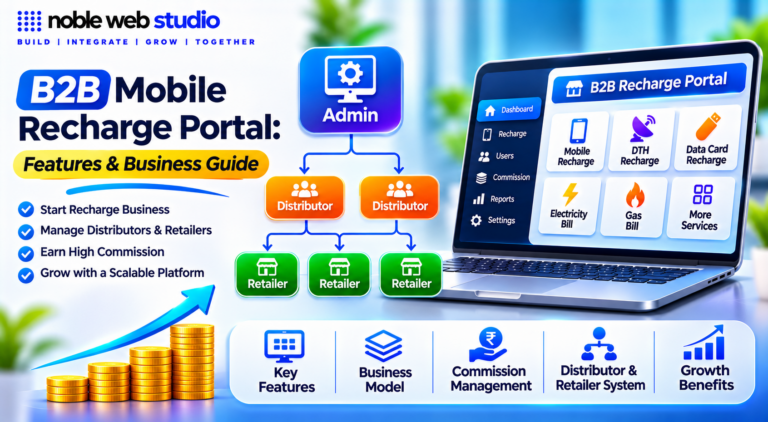
- Multi-Tier Hierarchy: Admin → Master Distributor → Distributor → Retailer.
- Wallet & Credit System: Pre-funded main wallets, commission-earned sub-wallets, and credit-limit controls by the admin.
- Custom Commission Rules: Margin settings carved out per operator, service type, or downline tier.
- Extensive Admin Panel: Operator block/unblock controls, live transaction monitoring, ledger reports, and dispute resolution desks.
- Tech Stack Needs: Robust relational database (MySQL/PostgreSQL) with strict ACID compliance for financial ledger accuracy and real-time balance reconciliation.
3. White-Label & Reseller Model
- Target Audience: Entrepreneurs or smaller brands wanting their own branded recharge portal without building the engine from scratch.
- Core Focus: Multi-tenancy, custom branding (logos, colors, domains), and isolated sub-admin access.
- Key Features:
- Dynamic theme and domain mapping per reseller client.
- Tiered pricing or usage-based pricing models for software licensing.
- Centralized API/operator management managed by the Noble web studio, while individual resellers handle their own client base.
- Tech Stack Needs: Multi-tenant architecture allowing isolated databases or schema separation per brand.
4. Expanding Beyond Basic Recharges (All Models)
To maximize profitability since plain-vanilla mobile recharges carry razor-thin margins modern recharge website development typically bundles:
- BBPS (Bharat Bill Payment System) for electricity, water, and gas bills.
- DMT (Domestic Money Transfer) and AePS (Aadhaar-enabled Payment System) for rural/semi-urban retail hubs.
- Travel & Bulk SMS APIs to diversify revenue streams.
Step-by-Step Recharge Website Development Process
Building a mobile or DTH recharge website requires combining standard web development steps with specialized financial and telecom API integrations (such as operator plans and payment gateways).
Step 1: Define Requirements & Business Model
- Target Audience: Decide if it is a B2C mobile recharge portal (direct consumers), a B2B network (retailers/distributors), or an best recharge API-based reseller model.
- Services Needed: List what you will support prepaid/postpaid mobile recharges, DTH, data cards, electricity, or utility bill payments.
- Compliance & Legal: Review local digital payment rules, KYC requirements (if running a wallet or B2B agent network), and data privacy laws.
Step 2: Choose the Technology Stack
- Frontend (Client-Side): React.js, Vue.js, or HTML/CSS/JavaScript for a fast, responsive user interface.
- Backend (Server-Side): Node.js, Python (Django/Flask), or PHP for handling business logic and recharge API requests.
- Database: MySQL, PostgreSQL, or MongoDB to store user profiles, transaction logs, and ledger balances.
- Hosting & Cloud: AWS, Google Cloud Platform (GCP), or DigitalOcean with an SSL certificate for secure transactions.
Step 3: Integrate Telecom & Utility APIs (Recharge Engine)
- Partner with best mobile recharge API or direct telecom operators (e.g., BBPS in India or regional telecom providers).
- Fetch live operator plans, circle/state detection, and commission structures.
- Build automated callback/webhook handlers to verify if a recharge succeeded, failed, or is pending in real time.
Step 4: Integrate Payment Gateways & Wallets
- Connect payment gateways to accept UPI, credit/debit cards, and net banking.
- Implement an internal recharge wallet system so retailers or users can keep pre-loaded balances for instant one-click recharges.
Step 5: Design UI/UX & Build the Forms
- User Authentication: Mobile number verification (OTP-based login) and role-based permissions (Admin, Retailer, User).
- Recharge Form: A clean input interface where users select the operator, enter a phone number/ID, pick a plan from a browser pop-up, and review details.
- Make the interface mobile-friendly, as most recharge traffic happens on smartphones.
Step 6: Testing & Quality Assurance (QA)
- Functional Testing: Verify that recharge requests, wallet deductions, and status callbacks trigger properly.
- Security Testing: Check for SQL injection, XSS, and encryption of user data and recharge API keys.
- Cross-Browser & Device Testing: Ensure smooth rendering on Chrome, Safari, iOS, and Android browsers.
Step 7: Launch & Post-Launch Maintenance
- Point your domain to the production server and install an active SSL/TLS certificate.
- Monitor transaction logs, server uptime, and top mobile recharge API latency continuously.
- Set up automated database backups and customer support or ticketing modules.
How Much Does Recharge Website Development Cost?
Developing a mobile or utility recharge website or platform involves several components including the core web portal, admin and user/recharge retailer panel, fast recharge API, and payment gateways.
Cost Breakdown by Development Approach
- White-Label / Ready-Made Packages (Starter to Mid-Range): ₹7,400 to ₹25,000 (one-time or entry packages). Best for starting quickly with pre-built operator integrations and standard brand customization.
- Advanced White-Label / Master Reseller Packages: ₹35,000 to ₹75,000+. Includes multi-level distributor hierarchies, automated wallets, and commission management.
- Baseline Custom / Low-Cost Development: ₹40,000 to ₹1,00,000. Involves custom-built web portals, basic B2B/B2C panels, and initial mobile recharge API integration.
- Custom Web App / Platform Development: ₹1,50,000 to ₹10,00,000+ depending on mid-to-high complexity, custom security, and scalable multi operator recharge API routing.
Core Component Cost Drivers
- Recharge APIs: ₹20,000 to ₹30,000+ (or per-transaction operational fees).
- Payment Gateway Setup & Integration: ₹5,000 to ₹50,000 (plus gateway transaction percentage fees).
- Domain & Web Hosting / Server Infrastructure: ₹500 (domain) + ₹10,000 to ₹20,000+ per year for reliable cloud/VPS hosting capable of handling high concurrent traffic.
- Android App / Multi-Platform Add-on: Adds design, deployment, and ongoing Play Store policy maintenance.
Ongoing / Recurring Costs (Post-Launch)
The initial build is often a fraction of the total cost. You should budget for:
- Server & Security Maintenance: Regular backups, SSL certificates, and security patches.
- API & Operator Changes: Handling telecom operator or utility API updates when endpoints change.
- Customer / Retailer Support & Bug Fixes: Monthly retainers or dedicated technical support.
Security Considerations for Recharge Website Development
Developing a secure mobile recharge and bill-payment website requires strict protection mechanisms because the recharge admin platform directly handles financial transactions, user data, and sensitive telecom APIs.
1. Data Encryption & Transport Security
- SSL/TLS Encryption: Enforce HTTPS by default across all pages (not just the checkout/login) to encrypt data in transit and prevent Adversary-in-the-Middle (AitM) attacks.
- End-to-End Encryption (E2EE): Encrypt sensitive payloads (such as mobile recharge API tokens, user wallet balances, and stored profile data) both in transit and at rest in the database.
- PCI-DSS & Payment Gateway Compliance: Never store raw credit card numbers, CVVs, or sensitive banking credentials on your own server. Rely strictly on tokenized, certified payment gateways.
2. Authentication & Access Control
- Multi-Factor Authentication (MFA / 2FA): Require strong authentication for best recharge admin panel, retailer accounts, and high-value customer actions.
- One-Time Passwords (OTP): Use SMS or mobile recharge commission app-based OTPs for high-risk actions like wallet top-ups, large recharges, or login verification.
- Role-Based Access Control (RBAC): Apply the principle of least privilege across back-end operators, customer support, and recharge admin dashboard so users only access what their role strictly requires.
- Session Management: Randomize session identifiers, use secure/HttpOnly cookies, and enforce automatic timeouts for inactive sessions.
3. Input Validation & Code Security
- Server-Side Validation: Treat all user input (phone numbers, operator codes, recharge amounts) as untrusted; validate length, type, and format strictly on the server side.
- SQL Injection & XSS Prevention: Use Parameterized Queries or Object-Relational Mappings (ORMs) to stop SQL injections, and context-aware output encoding to prevent Cross-Site Scripting (XSS).
- CSRF Tokens: Implement anti-Cross-Site Request Forgery tokens on all state-changing forms and recharge API endpoints.
4. Infrastructure & Threat Protection
- Web Application Firewall (WAF): Deploy a WAF (such as Cloudflare) to filter malicious traffic, block automated bot-scraping, and mitigate Distributed Denial of Service (DDoS) attacks.
- API Security & Failover: Secure third-party telecom and utility APIs with signed requests, IP whitelisting, and automated failover switching to prevent transaction spoofing or hanging states.
- Security Misconfigurations: Disable directory browsing, remove default/debug endpoints in production, and run regular hardening checks.
5. Monitoring, Logging & Maintenance
- Audit Logs: Maintain immutable, centralized logs for all financial transactions, login attempts, and administrative actions to trace anomalies.
- Automated Backups: Schedule encrypted, off-site database backups with tested restoration procedures.
- Dependency Patching: Keep all backend frameworks, CMS plugins, and server libraries updated to patch known vulnerabilities.
SEO and Performance for a Recharge Website
Optimizing a mobile recharge website requires balancing high-intent local/transactional SEO with lightning-fast mobile performance, as users expect instant load times and quick checkout flows.
1. Performance & Core Web Vitals Optimization
Recharge sites are heavily mobile-centric. Slow performance directly spikes bounce rates and hurts conversions. Focus heavily on Google’s Core Web Vitals:
Largest Contentful Paint (LCP < 2.5s):
- Optimize and compress carrier logos, banners, and hero assets using modern formats like
WebPorAVIF. - Preload key hero elements and request the primary above-the-fold interface early.
Interaction to Next Paint (INP < 200ms):
- Streamline your JavaScript execution. Heavy tracking scripts, third-party chat widgets, or bloated form-validation scripts can freeze the main thread when a user taps a carrier or enters a phone number.
- Defer non-critical JS and break up long-running tasks.
Cumulative Layout Shift (CLS < 0.1):
- Explicitly define width and height attributes on all images, ads, and operator dropdowns so the screen doesn’t jump around as elements finish loading.
Infrastructure & Caching:
- Use a reliable Content Delivery Network (CDN) like Cloudflare or Akamai to cache static assets close to your regional users.
- Enable fast server response times (Time to First Byte / TTFB).
2. Technical and On-Page SEO Strategy
Recharge queries are typically high-intent, transactional, and localized (e.g., “Jio recharge online”, “Vi prepaid plan”, “Airtel fast recharge”).
Keyword & Intent Architecture:
- Create dedicated, unique landing pages for each operator, circle/region, and plan type rather than dumping everything onto a single cluttered homepage.
- Avoid thin or duplicate operator pages enrich them with updated plan tables, FAQs, and clear call-to-action buttons.
Mobile-First Indexing:
- Google indexes and ranks your site based on its mobile version. Ensure that buttons (like operator selectors or payment triggers) are finger-friendly (at least 48×48 pixels) with proper spacing.
Structured Data (Schema Markup):
- Implement
FAQPageschema for common recharge/billing questions andProduct/Offerschema where applicable to help search engines parse your service offerings.
Crawlability & Index Management:
- Ensure your
robots.txtand XML sitemaps cleanly expose active plan/recharge routes while blocking transactional/cart/account-state URLs that waste crawl budget. - Set up Google Search Console to monitor mobile usability and crawl errors.
3. User Experience (UX) Tied to SEO
- Frictionless Checkout: If users have to bounce through heavy 3rd-party redirects or slow manual logins just to view plans, dwell time drops and bounce rates rise metrics that indirectly signal poor quality to search engines.
- Clear Value and Trust Signals: Display clear security badges, instant-confirmation guarantees, and transparent pricing to build E-E-A-T (Experience, Expertise, Authoritativeness, Trustworthiness).
Mobile-Friendly Recharge Website Design and Website Performance Optimization
A mobile-friendly recharge website must prioritize instant speed, frictionless payment flows, and clear touch-friendly layouts to prevent user drop-off.
Mobile-Friendly Recharge Website Design
- Mobile-First Approach: Design the interface starting from small smartphone screens (320px–480px width) before scaling up to desktop, ensuring key entry fields (phone number, operator selection, circle/region) sit comfortably in the thumb zone.
Streamlined Recharge Funnel:
- Step 1: Mobile number input with auto-detect (operator and circle/state).
- Step 2: Tabbed or filtered plan selector (Popular, Data, Top-up, Validity, Unlimited).
- Step 3: One-tap or embedded digital wallet/UPI checkout.
- Large Touch Targets: Design buttons, plan cards, and operator logos with a minimum tap target size of 48×48 pixels and generous spacing to prevent accidental misclicks.
- Legible, Scalable Typography: Use high-contrast, clean sans-serif fonts that scale automatically without requiring users to pinch or zoom.
- Minimalist Forms & Minimal Pop-ups: Avoid intrusive banners, chat widgets, or heavy pop-ups that block the payment path or shift layout elements.
Website Performance & Core Web Vitals Optimization
Target Core Web Vitals Benchmarks:
- Largest Contentful Paint (LCP): Under 2.5 seconds (optimize the main hero banner or plan summary card).
- Interaction to Next Paint (INP): Under 200 milliseconds (keep JavaScript execution light when tapping plans or switching tabs).
- Cumulative Layout Shift (CLS): Under 0.1 (reserve explicit width/height dimensions for dynamic plan lists or promotional banners).
Image & Asset Compression:
- Convert operator logos and icons to modern lightweight formats like WebP.
- Implement lazy loading for below-the-fold content and offscreen images.
Code & Resource Minification:
- Minify CSS, JavaScript, and HTML files, and combine or defer non-critical scripts.
- Leverage browser caching and a Content Delivery Network (CDN) to lower server response times.
- Testing Tools: Regularly audit performance and layout stability using Google PageSpeed Insights, Chrome DevTools Device Mode, or BrowserStack.
Technology Stack Used for Recharge Website Development
A technology stack for a recharge website (mobile prepaid, DTH, utility, or multi-service payment platform) requires high security, real-time transaction processing, ACID-compliant databases, and reliable third-party recharge API integrated.
1. Frontend (Client Layer)
The frontend controls what the user sees, entering phone numbers, selecting operators, and viewing transaction status.
- Languages & Core: HTML5, CSS3, JavaScript (ES6+), TypeScript.
- Frameworks & Libraries: React.js, Next.js, or Vue.js 3 for fast, reactive user interfaces.
- Styling: Tailwind CSS or Bootstrap for responsive, mobile-first design across smartphones and desktops.
2. Backend (Server & Logic Layer)
The backend manages business logic, commission calculations, wallet systems, and recharge API request routing.
- Languages & Frameworks:
- PHP with Laravel (widely used in ready-made or custom recharge source codes)
- Node.js with NestJS or Express for asynchronous, high-concurrency request handling
- Python with FastAPI or Django
- Java with Spring Boot for enterprise-grade scalability
3. Database & Ledger Management
Handles user accounts, distributor/retailer balances, transaction histories, and ledger reconciliation.
- Relational Databases (SQL): MySQL 8.0, PostgreSQL.
- NoSQL / Caching (for speed & queues): Redis (essential for managing rate-limiting, session caching, and recharge queue processing) and MongoDB.
4. Payment Gateway & Third-Party APIs
Core to any recharge platform for collecting money and dispatching top-ups:
- Payment Gateways: Razorpay or UPI/Wallet integrations.
- Recharge & Bill Payment APIs: Third-party operator mobile recharge API (for mobile, DTH, electricity, and broadband recharge fulfillment) with built-in status-check and duplicate-protection logic.
5. Security & Authentication
- Auth: JWT (JSON Web Tokens), OAuth 2.0, or Supabase/Laravel Sanctum.
- Data Protection: SSL/TLS encryption, PCI-DSS compliance for payment handling, and KYC/KYB verification modules for retailer/distributor portals.
6. Hosting & Infrastructure
- Cloud Providers: AWS (Amazon Web Services), Google Cloud Platform (GCP), or Cloudflare/Vercel for edge deployment.
- Containerization: Docker for local development and consistent server deployment.
White Label vs Custom Recharge Website Development
White-label recharge website development offers a fast, low-cost launch using a pre built recharge platform, whereas custom recharge website development provides complete source code ownership and unlimited flexibility at a higher upfront cost.
Comparison Table
| Feature | White-Label Recharge Website | Custom Recharge Website |
|---|---|---|
| Upfront Cost | Low (approx. ₹4,000 – ₹80,000 in India) | High (approx. ₹10,00,000 – ₹50,00,000+) |
| Time to Launch | Fast (a few days to weeks) | Slow (several months to over a year) |
| Code Ownership | No (you rent access or license the platform) | Yes (you own 100% of the source code and IP) |
| Customization | Limited (restricted to logo, colors, domain, and commission rules) | Unlimited (complete control over UI/UX, workflows, and features) |
| API Integration | Pre-integrated (bundled with provider’s mobile, DTH, and BBPS APIs) | Manual (you must source, negotiate, and integrate APIs yourself) |
| Maintenance & Updates | Handled by Provider (automatic bug fixes, security patches, and operator updates) | Your Responsibility (requires an in-house team or paid retainer) |
| Scalability | Moderate (constrained by the vendor’s server limits and roadmap) | High (built to scale infinitely with custom architecture) |
| Best For | Startups, small businesses, and quick market entry without a tech team | Established enterprises needing unique workflows or proprietary fintech ecosystems |
Common Challenges in Recharge Website Development and Their Solutions
Developing a mobile or DTH recharge website comes with unique transactional, integration, and security hurdles compared to a standard informational site.
Common Challenges & Solutions
Payment Gateway Failures & Transaction Drops
- Challenge: Users experience failed transactions, double debits, or delays where money is cut from their bank/wallet, but the recharge is not processed immediately.
- Solution: Implement webhook listeners, automated reconciliation scripts, and idempotent payment handling to safely verify and retry or rollback pending transactions in real time.
Third-Party API Latency & Downtime
- Challenge: Your site relies heavily on external telecom operator APIs (Airtel, Jio, Vi, DTH providers, BBPS). If their server is slow or goes down, your platform hangs or throws errors.
- Solution: Use asynchronous processing queues, intelligent fallback APIs, and clear user-facing status messages (e.g., “Operator is experiencing delays; your recharge is queued”).
High-Concurrency & Load Spikes
- Challenge: Flash sales, festival rushes, or peak evening hours can cause massive traffic spikes, crashing the server or slowing down checkout.
- Solution: Deploy auto-scaling cloud infrastructure (AWS/GCP), implement database read replicas, and use a Content Delivery Network (CDN) to cache static assets.
Data Security & Fraud Prevention
- Challenge: Handling sensitive financial data, phone numbers, and payment credentials makes the site a prime target for SQL injection, XSS, and carding attacks.
- Solution: Enforce end-to-end SSL/TLS encryption, PCI-DSS compliance for payment flows, input sanitization, multi-factor authentication (MFA), and strict rate-limiting to block bot abuse.
Complex UI/UX for Operator & Plan Selection
- Challenge: Displaying hundreds of frequently changing telecom plans, state-wise validity packs, and special offers in a clean, clutter-free mobile and desktop view.
- Solution: Build a dynamic, searchable plan-fetching module backed by a regularly updated plan database and a mobile-first, minimalist design.
Real-time Commission & Wallet Ledger Management
- Challenge: Multi-tier reseller or cashback models require accurate, real-time tracking of agent balances, commissions, and margin splits without race conditions.
- Solution: Use ACID-compliant relational databases with strict transaction locks (transactions commit completely or roll back) for all wallet ledger updates.
Why Consider Recharge Fintech Software Development Services?
Considering recharge fintech software development services allows businesses, startups, and local retailers to launch or scale digital transaction platforms efficiently.
Key Reasons to Consider Recharge Fintech Software
- High, Consistent Demand: Mobile and utility recharges are daily essentials across urban and rural markets, ensuring steady and repeat transaction volumes.
- New Revenue Streams & Commission Models: Highest Volume Recharge Platform enable businesses to generate commission-based income on every mobile top-up, DTH service, FASTag, and utility payment.
- Empowering Local Retailers & B2B Networks: Small shopkeepers and distributors can transform into digital service hubs by offering value-added services like AEPS (Aadhaar Enabled Payment System) cash withdrawals, money transfers, and bill payments.
- All-in-One Service Integration: Modern recharge platform consolidate multiple services such as prepaid/postpaid mobile recharges, DTH, electricity, water, gas bills, and UPI/wallet features into a single interface.
- Automation and AI Personalization: Utilizing Best Mobile Recharge Commission App & Mobile recharge Software Development Services lets businesses automate billing reminders, predict user behavior with AI tools, offer tailored plans, and reduce customer churn.
- White-Label & Cost Efficiency: Instead of building complex backend banking and low cost recharge API connections from scratch, white label and ready-made recharge B2B solution (like those from Noble Web Studio) significantly lower Recharge Website Development costs and speed up time-to-market.
- Built-in Compliance & Security: Specialized Recharge Website developers bake-in vital regulatory protocols, KYC/KYB verification workflows, and data encryption from day one to protect funds and maintain user trust.
Noble Web Studio One of The Best Recharge Website Development Company in India
Noble Web Studio one of the right company to build a recharge and utility payment website requires looking past cheap upfront quotes and evaluating technical reliability, scalability, and security.
1. API Reliability & Multi-API Support
- Uptime & Peak-Hour Performance: A recharge site handles high-volume, real-time requests. The company must provide robust, Modern recharge API that prevent transaction failures during festival rushes or month-end bill payment peaks.
- Backup API Integration: Ensure recharge service platform supports secondary or backup recharge API so you can switch operators immediately if your primary provider goes down.
2. Multi-Service Coverage
- Beyond Mobile Recharges: Look for developers who can integrate mobile recharge, DTH, BBPS (Bharat Bill Payment System), AePS (Aadhaar Enabled Payment System), and DMT (Domestic Money Transfer) under a single login.
- Future-Proofing: Starting with a single-service recharge script often forces an expensive recharge earning platform switch a year later when you want to expand.
3. White-Label & Panel Ownership
- White-Label Admin Panel: Confirm whether you receive a White Label Recharge Admin Panel so you can run the business under your own brand, logo, and domain rather than the developer’s.
- App Ownership: Ensure Android recharge app/iOS recharge apps are published under your own Google Play Store / Apple Developer account rather than the vendor’s account.
4. Security & Compliance
- Data & Payment Protection: Standard Recharge platform manage sensitive financial data. The company must implement end-to-end encryption, secure payment gateway integrations, and strict anti-fraud measures.
- Live Demo & Testing: Always ask for a live test (such as a ₹10 test transaction) and see how the system handles pending or stuck transactions.
5. Transparent Pricing & Cost Breakdown
- Separate Development vs. Recurring Fees: Request a clear quote that splits one-time recharge website development costs from recurring maintenance, hosting fees, reliable mobile recharge API renewal charges, and SMS/notification gateway costs.
- Avoid “Too Good to Be True” Quotes: Extremely cheap scripts often lack a core technical team, leaving you with unpatched bugs and zero support when transactions fail.
6. Post-Launch Support & Source Code
- Written Support SLA: Confirm support hours, response times, and update policies in writing before signing the contract.
- Source Code Access: Clarify whether you own or have access to the source code in case you need to transition to an in-house development team later.
Why Choose Noble Web Studio for Recharge Website Development?
Choosing the Noble web studio for recharge website development is essential because a recharge platform handles financial transactions, live operator recharge API and user trust.
Key Reasons to Choose a Specialized Provider
- Ready-to-Use APIs and Multi-Recharge Integration: Noble web studio connects your site directly to multiple telecom operators (Airtel, Jio, Vi, BSNL), DTH providers, and utility billers (electricity, gas, water) through a single multi-recharge API.
- White-Label vs. Custom Flexibility: Noble web studio offer white label mobile recharge software (fast launch with your own brand name and logo) or custom recharge software built from scratch to match unique business workflows and user interfaces (UI/UX).
- Automated Transaction & Wallet Systems: They implement real-time wallet updates, automated commission structures for retailers/distributors, and instant transaction processing to eliminate manual intervention.
- Built-In Payment Gateways: Noble web studio integrate popular payment channels like UPI, credit/debit cards, net banking, and digital wallets.
- Security and Compliance: Noble web studio ensures advanced encryption, secure database handling, and proper KYC/API compliance to safeguard user funds and data.
- Ongoing Support and Maintenance: Trusted Recharge platform require continuous updates as telecom plans and operator endpoints change frequently. Noble web studio typically offer technical support, server management, and recharge commission app publishing (such as Android apps on the Google Play Store).
Conclusion
Choosing the right Recharge Website Development solution is an important step toward building a successful online recharge business. Whether you want to launch B2B recharge portal, a B2C mobile recharge website, or a customized white label mobile recharge platform, having the right technology, essential features, and reliable integrations can make a significant difference to your business operations.
A professionally developed recharge website should offer more than basic mobile recharge functionality. It should provide a smooth user experience, secure payment gateway integration, reliable recharge API connectivity, real-time transaction tracking, digital wallet management, retailer and recharge distributor panel, commission management, and a powerful mobile recharge admin dashboard. These features help businesses manage recharge operations efficiently while providing customers with a convenient digital service experience.
Recharge website development involves building an online recharge platform for mobile prepaid, DTH, utility bill payments (via BBPS), FASTag, and digital financial services.
At Noble Web Studio, we focus on developing customized recharge website solutions designed around your business requirements. Our approach combines modern website design, functional development, mobile recharge API integrate, responsive layouts, and scalable technology to help you establish your own online recharge platform.
Whether you are a startup entrepreneur planning to enter the digital recharge industry or an established business looking to expand your services, Noble Web Studio can help you plan a recharge website that aligns with your goals, operational requirements, and future growth.
Don’t let outdated technology limit your business opportunities. Choose a professional Recharge Website Development Company that understands your requirements and can help turn your business idea into a practical digital solution.
Ready to launch your own recharge website?
Contact Noble Web Studio today to discuss your requirements and explore customized B2B, B2C, mobile recharge, and white-label website development solutions. Take the next step toward building your own branded online recharge business with the Noble web studio.
Recharge Website Development with Noble Web Studio
Looking to build a professional recharge website for your business? Noble Web Studio offers Recharge Website Development solutions with features for mobile recharge, DTH recharge, BBPS, retailer and distributor management, admin panel and payment integration. Contact our team to discuss website design, features, customization, pricing and project setup requirements.
Frequently Asked Questions About Recharge Website Development
Recharge Website Development is the process of creating an online platform that allows customers, retailers, and distributors to access digital recharge services through a website. It can include mobile prepaid recharge, DTH recharge, data card recharge, bill payments, wallet management, payment gateway integration, and high speed recharge API connectivity. A professionally developed recharge website helps businesses manage transactions, users, commissions, and services through a centralized platform.
To start an online recharge business, you need a domain name, hosting, a professionally developed recharge website, a Noble web studio, and suitable payment integration. You should also decide whether you want a B2C customer portal or a B2B retailer and distributor platform. Noble Web Studio can help businesses plan their recharge website according to their operational requirements and business goals.
The cost of recharge website development in India depends on the website’s design, features, recharge API integrating, payment gateway, user management system, and customization requirements. A basic recharge portal generally costs less than an advanced B2B or B2C platform with recharge retailer panel, distributor management, wallet systems, automated transactions, and detailed reporting. Contact Noble Web Studio for a project estimate based on your specific requirements.
A professional recharge website should include the following features:
User registration and secure login.
Mobile and DTH recharge functionality.
Recharge API integration.
Payment gateway integration.
Wallet and balance management.
Transaction history and status tracking.
Admin dashboard.
Retailer and distributor management.
Commission management.
Automated notifications.
Refund and failed transaction management.
Mobile-responsive website design.
Reports and analytics.
The exact features should be selected according to the business model.
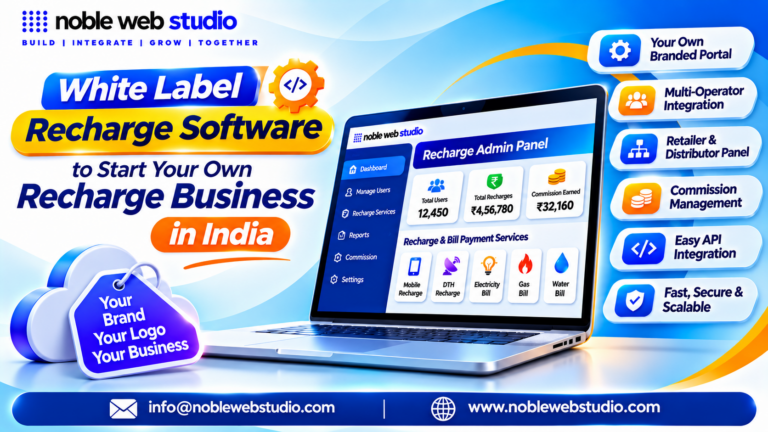
A white label recharge website is a ready-to-customize or configurable recharge platform that businesses can operate under their own brand name. Depending on the Noble web studio offering, it may include custom branding, logo integration, domain configuration, recharge admin access, recharge API integration, and user management. It allows businesses to establish their own branded recharge service without developing every component from scratch.
Recharge API integration is generally necessary when you want your website to process recharge requests automatically through an Noble web studio. The branded recharge API connects your website with supported mobile, DTH, or other recharge services. It can also return transaction responses and status information. Before choosing an Noble web studio, check operator coverage, documentation, response handling, pricing, support, and service reliability.
Yes. A mobile recharge website can be developed with automatic recharge functionality by integrating a compatible recharge API. Customers can select an operator, enter their mobile number, choose a recharge amount, and submit a request. The recharge b2b platform communicates with the Noble web studio and displays the returned transaction status. Proper handling of pending, successful, and failed transactions is essential.
Yes. A customized recharge website can support multiple services, including mobile prepaid recharge, DTH recharge, data card recharge, and utility bill payments, provided the selected Noble web studio supports them. Additional services may require separate integrations, approvals, and configuration. The website should display only those services that are actually available through its Noble web studio.
A payment gateway allows customers to add money to their wallets or pay for eligible services using supported payment methods. It helps process payment requests and return payment confirmations. A properly integrated payment system should also handle failed payments, duplicate payment notifications, refunds, and transaction reconciliation.
Yes. A B2B recharge website can provide separate dashboards for administrators, master distributors, distributors, and retailers. Each account can have permissions based on its assigned role. The mobile recharge admin can manage account creation, wallet balances, commission structures, transaction activity, and reports according to the b2b recharge platform configuration.
Yes. A recharge website can support multiple API providers if the Noble web studio offer compatible integration methods and the recharge platform designed to manage them. Multiple recharge API integration can help businesses configure different service providers, manage service availability, and handle transaction responses. However, routing, duplicate-request prevention, and transaction reconciliation must be planned carefully.
The security of a recharge website depends on its architecture, implementation, hosting environment, and ongoing maintenance. Important security measures include HTTPS encryption, secure password storage, role-based access control, protected recharge API credentials, input validation, secure payment handling, activity logs, and regular backups. Security testing should be completed before the website starts processing live transactions.
Yes. A customized recharge website can be designed according to your branding, business model, target customers, service requirements, and operational workflows. Customization may include dashboard design, user roles, retailer panels, commission rules, wallet management, mobile recharge API integrated, reports, and payment options. The requirements should be finalized before development begins.
The development timeline depends on the complexity of the project. A basic recharge website may take less time than a customized recharge platform with multiple recharge API integration, B2B account hierarchies, wallet management, payment processing, and advanced reporting. The timeline should include requirement analysis, design, development, integration, testing, and deployment.
Yes. Business owners do not necessarily need programming knowledge to operate a professionally developed recharge website. An easy-to-use recharge admin dashboard can help manage customers, retailers, services, transactions, and reports. However, technical support is important for smooth recharge API issues, software updates, security, and ongoing maintenance.
Yes. A recharge platform designed with a backend architecture that supports future Android application integration. Depending on the technical setup, the website and mobile application can share APIs, user accounts, service configurations, and transaction management systems. Planning for mobile application support early can reduce future integration work.
Yes. A recharge website can include a recharge wallet management system that allows registered users, retailers, and distributors to manage their account balances. Depending on the business requirements, it may support wallet deposits, balance deductions, transaction ledgers, wallet transfers, and reconciliation reports.
Yes. A properly designed recharge platform can check transaction status through recharge API responses or status-check requests. It can identify pending, successful, and failed transactions and initiate the appropriate refund or reconciliation workflow according to the Noble web studio rules. This helps reduce manual work and improves transaction transparency.
BBPS-related bill payment functionality can be integrated through an eligible service provider or authorized Noble web studio, subject to applicable requirements and approvals. Depending on the available integration, the fast recharge platform may support electricity, water, gas, and other utility bill payments.
A recharge website can include a dedicated recharge admin panel to manage users, retailers, distributors, services, recharge API configurations, transactions, commissions, and reports. Administrative permissions can be customized to ensure that sensitive functions are accessible only to authorized users.
Yes. A recharge platform can be designed to support increasing users and transaction volumes through suitable server infrastructure, database optimization, application performance monitoring, and scalable architecture. Actual capacity depends on the hosting resources, recharge software design, limits, and transaction workload.
Before selecting a recharge website development company, evaluate:
Experience in recharge portal development.
B2B and B2C development capabilities.
Recharge API integration knowledge.
Payment gateway integration experience.
Security and transaction management.
Customization options.
Development timeline and project scope.
Maintenance and technical support.
Ownership and access to source code.
Transparent development and recurring costs.
Always request a clear project proposal before making a decision.
Noble Web Studio aims to help businesses establish professional online platforms through website development and customized digital solutions. When evaluating a recharge website project, businesses should look for a solution that matches their required features, business model, integrations, security needs, and future growth plans. Contact Noble Web Studio to discuss your recharge website requirements and obtain a customized recharge software development proposal.